Category Archives: Natural heritage

A wet winter?

Today’s Irish Times reports on yesterday’s launch of a report called Ireland’s climate: the road ahead [92.9 Mb 103 page PDF here]. The report predicts:

  • Daytime summer temperatures to rise by up to 2°C
  • Lowest winter night-time temperatures to rise by 2-3°C
  • Milder winters to reduce cold-related mortality rates
  • Wetter winters and drier summers
  • Increase in frequency of heavy precipitation event.

Chapter 10 “Climate change and catchment hydrology” covers river flows.

Met Éireann’s report on summer 2013 [2 page PDF] is available here; rainfall was down [on the 1981–2010 average] at all stations except Valentia; temperature was up everywhere and so was sunshine. So perhaps we’ll have a wet winter to look forward to.

Elfin safety

Messrs Build.ie draw my attention to the formation of an Irish branch of the Visitor Safety in the Countryside Group, with members including the State Claims Agency, the OPW, Coillte, Waterways Ireland and the Department of Environment, Community and Local Government. The matter was mentioned in a Dáil written answer on 16 July 2013 and there is a ministerial statement on the formation here including this:

[…] it is essential that these visitors have safe access to our valuable assets […].

There is a list of VSCG members here. It will be nice for the Irish members to be able to converse with those from Manx National Heritage without having to use English, but the Waterways Ireland delegates will no doubt be disappointed that the Scottish bodies don’t seem to give much attention to the Scots language.

One of the VSCG case-studies is about Gas Street Basin in Birmingham; Waterways Ireland may be thinking about its applicability to the Grand Canal docks in Ringsend.

The involvement of the State Claims Agency suggests that the concern for visitors’ safety is not entirely altruistic: that the members may wish to keep down the costs of legal claims against them. Nothing wrong with that: it is in the interests of the citizenry that costs be kept down; that means managing risks and protecting against vexatious claims. If that isn’t done, there is a danger that public access to these bodies’ estates might be restricted.


After the summer

I don’t really know much about politicians, local or national, but I presume that, in the summer recess, they retire to their country estates for a bit of huntin, shootin and fishin, with breaks for trips to agreeable parts of foreignlandia (Tuscany, perhaps) and with occasional visits from other gentlefolk.

At any rate, something distracts them and keeps them quiet, but summer is now giving way to autumn and, er, innovative suggestions are coming thick and fast from politicos anxious to get other people to contribute to social and economic development in their constituencies (or to get reelected, whichever comes first).

So we have one who wants a walkway across Meelick Weir and another who wants a riverbus service on the Park Canal in Limerick.

Meelick turns up in another story from the past week, by John Mulligan in the Irish Independent. But despite the silly headline and subhead, the body of the article is a thorough and balanced account of flooding on the Shannon. Mr Mulligan is to be commended.


Never mind the jellyfish …

… worry about the nutcracker fish [movie] instead. The pacu, usually vegetarian, has been found in Sweden and, now, in the Seine in Paris. It’s getting closer ….

Lough Derg jellyfish

Story here, here and here (and no doubt elsewhere).

Belle of Barley Harbour

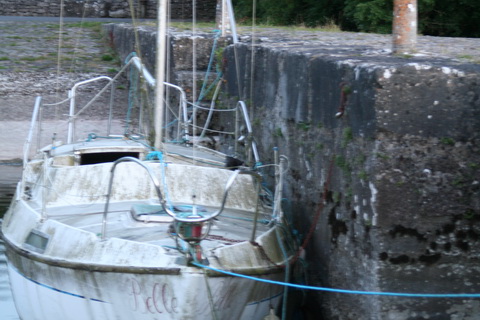
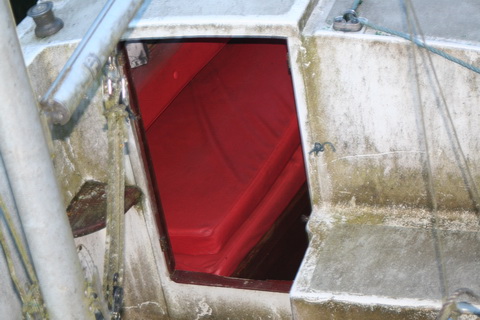
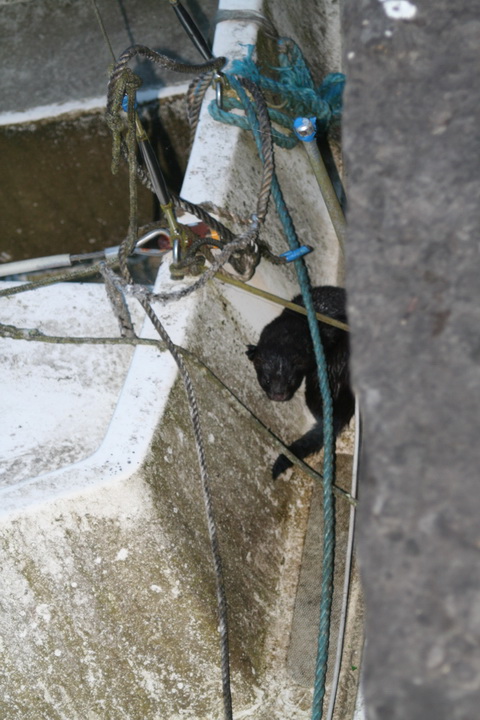
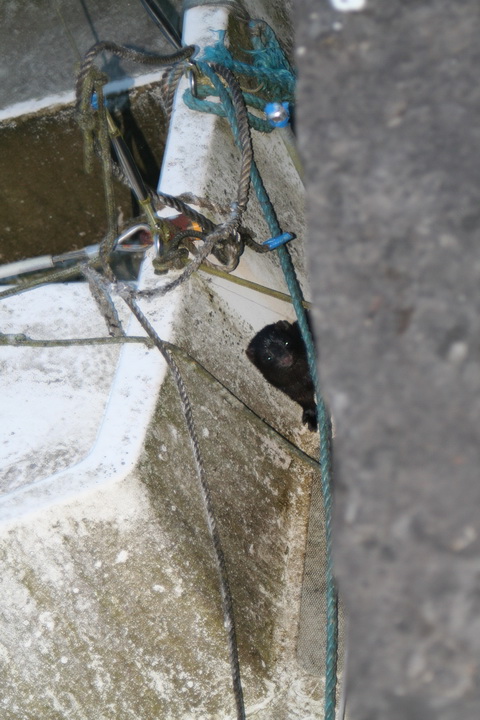
If you own the yacht Belle, which is at Barley Harbour on Lough Ree, you may wish to visit it. Its wooden doors are missing and there is what I think is a mink on board. I’m afraid I don’t know the owner and don’t know how to contact her or him.

Belle at Barley Harbour 01_resize

Belle by night

Belle at Barley Harbour 07_resize

Doors missing

Belle at Barley Harbour 05_resize

Mink 1

Belle at Barley Harbour 06_resize

Mink 2


The uses of regulation

One of the things about being an Enemy of the Working People is that you start thinking about stuff like regulation. It tends to be supported by well-meaning liberal folk, who think that it will tame the wilder excesses of entrepreneurs, but its effects may not be those that were intended.

Consider, to take an example well away from Irish waterways matters, the study discussed here by Aaron Carroll of the effects of telling folk about the numbers of calories in their meals. The regulators’ idea was that, if fast-food eateries told consumers how many calories were in their food, fat folk would eat less (and the social and economic costs would be lower, I suppose). Some researchers decided to check. To quote Aaron Carroll:

Researchers approached 1121 McDonald’s customers both before and after calorie posting began in New York City. Each had a random chance of being handed (1) information that described the recommended calories a man and woman should eat each day, (2) information that described the recommended calories a man or woman should eat each meal, or (3) nothing. The hypothesis was that giving people information about recommended intake would help them to make better choices about how much to order. After all, the whole menu labeling thing is based on the idea that giving people calorie information will reduce obesity.

The result?

Giving people calorie recommendations didn’t change what people offered.

I think “offered” should be “ordered”. But the point is that the regulation, requiring that menus show calories, doesn’t seem to have had the effects that the regulators desired.

In a sense, though, that’s a fairly neutral outcome. At worst, as Carroll says,

[…] although the result was not statistically significant (p=0.07), people who were given more calorie information ordered more calories.

But there are outcomes than can be much worse than that, especially in regulatory capture, a topic that should be of interest in Ireland. One way of looking at the state is to see it as a tool or machine that can be used by powerful gangs to advance their own interests. In Ireland it is used by gangs of insiders (especially operatives in the state-protected industries: moneylenders, legal operatives, teaching operatives, body plumbers, enforcers and so on) to protect both their earnings and their status. The Troika has, alas, struggled in vain against them.

But I digress. Another way of using the power of the state might tempt folk who have commercial competitors (AKA “the enemy”). You could find a regulation or two that your opponent has broken: the more regulations there are, the more certain it becomes that your enemy has broken something or other. You can then use that breach to attack him or her.

Suppose, for example — and I realise I am in the wilder realms of the imagination here — you ran a business in the marine leisure sector which, if the decline in Shannon traffic is any guide, may be suffering from declining demand. And suppose you had several competitors in the same geographical area, and offering roughly the same services, as yourself. You could compete in the standard ways, perhaps using Jerome McCarthy’s Four Ps [Product, Promotion, Price, Place] in your marketing mix. But if your product and place were more or less the same, and if promotion were of little use in a declining market, you might be left competing on price, which might have its own drawbacks.

But there might be other weapons available to you: weapons that the innocent Mr McCarthy did not dream of. Suppose, for instance, that you found that one or more of your competitors had breached one or more of a body of regulations — there are lots of such regulations, mostly incomprehensible to the layman. You could cause or encourage the state (or one or other of its arms) to investigate your competitor. And, even if you didn’t have your competitor’s business shut down, you would have increased the costs to that business and forced its management to spend hours, nay days, as well as large fees, on trying to escape from the net. And perhaps a sympathetic politician might take up the matter, questioning ministers about it.

Given the general saintliness of the Irish people, and the high moral and ethical standards that have always prevailed, I am quite sure that nothing of the kind has ever happened, or could ever happen, but it does make me wonder whether regulation should be regulated.

Watering Dublin

Someone asked me recently about the progress of the scheme to supply Dublin with water from the Shannon. I had to confess that I haven’t been keeping up with the matter, because I don’t think it’s very important, but happily KildareStreet.com has provided an update. On Tuesday 16 July 2013 one of the Sinn Féin chappies, Brian Stanley of Laois-Offaly, asked a priority question:

54. To ask the Minister for Environment, Community and Local Government the progress being made on the Dublin, Garryhinch, Shannon water supply project; and the timeframe for planning, construction and completion phases of this project.

I suspect that most folk think of the scheme as one involving Dublin and the Shannon, so that the inclusion of Garryhinch may have been puzzling. It seems that Garryhinch is on the road from Portarlington to Mountmellick, just after that nasty bend where folk go to commit golf.

And Mr Stanley is interested not because he wants Garryhinch, Portarlington Golf Club, or indeed Portarlington and Mountmellick to be flooded but because he wants his constituents to be employed digging a hole in the ground there (a bit like the Clones Sheugh, really) and working in a water-based ecopark that will include a reservoir where the Shannon’s water will be stored.

Anyway, Fergus O’Dowd [FG, Louth], who is a Minister of State for something, replied:

The Dublin water supply scheme long-term water source is listed as a scheme at planning stage in my Department’s water services investment programme 2010 to 2013. Dublin City Council is the lead authority for this scheme, on behalf of all of the water services authorities in the greater Dublin area.

Studies carried out for the city council and a strategic environmental assessment have identified a preferred option which involves abstraction of raw water from Lough Derg and pumping the abstracted water through a new pipeline to a proposed storage reservoir at Garryhinch cut-away bog in County Offaly, forming part of a proposed midlands water-based eco-park. After treatment, water would then be conveyed to the west of Dublin where the new supply would be integrated with the existing storage and trunk distribution system.

In December 2012, the Department approved a brief for the engagement of consultants for the planning and statutory approval phase of the scheme. Dublin City Council has carried out a procurement process and I understand it will shortly be in a position to appoint a consultant to advance the further planning of this scheme.

The programme for project implementation has been developed based on the planning and statutory approval phase taking approximately two years. The detailed design and procurement phase should take a further two years, while the construction and commissioning phase should be completed in three years.

Following their appointment by Dublin City Council, the consultants will undertake the environmental impact statement and other statutory requirements in preparation for a submission to An Bord Pleanála which will adjudicate on the matter.

He forgot to mention “best practice”, so he’s lost some brownie points. Mr Stanley wanted it all to happen much faster, to be completed before 2021, but the discussion provided no more useful information. Bord na Móna has some more information about the eco-park here. All good stuff, much as I suggested for Lough Oughter, but I’d lose the eco title: eco stuff is so last millennium.

Pumping algae

Do algae pass through pumps? I don’t know, but I ask because boating, bathing and animals have been banned in Lough Ennell where blue-green algae have been found. Lough Ennell is to supply water to the Royal Canal, although I presume it will take some time before it begins to do so. But perhaps, even if algae made it through the pumps, they would die in the Royal. If you know, Gentle Reader, do please leave a Comment below.

Shannon Navigation Guide 1963

Messrs abebooks.co.uk have drawn my attention to the fact that Sharston Books of Manchester (which is a town or city within Her current Majesty’s Realm) have a copy of this 1963 Shell/BP guide for sale. John Weaving was Navigation Editor. I already have it, so I mention it here in case anyone else is interested.

I have no connection, commercial or otherwise, to the seller.