


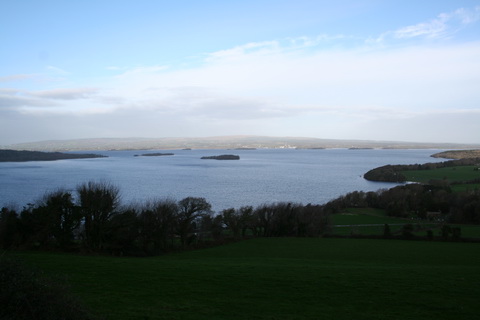
Flat calm on Lough Derg.
Flat calm on Lough Derg.
Posted in Ashore, Extant waterways, Ireland, Natural heritage, Scenery, Shannon, waterways, Weather
Tagged calm, Castlelough, Lough Derg, Shannon, trees, waterways
The Erne in the 1890s, from the Cruising Club Manual.
Posted in Built heritage, Extant waterways, Foreign parts, Ireland, Irish inland waterways vessels, Natural heritage, Operations, People, Scenery, Sources, Tourism, Ulster Canal, Water sports activities, waterways
Tagged boats, bridge, canal, Clones, Cruising Club, Erne, Ireland, Prothero, vessels, waterways
Posted in Extant waterways, Ireland, Irish waterways general, Natural heritage, Scenery, Shannon, waterways
Tagged Ireland, Lookout, Lough Derg, Shannon
Just as Killaloe is to have a new bridge, so too is Limerick. Or perhaps more than one …. This page (on a site whose ownership I do not know) has a map of proposed routes for the proposed Limerick Northern Distributor Road, which is to provide a northern bypass of Limerick. You can read about it on the websites of the promoters, Limerick County Council, Clare County Council and Limerick City Council. You can download stuff. And you will be pleased to hear that there are to be consultations (only not many of them).
This road is to be built in two phases, the first covering the area from west of the city to Parteen and the second from there to the old Dublin road (N7 as was, now demoted to the status of boreen). There are (or were) several options for each section, but the decision to cross the navigation at the Ardnacrusha tailrace, between the power station and the existing bridge, seems to be set in, er, concrete: that is, it seems, where the ESB wants it.
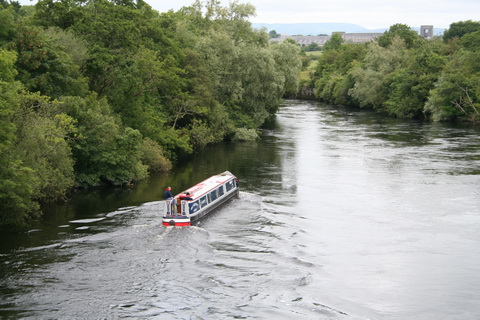
Ardnacrusha and the tailrace seen from the existing bridge at Parteen
The current consultation is about Phase 2, south-east from Parteen. There are several possible routes.
Two of them, B1 and B2, would cross the Shannon downstream of Plassey and the Black Bridge; they would not cross the Plassey–Errina Canal. It would be important to ensure that they did not further damage the towing-path and its artefacts on the Limerick side.
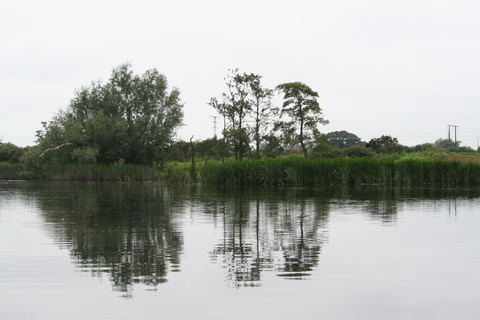
The west bank below Plassey
Four other routes — C1, D1, D2 and E1 — would cross the Plassey–Errina Canal between Gillogue and Wooden Bridge; they would cross the non-navigable Shannon upstream of Plassey, between there and a point just above the confluence of the Mulcair. C1 seems to run very close to Gillogue Lock, although that may be an effect of the scale of the route markings.
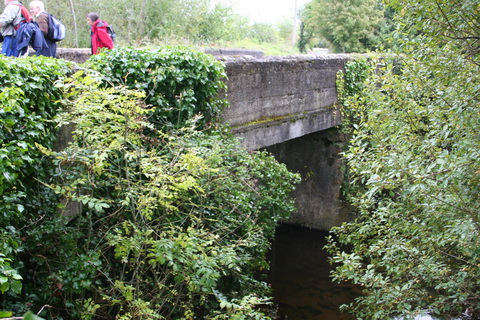
Woodenbridge (which isn't)
I am sure that the ESB will look after the interests of the existing navigation (through Ardnacrusha) and that Waterways Ireland will look after those of the former navigation (the river to Plassey and the canal thence to Errina). However, it might be worthwhile lobbing in a comment to TPTB, first to sttress the heritage value of the abandoned navigation and second to suggest that a new road near Plassey might improve rather than diminish access to that area.
One final thought: this new road seems likely to put the final nail in the coffin of the Limerick Tunnel under the Shannon estuary downstream of Limerick. I very much enjoy using the tunnel, but many folk are deterred by the charges and they drive through the city instead — or, worse, cross the Shannon at O’Briensbridge. As a result, revenue is less than expected, so the traffic guarantee mechanism means that the National Roads Authority has to compensate the tunnel operators.
So now that a new, free, presumably fast road is to link the east and west sides of the city, what will happen to the numbers of vehicles using the tunnel and to the taxpayers who are ultimately paying the compensation? They’ll pay more. The tunnel is on a national primary route, so it’s the NRA’s problem, whereas the new bypass is a regional or local route, which is in the hands of the local authorities.
=p-po-
Posted in Ashore, Built heritage, Charles Wye Williams, Economic activities, Engineering and construction, Extant waterways, Forgotten navigations, Industrial heritage, Ireland, Irish waterways general, Natural heritage, Non-waterway, Politics, Scenery, Shannon, The cattle trade, The turf trade, waterways
Tagged boats, bridge, canal, Clare, Errina, ESB, Gillogue, Ireland, Killaloe, Limerick, Limerick tunnel, lock, Lough Derg, Montpelier, O'Briensbridge, Operations, Plassey, road, Shannon, vessels, water level, waterways, Waterways Ireland, Woodenbridge
From the website of the Dublin City Business Association:
Dublin City Business Association commissioned Jerome Casey and Felim O’Rourke to undertake a study of tourism in Dublin and to make least-cost recommendations for its rejuvenation. The World Tourism Organisation concluded (in relation to Ireland) that “there appears to be very little correlation between marketing spending by National Tourism Organisations and international arrivals”.
Within Ireland, there is a mismatch between the Irish tourism market and the public resources devoted to it.
33 existing tourist attractions in Dublin were reviewed, and low-cost initiatives suggested for their improvement.
From 2000 – 2010 Ireland’s share of world tourism visitors has fallen sharply. In 2004, Ireland changed from being a destination country for incoming tourists to an origin country for Irish, outgoing tourists.
Dublin must move from passive approval of tourist activities to an active development of tourism as a priority industry in regenerating the city’s economy.
As my piece on the Park Canal in Limerick shows, I’m all in favour of low-cost improvements, so I downloaded the full report (PDF: 949.7 kb). Folk interested in waterways might like to proceed directly to page 46, which reviews the Box in the Docks, the Waterways Ireland visitor centre in the Grand Canal Basin at Ringsend.
Some other water-based attractions get much better reviews.
Posted in Ashore, Built heritage, Economic activities, Extant waterways, Industrial heritage, Ireland, Irish inland waterways vessels, Irish waterways general, Natural heritage, Operations, People, Politics, Tourism, Uncategorized, Water sports activities, waterways, Waterways management
Tagged boats, box in the docks, canal, department of arts heritage and the gaeltacht, Dublin, Grand Canal, Ireland, Liffey, Operations, Ringsend, vessels, waterways, Waterways Ireland, workboat

 Irish waterways history