Category Archives: Natural heritage

Budget 2015

End of austerity?

Waterways Ireland’s southern money [85% of its current budget plus the full cost of capital work undertaken in the republic plus, according to this unicorn who has just dropped in, the full cost of the Clones Sheugh] comes from the Department of Arts, Heritage and the Gaeltacht under the heading of North-South Co-operation. The figures are subject to the approval of the North-South Ministerial Council.

Waterways Ireland accounts for the largest portion of the North-South Co-operation funding but the budget documents [PDF] don’t show the breakdown between WI and the languages body.

The 2014 estimate for current expenditure on NSCoop was €35,271,000; the 2015 figure is €34,870,000.

The 2014 estimate for capital expenditure (all but €119,000 for Waterways Ireland according to page 213) was €3,977,000; the 2015 figure is €3,487,000. Rather neatly, that’s 10% of the current expenditure figure. In 2008 WI got €11,000,000.

The total is 2% down on 2014.

The aim of the NSCoop programme

The aim of this Programme is to maintain, develop and foster North-South co-operation in the context of the implementation of the Good Friday Agreement and the St. Andrews’ Agreement.

Under this Programme, the allocation for 2015 will:

  • Through Foras na Gaeilge and the Ulster-Scots Agency, promote the Irish and UlsterScots language and culture; and

  • Through Waterways Ireland, maintain the waterways for some 15,000 registered boat users.

I noted last year that the department’s high-level programme activities were to include:

Development of inland waterways within the context of the implementation of the Good Friday and St Andrews Agreements.

I deduce, therefore, that development of inland waterways has been abandoned; the [more sensible] aim is now that of maintenance. Furthermore, I note that there is no mention of tourism or of non-boating waterways uses like those lauded by the minister the other day.

Capital “investment”

According to Table 1  Multi-Annual Capital Investment Framework 2015-2017 on page 211, Exchequer Capital Funding to the Department of Arts, Heritage and the Gaeltacht is to fall from €62 million in 2015 to €36 million in each of 2016 and 2017. The 2015 capital estimates are:

A – ARTS, CULTURE AND FILM €42,460,000
B – HERITAGE 6,916,000
C – IRISH LANGUAGE, GAELTACHT AND ISLANDS 8,717,000
D – NORTH-SOUTH CO-OPERATION 3,487,000

The allocations to the last three groups are small, so it looks as if the luvvies will be suffering the cuts. But the level of cuts is rather large; I wonder how that’s going to work.

A win for the luvvies

The departmental overview begins on page 45. On page It shows that Total Gross Voted Current Expenditure is to stay constant at €212 million in 2015, 2016 and 2017. Below that we read:

The multi-annual expenditure ceilings are binding and it will fall to the Department of Arts,Heritage and the Gaeltacht to deliver services within these agreed allocations for the period 2015-17. This includes responding to emerging expenditure pressures over that period without recourse to additional Exchequer allocations. To do so will involve commitment to ongoing reform and efficiency measures and reprioritisation of expenditure as appropriate.

And on page 46:

This funding will enable a significant level of services to be delivered in 2015. The funding provided reflects the Government’s commitment to the conservation, preservation, protection, development and presentation of Ireland’s heritage and culture and the promotion of the Irish language, support of the Gaeltacht and development of island communities.

No mention of waterways, or even of northsouthery, in that lot.

On page 47 we learn:

The 2015 current expenditure ceiling of €212m represents an increase of €4m over the REV 2014 allocation and €7m over the previously published expenditure ceiling.

The additional current expenditure funding in 2015 will be utilised to support existing services and fund initiatives to commemorate the foundation of the State.

So the previous talk of continuing savings has vanished; the department’s total budget is up by 4%, just under €10 million. What we are seeing is a reallocation within the department:

A – ARTS, CULTURE AND FILM up 11%
B – HERITAGE down 12%
C – IRISH LANGUAGE, GAELTACHT AND ISLANDS  up 1%
D – NORTH-SOUTH CO-OPERATION down 2%,

Why are the luvvies getting the loot?

All of this is from a quick perusal; more later as information emerges, in particular when the minister addresses the Dáil.
Barrow Line meets Barrow Navigation

Seen from the air, 1947. Several of Limerick too. What’s the boat at bottom left in this pic of Athlone? A search for “Ireland” gives 2642 results, which is more than I can go through. If you find anything interesting, I’d welcome a link, which I’ll add here.

River Nore heritage

On its page headed Heritage Audit of the River Nore, Kilkenny County Council says

Phase 2 of the survey (from Kilkenny City to Inistioge) commenced in 2011 and will be completed in 2012.

It also says (on the same page)

Phase 2 of the survey (from Kilkenny City to just north of New Ross) is in the final stages of editing and will be completed in early 2014.

If anyone has seen any sign of it, I would be grateful for a link.


Luddite loons

I have commented from time to time on the reluctance of some Irish folk to move beyond the technologies of the eighteenth century. Thus we find Shinners wanting canals all over the place and folk in Leitrim determined that, if Ireland has oil and gas, they must never be used. [That’s the Leitrim that had both a coal and an iron industry, by the way, as well as hydroelectricity, railways, a brickworks and a dockyard, to name but a few industries that come to mind.]

The latest target of the ire of the Luddites is that newfangled invention, the bicycle. Waterways Ireland might like to provide for folk to cycle along the trackway on the Barrow Navigation; some folk want to keep the dreaded bicycle, and presumably its Lycra-clad users, away from the trackway along which they like to walk.

Happily, some sane folk have written letters to the blatts and IndustrialHeritageIreland has a sensible comment.

I presume that the Luddites insist that the grass be cut using scythes, thus creating much local employment.

Salmon at Ardnacrusha

Might a salmon cannon work?

New guide to Shannon and Erne

In German. Bit of a coup for Sven and Anita, I think. Hawthorn‘s bow appears in one photo.

Some of Ireland’s competitors on this and the next two pages.

Where do correct ideas come from?

Where do correct ideas come from? Do they drop from the skies? No. Are they innate in the mind? No. They come from social practice, and from it alone; they come from three kinds of social practice, the struggle for production, the class struggle and scientific experiment.

Readers will not, I am sure, need to be reminded that those are the words of the late Comrade Mao Tse-tung [or Mao Zedong, as the younger comrades say] in the Draft Decision of the Central Committee of the Chinese Communist Party on Certain Problems in Our Present Rural Work of May 1963.

Maurice Semple, in By the Corribside [self-published, 1981], lists writers who, from 1868 onwards, agreed with the view of the Cong Canal expressed by Sir William Wilde:

[…] for it was discovered, that like many other undertakings, the great canal at Cong “would not hold water.”

Those writers’ view is echoed by local people, and even by engineers, to the present day. Their case is, in effect, that the Board of Works engineers did not know what they were doing or did not properly survey the ground and were therefore surprised to find, on admitting water to the bed of the canal, that it vanished into sinkholes or swallow-holes in the karst.

One oddity about that belief is that the Cong Canal does actually hold water: it is full in winter, as the photos on this page, taken in February 2013, clearly show. It is empty in summer, but that is because water is unable to get in at the upper end, not (I suggest) because it flows out through the bottom.

What interests me at the moment is that I can find no evidence to support Wilde’s contention. Samuel Roberts, the engineer in charge of the work, knew that the work would be difficult but there is no hint in any of his annual reports that he feared that the difficulties might be insuperable. Furthermore, it is clear from his own reports and from other evidence that he was ordered to cease work on the navigation aspects of the canal before it was finished: there was never a moment when water was admitted to a completed navigation canal.

I have not been able to find any report from the 1850s in the Freeman’s Journal, the Cork Examiner, the Dublin Evening Mail or the Belfast News-Letter, or in any British newspaper, that supports William Wilde’s account of events. What, then, is its basis?

Of course my inability to find evidence does not mean that it doesn’t exist, but I would be grateful if anyone could point me towards it. I should say that I do not regard later accounts, like Wilde’s, as valid unless they include some evidence from 1854, the year of which Roberts wrote

The masonry in the Cong lock was commenced in March, and was progressing rapidly when I received instructions from the Board, in April, to suspend the execution of all navigation works in this division of the district, and complete only such as were necessary for the regulation of the waters of Lough Mask, for drainage purposes.

What I am looking for is an eyewitness, an official or some other reliable account, from 1854, that says “the canal was completed; water was let in; it vanished, to the surprise of the engineers”. If no such account exists, I may be forced to conclude that Wilde’s style of work is opposed to the fundamental spirit of Marxism-Leninism. As the Great Helmsman put it in the Little Red Book:

To behave like “a blindfolded man catching sparrows”, or “a blind man groping for fish”, to be crude and careless, to indulge in verbiage, to rest content with a smattering of knowledge — such is the extremely bad style of work that still exists among many comrades in our Party, a style utterly opposed to the fundamental spirit of Marxism-Leninism. Marx, Engels, Lenin and Stalin have taught us that it is necessary to study conditions conscientiously and to proceed from objective reality and not from subjective wishes; but many of our comrades act in direct violation of this truth.


Saving canals

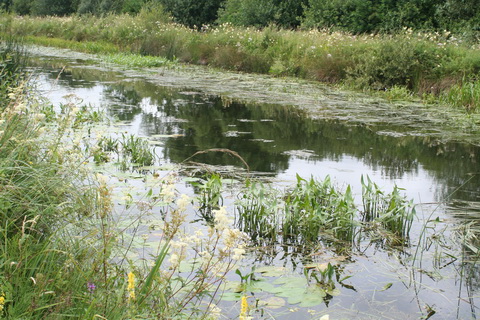
Barrow Line 20140721 03_resize

Barrow Line 1

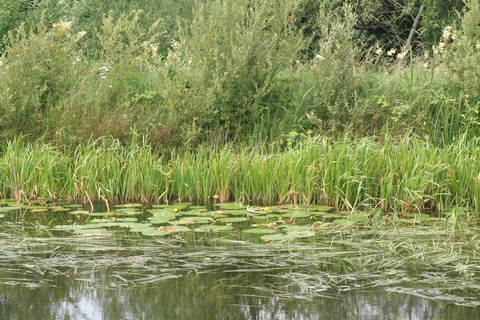
Barrow Line 20140721 06_resize

Barrow Line 2

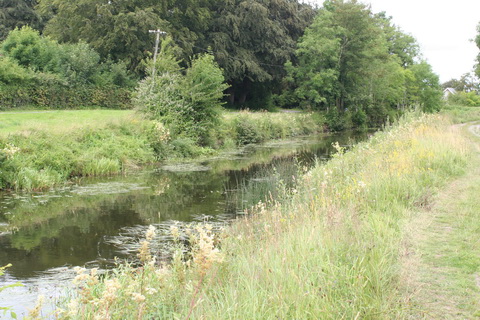
Barrow Line 20140721 08_resize

Barrow Line 3

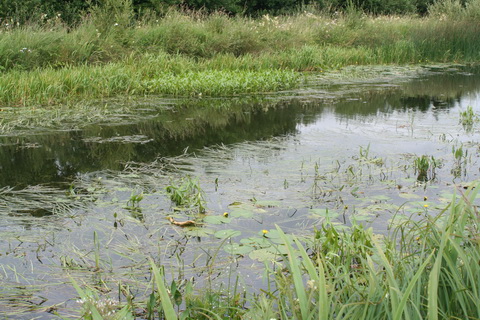
Barrow Line 20140721 09_resize

Barrow Line 4

When I get a moment, I must find out how many boats have been down that way in this warm, sunny July, the peak of the holiday season. The warmth will have encouraged the vegetation, but I suspect relatively few boats have been through. And only two boats entered the Royal through Dublin in July, even though two openings were offered.

Apart from giving artistic verisimilitude to an otherwise bald and unconvincing narrative about the value of the canal tourist industry and the abiding love of boaters for the canal, using canals helps to keep the weed down.


The buoys of the lough

Waterways Ireland’s proposed new moorings on Lough Erne. Note that the links at the bottom of the page [which do not include this or this] are to PDFs.

The “heaviest cruisers”, eh? Hmph. And “egress” is not the mot juste. But let us not carp: perhaps the idea will, in time, be applied on some southron waterways too.

The Brosna: fish and mills

Two reports from Dr William O’Connor about fish on the Brosna here at Clara and here at Belmont. Both are mill sites, now generating electricity, and the difficulty lies in providing for fish to get past.