Category Archives: People

Leisure industries in Mullingar

From the Waterford Chronicle 21 October 1843 quoting the Athlone Sentinel:

An unfortunate female was thrown over the bridge at Mullingar into the canal, on Friday night, by some of her unfortunate companions, and was drowned. An inquest was held on the body, when a verdict of wilful murder was returned against six females, three of whom have been taken.

From the BNA

Grand Canal passage-boat

Here is an account, published in 1862, of what it was like to travel from Portobello, in Dublin, to Ballinasloe by the Grand Canal Company’s passage-boats — and of why rail travel was much to be preferred.

Deadlock?

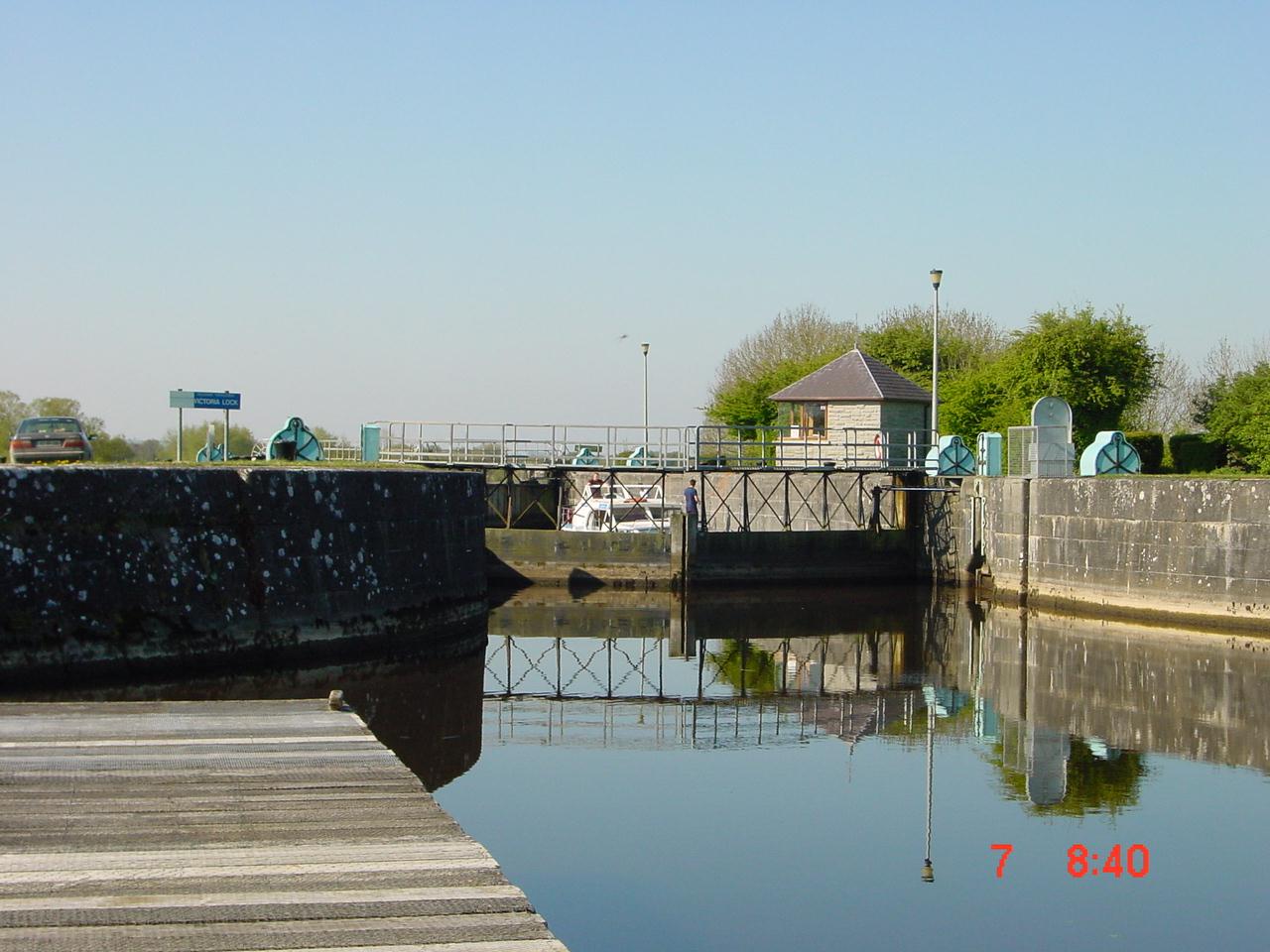
Victoria Lock, Meelick

Victoria Lock, Meelick

I like spending the night above the lock at Meelick: a pleasant, sheltered and quiet place. But there is a mystery about it.

Last time we were there, several groups of young folks came down to the lock after the keeper had knocked off for the night and gone home. It had been a warm day and I imagine that they were there to swim below the lock. Afterwards, some of them stayed around, chatting and hitting balls with their hurling mallets. They were quiet and caused no annoyance to anyone (although they might have removed their rubbish, in accordance with Waterways Ireland’s Leave no Trace policy).

But I did wonder what would have happened if there had been any horseplay, or even a mild slip, and someone had fallen into the lock chamber.

Both sets of gates were closed for the night, so the victim (even if conscious and uninjured) would have been unable to swim out and no rescue boat could get in.

There are no ladders in the lock chamber, so the victim could not have climbed out and any rescuer could only dive in, which would mean two people in the chamber rather than one. Nor was there anything in the chamber on which the victim might rest.

There was no information (that I could see) at the lock to tell the victim’s friends what to do, how to summon help or to get the gate opened. Any boater present might use VHF to call the Coast Guard and request a helicopter, but non-boaters might not think of that (or even of asking for the Coast Guard on ringing 999 or 112).

So that’s the mystery: if someone falls into a closed lock after operating hours, how is that person to be rescued? And how are others present to know what they should do? It would be nice if Waterways Ireland were to make information available on the spot.


Not just kayakers

Now rowers propose to use the Shannon.

I hadn’t realised that the Limerick [non-salmon] weir had affected rowers.

Waterways Ireland draft heritage plan

Boogie on over to the WI website for a copy of the WI draft heritage plan, and send WI your comments by 6 November 2015.

WI staff have put a lot of work into this and consulted various people, including me. I argued for a more activist approach, with more history and less about communities, and I would have let the twitchers and other nature-lovers look after themselves and their little feathered friends …

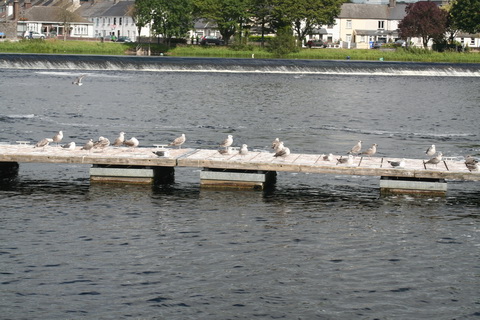
Birds hijacking facility at Athlone intended for (and paid for by) humans

Freeloading birds hijacking facility at Athlone intended for (and paid for by) humans. And who’s going to have to pay for cleaning it? Humans, that’s who. Human rights, that’s what we need …

… but I quite appreciate that Waterways Ireland has to be polite to all these people and can’t disobey the law, no matter how insane the legislation is.

But I digress. Get some comments in, preferably plugging industrial and transport heritage and economic history.

Portumna drawbridge

BORRISOKEEN, July 14. — The Solicitor-General, Mr Doherty, will arrive here to-morrow for the purpose of investigating the late unfortunate occurrences of this town on the 26th and 28th ultimo. This measure of the Government seems to restore some confidence to the minds of the people. Had this investigation not been granted, no person could calculate on the consequences of the expressed resolution of the peasantry to come into Borrisokeen, in a body of 50,000 or 60,000, to have vengeance for the loss of their relatives and neighbours.

On Saturday last a person named Dagg, a Protestant, residing in Borrisokeen, but who left it on account of the late occurrences, was apprehended at the mountains of Thoreebrien, when the country people held a consultation on the most effectual mode of putting him to death. Disregarding his entreaties and professions of innocence, he was dragged along by about 500 persons, and, on coming to Portumna, they determined to tie his legs to one part and his arms to the other part of the drawbridge across the Shannon, and then open it, that he might be drawn asunder. Fortunately at the time a gentleman from Borrisokeen passed by, and by his interference, with that of the parish priest, the life of the unfortunate man was spared.

Salisbury and Wiltshire Journal 27 July 1829

From the BNA

Newspaper accounts at the time suggest that there was an affray in Borrisokane at the end of the fair. Five mounted police either attacked or attempted to disperse the crowd; stones were thrown; Captain Dobbyn, a Stipendiary Magistrate, read the Riot Act and ordered the police to fire, which they did, killing two people. Two days later, during the funeral of one of those shot, one John L—, an Orangeman, and four companions, fired on the mourners from behind portholes on his house, or sallied forth to fire, killing four immediately and mortally wounding another. There is nothing to suggest that the unfortunate Mr Dagg was in any way involved.

Hamilton Lock

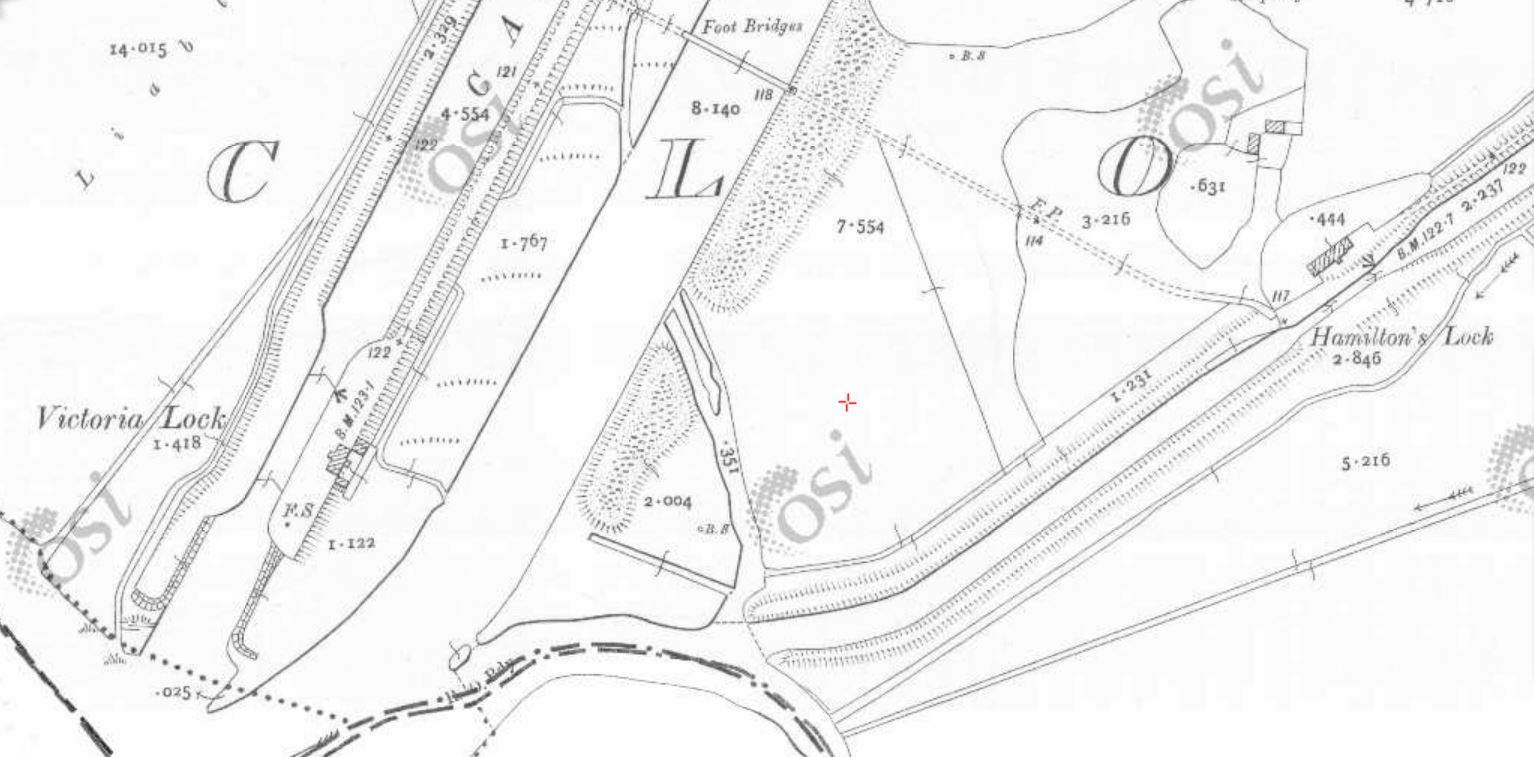
Victoria (Meelick) and Hamilton Locks (OSI ~1900)

Victoria (Meelick) and Hamilton Locks (OSI ~1900)

Lord Dunkellin: Do you know the Victoria lock at Meelick?

Sir Richard Griffith: I do.

Victoria Lock, Meelick

Victoria Lock, Meelick

Dunkellin: Do you know what is called the Old Cut, the old canal?

Griffith: Yes.

Dunkellin: The Victoria lock is a new work, is it not?

Griffith: It is.

Dunkellin: Should you be surprised to hear that vessels do not use that frequently, but go by the old cut?

Griffith: In times of very high flood I am aware that the canal boats find it advisable and beneficial to go by the Hamilton lock, on the old cut, in preference to the other.

Dunkellin: Prima facie, one would have thought that a new work like the Victoria lock would have the effect of regulating the state of things?

Griffith: It arises from the Counsellers’ Ford, as it is called, above Meelick; it has not been sufficiently excavated, and there is a strong current, and the boats are not able to get up to it in times of high flood.

Dunkellin: Then the boats made use of the old canal instead of the new lock?

Griffith: Under those peculiar circumstances they did.

Evidence of Sir Richard Griffith to the Select Committee on the Shannon River 12 June 1865

My OSI logo and permit number for website

WI and oral history

I learn from the Heritage Council that Waterways Ireland is seeking tenders for a pilot oral history project. The winner is to

  • Undertake a minimum of 3 interviews per waterway under our jurisdiction (see list above in Introduction). Any interviews relating to the Ulster Canal will be included as part of the Lough Erne Collection for the purposes of this pilot project. […] The interview questionnaire (to be agreed with Waterways Ireland) should endeavour to elicit material that adds to our existing archive, would be beneficial in our schools education programme and used in a broader promotion capacity.

  • Devise an oral history handbook for Waterways Ireland so staff members and community groups can advance this project in years to come.

  • Deliver training on best practices and guidelines in oral history interview skills and techniques. All training to be delivered in Waterways Ireland offices.

This is very interesting for several reasons. Let me get two quibbles out of the way first:

  • Why is the Clones Sheugh treated as part of the Erne? And why mention that specifically? What sensitivity is being addressed here?
  • Why is this tender not mentioned on WI’s Tenders page or the Current tenders page to which it links or anywhere else that the WI search engine can find?

I think there are four important points about this.

First, it is good that WI is devoting resources to the collection of oral history.

Second, it is good that it has applications in mind for the material: it may be used both in WI educational programmes and in marketing.

Third, the requirement for a training programme and a handbook is yet more evidence [on top of Éanna Rowe’s appointment to manage the Shannon] that the balance of skills required within Waterways Ireland nowadays is different from that of the past. While engineering will always be important, given the extent of the waterways infrastructure that has to be maintained, WI needs a higher proportion of people engaging with users, potential users and communities or devising product variants to attract such users. The marketing department can’t do all the work by itself.

Fourth, it is good that “community groups” as well as “staff members” will be able to use the oral history handbook. I hope that the term “community groups” won’t be interpreted too strictly — that individual amateur historians, for example, will be able to use the handbook — so that all waterways oral history can follow a common format, that the records are conserved properly and that the appropriate consents to the use of the material are collected at the time of the interview.

I should perhaps make a declaration of non-interest: I am much occupied with the waterways of the early nineteenth century but have not, so far, found any survivors from that time whom I could interview. But I might, perhaps, be allowed to express the hope that WI won’t altogether neglect such earlier history, about which there is much yet to be learned.


The ESB and eels

A minister speaks [or at least reads out a script prepared by other people].

I see that

The independent Standing Scientific Committee on Eels sets targets of quantities to be transported annually.

Which would be nice, if transporting eels were an end in itself. But the object is surely to increase the eel population, and I note that the minister had nothing to say on that subject. Nor did he tell John McGuinness what the stock of eels was. So we have no idea whether all this activity is achieving anything, and responsibility is diffused amongst the members of an Standing Scientific Committee on Eels, none of whom seem to have any stake in the matter.

This is a clear case for privatisation: sell the eels and the fishing rights to people [cooperatives, as on Lough Neagh?] who will have an interest in managing the populations of eels, rather than in managing the numbers trapped and transported.

The minister also introduced a red herring about compensation, which he wasn’t asked about. By my reckoning he answered only half the question, and even that credits him with answering the ritual invocation “if he will make a statement on the matter”.

On the Pill

Brian Simpson has kindly sent me photos of the small-boat rally on St John’s Pill (River) in Waterford at the end of May; I’ve put them on this page.