Category Archives: Safety

Women and children first? Not on your life

Abstract of a paper “Gender, social norms, and survival in maritime disasters” by Mikael Elindera and Oscar Erixsona [h/t Tyler Cowen]

Since the sinking of the Titanic, there has been a widespread belief that the social norm of “women and children first” (WCF) gives women a survival advantage over men in maritime disasters, and that captains and crew members give priority to passengers. We analyze a database of 18 maritime disasters spanning three centuries, covering the fate of over 15,000 individuals of more than 30 nationalities. Our results provide a unique picture of maritime disasters.

Women have a distinct survival disadvantage compared with men.

Captains and crew survive at a significantly higher rate than passengers.

We also find that:

  • the captain has the power to enforce normative behavior;
  • there seems to be no association between duration of a disaster and the impact of social norms;
  • women fare no better when they constitute a small share of the ship’s complement;
  • the length of the voyage before the disaster appears to have no impact on women’s relative survival rate;
  • the sex gap in survival rates has declined since World War I;
  • and women have a larger disadvantage in British shipwrecks.

Taken together, our findings show that human behavior in life-and-death situations is best captured by the expression “every man for himself.”

Man up, chaps.

DUKWs? Fiat lux

I have written here about a series of misfortunes suffered by DUKWs in Liverpool and London. On 16 June 2013 I put up some photos of DUKWs in Dublin and Liverpool; I pointed to what seemed to me to be two differences between practices in the two cities:

First, before they enter the water at Grand Canal Dock, Ringsend, the DUKWs are fitted with extra buoyancy in cylinders that slide into racks along their sides. I saw the VikingSplash crew removing the cylinders from the yellow DUKW; it took only a couple of minutes, and I presume that it didn’t take much longer to put the cylinders on.

Second, the Dublin passengers are issued with buoyancy aids before they take to the water. I can’t see any buoyancy aids on the Liverpool passengers, although it’s possible that they are out of camera shot.

There are links on that page to photos, news reports and a seriously scary video of the sinking of a DUKW in Liverpool. Then, in September 2013, a DUKW went on fire on the Thames; my brief report and links here. In October 2013 the UK Marine Accident Investigation Branch issued a safety bulletin (my report here, with links) pointing to foam buoyancy as a common factor. The Liverpool DUKWs did not have enough buoyancy to keep them afloat if they started taking water and MAIB thought it would be impossible to get enough into them. On the London vessel,

… the most likely cause of fire was the action of the rotating drive shaft (or other moving parts) on the oil contaminated surfaces of the buoyancy foam blocks.

In November 2013 I noted that the wearing of lifejackets had been discussed in London and I commented on the policy of the Dublin operator, VikingSplash:

The point that strikes me is that, in both UK accidents, passengers had little time to don lifejackets and would have been trying to put them on in a confined space and under less than ideal conditions. It seems to me that Viking Splash’s policy [having passengers don lifejackets before taking to the water] is the right one.

In December 2014 the MAIB published its report into the two accidents. There’s a Guardian news report here [h/t gjb] and you can download the MAIB’s full report and annexes from this page. The London and Liverpool accidents are covered in the same report.

It’s well worth reading and pulls (as far as I could tell) no punches, even tearing strips off the Maritime and Coastguard Agency and the Vehicle and Operator Services Agency, both within the UK Department for Transport and both involved because the DUKW is an amphibian.

I took three main points from the report.

The Irish approach

First, the Irish authorities seem to have thought seriously about the safety problems. My understanding of the buoyancy requirements was mistaken: the UK DUKWs had added buoyancy (although not enough, and adding more foam caused fire) and the Irish buoyancy cylinders are not designed to keep the vessel afloat. Here’s what MAIB says:

In Ireland, APV operators have been permitted to operate vintage DUKWs without having to provide any residual buoyancy. To mitigate the consequences of serious flooding, the Irish regulator required the operators to:

  • Fit external buoyancy tubes designed to slow the sinking process and make the vehicle sink bodily [my emphasis].
  • Retract the canopy roof and open the side curtains prior to entering the water.
  • Require passengers and crew to wear PFDs while on the water.
  • Provide a fast rescue craft, rescue crew and an inflatable liferaft at the slipway.
  • Limit operations to a non-tidal area.

This approach focused on passenger survivability by reducing the risk of entrapment and drowning, rather than vehicle survivability, and introduced several of the interim measures recommended by the NTSB following the sinking of Miss Majestic.

The Irish model demonstrates that open topped APVs can be operated successfully in similar weather conditions to those experienced in the UK, and that passengers are willing to wear PFDs.

So big it up for the Irish Maritime Administration.

The speed of the sinking

Second, if you’ve seen the video of the Liverpool sinking you may have been struck by its speed. In both Liverpool and London passengers had very little time to get out and the report’s synopsis says

In both instances, the crew had little time to co-ordinate the evacuation process and the confined nature of passenger spaces made it almost impossible for them to control or assist the passengers.

And in 4.3 Common safety issues:

8.  It was extremely fortunate that all on board WQ1 and Cleopatra were able to evacuate into the water unharmed. In both cases the passengers were forced to act on instinct and exit the vehicles under their own initiative.

Any of several issues could have cut the time available and “the risk of entrapment and the likelihood of loss of life would have been considerably higher”.

So Figure 63 of a Dublin DUKW doesn’t just show the external buoyancy cylinders: the passengers are wearing buoyancy aids, there is a crewman already stationed at the stern and the side and roof canopies are open, all giving more chance of escape.

I’m not in any position to assess the overall safety of the Irish DUKW operation. What interests me here is a more general point about the evacuation of passengers from trip vessels: getting a large number of people out of a small space in a short time is not easy. And the recent problem of getting people off the Norman Atlantic didn’t make me feel any better.

Photo

Third, I am delighted that my photo of a DUKW in Liverpool was useful to the  UK Marine Accident Investigation Branch (see the report’s Figure 16) but they really should have asked for permission to use it.

 

Matricide

A young woman, named Anne Macdonald, threw her mother into the Grand Canal, Dublin, last week, where the unfortunate woman was drowned. The daughter was excited to the unnatural act by a sudden fit of passion, on being called an opprobrious name by her mother.

Liverpool Mercury 1 January 1830

Down to the sea in steps

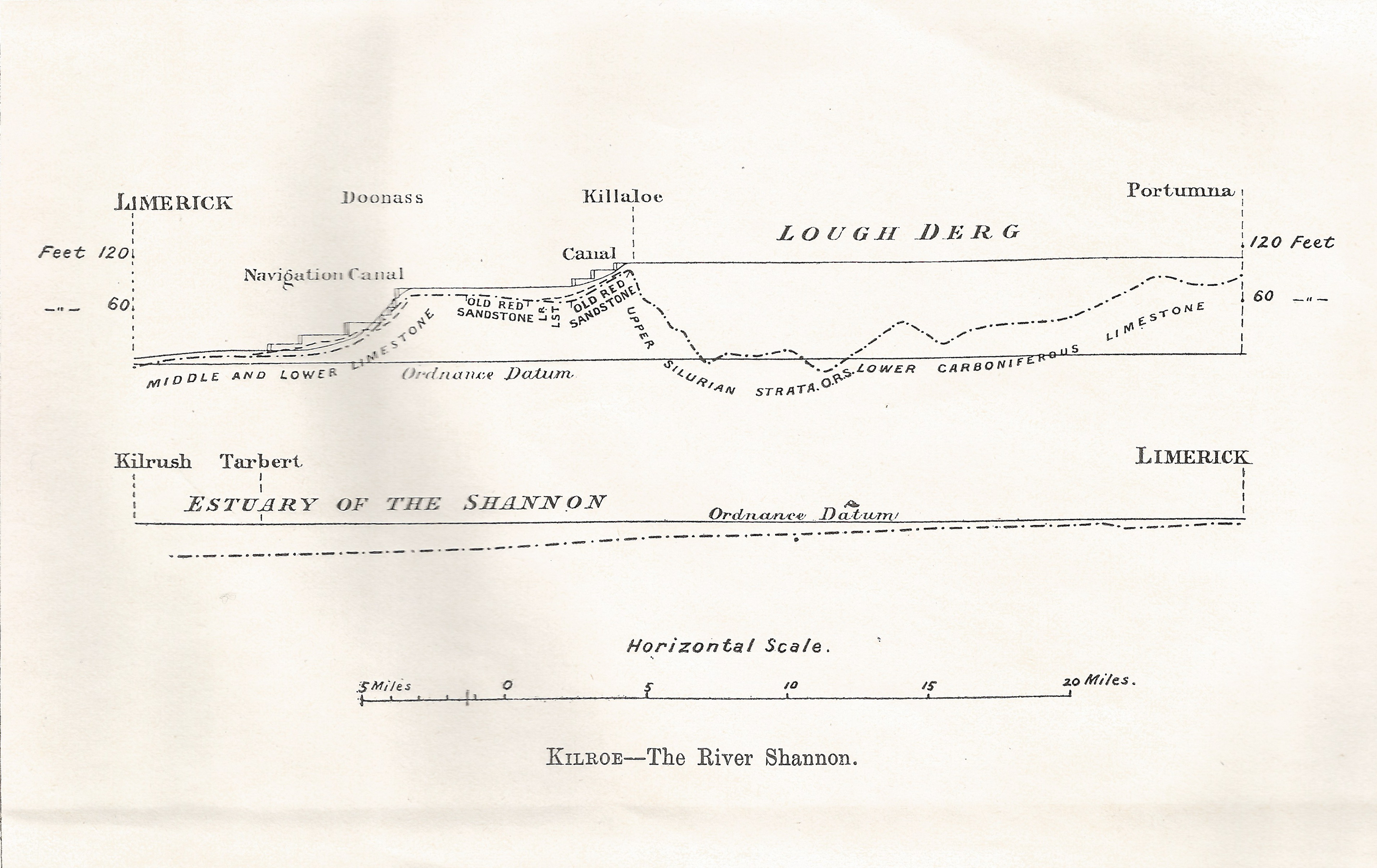
On 28 January 1907 James Robinson Kilroe [near the bottom of the page] of H M Geological Survey read to the Royal Irish Academy a paper on “The River Shannon: its present course and geological history” [Proceedings of the Royal Irish Academy Vol XXVI Section B No 8 Hodges, Figgis & Co Ltd, Dublin; Williams & Norgate, London 1907]. I thought that Plate V was interesting.

Shannon Derg to sea

Plate V

Kilroe wrote:

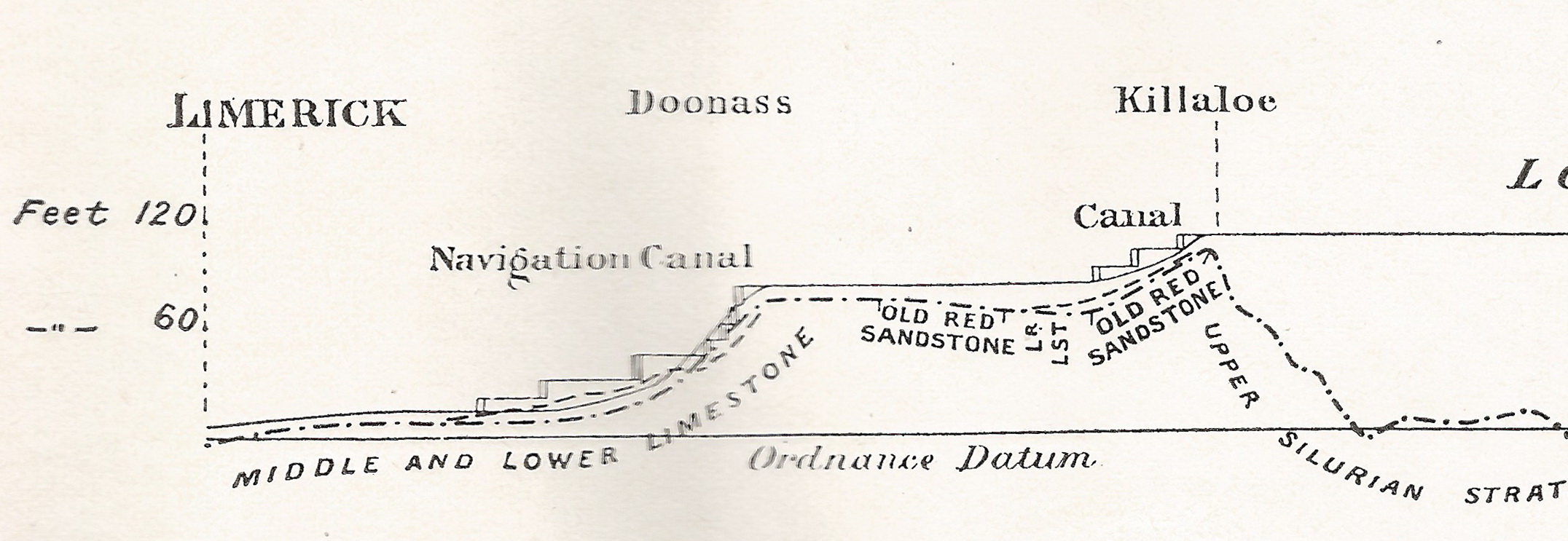
It will be perceived that instead of the river being shallow over the unyielding Silurian slate-rock, set almost vertically, and striking across the river-course, it is deeper than over the limestone of Lough Derg, and much deeper than over the comparatively easily eroded Old Red Sandstone at Killaloe. The river-bed actually drops below the datum line above the town, while at the town it is 100 feet above datum.

Old Red Sandstone strata are here to be seen in the river-bank, and Silurian rocks in situ in its bed. A barrier is thus formed, partly of Silurian, and partly of Old Red Sandstone rocks, which without the artificial impounding weir would retain the waters of Lough Derg to a depth of some 104 feet opposite Derrycastle — two miles above Killaloe.

One might have expected to find a fairly level shallow bed from Killaloe northward, a sudden drop from slate-rock to the sandstone floor, and  a pronounced wide, well-formed valley in the limestone district southward to Limerick.

None of these elements exist; instead, we have the formidable barrier at Killaloe, naturally damming up a considerable depth of water in Lough Derg, and the river falling away southward by a series of rapids which correspond with drops in the canal, south of O’Briensbridge […], along an alternative course, possibly one used by a branch of the Shannon.

Here is an extract from the Plate V map, showing the steps of the (pre-Ardnacrusha) Limerick Navigation between Lough Derg and the sea.

Shannon Killaloe to Limerick

The steps of the canal (click to enlarge)

Upstream

Kilroe wrote of Lough Ree:

The waters of Lough Ree stood some 10 feet higher within recent times than they now do, as proved by evidence of solution, with under-cutting of limestone blocks, to be seen about five miles north-west of Athlone, close to the railway, in the townland of Cornaseer.

Under these conditions the lake must have been, perhaps, twice its width, and for a considerable period. Its ancient surface-level is clearly indicated by the caps of the mushroom-shaped blocks.

And of the Shannon between Lough Ree and Lough Derg:

The extreme flatness of the river between Athlone and Meelick is such that, consequent upon the completion of the Suck Drainage-works in 1892, it was found that the callows along the Shannon above the confluence of the Suck at Shannonbridge were much more liable to sudden and frequent floodings than they previously had been.

The more rapid discharge of the Suck waters into the Shannon, before ordinary extra water had time to pass away, had the effect of modifying the regimen of the main stream to an extent which resulted in an action at law [La Touche -v- The Suck Drainage Board].

I have found only one account of that case, in the Freeman’s Journal of 1 July 1893. The plaintiffs, Messrs Harrison and La Touche, owned land at Cappaleitrim, on the west bank of the Shannon above Shannonbridge. They said that the actions of the Suck Drainage Board had caused their lands to be flooded:

[…] that the defendants brought water from the Suck into the Shannon, containing a drainage of 40 miles, with such velocity and such volume that the Shannon was penned back, and that the back water caused the damage to the lands complained of.

[…] The jury disagreed and were discharged.

I don’t know whether the matter ever again came before a judge.

The Black Bridge at Plassey

I am repeating here a point I made in response to a comment on this page. I do so because the point is, I think, an important one: some readers don’t check the comments and might miss this.

I have an imperfect copy [with some lines missing] of an indenture made on 8 July 1949 between the Minister for Finance and Limerick County Council under which the Council leased from the Minister

… all that those parts of the lands of Garraun and Sreelane on which Plassey Bridge abuts on both banks of the River Shannon and the site and piles of said Plassey Bridge together with said Plassey Bridge […].

I am not a lawyer, so my interpretation may be misleading, but I think that there are two points of interest.

The first is that, under the indenture, the Council is obliged to “well and sufficiently repair cleanse maintain amend and keep the hereby demised premises”, which includes the bridge. The Council is also required to “use the said demised premises as a public highway”.

The second is that, if the Council fails to do so, the Minister, and his agents the Commissioners of Public Works in Ireland, are entitled (after giving due notice) “to enter upon the hereby demised premises and to execute and to do the necessary repairs and works and the Lessees [ie Limerick Councy Council] shall repay the expenses of such repairs to the Lessor on demand […]“.

As far as I can see, Limerick County Council is in breach of its agreement with the Minister for Finance, and that Minister is entitled to repair the bridge and charge the Council for the cost.

If only there were a Minister for Finance who had an interest in Limerick (or in bridges) ….

A little rain goes a long way

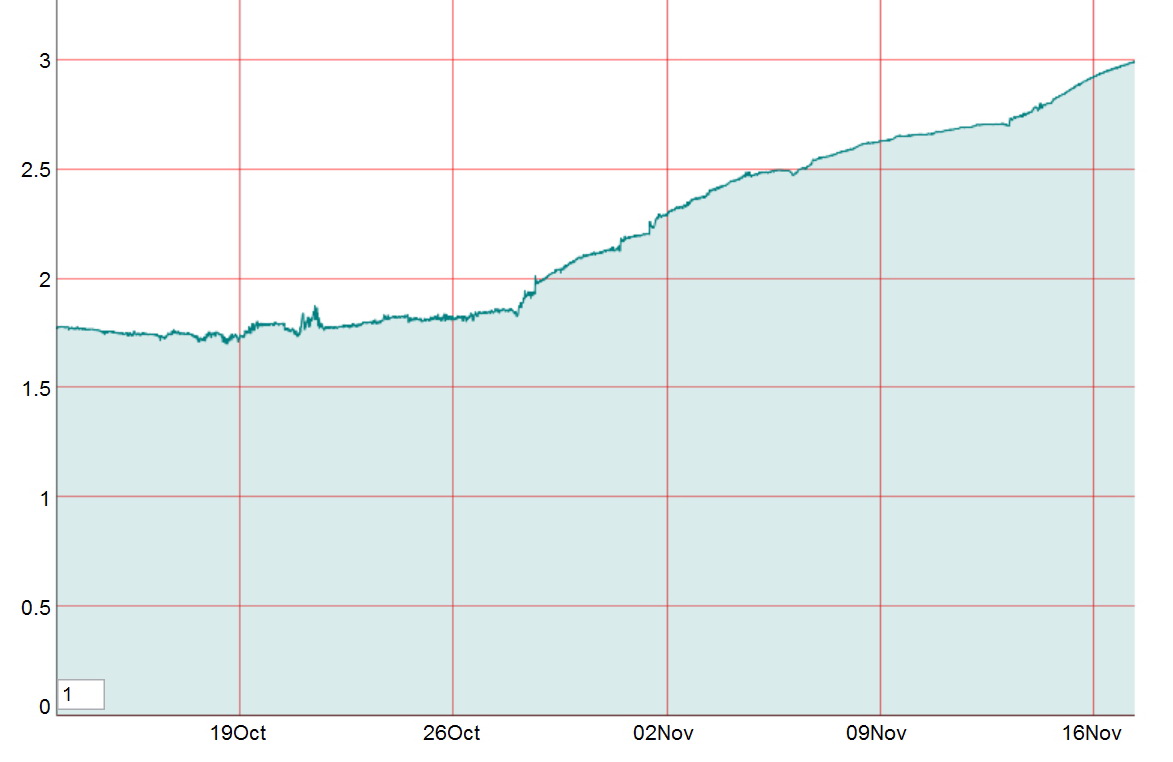
Here are some water level readings from Athlone Weir. I’ve taken them from the OPW’s very useful water levels site, where you can monitor levels from the comfort of your own armchair. [If only there were a gauge at Killaloe ….]

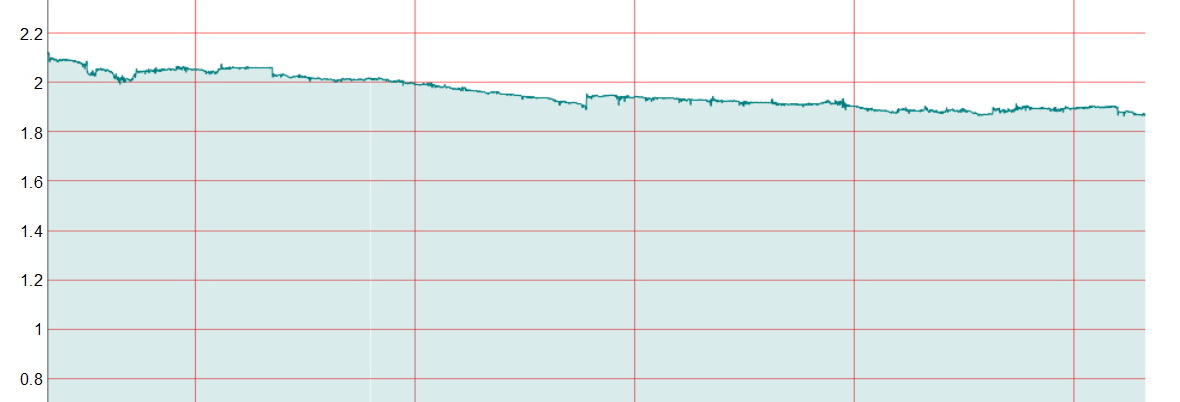
At Athlone, staff gauge zero is 35.360m above Poolbeg datum (from 18 Oct 2003). I chopped the bottoms off the first two graphs. The first one shows the level for 35 days to 30 September 2014; I presume that the level of Lough Ree was being reduced to enable it to hold some of the autumn’s rainfall.

Athlone Weir 20140930

Athlone Weir 35 days to 30 September 2014 (truncated)

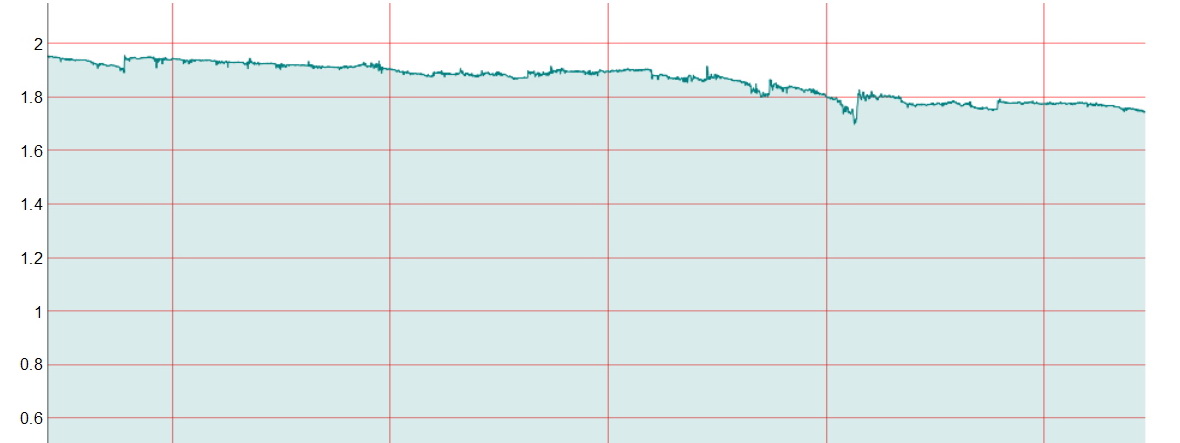
Here’s the graph for the 35 days to 15 October 2014.

Athlone Weir 20141015

Athlone Weir 35 days to 15 October 2014 (truncated)

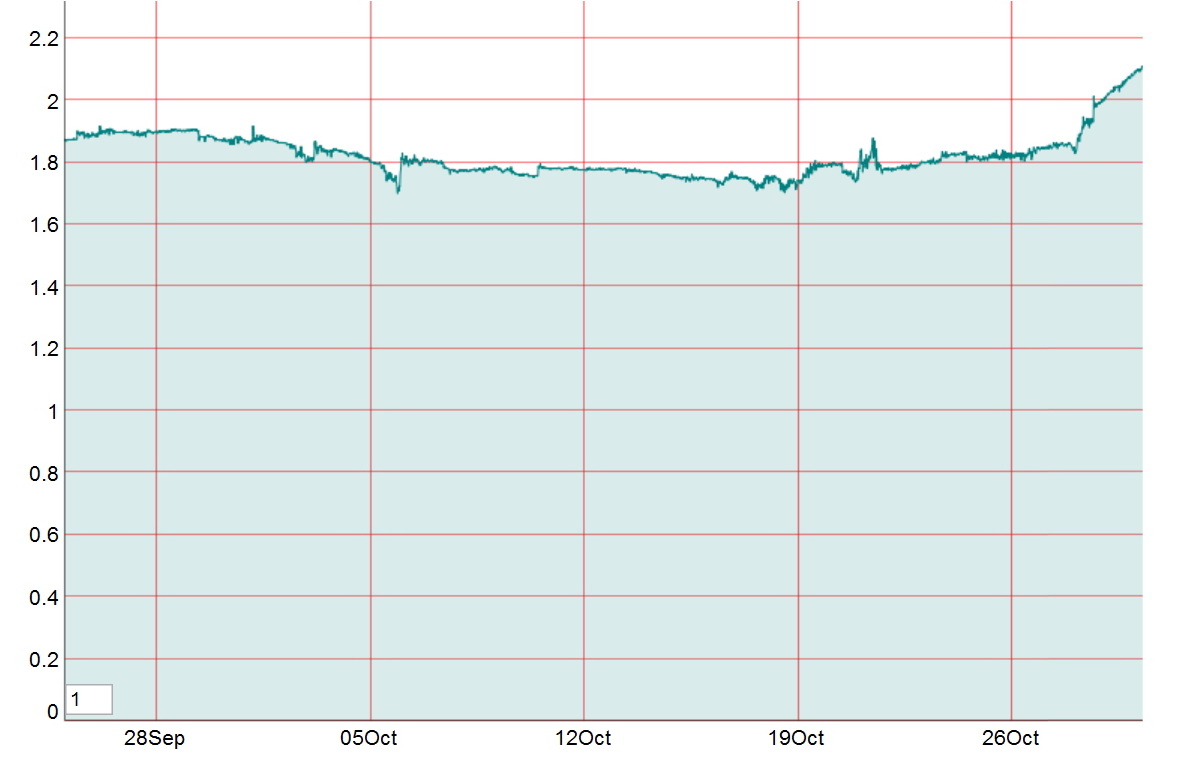
Then, in October, the level began to rise again. By 30 October, it was back to about 2.1 metres, roughly the starting point on the first of the graphs above.

Athlone Weir 20141030

Athlone Weir 35 days ro 30 October 2014

And since then it has continued to rise.

Athlone Weir 20141117

Athlone Weir 35 days to 17 November 2014

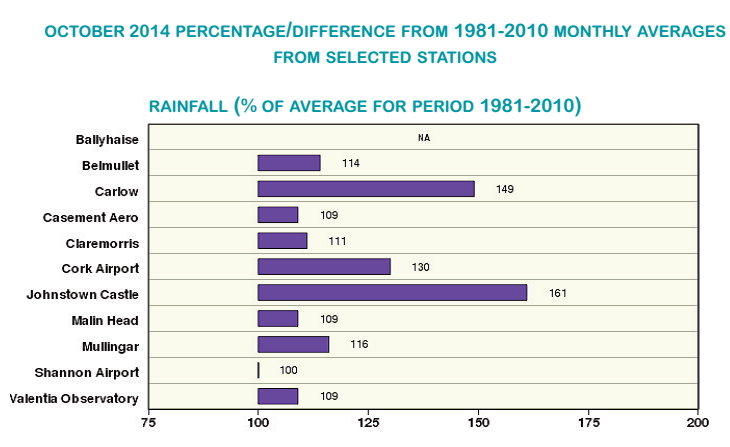
Met Éireann’s weather summary for October 2014 [PDF] has this chart:

Met Eireann weather Oct 2014

Met Éireann rainfall October 2014

It says:

Rainfall: wet conditions nearly everywhere

Monthly rainfall totals were above-average nearly everywhere with the exception of stations in coastal areas in the Northwest and West and in parts of the Midlands. Percentage of Long-Term Average (LTA) values ranged from 81% at Gurteen to 161% at Johnstown Castle, which recorded it wettest October since 2002.

Fermoy (Moore Park) reported 135% of its LTA with 153.6 mm and its wettest October in 10 years. The wettest days were mainly the 3rd, 5th and 28th, with the month’s highest daily rainfall reported on the 5th at Cork Airport with 38.6 mm, its wettest October day in five years. Mullingar reported its wettest October day in 12 years on the 28th with 26.4 mm. The number of wet days (days with 1 mm or more rainfall) ranged from 12 at Casement Aerodrome to 24 at Valentia Observatory and Claremorris, with Claremorris reporting its highest number of October wet days since 1973.

Use of the OPW charts is licensed under Directive 2003/98/EC [PDF] of the European Parliament and of the Council on the re-use of public sector information. Met Éireann allows use of “the web pages, and the information contained within them, for private and non-commercial purposes, for teaching, and for research […] is allowed subject to the condition that the source of the information is always credited in connection with its use”.


Three drowned on Lough Neagh

Most distressing accident on Lough Neagh — three young gentlemen drowned

It is with painful regret we have to announce a very afflicting calamity that occurred on Lough Neagh, on Friday, by which Mr Alexander Charters, son of our esteemed townsman, Mr John Charters, Mr Henry Nelson, son of Mr James Nelson, Ballinderry, and Mr Allen Bell, Glenavy-water-foot, have been consigned to an early grave.

They had that day gone on the lake on a pleasure excursion; and between three and four o’clock in the afternoon, when rounding Ram’s Island, the yacht in which they were capsized in a sudden and violent squall and sunk, when the three young men perished. Several persons on the shore witnessed the occurrence, but at the distance, and the wind blowing an unusually stiff gale from the north, no assistance could be afforded.

All the bodies have been recovered. Mr Alexander Charters, whose untimely death it is thus our melancholy duty to record, had been on a visit to his uncle, who resides near the shore of the lake.

The Dublin Monitor 3 May 1844, quoting the Northern Whig

Two men drowned on Lough Derg

A melancholy loss of life took place on the river Shannon, within five miles of Nenagh. Master Edmond Bourke (eldest son of John Bourke, of Tintrim, Esq, JP) in company with two men named Fahy and Conway, was on an excursion of pleasure in his father’s yacht. On entering Lough Derg with swelling sails a sudden squall bowed the vessel on her side and dipped the sails beneatht he surface of the water. The yacht recovered her upright posture, but being so full of water she went down gradually until completely hidden from view. The two boatmen perished, but Master Bourke clung to an oar and struggled with his fate. He was picked up in the last stage of exhaustion by some persons who had witnessed the melancholy scene from the shore, and had put out a boat to his assistance.

The Dublin Monitor 8 July 1841 quoting the Limerick Chronicle


Pumps and crisps

Thanks to Colin Becker, I have updated this page to show the location of the ESB’s third pumping station between Meelick and Portumna: I had known only where two of them were.

I have also added to the page some rude remarks about the ESB’s policy of not revealing the clearance of their cables above navigable waterways. If, dear reader, you know of a change in the policy, or if you can effect such a change, or if you know the clearances, do please let me know by leaving a Comment.


Trip boat crewing arrangements

The invaluable KildareStreet alerted me to this:

Joint Oireachtas Committee on Jobs, Enterprise and Innovation: Scrutiny of EU Legislative Proposals 7 Oct 2014 3:00 pm

Marcella Corcoran Kennedy [FG, Laois-Offaly]

Schedule A: COM (2014) 452 is a proposal for a Council directive implementing the European agreement concluded by the European Barge Union, EBU, the European Skippers Organisation, ESO, and the European Transport Workers Federation, ETF, concerning certain aspects of the organisation of working time in inland waterway transport. Is it agreed that this proposal warrants further scrutiny? Agreed.

Given that Ireland has no inland waterway transport, I wondered why the committee was bothering about it, but it seems that the EU proposal would also cover trip boats.

The text of the proposal can be downloaded here [PDF; make sure you click on the Union Flag because the tricolour beneath it is the Italian, not the Irish, flag] and the Annex here [{DF; same warning]. As far as I can see, the Proposal is legal gobbledegook and the meat is in the Annex, which might affect hours of work on inland passenger vessels. although I don’t know what the current regulations are so I can’t say what changes are proposed.