A playwright called Helena Enright is seeking recorded reminiscences of the Shannon for a project that is part of the Elemental Arts & Culture Festival in Limerick on Saturday 15 September 2012. More info here.
h/t Stephen Powell

A playwright called Helena Enright is seeking recorded reminiscences of the Shannon for a project that is part of the Elemental Arts & Culture Festival in Limerick on Saturday 15 September 2012. More info here.
h/t Stephen Powell
I have added this description, from Richard Twiss’s A Tour in Ireland in 1775 with a Map, and a View of the Salmon-Leap at Ballyshannon [London 1776] to my second page on the abandoned Main Line of the Grand Canal in Dublin:
The city bason is a reservoir, capable of holding water to supply the city for some weeks, when the springs from whence it is filled are dry; both the springs and the reservoir were dry whilst I was in Dublin. In 1765 a canal was begun to be cut from this place, and intended to be continued to Athlone, which is about seventy English miles off, in order to open a communication with the Shannon; at the rate the work is at present carried on it bids fair for being completed in three or four centuries.
Posted in Ashore, Built heritage, Economic activities, Engineering and construction, Forgotten navigations, Industrial heritage, Ireland, Irish waterways general, Non-waterway, Operations, People, Sources, waterways, Waterways management
Tagged 1775, 1776, canal, City Basin, City Bason, Dublin, Grand Canal, main line, Richard Twiss, water supply, waterways
Here is an article from 1792 about the virtues of the River Shannon. It was written by an unidentified Traveller from Shincliffe, near Durham. It is interesting as an earlyish example of the Irish waterways cargo cult which, it has been pointed out to me, resembles the business plan of the underpants gnomes.
Posted in Ashore, Drainage, Economic activities, Engineering and construction, Extant waterways, Ireland, Natural heritage, Operations, People, Politics, Scenery, Shannon, shannon estuary, Sources, The cattle trade, Tourism, waterways
Tagged 1792, black cattle, Clare, estuary, Galway, Ireland, Kerry, King's County, Leitrim, Limerick, Longford, Offaly, Roscommon, Shannon, Shincliffe, Shinkliff, Tipperary, traveller, Westmeath
Users -v- visitors. Pic of Laura Lucy here.
Even though I can describe brigs, brigantines, barques, barquentines and ships (as well as ketches, yawls, schooners and snows and a few more), I have no interest in these so-called “tall ships” events. However, the Pelican‘s rig (seen from the ferry the other day) is worthy of notice.
Posted in Economic activities, Extant waterways, Forgotten navigations, Ireland, Irish inland waterways vessels, Operations, People, Politics, Sources, Tourism, Water sports activities, Waterways management
Tagged boats, bridge, Dublin, Ireland, Laura Lucy, Liffey, Operations, Sam Field Corbett, vessels, waterways
The Black Bridge at Plassey has been closed since the floods of November 2009. Its reopening seems to have a low priority; I suspect that is because the importance of the bridge in Ireland’s technological, economic, entrepreneurial and political history is not widely appreciated. Here is a page explaining some of the background and suggesting a context within which reopening might be justifiable.
Posted in Built heritage, Charles Wye Williams, Economic activities, Engineering and construction, Extant waterways, Forgotten navigations, Industrial heritage, Ireland, Irish inland waterways vessels, Irish waterways general, Natural heritage, Operations, People, Restoration and rebuilding, Scenery, Shannon, shannon estuary, Sources, Steamers, The cattle trade, The turf trade, Tourism, waterways, Waterways management, Weather
Tagged Annaghbeg, Black Bridge, boats, bridge, canal, Charles Wye Williams, City of Dublin Steam Packet Company, Clare, floods, Grand Canal, Ireland, John Brownrigg, Killaloe, Kilrush, Limerick, Limerick Navigation, Liverpool, livestock, lock, lost, Lough Derg, Manchester, Montpelier, O'Briensbridge, Operations, P&O Line, Plassey, quay, Shannon, Thomas Rhodes, Tipperary, turf, vessels, water level, waterways, Waterways Ireland
… here.
h/t PW
Posted in Charles Wye Williams, Economic activities, Engineering and construction, Extant waterways, Forgotten navigations, Industrial heritage, Ireland, Irish inland waterways vessels, Operations, Scenery, Shannon, Sources, Steamers, The cattle trade, Tourism, waterways
Tagged Ballina, boats, Clare, Ireland, Killaloe, lawrence, Lough Derg, Operations, Shannon, steamer, vessels, wreck
Why, when speaking of the branded product Plasticine, did [do?] Irish teachers insist on using the Irish word marla? Even that word was, according to Terry Dolan’s Dictionary of Hiberno-English [Gill & Macmillan, Dublin 2004; new ed forthcoming], derived from the English marl.
At least in the nineteenth century, marl was a valuable manure or fertiliser and, on Lough Derg, Mr Head of the Derry Estate introduced a system of dredging it from deep water. Read about it here.
Posted in Economic activities, Engineering and construction, Extant waterways, Industrial heritage, Ireland, Irish inland waterways vessels, Operations, People, Scenery, Shannon, Sources, Steamers, The cattle trade, waterways
Tagged "marl dock", boats, broadford, Clare, Derry Castle, Derry estate, dredging, Dublin Society, fertiliser, Hely Dutton, Ireland, Killaloe, Lough Derg, manure, marl, Mr Head, Operations, Scarriff, Shannon, shelly, Spaight, Tipperary, vessels, waterways, workboat
I am to speak at Jamestown, near Carrick-on-Shannon in Co Leitrim, on Saturday 4 August 2012. Jamestown is having its heritage festival, and large numbers of old (converted) barges will be there. I will be giving one of four talks; mine is entitled
Down with barges: why cots were the really important vessels on Irish inland waterways.
I will be citing His Late Majesty Henry VIII, Fid Def, in support of my contention.
Here is some of the background to my thinking. If you would like to hear more, do come along on the day: the talks are open to all.
Posted in Economic activities, Extant waterways, Forgotten navigations, Industrial heritage, Ireland, Irish inland waterways vessels, Irish waterways general, Operations, People, Politics, Shannon, Sources, Suir, The cattle trade, The fishing trade, The turf trade, waterways, Waterways management
Tagged barges, Barrow, boats, cots, Erne, floods, Ireland, Kilrush, Limerick, Lough Derg, Lough Neagh, O'Briensbridge, Operations, Shannon, Suir, turf, vessels, waterways, workboat
… (a) correct ideas and (b) camper vans come from?
Correct ideas, as everyone is undoubtedly aware, come from three kinds of social practice: the struggle for production, the class struggle and scientific experiment.
Camper vans (or RVs: song on this page requiring Flash) may come to WI harbours because they’ve studied the Safe Nights Ireland website, which (inter alia) lists all the public toilets in Ireland (many counties have none) and the WI facilities.
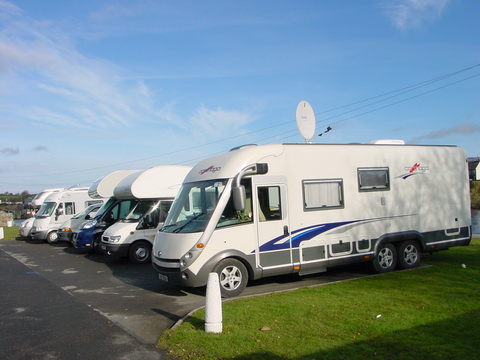
Incidentally, I have been told that WI now welcomes camper vans, having persuaded Bord Fáilte that the economy won’t collapse if it recognises the reality that the vans use the harbours. However, I haven’t seen that in writing anywhere; if anyone can point me towards a reliable source, please leave a Comment below.
Posted in Ashore, Economic activities, Extant waterways, Ireland, Irish waterways general, Non-waterway, Operations, Politics, Shannon, Sources, Tourism, waterways, Waterways management
Tagged boats, camper vans, Ireland, Killaloe, Mao Zedong, RVs, Shannon, waterways, Waterways Ireland
The joint communiqué from the latest North-South Ministerial Council inland waterways sectoral meeting, held on 9 July 2012, is here as a web page and here as a PDF.
The exciting bits:
The waterways maintenance part includes the claim that “97.5% of waterways remain[ed] open during the months of April and May”. That depends on how you measure things, though. The summit level of the Royal Canal was closed for almost the whole of that two-month period, so the canal (one seventh, about 14%, of WI’s waterways) was impassable throughout.
Posted in Ashore, Built heritage, Drainage, Economic activities, Engineering and construction, Extant waterways, Foreign parts, Forgotten navigations, Ireland, Operations, Politics, Restoration and rebuilding, Sources, Ulster Canal, Waterways management
Tagged boats, canal, Clones, department of arts heritage and the gaeltacht, Erne, Ireland, Lough Neagh, North/South Ministerial Council, Royal Canal, Ulster Canal, water level, waterways, Waterways Ireland


 Irish waterways history