Category Archives: waterways

The origins of the Royal Canal

The Royal Canal’s origins have never been satisfactorily explained: a later legend even seeks to explain its origins in an obscure dispute between a retired shoemaker and other members of the Grand Canal Company. But in fact its origins were political. As the Grand Canal Company was taken over by the conservative La Touche clique, the opposition launched a new venture: its patron was the duke of Leinster; businessmen and opposition politicians rallied to it; and Gleadowes, rivals of the La Touches, were bankers to the company. In other words, there was to be a left-wing as well as a right-wing way to reach the Shannon. Almost symbolically on its more northerly route to the Shannon, it passed through the duke of Leinster’s land.

L M Cullen “Politics and Institutions, 1731–1835” in Economy, Trade and Irish Merchants at home and abroad, 1600–1988 Four Courts Press, Dublin 2012

Up the Inny

The navigation of the River Inny from Ballynacarrow upriver to Lough Sheelin.

The opening of the Royal Canal

On 27 May 2017 the Royal Canal Amenity Group and Waterways Ireland are to commemorate the fact that

In May 1817 the Royal Canal was officially opened from Dublin to the Shannon ….

[Unfortunately I am unable to find anything about the commemorative event on WI’s website, although they did send me some information about it.]

I wondered how the opening might have been celebrated in 1817, but I haven’t been able to find out anything about it. I am hoping that some more knowledgeable person might be able to provide information: please leave a Comment below if you can help.

Ruth Delany gives 26 May 1817 as the date on which the contractors said that the western end of the canal (to the Shannon at Richmond Harbour) would be ready to hand over to the Directors General of Inland Navigation, who were running the show after the Royal Canal Company collapsed under the weight of its debts.

However, as far as I can see, the British Newspaper Archive contains no mention of any opening ceremony at any time in 1817. The Lanesborough Trader, the first boat to travel from the Shannon to Dublin did so in January 1818 [Saunders’s News-Letter 2 February 1818] and in May Mr Peel moved that a further £15000 be granted for completion of the navigation, where “shoals were
found to interfere” [Dublin Evening Post 23 May 1818].

Traffic increased later in 1818: in October the directors of the New Royal Canal Company went by boat

… from Dublin to Tarmonbury, and thence to the termination of the Canal, near the river Shannon, to inspect the works and give every necessary direction for the entire completion of that great and important undertaking ….
[Dublin Evening Post 20 October 1818]

The same newspaper reported that several boats of coal, found on the banks of the canal near Tarmonbury, had arrived in Dublin. It seems, therefore, that the canal was usable even if not entirely finished.

Later that month Christopher Dillon of Athlone, who had been trading on the Grand Canal and the Shannon, announced that he was moving his boats to the Royal Canal — but the western terminus for his boats was at Ballymahon, from which (although he did not say so) goods could be carried by road to Athlone: just the situation the Grand Canal Company had feared. [Dublin Evening Post 27 October 1818]

I have found no evidence of an opening ceremony in 1817; nor have I found evidence that the canal was actually open from the Shannon to the Liffey (or the Broadstone) in 1817, in that no boat seems to have travelled between the Shannon and the Liffey. At least one boat did so in 1818, but again I have no evidence of any opening ceremony.

There is one further mystery. The Royal Canal harbour at the junction with the Shannon is called Richmond Harbour. I presume that that is a compliment to the Lord Lieutenant of Ireland, His Grace Charles Lennox, 4th Duke of Richmond, 4th Duke of Lennox, 4th Duke of Aubigny, KG, PC. But he had ceased to be Lord Lieutenant in 1813 and was presumably unable to dispense favours after that, so why was the harbour named after him? I don’t know when the construction of the harbour was begun or finished.

I have not visited the National Archives in Dublin to look at the papers of the Directors General of Inland Navigation, which may have something on the events of 1817 and 1818. Perhaps WI’s archive has something relevant too. I would therefore be glad to hear from anyone who has searched those archives or found other evidence about the period.

Newspapers cited here were accessed through the British Newspaper Archive.

 

Waterways Ireland’s boat register

A boat-owner of my acquaintance received a text message today. [A text message is a new-fangled form of telegram sent to a telephone, using technologies that need not concern us here.] The message, which I have redacted, read:

Hi, Boater, Waterways Ireland is currently data protecting the boat register. Please confirm your boat registration number S[????] by replying with your email address or to stop text WWSTOP to [?????].

This is not a type of communication that is familiar to me: if it were genuine, I would have expected some more formal message, perhaps a letter or a Marine Notice, to emanate from Waterways Ireland. Furthermore, the phrase “currently data protecting the boat register” is nonsense. And the acquisition by the originator of the boat-owner’s email address does nothing to validate or update the register of boats on the Shannon.

Accordingly, I regard this with deep suspicion, and I have advised the owner to ignore it. However, the owner tells me that the registration number given in the message was correct. That might mean that some evildoer has gained access to the Waterways Ireland register of boats and is now, for some unknown but nefarious purpose, seeking to match email addresses to boats.

I would be glad to hear from anyone who knows more about this. I would also be glad to be assured of the sanctity of WI’s boat register.

Update 13 May 2017

Usually reliable sources tell me that the communication is from Waterways Ireland and represents an attempt to check and update their register of boats. Two points, however, remain:

  • I cannot tell [though others more skilly in these matters may be able to do so] how the, er, lay reader can be assured that such a communication is genuine
  • the communication is itself unclear: I would prefer a more explicit statement of what WI is trying to do and what the recipient is expected to do.


Steamer at Drumsna

Can you help?

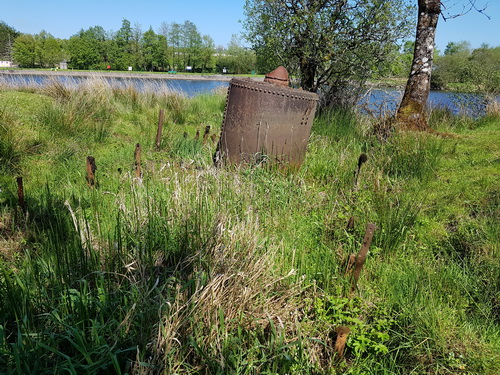
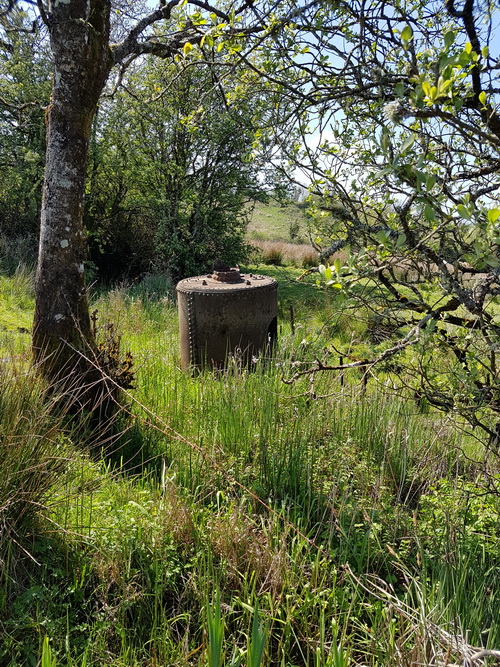
Liam Sherringham has sent me two photos of the remains of a steamer at Drumsna.

I am pretty certain that someone at some time told me something about this vessel, but I’ve lost the information. I think it was said to be a former steam yacht, owned by a family living not too far away and abandoned at the spot, but I am not at all certain about this.

If you are the person who told me about this, I apologise for my lapse and I would be grateful if you could supply the information again. If you are not that person, but know anything about the vessel, do please tell us about it. In either case you can leave a Comment below.

Photo 1 ((c) Liam Sherringham 2017)

Photo 2 ((c) Liam Sherringham 2017)


Waterways History Conference

The ninth Waterways History Conference will be held at the University of Birmingham, UK, on Saturday 24 June 2017. The programme and other details are available here. The theme is Waterways Research? and one of the topics is the Cong Canal.

A new sporting opportunity for the Suir?

This could work, from Carrick-on-Suir up to Clonmel, as there is already a towing-path.

The Lanesborough Trader

Inland Navigation

The numerous individuals interested in the prosperity of the Royal Canal, as well as the Public at large, must be highly gratified to learn, that the trade on the extended line of that navigation has commenced with all the spirit and activity that could have been anticipated by the most sanguine. The first boat from the Shannon (the Lanesborough Trader, Patrick Connor, owner) arrived at the Broadstone harbour on Saturday [31 January 1818], amid the cheers of numerous spectators, with a fiddler playing merrily upon her deck.

Saunders’s News-Letter 2 February 1818

Quadrupling Kerry’s canals

I thought there was only one canal in Co Kerry, but there were three more at Lixnaw. They’re still to be seen and they have interesting associations.

Thanks to Ewan Duffy of Industrial Heritage Ireland for the tip-off.

Sunday travel

The Rev Mr Stavelly said that he would avail himself of the present occasion to draw the attention of the directors to a subject in which he felt much interest — namely, the propriety of the company discontinuing the plying of their passage-boats on Sundays, and he moved a resolution to that effect, which was seconded by Mr Robert Guinness.

The Chairman stated that the subject of the rev gentleman’s motion had been already, on various occasions, under the consideration of the Court of Directors, but, with any desire, on their part, to meet the views of those who objected to Sunday travelling, it had been hitherto found impracticable to reconcile the proposed change with the convenience of the public or the interests of the company. He believed it was not in his power to put the resolution from the chair, as by the laws which governed the proceedings of the company, no resolution could be put to any meeting which had not direct reference to the objects for which it was called, but that he would again draw the attention of the directors to the subject on the very earliest occasion.

The meeting then adjourned.

From the report on the stated half-yearly meeting of the Grand Canal Company held on Saturday 23 October 1841 in the Dublin Morning Register 25 October 1841