Tag Archives: bridge

Saving canals

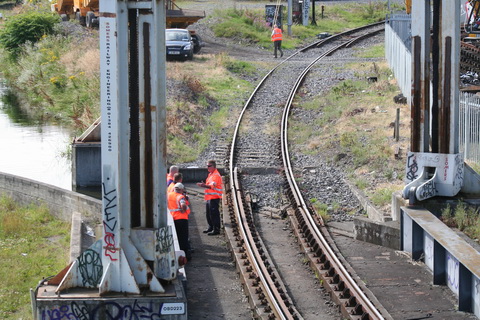
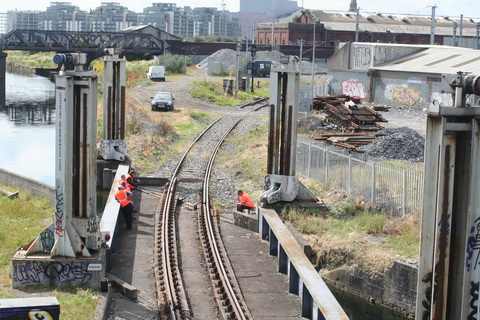
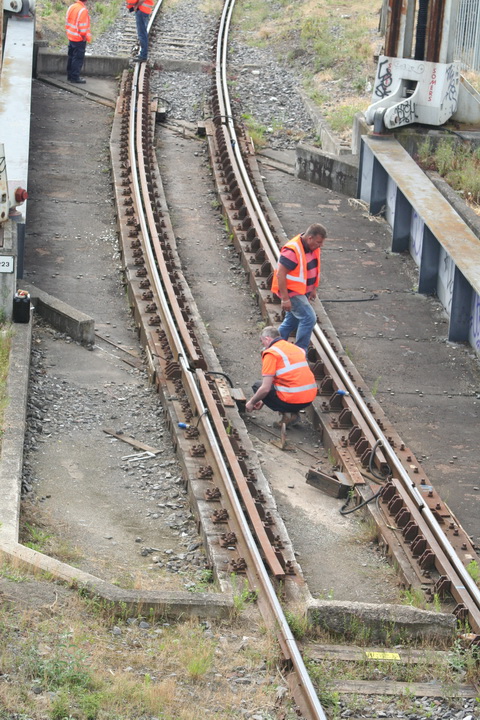
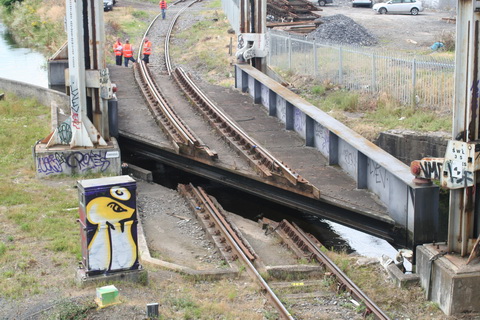
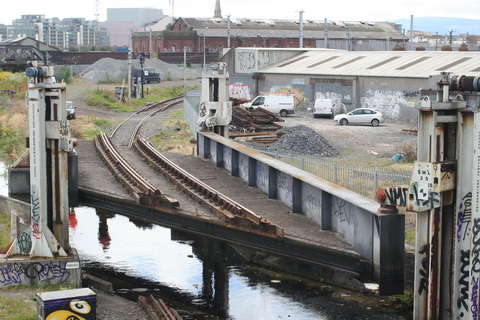
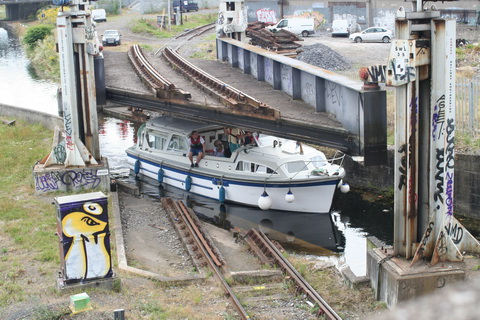
Barrow Line 20140721 03_resize

Barrow Line 1

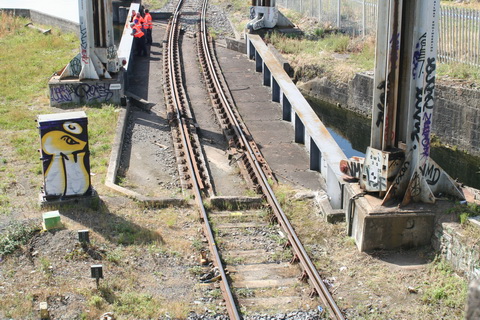
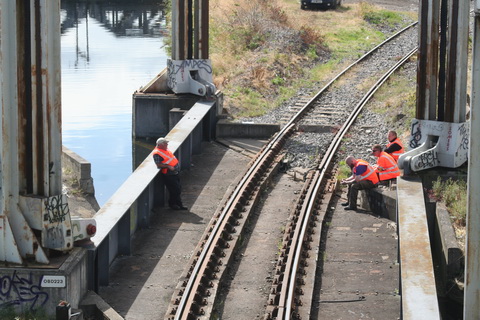
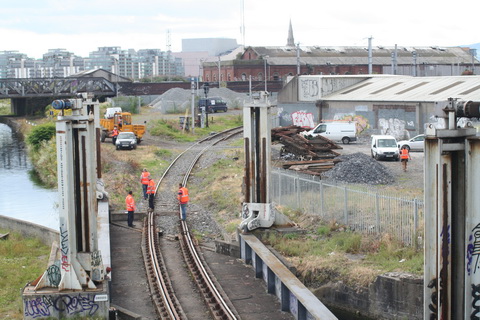
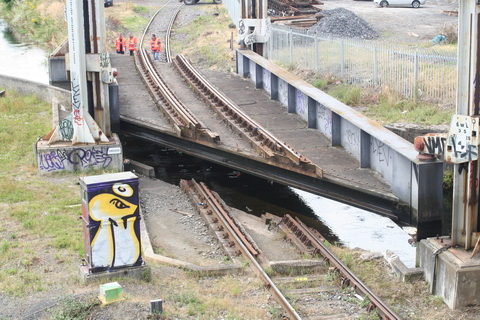
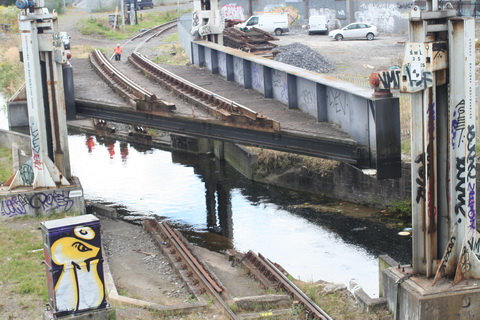
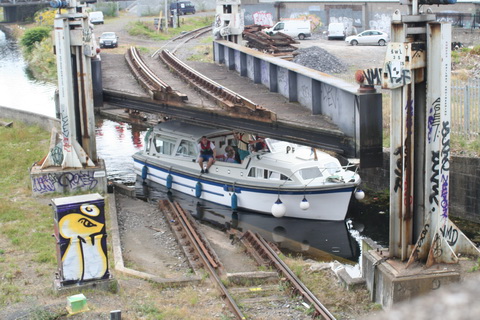
Barrow Line 20140721 06_resize

Barrow Line 2

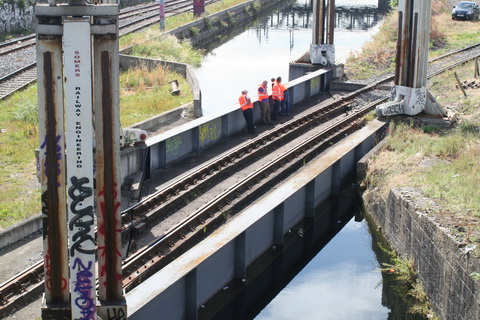
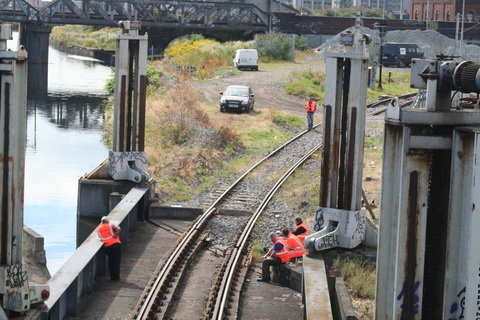
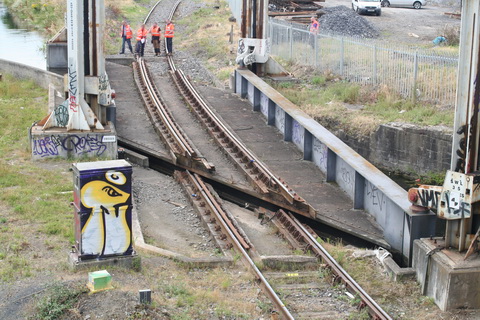
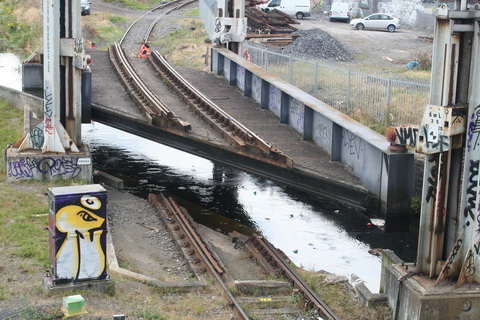
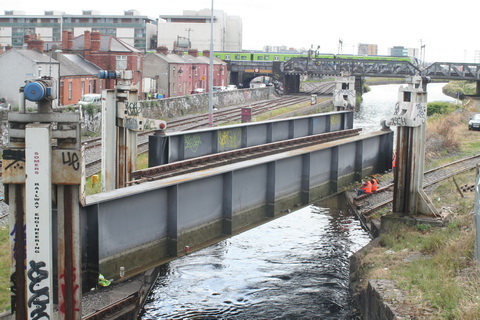
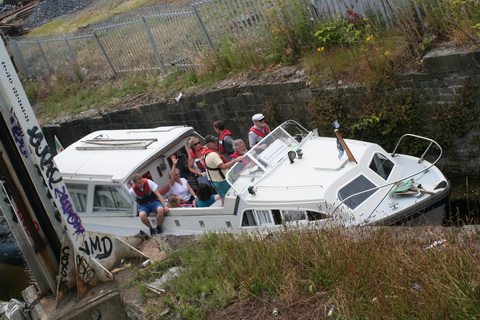
Barrow Line 20140721 08_resize

Barrow Line 3

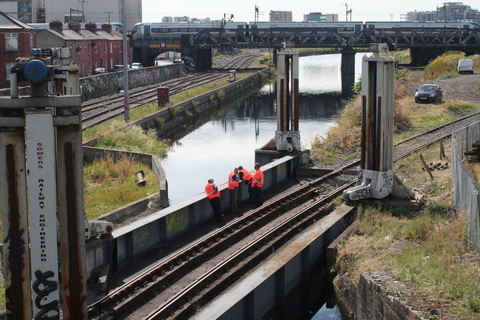
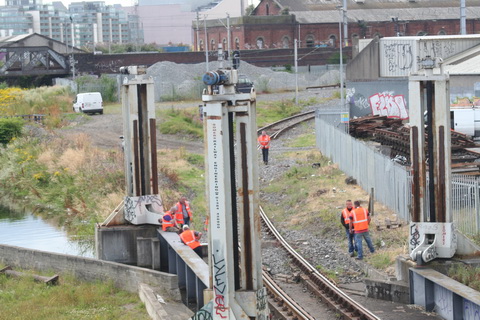
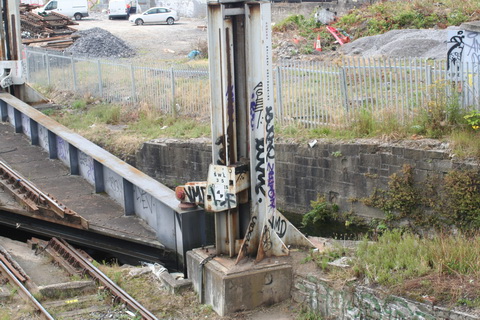
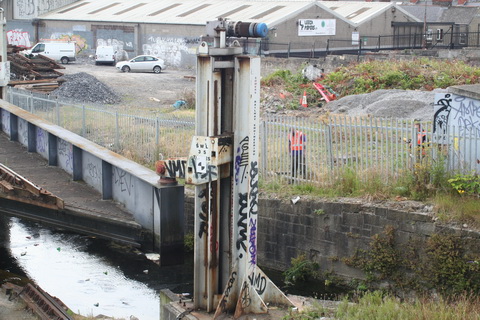
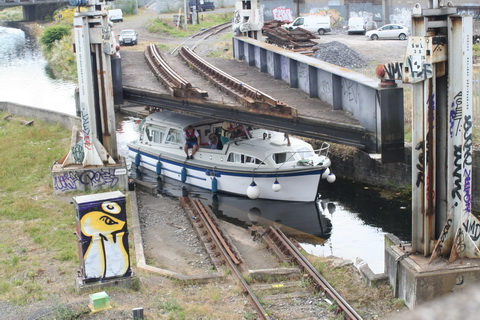
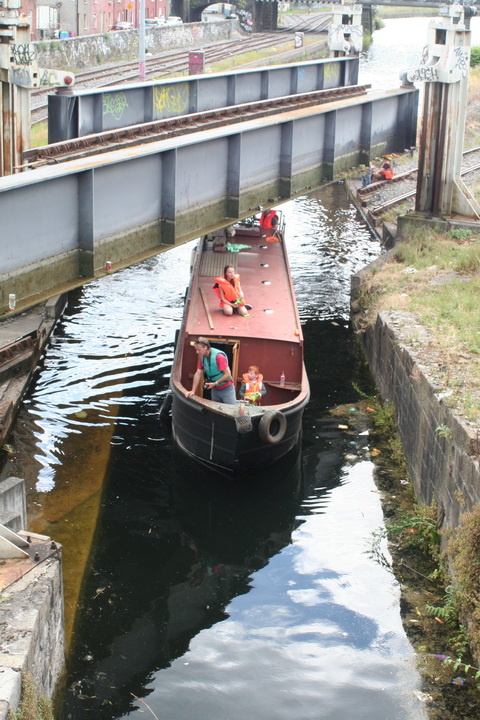
Barrow Line 20140721 09_resize

Barrow Line 4

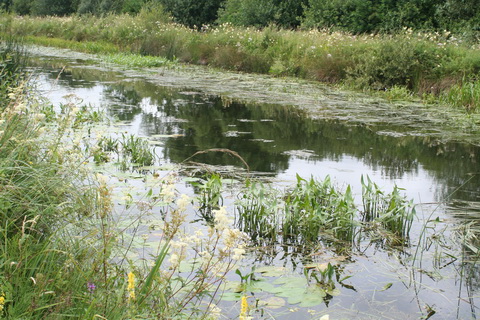
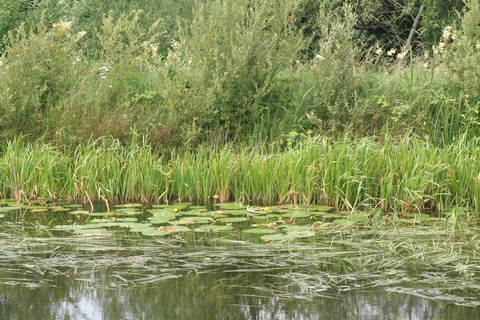
When I get a moment, I must find out how many boats have been down that way in this warm, sunny July, the peak of the holiday season. The warmth will have encouraged the vegetation, but I suspect relatively few boats have been through. And only two boats entered the Royal through Dublin in July, even though two openings were offered.

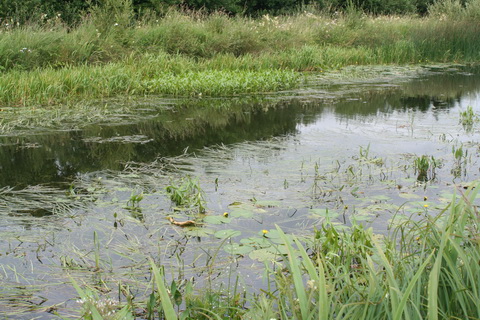
Apart from giving artistic verisimilitude to an otherwise bald and unconvincing narrative about the value of the canal tourist industry and the abiding love of boaters for the canal, using canals helps to keep the weed down.


Effin mensuration

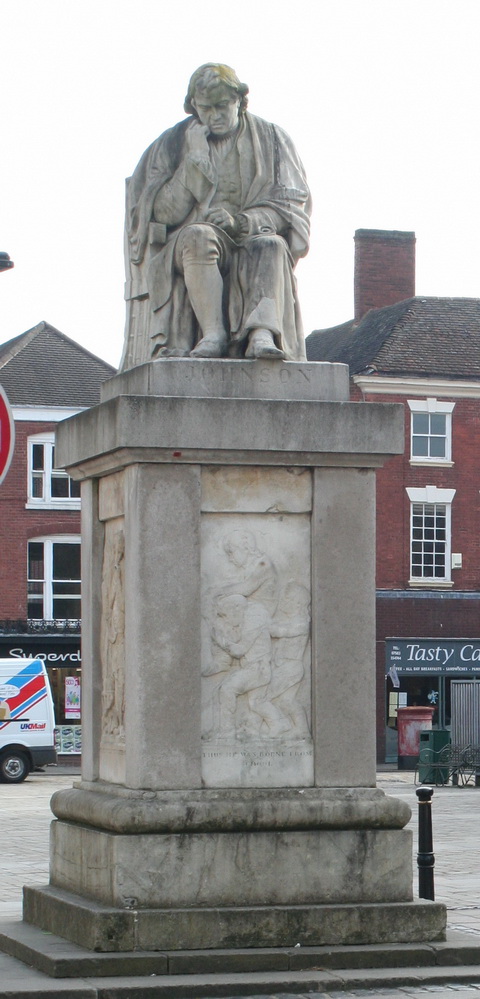
Statue of Dr Johnson near his birthplace in Lichfield

Statue of Dr Johnson near his birthplace in Lichfield

The learned readers of this site will not need to be reminded of the sapient advice of the late Dr Samuel Johnson:

[…] no man should travel unprovided with instruments for taking heights and distances.

There is yet another cause of errour not always easily surmounted, though more dangerous to the veracity of itinerary narratives, than imperfect mensuration. An observer deeply impressed by any remarkable spectacle, does not suppose, that the traces will soon vanish from his mind, and having commonly no great convenience for writing, defers the description to a time of more leisure, and better accommodation. […]

To this dilatory notation must be imputed the false relations of travellers, where there is no imaginable motive to deceive.

Samuel Johnson A Journey to the Western Islands of Scotland W Strahan and T Cadell 1775

The good doctor would, I think, have welcomed the invention of the digital camera with inbuild chronometer. Equipped with just such a device I arrived yesterday at the first lock on the Royal Canal to witness the lifting of the railway bridge and the passage thereunder of fleets of boats. I thought it would be interesting to record how long each stage took.

I have written before about this bridge: reporting a question by Maureen O’Sullivan TD in October 2013 and another in November 2013 and providing statistics on usage a few days later:

  • only 58 boats went through in 2013
  • the bridge was lifted on seven dates
  • two other scheduled lifts were cancelled as no boats wanted to travel
  • Irish Rail charged Waterways Ireland €1200 per weekday lift and €2000 per weekend lift.

The first 45 minutes

A lift scheduled for early July 2014 was cancelled; yesterday’s lift catered for just two boats, whose passage was assisted or monitored by eight Irish Rail staff and four from Waterways Ireland. Four of the Irish Rail people may have been in training as others seemed to be demonstrating things to them, but that’s only a guess. Three of the WI staff travelled together in WI’s stealth van and operated the first lock; the other, who travelled separately in a 4WD vehicle, visited from time to time. As far as I could see there was no contact between the Irish Rail and WI teams.

The bridge was scheduled to be lifted by 1100.
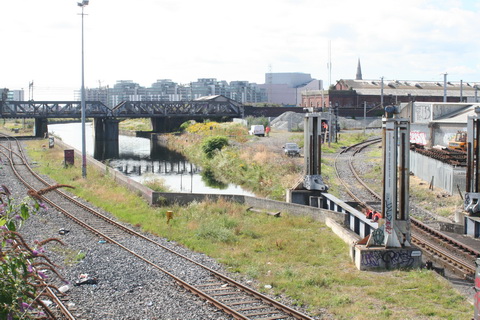
Before the lift 0945

Before the lift: 0945. The lifting bridge is on the right of the photo
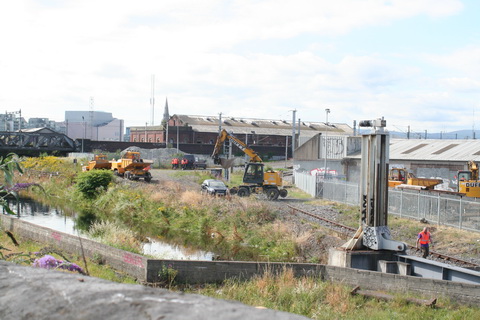
Before the lift 0946

One minute later: 0946. A separate group of workers, perhaps contractors, is going down the west side of Spencer Dock with equipment
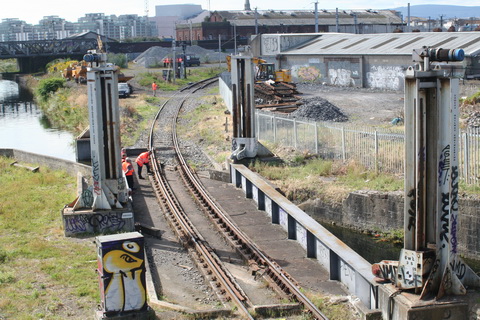
Before the lift 0949

Four men still on the bridge 0949

Before the lift 0951

Two minutes later

Before the lift 0956

On the bridge 0956

Before the lift 0958

Still there 0958

Before the lift 0959

One minute later

Before the lift 1006

The bridge 1006

Before the lift 1012

The bridge 1012

Before the lift 1015

The bridge 1015: another person approaches
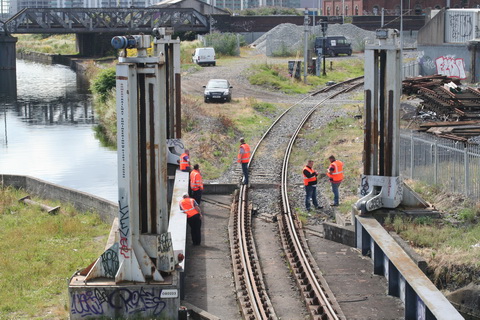
Before the lift 1020

Six men at the bridge at 1020

Before the lift 1028

A seventh man approaches at 1028

Preparing to lift

The preparation stage, presumably involving the unlocking of some mechanism, took about five minutes altogether.
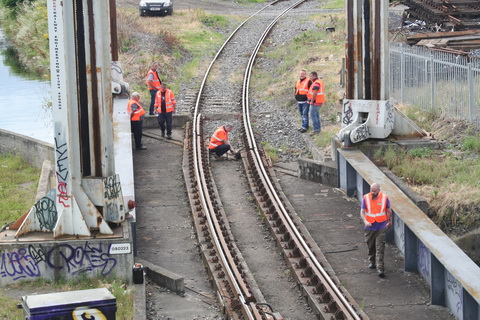
Preparing the bridge 5 mins 03_resize

One man worked on the far end while another walked to do the same at the near end
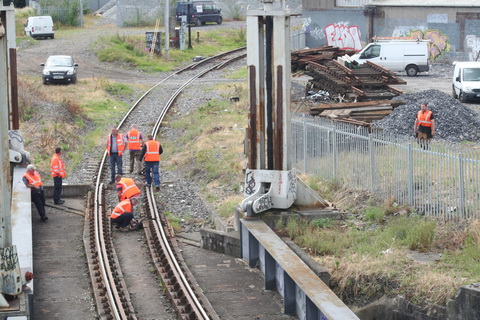
Preparing the bridge 5 mins 06_resize

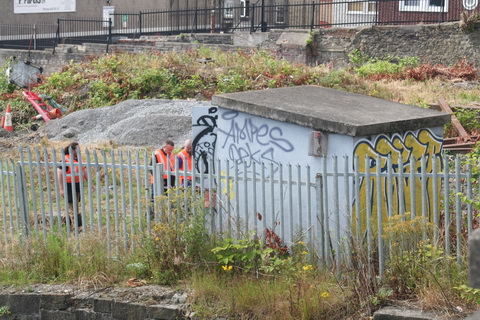
An eighth man, behind the fence on the right, seemed to summon two of the men on the bridge
Preparing the bridge 5 mins 14_resize

They went to this building, which I guess houses the controls for the bridge
Preparing the bridge 5 mins 15_resize

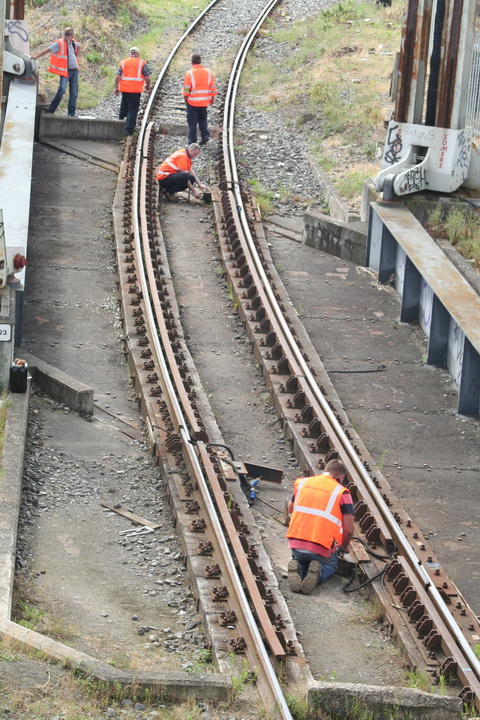
Meanwhile work continued on the bridge itself
Preparing the bridge 5 mins 19_resize

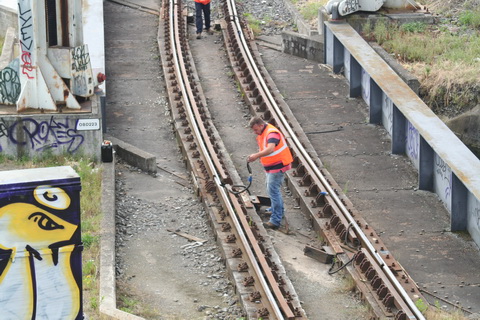
Almost done

Preparing the bridge 5 mins 22_resize

A final check

Preparing the bridge 5 mins 25_resize

Everybody was off the bridge by 1033

Lifting

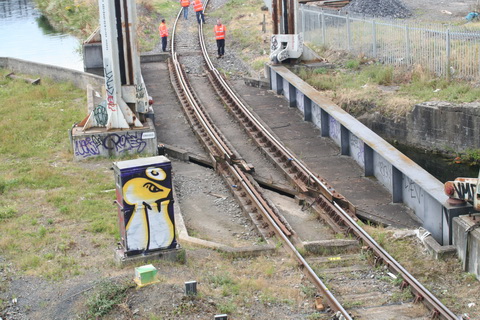
The lift itself took just over nine minutes; the bridge was up before 1044, in good time for the arrival of the boats.
The lift 9 mins 02_resize

After about one minute

The lift 9 mins 08_resize

Another minute later

The lift 9 mins 11_resize

Another minute (or so)

The lift 9 mins 15_resize

About four minutes have elapsed

The lift 9 mins 18_resize

After five minutes. The sides are clear of the water in which they usually rest; they are dripping on to the canal below
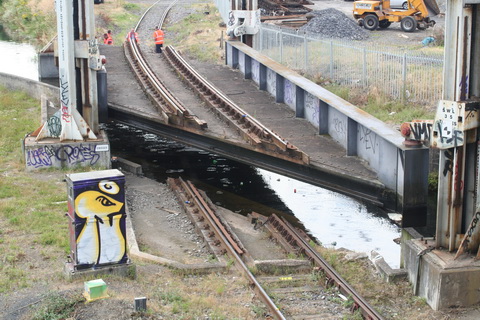
The lift 9 mins 20_resize

Six minutes in

The lift 9 mins 23_resize

Seven minutes

The lift 9 mins 24_resize

The men behind the fence may be controlling the lift
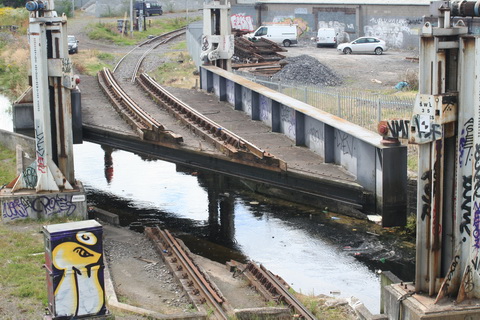
The lift 9 mins 28_resize

Not much further to go

The lift 9 mins 32_resize

Eight minutes

The lift 9 mins 40_resize

It’s up

The bridge up 16_resize

One of the jacks

After the boats passed_resize

Side view (taken after the boats had gone through)
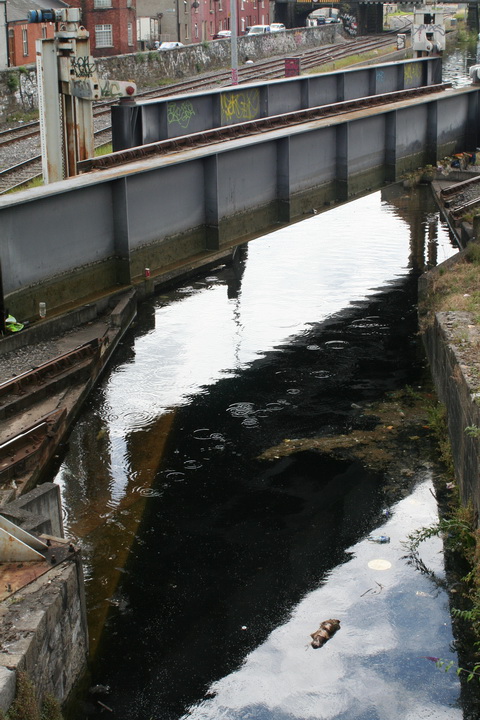
The bridge up 13_resize

Water under the bridge

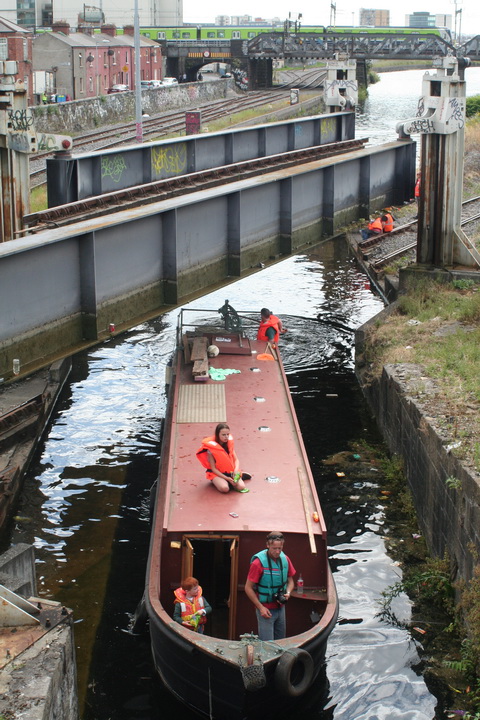
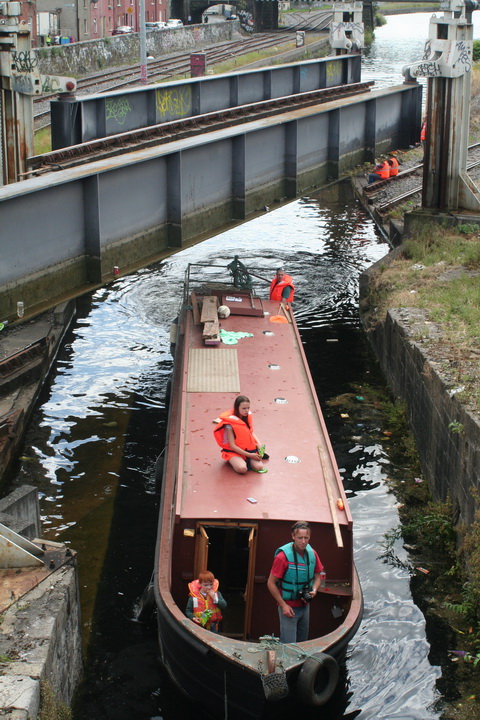
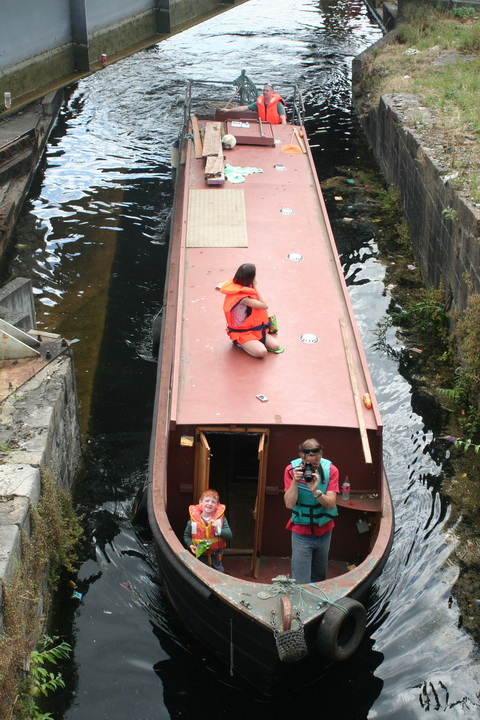
Boats go through

It took just over three minutes for the two boats to go under the bridge.
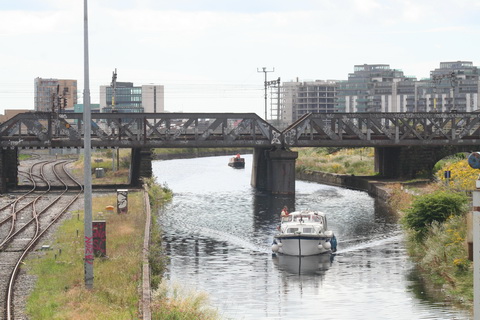
Boats approach 12_resize

Cruiser approaches; steel boat visible through the bridge
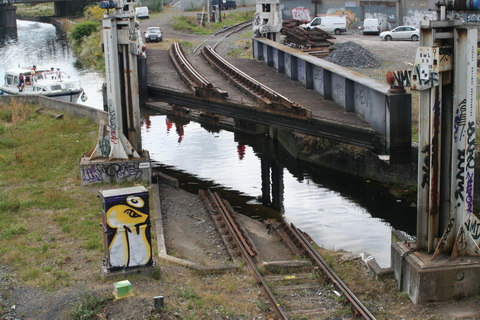
Cruiser goes through 03_resize

Cruiser about to enter

Cruiser goes through 04_resize

Heads down

Cruiser goes through 06_resize

Half way through

Cruiser goes through 07_resize

Leaving

Cruiser goes through 08_resize

Out

Steel boat goes through 12_resize

Steel boat entering

Steel boat goes through 20_resize

Almost through

Steel boat goes through 22_resize

Looking ahead to the lock

Steel boat goes through 25_resize

Done


I did not record the lowering of the bridge, which I presume took much the same time as the raising.

Preparation 5 minutes, lifting 9 minutes, passage 3 minutes, lowering and locking say another 14 minutes: say 45 minutes altogether, allowing some margin. But a large number of boats would take much longer as the rate at which they could move on from the bridge would be limited by the time taken to work through the lock.

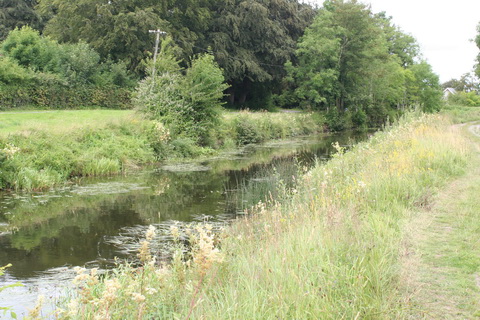


All sheugh up

Heather Humphreys [FG, Cavan-Monaghan] is to be Minister for Waterways (as well as arts and heritage).

That’s Heather Humphreys, who asked her predecessor as minister three questions about the Clones Sheugh (some of which would be in Monaghan):

21 July 2011: To ask the Minister for Arts, Heritage and the Gaeltacht if €35 million was ring-fenced for the restoration of the section of the Ulster Canal between Clones and Upper Lough Erne; if this funding was included in any budget between 2008 and 2010; and if he will make a statement on the matter.

30 January 2013: To ask the Minister for Arts, Heritage and the Gaeltacht if he will provide an update on progress on the Ulster Canal Project; and if he will make a statement on the matter.

6 March 2014: To ask the Minister for Arts, Heritage and the Gaeltacht if he will provide an update on the progress of the Ulster canal project; the work carried out to date by the interagency group which was set up to examine possible funding options; and if he will make a statement on the matter.

How could a Fine Gael minister hold back the tide of Shinners in Cavan-Monaghan? Not, I hope, by wasting public money on porkbarrel projects.


Shannon traffic figures for June


I am grateful to Waterways Ireland for letting me have the Shannon traffic figures for June 2014. All the usual caveats apply:

  • the underlying figures do not record total waterways usage (even for the Shannon) as, for instance, sailing, fishing or waterskiing on lakes or river stretches, which did not involve a passage through a lock or Portumna Bridge, would not be recorded
  • the passage records would not show, for instance, a change in the balance of types of activities from those in larger cruising boats to those in smaller (sailing, fishing, waterskiing) boats
  • figures like these, for a small number of months, will not necessarily be representative of those for the year as a whole. The winter months, January to March, see little traffic in any year; for April, May and June, the weather can have a large influence on the amount of activity especially, I suspect, in private boats.

On the other hand, the figures do include the Shannon’s most significant tourism activity, the cruiser hire business. And they are our only consistent long-term indicator of usage of the inland waterways.

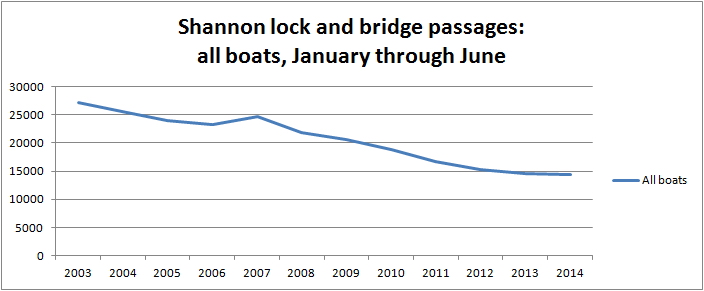
Total (private + hired) traffic for the first six months of each year

Total (private + hired) traffic for the first six months of each year

Total traffic is down again, but only slightly. The decline does seem to be levelling off and a continuation of the relatively good weather could increase usage.

SnnNav JanJun 2

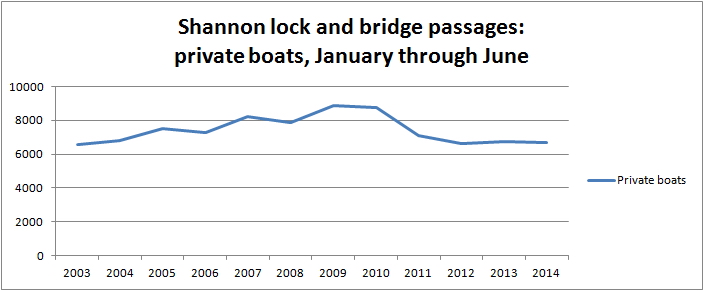
Private-boat traffic for the first six months of each year

Private traffic is down slightly on last year, but it has been pretty much the same for three years. I had thought that the good weather might have caused something of an increase, but on the other hand my own impression of Lough Derg traffic (not reflected in the passage figures) is that it has been fairly light.

SnnNav JanJun 3

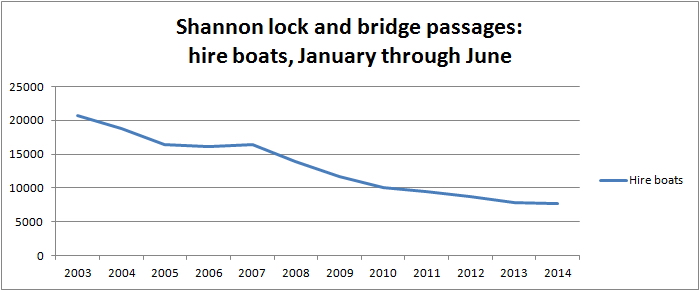
Hire-boat traffic for the first six months of each year

For hire-boat traffic, there is no sign of an upturn, although the drop on last year’s figures is not very large.

SnnNav JanJun 4

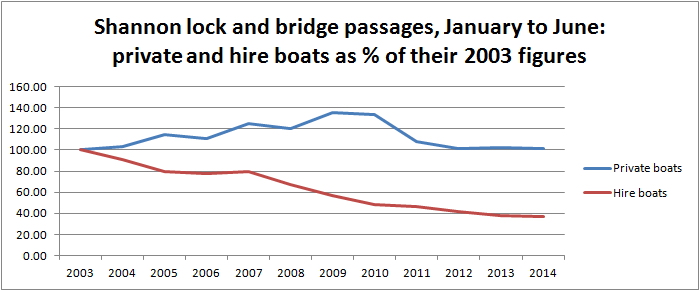
Changes since 2003: private and hired boats

That table amalgamates the two before it, but shows the figures as percentages of the 2003 figures. For private boats, the Celtic Tiger (nach maireann) caused an increase; that effect has worn off and usage has not changed much since about 2011. For hired boats, the decline began long before the Celtic Tiger idiocy.

SnnNav JanJun 5

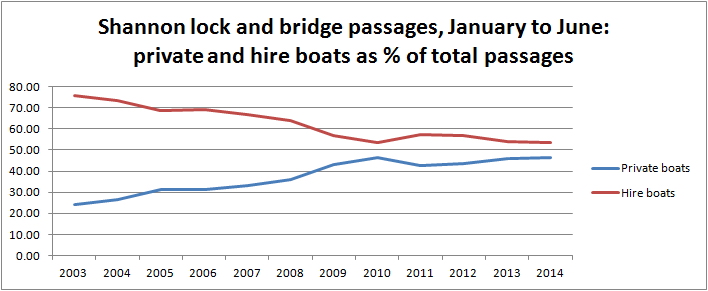
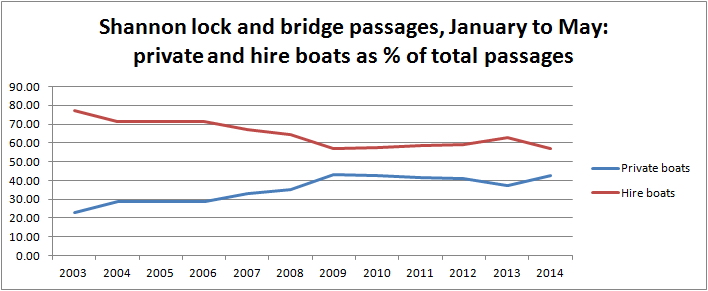
From 75/25 to 50/50

Hired boats were once the major users; private boats have almost caught up.

SnnNav JanJun 6

How to save money

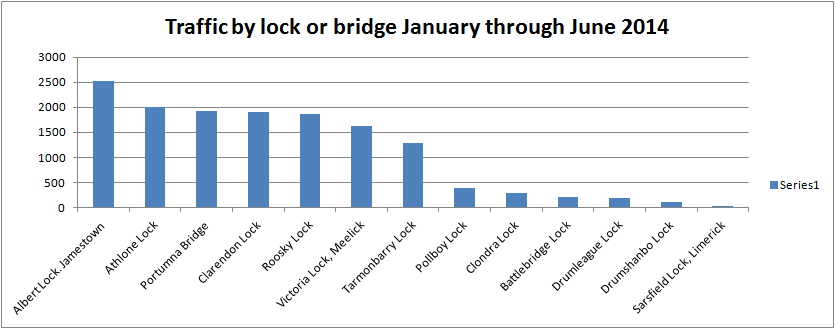
I don’t know how much the various locks cost to run, so I can’t work out any measure of value for money, but the sea lock in Limerick and the Lough Allen Canal must surely be candidates for the chop.


The OPW’s 1969 restoration of Richmond Harbour and the Clondra Canal

Read about it here.

Dear Mr Bannon

I would be grateful if you could explain why any government in its right mind would restore the Longford branch of the Royal Canal given that (a) canal traffic in Ireland is so small as to be insignificant, (b) the upkeep of the Royal’s main line is causing severe budgetary strain and (c) the Irish hire boat industry is in decline.

If you have conducted any analyses of the costs and benefits of such restoration, I would be grateful if you would publish them.

bjg

Note: Mr Bannon is a Fine Gael TD. But that’s no excuse.


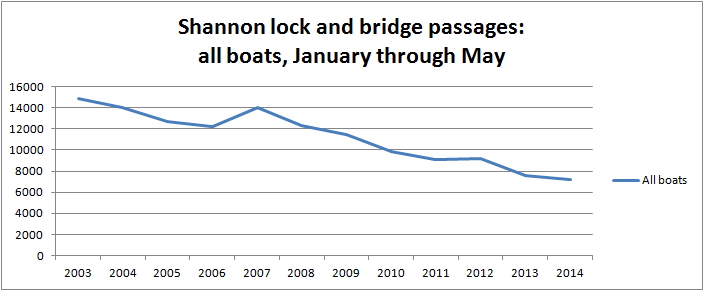
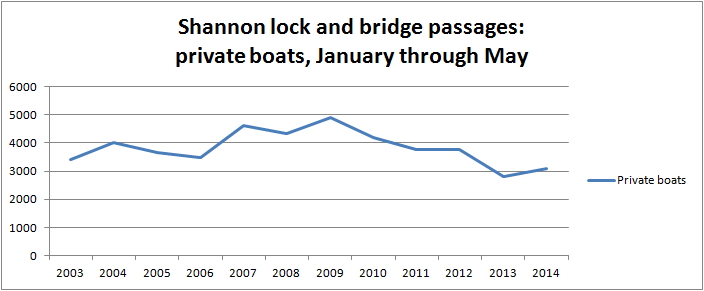
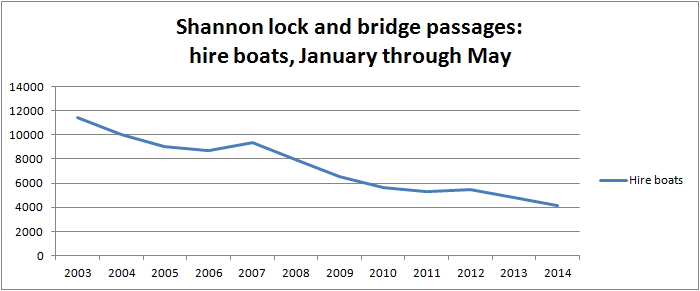
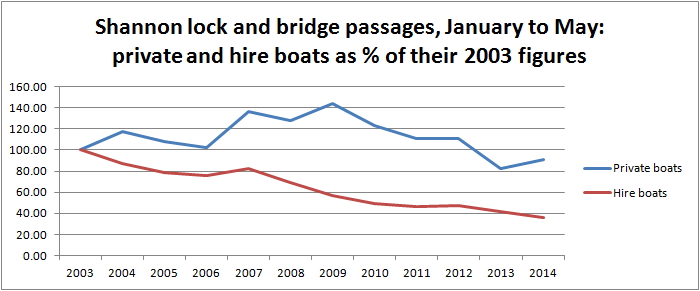
Shannon traffic to May 2014

I am grateful to Waterways Ireland for letting me have copies of the recorded numbers of boat passages through Shannon locks and Portumna Bridge for the first five months of 2014. All the usual caveats apply:

  • the underlying figures do not record total waterways usage (even for the Shannon) as, for instance, sailing, fishing or waterskiing on lakes or river stretches, which did not involve a passage through a lock or Portumna Bridge, would not be recorded
  • the passage records would not show, for instance, a change in the balance of types of activities from those in larger cruising boats to those in smaller (sailing, fishing, waterskiing) boats
  • figures like these, for a small number of months, will not necessarily be representative of those for the year as a whole. The winter months, January to March, see little traffic in any year; for April and May, the weather can have a large influence on the amount of activity especially, I suspect, in private boats.

On the other hand, the figures do include the Shannon’s most significant tourism activity, the cruiser hire business. And they are our only consistent long-term indicator of usage of the inland waterways.

Shannon passages May 2014 01


The total amount of traffic continues to decline.

Shannon passages May 2014 02

Private-boat traffic is still below its average for the period but increased slightly on the same period of the previous year [but see the third caveat above].

Shannon passages May 2014 03


Hire-boat traffic is just over one third of its 2003 level.

Shannon passages May 2014 04


Since 2003, both private and hired traffic have fallen, from the highest figures attained within the period, by about 60% of the 2003 figure. But private traffic first rose by 40% of the 2003 figure, so it is now only about 20% below that figure. Hire traffic has fallen pretty consistently since 2003.

Shannon passages May 2014 05


Hire traffic is usually greater than private traffic between April and October (roughly speaking), but the gap is closing.

Carál Ní Chuilín, NI’s [SF] waterways minister, said the other day:

Waterways Ireland delivered a presentation to Ministers entitled ‘Ireland’s Inland Waterways — Building a Tourism Destination’. The presentation provided an overview of the progress that Waterways Ireland is making in placing waterways and the waterway experience at the centre of the tourism offering in Ireland and internationally.

And a good thing too, but the waterways need new water-based tourism products to complement, and perhaps to replace some of, the hire-boat cruising business. Opening new waterways — Royal Canal, Longford Branch, Ulster Canal, Kilbeggan Branch or anything else — is a waste of money until demand, domestic and visitor, private and hired, exceeds existing capacity.


NSMC explained

I reported here on April’s meeting of the North-South Ministerial Council (inland waterways flavour). I wasn’t there, though, and Carál Ní Chuilín was. Here is her account of the meeting, as explained to the Northern Ireland Assembly yesterday. There is much of interest, including the prospect of new byelaws on the Erne.

Members of the free state parliament don’t, as far as I know, get similar briefings.

It is slightly disconcerting to note that Jim Allister, the Traditional Unionist Voice MLA, seems to be the only person on the island, apart from me, to worry about delays in approving Waterways Ireland’s budgets.


Euroloot for the Clones Sheugh?

According to today’s Irish Times [which will disappear behind a paywall at some stage]

EU seeks feedback on plans to invest €500m in North and Border counties.

For full information, go to the SEUPB website. The Consultation Information Document [PDF may open or download as soon as you click] is the more useful and most readable document, but there are several others, including drafts of the PEACE and INTERREG Cooperation Programmes.

I have not myself been initiated into the Mystical Brotherhood of Euroloot Interpreters, so I can’t be sure, but I don’t think that either of these programmes contains, or could contain, anything that could fund the Clones Sheugh. It is difficult to see how a Sheugh-related action could be made to fit any of the objectives of either programme. But who knows what Fine Gael’s desperation might drive it to do? It faces the threat, in Monaghan, that the Shinners might arrive from Stormont bearing money from Her Majesty’s Treasury [NI branch office].


Who writes this stuff?

The National Inventory of Architectural Heritage on the Black Bridge at Plass[e]y and on Baal’s Bridge in Limerick.
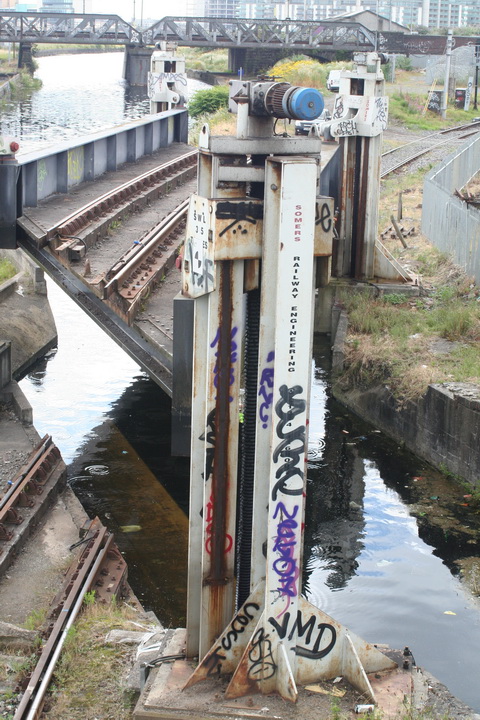
It would be nice if the NIAH provided reliable historical information.