Tag Archives: Limerick

Piscator, Navita and Shannon navigation rights

I was never any good at fishing. The only time I ever caught anything was when fishing for mackerel with feathers from a boat, which is [I gather] the equivalent of shooting fish in a barrel [surely a pointless exercise: if you wanted to catch or kill them you could just let the water out of the barrel].

My knowledge of angling comes, therefore, almost entirely from two sources. The first is observation: from the comfort of a boat, I’ve seen anglers along riverbanks, huddled under umbrellas in the rain, miles from any amenities. They don’t seem to be having a lot of fun, but that is no doubt because they “affect a holy melancholy”, as explained in my second source.

Izaak Walton begins his The Compleat Angler or the Contemplative Man’s Recreation, being a Discourse of Rivers, Fishponds, Fish, and Fishing [a 1904 edition available here] with a friendly argument between Piscator, Venator and Auceps, each lauding his own pastime. They cite learned authorities, refer to scripture and quote poets at length before refreshing themselves at the Thatched House.

Then Venator, having become an apprentice angler, learns “How to Fish for, and to Dress, the Chavender or Chub” and many another fish, pausing to hear Maudlin, the milkmaid, sing her song and her mother sing a response. After a supper of barley-wine and trout, Piscator, Venator and two more anglers, Peter and Coridon, sing more songs, including The Angler’s Song, which includes this stanza:

Of recreation there is none
So free as fishing is alone;
All other pastimes do no less
Than mind and body both possess;
My hand alone my work can do,
So I can fish and study too.

Towards the end of the book’s first part [the second being written by Charles Cotton], Piscator recites a poem attributed to Sir Harry Wotton, this being the last stanza:

Welcome, pure thoughts, welcome, ye silent groves,
These guests, these courts, my soul most dearly loves;
Now the wing’d people of the sky shall sing
My cheerful anthems to the gladsome spring;
A prayer-book, now, shall be my looking-glass,
In which I shall adore sweet virtue’s face,
Here dwell no hateful looks, no palace cares,
No broken vows dwell here, nor pale-faced fears; Then here I’ll sit, and sigh my hot love’s folly,
And learn t’affect a holy melancholy;
And if contentment be a stranger, then
I’ll ne’er look for it, but in heaven, again.

They don’t write ’em like that any more.

Piscator iratus

I had assumed that this blend of contentment and holy melancholy characterised the anglers of today. But when, having visited the excellent website of the Limerick and District Anglers Association, I moved instead to their FaceTweet page, I found that the modern angler’s lot is not a happy one. The angler has to contend with the iniquities of the Electricity Supply Board [which owns fishing rights on the Shannon], Inland Fisheries Ireland  [whose role on the Shannon I know not] and, now, kayakers.

In discussion of another post on the subject, the Association said:

Therefore canoeists who enter this section of river without permission are trespassing.

That interested me, and I thought I should look further into navigation rights on the Shannon. [Update 10 June 2015] I have posted my interim conclusions here.

There is a second point. The Old River Shannon Research Group repeated the kayaking topic on its FaceTweet page with this comment:

This is a commercial company trying to turn the Castleconnell beats into something like Lahinch has become with surfers. See their website here. This type of “development” requires Appropriate Assessment.

I am most reluctant to disagree with the learned Dr William O’Connor on anything, as he knows far more than I do about environmental matters, but his comment raised a second topic of interest and I thought I might look into that too. Again, I’ll post separately on that.
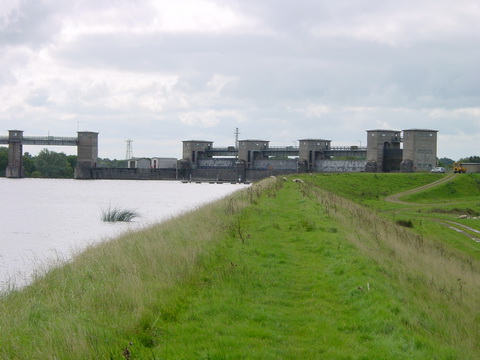
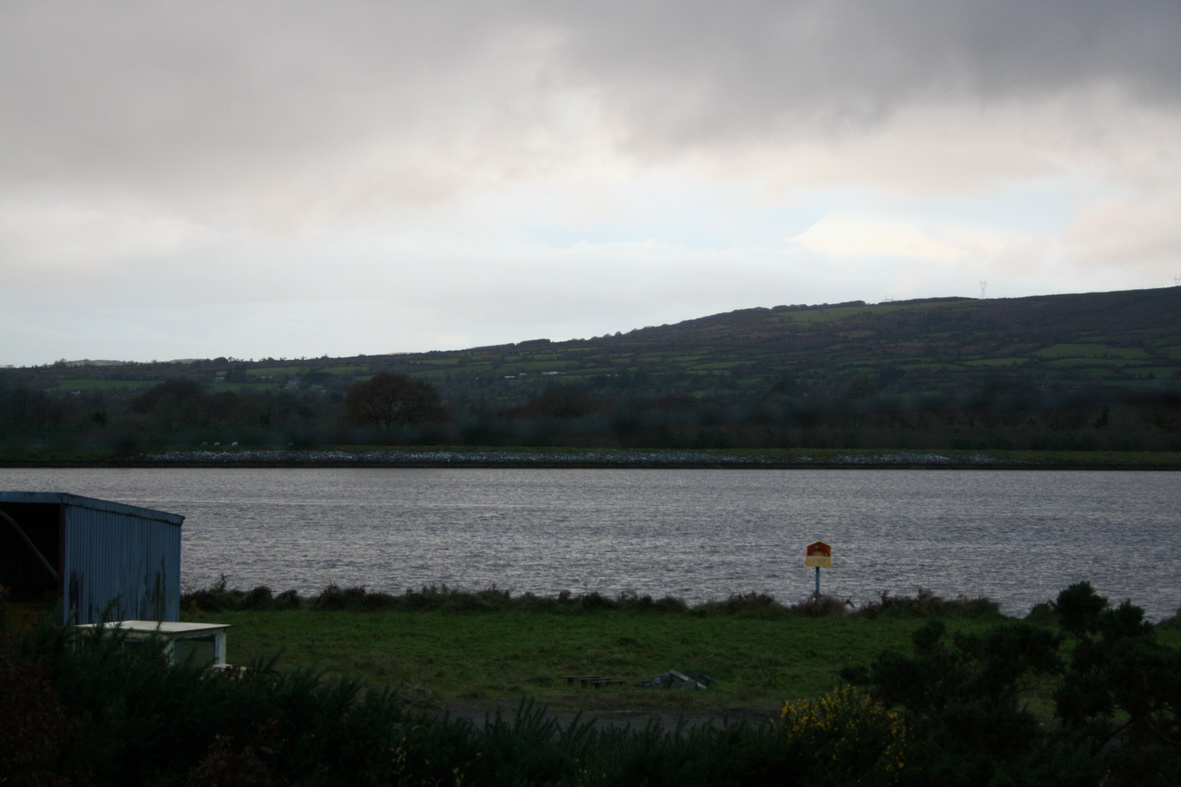
Please don’t look at these photos

I regret to say that I have published, on these pages, several photos of the Shannon, Parteen Villa Weir, Ardnacrusha hydroelectric power station and its headrace and tailrace canals.

The storage basin between the road bridge over the River Shannon at Killaloe and the weir and canal intake at Parteen, including the right and left embankments constructed to form the said storage basin, together with the land outside and along the said right embankment delimited and separated from the adjoining land by post and wire fencing and also the land outside and, along the said left embankment delimited by the left bank of the Kilmastulla River Diversion.

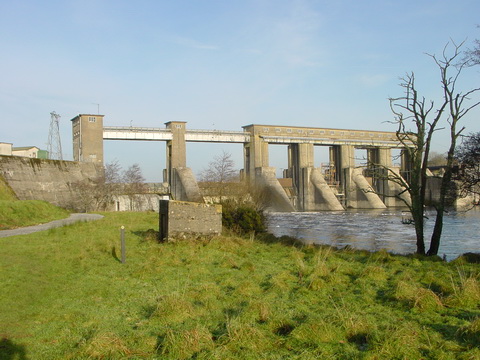
Parteen Villa Weir from the embankment upstream (2008)

Parteen Villa Weir from the embankment upstream (2008)

The flooded area above Parteen Villa Weir

The flooded area above Parteen Villa Weir

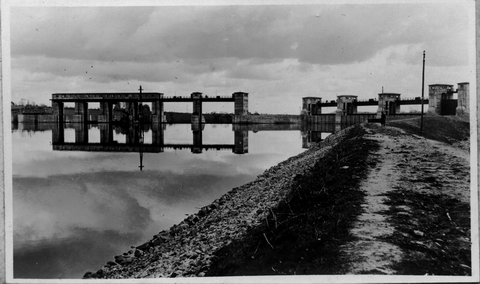
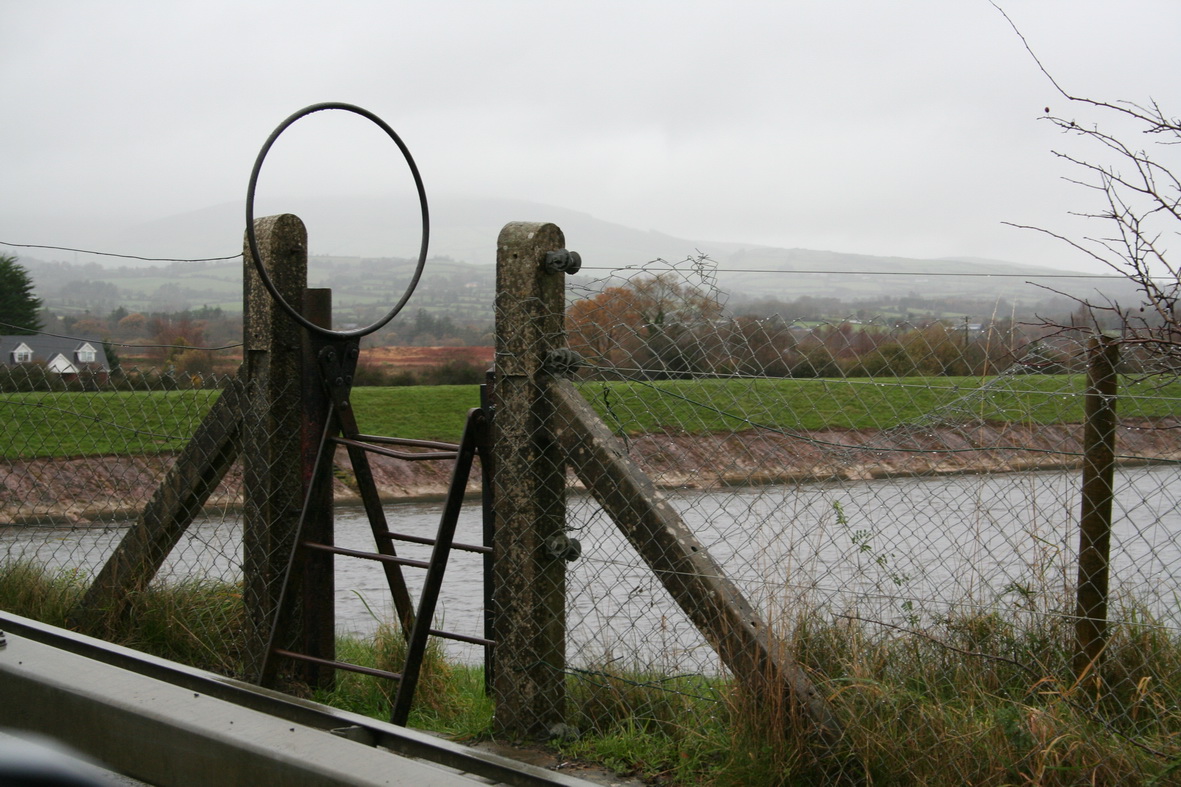
The weir and canal intake, the embankments constructed to form abutments to the said intakes, the syphon under the said canal intake, and adjoining lands inside and bounded by post and wire fencing.

Parteen Villa Weir

Parteen Villa Weir

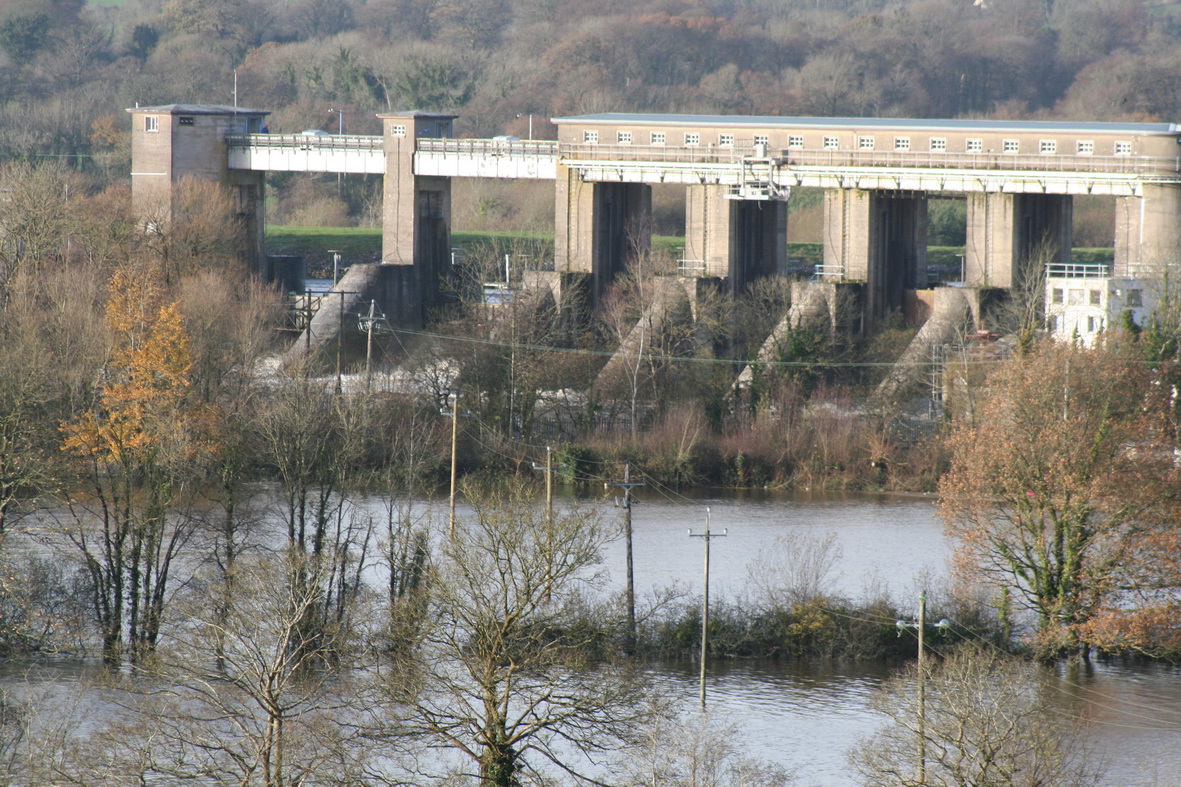
Parteen Villa Weir from upstream

Parteen Villa Weir from upstream

The six sluices controlling discharges down the old course of the river

The six sluices controlling discharges down the old course of the river

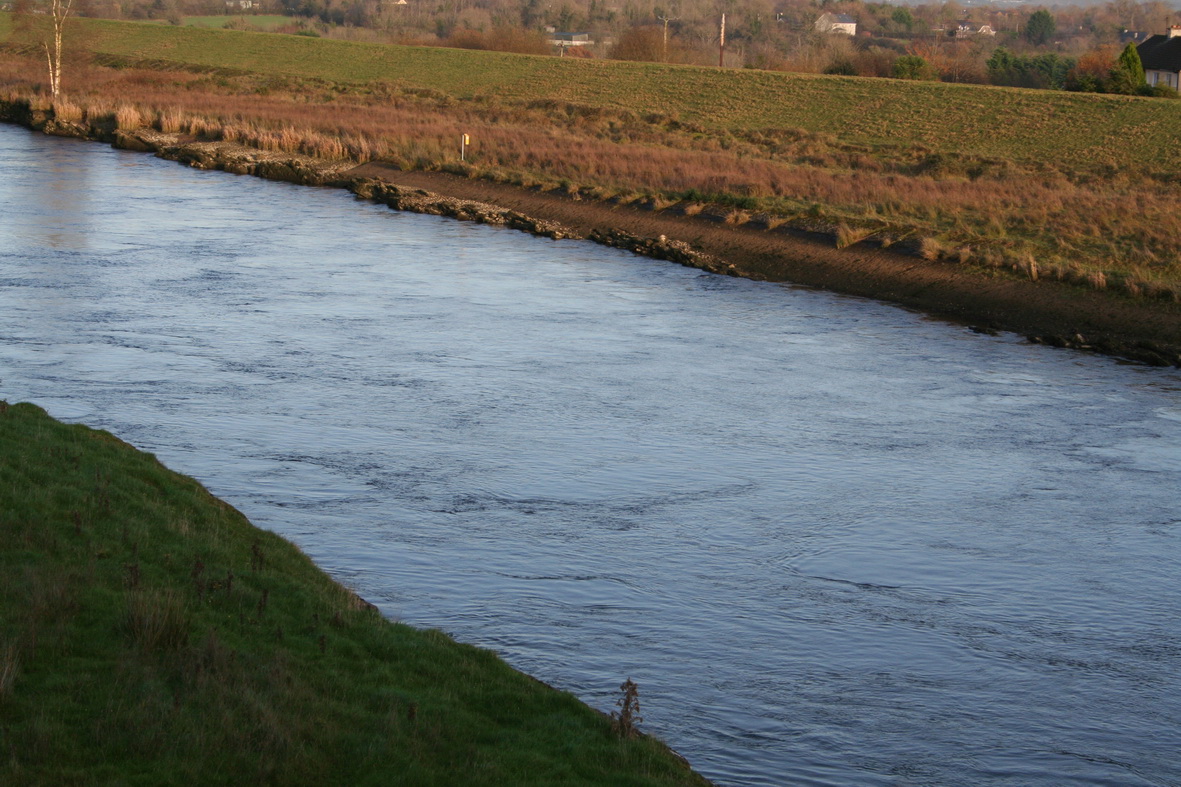
The head race between the canal intake and the power station including the right and left embankments constructed to form the said head race, together with the land outside and along the said embankments delimited and separated from the adjoining land by post and wire fencing, and also the road bridges over and the syphons and culverts under the said race.

The headrace from the bridge at Clonlara 20 November 2009

The headrace from the bridge at Clonlara 20 November 2009

The headrace from the bridge at O'Briensbridge 22 November 2009

The headrace from the bridge at O’Briensbridge 22 November 2009

The power station, the intake to the said power station, the locks and all adjoining buildings and land within the area around the said power station, all of which are delimited and separated from the adjoining land by post and wire fencing.

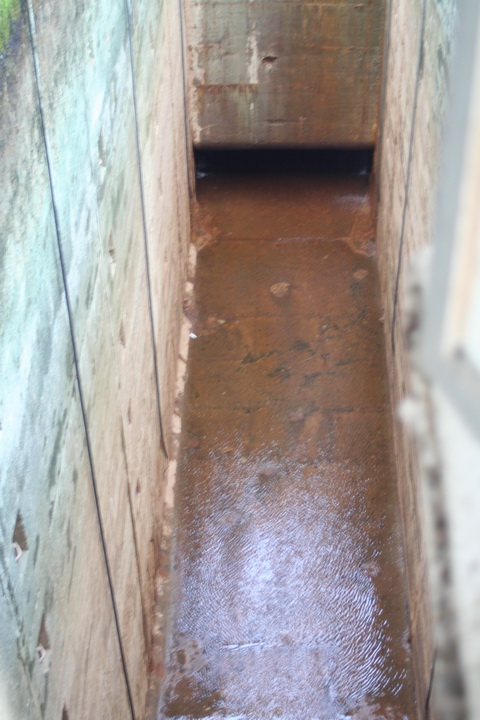
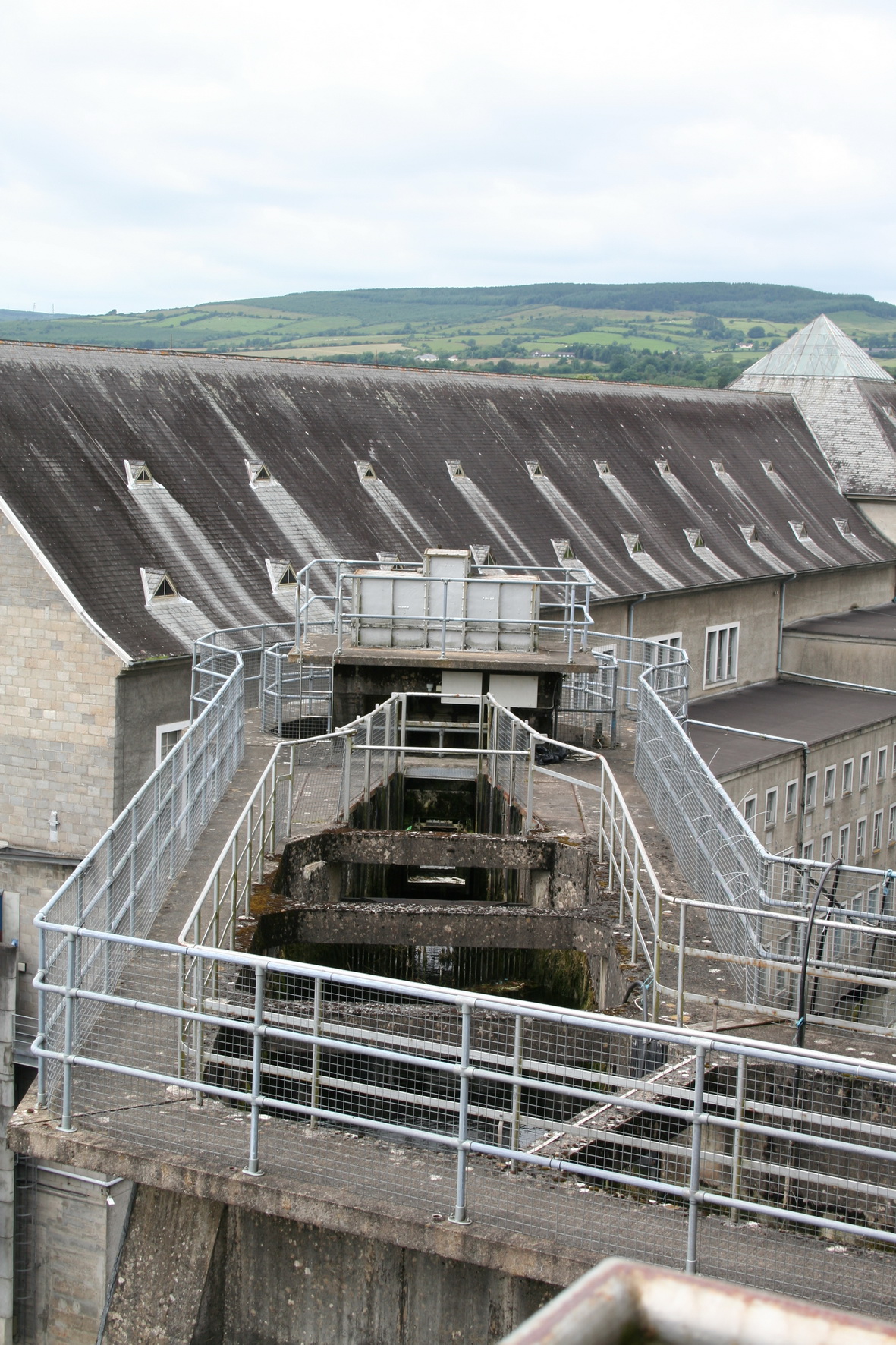
The upper chamber at Ardnacrusha lock

The upper chamber at Ardnacrusha lock

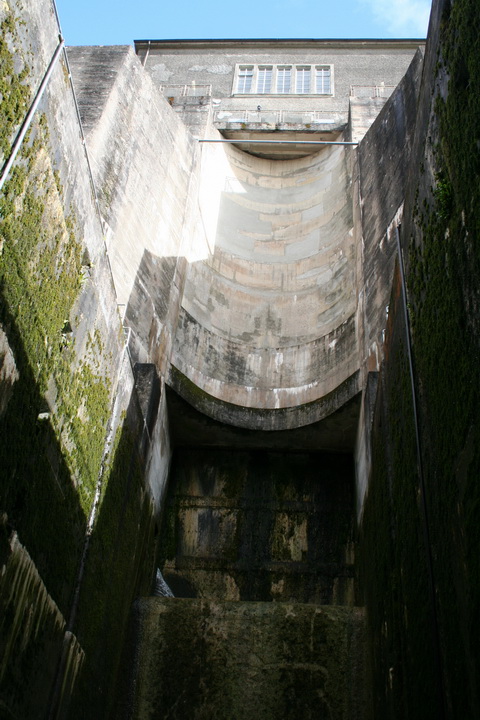
Ardnacrusha: looking up at the top chamber from the bottom

Ardnacrusha: looking up at the top chamber from the bottom

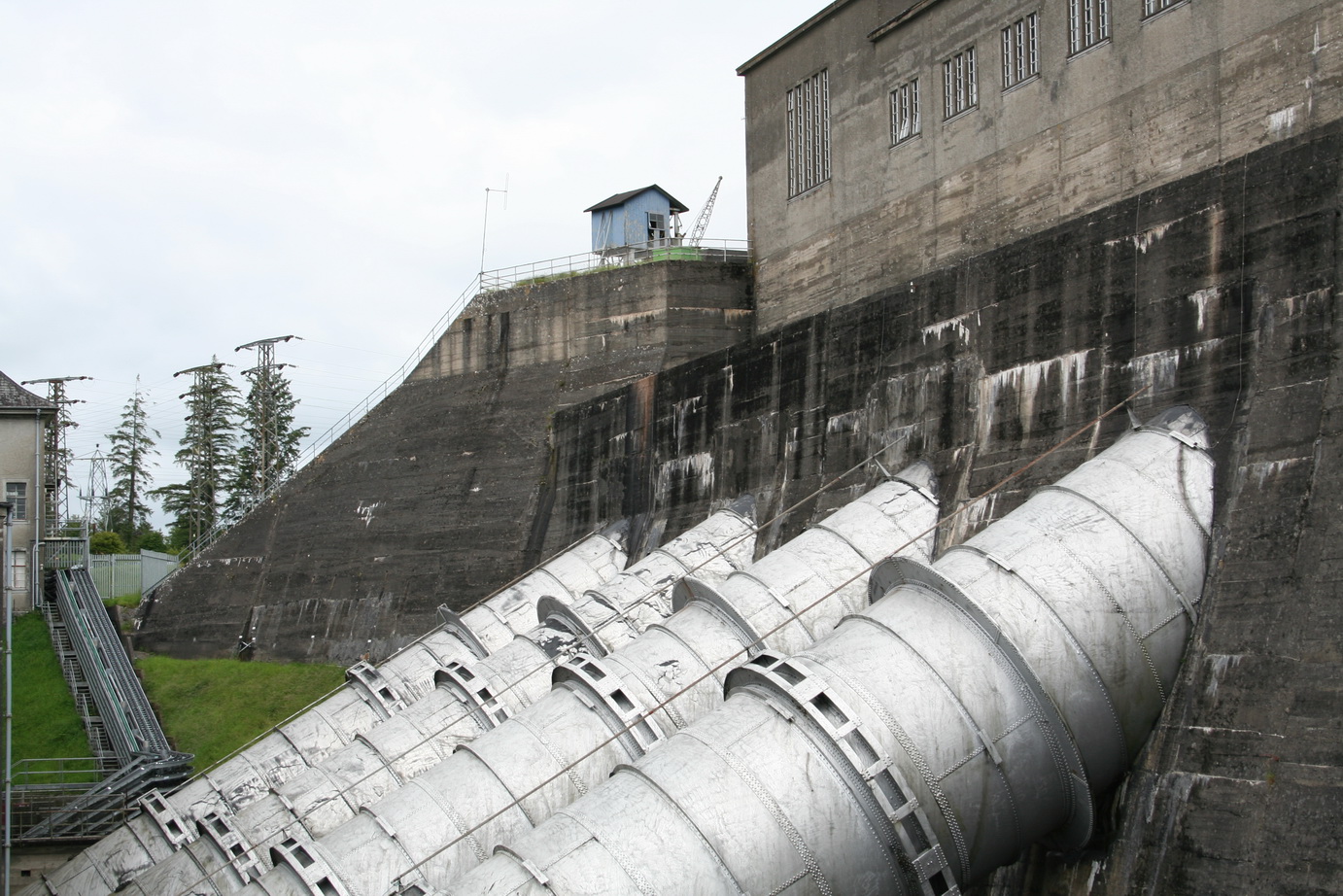
The penstocks that feed the turbines at Ardnacrusha

The penstocks that feed the turbines at Ardnacrusha

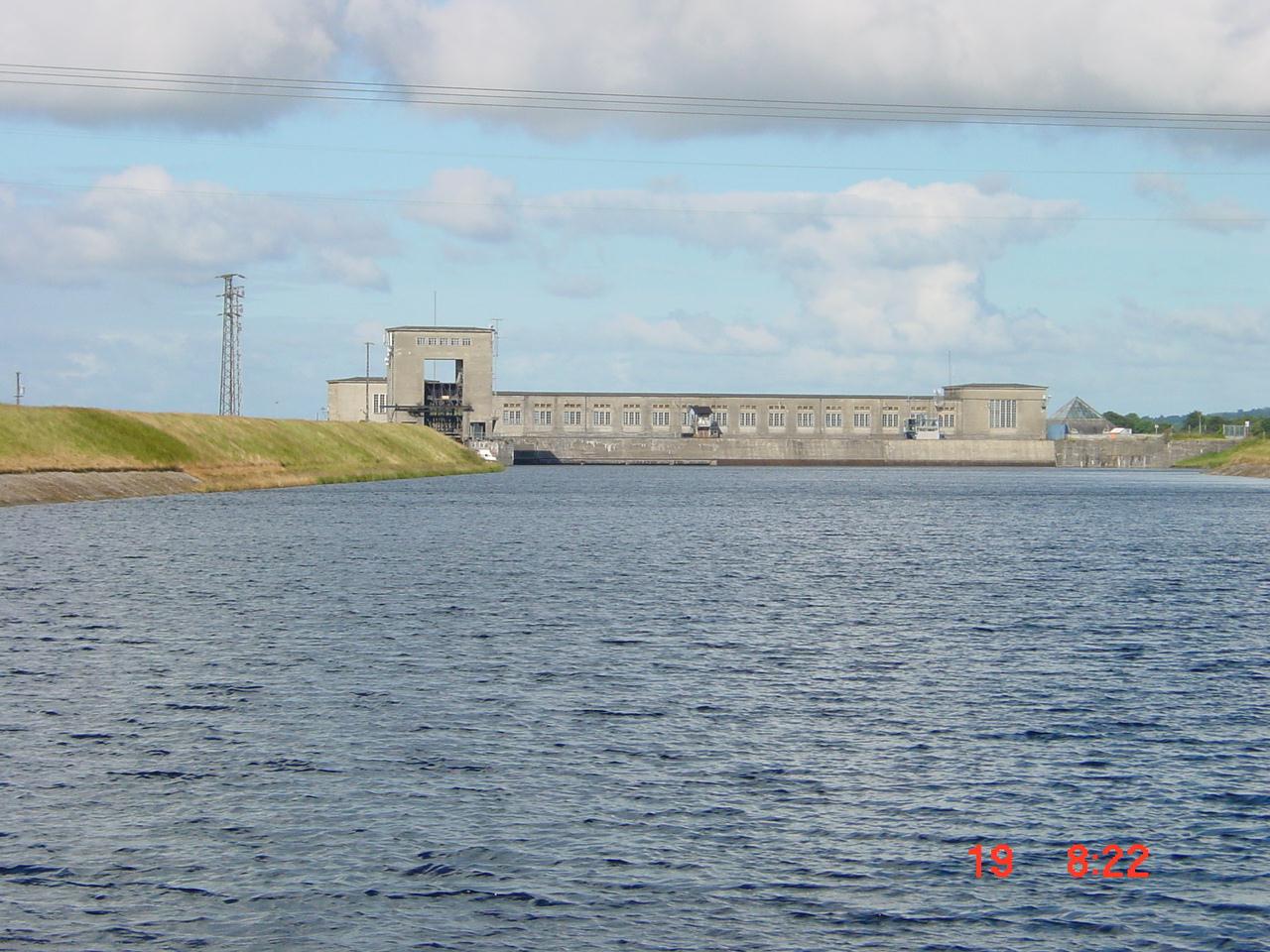
Ardnacrusha power station from the headrace

Ardnacrusha power station from the headrace

The fishpass

The fishpass

The tail race from the power station to the River Shannon, the branch railway running along the said tail race, and the land on either side of the said tail race, all of which are delimited and separated from the adjoining land by post and wire fencing.

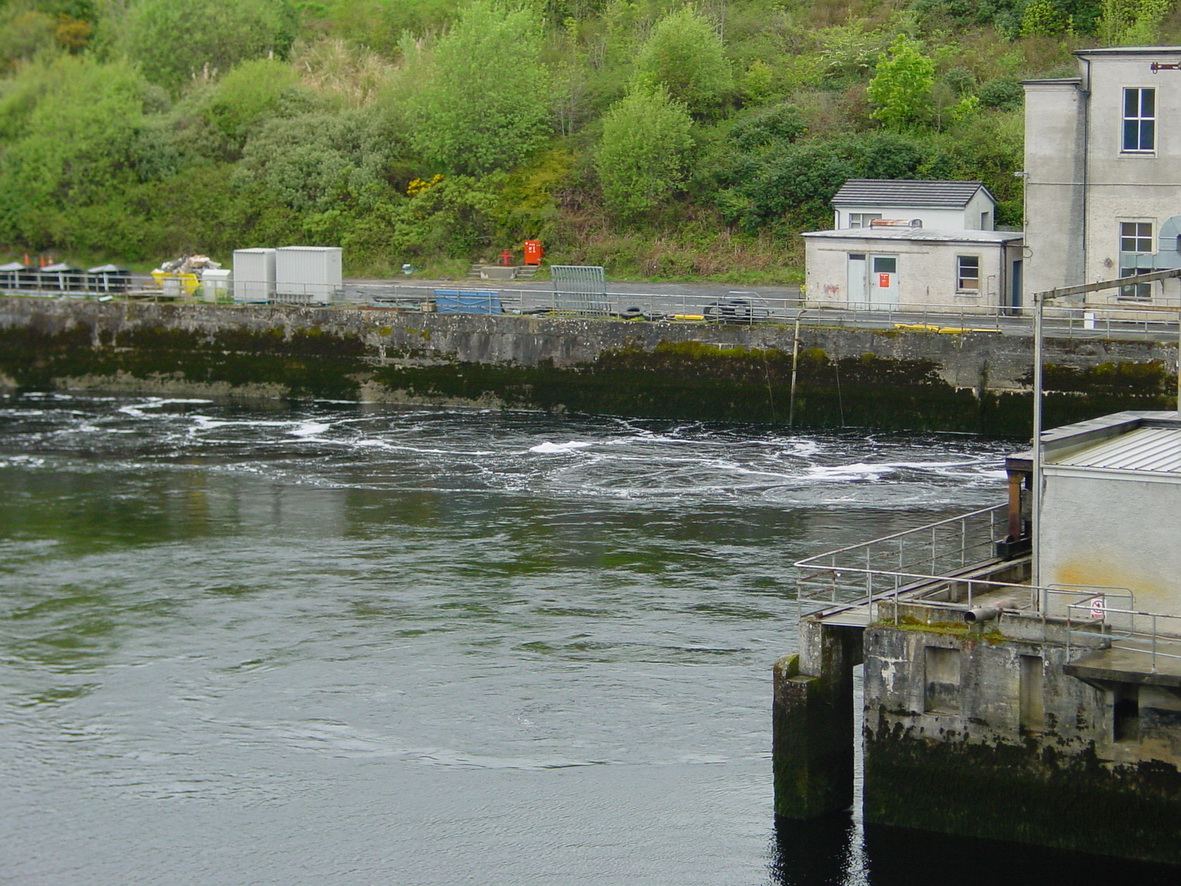
Outflow

Outflow

And I have lots more photos … here and here and here, which I ask readers not to look at either.

You see the thing is, Your Honour, Sir, I didn’t know. I didn’t realise that, under Statutory Instrument 73 of 1935 Shannon Electricity Works (Declaration of Prohibited Place) Order 1935, the places as described are prohibited places under paragraph (d) of Section 3 of the Official Secrets Act 1911, as amended by the Official Secrets Act 1920, and as adapted by or under the Adaptation of Enactments Act 1922 (No 2 of 1922). That’s because

information with respect thereto, or the destruction or obstruction thereof, or interference therewith, would be useful to an enemy.

Apparently, under those acts, giving anyone information about a prohibited place is a felony, punishable by imprisonment for up to fourteen years.

Wikipedia says that, in Ireland, those acts were repealed by the Official Secrets Act 1963, but was the statutory instrument repealed? I don’t know, but I’ve written to the Department of Justice to ask.

In the meantime, please don’t look at the photos, especially if you’re a Foreign Agent: a term that, under the 1963 act,

includes any person who is or has been or is reasonably suspected of being or having been employed by a foreign power either directly or indirectly for the purpose of committing an act (whether within or outside the State) prejudicial to the safety or preservation of the State, or who has or is reasonably suspected of having (whether within or outside the State) committed or attempted to commit any such act.

I wonder whether that includes the European Central Bank.

Chains at the Black Bridge

It seems that the city edition of the Limerick Leader dated Saturday May 16 2015 carries a story saying that funding has been approved for the repair of the Black Bridge at Plassey. I can’t find the story on the Leader‘s website and I can’t find anything about it anywhere else [there is a limit to the amount of my life I am willing to spend trying to find anything on the Limerick Council website] except on the Leader‘s FaceTweet page, where I can expand the city edition front page.

There is a photo of several councillors, which of course is wonderful: no day is wasted if it offers an opportunity of looking at a photo of local councillors, especially important ones with chains.

From what I can read of the text, it seems that “councillors in City East” [which is not one of the Limerick districts listed here] are willing to spend €50,000 “to start work to make the walkway safe again”. And they hope that Clare County Council, the University of Limerick and Waterways Ireland will “also row in behind the project”.

Now, half a loaf is better than no bread, and €50,000 is better than a poke in the eye from a blind horse, but it’s not going to go very far towards the cost of repairing the Black Bridge. I don’t known whether it would even cover the cost of a full survey.

I’m sure that Waterways Ireland would be delighted to help, if the Department of Fairytales hadn’t raided its coffers to pay for Saunderson’s Sheugh. I have reason to believe that the university was willing to help — and that Clare County Council was not. I submitted a Freedom of Information request to the university, asking it for [recent] records relating to the Black Bridge. The university gave me three extracts from meetings of the Limerick Smarter Travel Steering Group:

9 January 2013
Funding not in place for Black Bridge

21 November 2013
Black Bridge: UL indicated that funding may be available from UL. LST [Limerick Smarter Travel] has indicated funding in the order of €100,000. UL may be able to mach [sic] this. Request for funding to be made formally to UL by LCCC and to include surveys and reports on bridge to date.

18 September 2014
RR said UL have set aside €100,000 towards Black bridge refurbishment but will need matched funding from LA [presumably local authority]. Black bridge will require a detailed study to identify what repair work will need to be carried out, also an AA study will be required, and proper consents from ABP [An Bord Pleanála?]. Funding currently not available from LA.
PON spoke to Clare Co Co. No funding available from them.
PC Department will not fund a pedestrian bridge.
RR can we look for alternative funding options, UL will ring fence for the moment.

An AA study is, I think, an Appropriate Assessment, a sort of employment creation scheme for bird-watchers who can read European directives [and sooner them than me].

The point to be remembered here is that Limerick County Council leased the bridge and undertook to keep it in repair; there is no obligation on Waterways Ireland, Clare County Council or the University of Limerick to spend a penny on it. The two parties on whom lies the responsibility for repairing the bridge are the Limerick Council and the Department of Finance, which latter has the power, under the lease, to do the work and charge it to the council. That would be a better use of its time and money than an unnecessary and intrusive footbridge in the middle of Limerick.

Riverfest in Limerick

Riverfest is an annual, er, happening in Limerick. I don’t know much about it: I’ve never been because I dislike both crowds and festivals and it would take something remarkably interesting to outweigh my dislike and persuade me to attend any part of the thing. I took notice of this year’s event only because I wanted to find out what streets would be closed to traffic; the festival organisers did not, alas, think to provide a map showing the closures.

I have only two other comments on the event:

  • the brochure [PDF] mentions a workshop called “Craft a River” but doesn’t say what, or indeed where, it is
  • in a city whose history is so intertwined with that of the food industry, and which has, in the Milk Market, the best Irish market outside Cork, it seems ludicrous to import a “continental market” instead of showcasing local producers.

But I acknowledge that I am not really entitled to comment; Brian Leddin, on the other hand, has a better informed view.

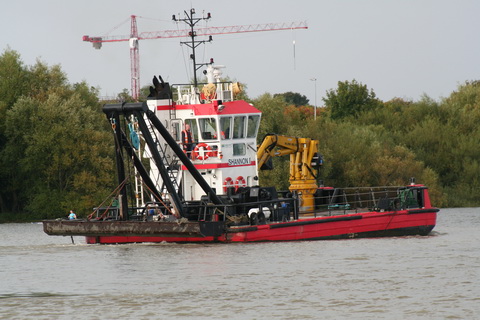
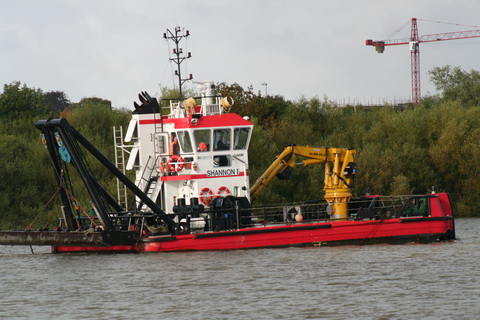
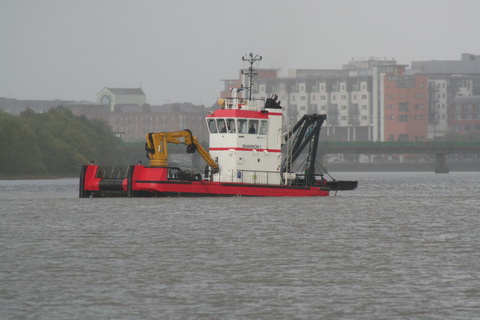
The Shannon One

Copy of IMG_4546_resize

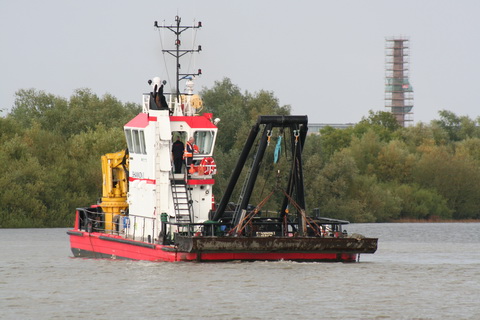
Heading down the estuary past Shannon Airport

Limerick Port dredger Shannon I 3_resize

Working in Limerick

Limerick Port dredger Shannon I 4_resize

Almost as much kit as WI’s Swiss Army Knife

Limerick Port dredger Shannon I 5_resize

The big crane, though, is not part of the kit

Limerick Port dredger Shannon I 7_resize

Great view from the cab … er, wheelhouse

Limerick Port dredger Shannon I 11_resize

Pusher bow?

Limerick Port dredger Shannon I 1_resize

Limerick in the background

Limerick Port old dredger Curraghgour II 3_resize

Shannon 1’s predecessor Curraghgour II


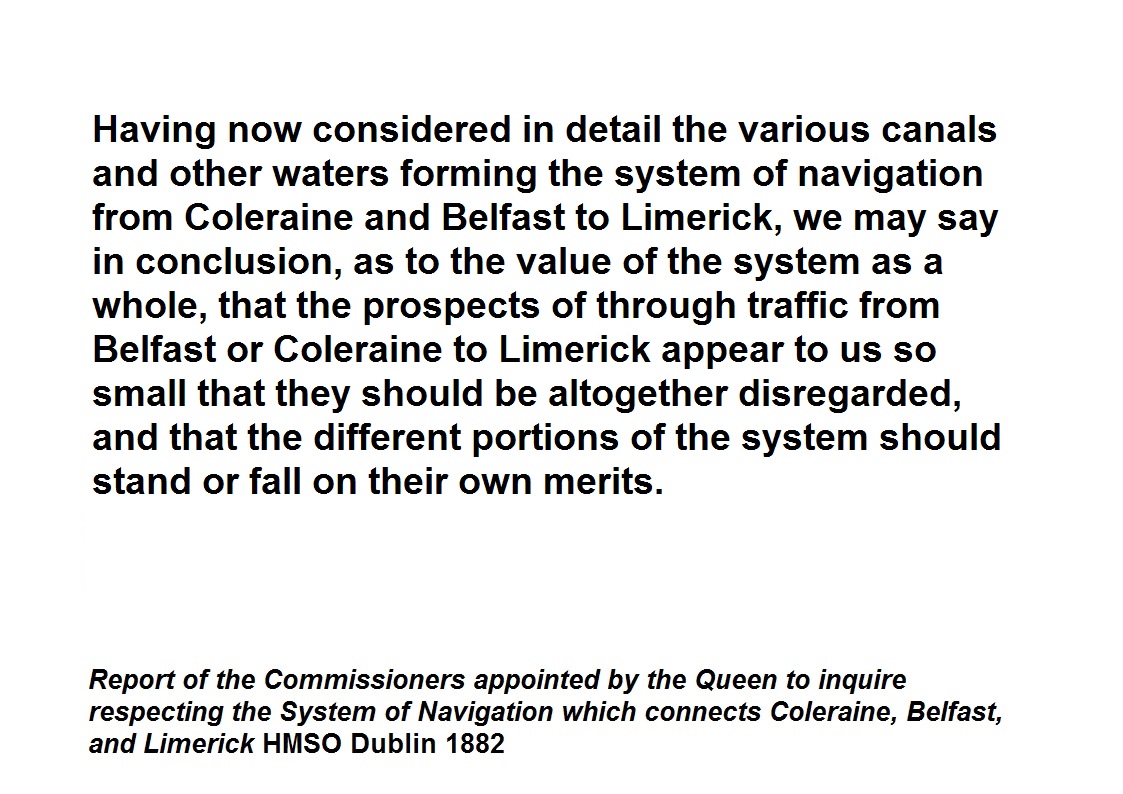
How true these words are …

… even today.

Connected system

Limerick flooded again

The waves covered the quays in some places to a depth of three and four feet, and rolled in to the adjoining streets with resistless fury. Shannon-street, Charlotte’s Quay, and the Mall were completely inundated, and in the corn stores on Honan’s-quay, Harvey’s quay, &c, the water reached a height of four feet in some instances.

I already had a page about the floods in Limerick in November 2009; here is an account of the floods in Limerick in 1850.

Navigations under threat

Limerick City & County Council [why don’t they shorten it to Limerick Council?] is examining options for an improved road from Limerick to Foynes, which is the main port on the Shannon Estuary. The options are set out on this website and you can download a PDF map that makes it easier to see the details.

The Red Route would cross the Deel Navigation just below Askeaton: the existing route does the same so there might not be any extra interference with the navigation. But the Red Route would also cross the Maigue and the Blue Route would do so just below the new quay at Adare. No doubt the Adarians would welcome a bypass but I imagine that some will be watching to ensure that navigation on the Maigue is not impeded.

Meanwhile we learn that some folk and some other folk want the railway line from Foynes to be reinstated. I have no idea why they think that’s a good idea: it’s not as if there were vast piles of incoming freight piled up at Foynes, unable to be shifted by road. Rip up the tracks and make a greenway, that’s what I say.

Shannon history

Folk interested in the history of the Shannon Navigation, and in particular in the work of the Shannon Commissioners in the 1840s, may like to get hold of an article “Steam, the Shannon and the Great British breakfast”, published in the Journal of the Railway & Canal Historical Society Vol 38 Part 4 No 222 March 2015.

What DAHG knows about waterways history

Commercial traffic on all waterways in Ireland ended during the first half of the 20th century.

For certain values of “half”.