Tag Archives: vessels

Reading list

Waterways Ireland has been putting out more and more stuff on its website.

If you haven’t already seen them, you can get the full set of Product Development Studies, in PDF format, here.

Even more interesting, to this site, are the waterway heritage surveys. Those for all waterways other than the Shannon are available here. The Shannon study was done some years ago (I remember making some comments on it at the time) and will be uploaded “in due course”.

I was in a WI office yesterday and had a quick look at the Lower Bann survey, which was done by Fred Hamond (so we know it will be good), and I’m looking forward to learning more about the waterway I know least about. It is done thematically and has lots of illustrations: Fred is able to see and present the bigger picture, but a full database, with all the supporting information, is available on request.

Grace’s Guide and the Brunswick Dockyard

William Watson, of the City of Dublin Steam Packet Company, held patents for a double canal boat, capable of being shortened to pass through locks, and for a form of composite construction for boats, with iron ribs and wooden planking. I found recently that at least one composite boat was built for the CoDSPCo at the Brunswick boatyard in Ringsend, Dublin.

The invaluable Grace’s Guide had no entry for the Brunswick boatyard/dockyard but, when I mentioned the matter, undertook some research and produced a page about it. Grace’s and I would welcome any more information about that yard; as the Guide says:

The precise location of the dockyard has yet to be identified.

Pat Sweeney’s Liffey Ships and Shipbuilding (Mercier 2010) just mentions Henry Teal [sic]; Irish Maritime History’s list is light on early nineteenth century construction.

I would welcome information about other yards that might have built vessels for the CoDSPCo.


Composite construction on Irish inland waterways

I wrote here about Watson’s Double Canal Boat, saying inter alia that, in 1839, William Watson, manager of the inland department of the City of Dublin Steam Packet Company, patented:

an improvement in the construction of ships, and which improvement is also applicable to all kinds of sea-going vessels; and also certain improvements in the construction of boats and other vessels intended to be used on canals and inland navigations. [1]

I quoted the Mechanics’ Magazine of December 1839, which said that:

Three canal barges have already been built upon Mr Watson’s plan of construction, of 60 tons burthen each, and with eminent success.[2]

I said that the size suggested that these canal barges were for the CoDSPCo’s Irish inland operations, but that I had no information about where they were built.  I have now found information about one builder.

SHIP BUILDING

On Thursday, the 22nd instant, a fine new trade boat, built with iron ribs, according to the patent of William Watson, Esq., and belonging to the City of Dublin Steam company, also a new smack, 50 tons measurement, were launched from the Brunswick dock-yard, Ringsend Docks.[3]

I would be grateful for more information.


[1] “List of patents granted for Scotland from 18th March to 18th June 1839” in The Edinburgh New Philosophical Journal , exhibiting a view of the progressive discoveries and improvements in the sciences and the arts Vol XXVII No LIII — July 1839; “List of English patents granted between the 25th of May and the 25th of June, 1839” in The Mechanics’ Magazine No 829, Saturday, June 29, 1839

[2] The Mechanics’ Magazine Vol XXXII No 855 28 December 1839

[3] The Freeman’s Journal Saturday 24 July 1841. An almost identical note appeared in the Dublin Evening Mail of Monday 26 July 1841.

Sending gunboats

From the Newcastle Courant 8 December 1843:

WARLIKE PREPARATIONS. — The Penelope steam-frigate has arrived in Kingstown harbour, loaded almost to the water’s edge with large gun-boats. They are intended for the Upper [ie non-tidal] Shannon, and the large lakes formed by that river in its progress towards the lower branch. A considerable number of persons were collected on the banks of the canal to witness their being towed to Portobello from the basin at Ringsend. They are immense boats, with great beam, capable of carrying two guns, and accommodating a large body of men. They are double banked, and each pulled by twelve rowers. As floating batteries they are most formidable, and furnish an important, as well as a novel, addition to the armament already existing in this country.

Slightly Foxed

WI says today, of its sale of surplus barges:

The ” Fox” workboat/barge currently located at Roosky has been withdrawn from the Sale .

Ballinlaw ferry

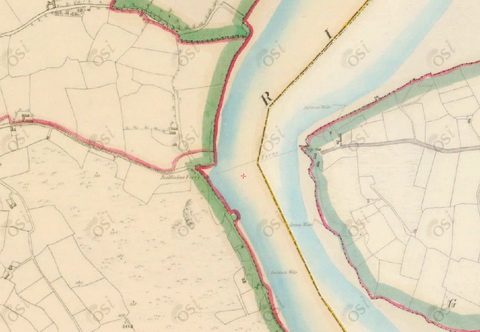
A visitor to my page on the tidal Barrow is a descendant of ferrymen at Ballinlaw on the Barrow. He would like to find a photograph (or, presumably, other illustration) of the ferry boat and I would welcome more information about the service (eg when it ended).

Ballinlaw ferry (OSI ~1840)

Ballinlaw ferry (OSI ~1840)

If anyone knows of a possible source of information or illustration, I will pass it on to the enquirer.

Update January 2019: much information about Ballinlaw Ferry from Andrew Doherty here.

My OSI logo and permit number for website

A threat to an existing navigation

I have a page here about the River Maigue, one of Ireland’s oldest improved navigations. Incidentally, the river’s name is locally pronounced Mag, to rhyme with bag.

In 2009 I wrote to the Powers That Be to suggest that the (much to be desired) bypass of Adare, a major bottleneck on the N21 Limerick–Tralee/Killarney road, should pass to the south of the town, thus avoiding the interference with the navigation that would undoubtedly have resulted from a northern bypass. It was no doubt the strength of my case, and a recognition of the importance of the navigation, that caused the Powers to opt for a southern bypass. A proposed link to a proposed M20 Limerick–Cork motorway may have been a minor factor in their decision: as nobody was going to build a motorway to Kerry, Adare would piggyback on the motorway to Cork.

However, An Bord Pleanála overturned the decision [PDFs available here] because the M20 proposal was withdrawn. The Irish Cattle and Sheep Farmers’ Association is pleased because it wanted a northern bypass of Adare, to be linked to a new road from Limerick to the port of Foynes; its submission on the matter is here [PDF]. A Limerick ICSA chap has a letter to the editor about the Foynes link in the current issue of the Limerick Leader, although it’s not yet available online.

Now, this proposal has the drawback that it might actually be slightly sensible: a better road to Foynes might stop people agitating for a restoration of the railway line and enable a speedy ending of port activities in Limerick, thus removing large piles of scrap from the riverside. But have the ICSA not considered the damage to the turf-boat traffic to Adare if a road bridge is added to the railway bridge downstream of Adare?

Winter Quarters

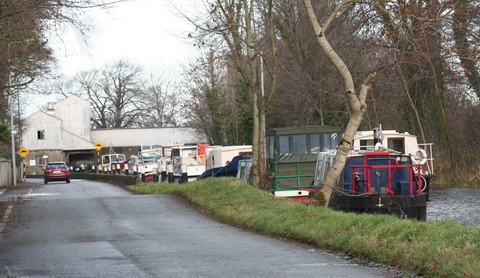
At Leinster Mills, Naas Branch, new year's eve 2013

At Leinster Mills, Naas Branch, new year’s eve 2013

Ballylongford man’s posthumous honour

Herbert Kitchener, born in Ballylongford near Saleen in 1850, shortly after the Shannon Commissioners completed their work, is to appear on a new UK £2 coin.

Lough Derg 27 December 2013

Water level

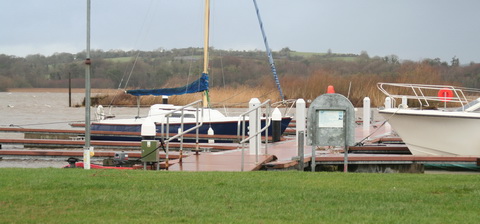
Dromineer 20131227 01_resize

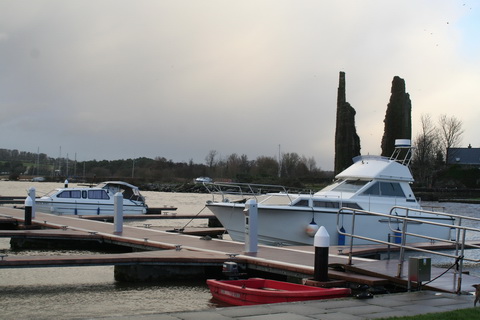
The ramp to the pontoons in Dromineer is now sloping upwards

The water level at Banagher has risen about one metre in the past 35 days.

Wind

Dromineer 20131227 02_resize

Dromineer people need to drink more wine

Dromineer 20131227 04_resize

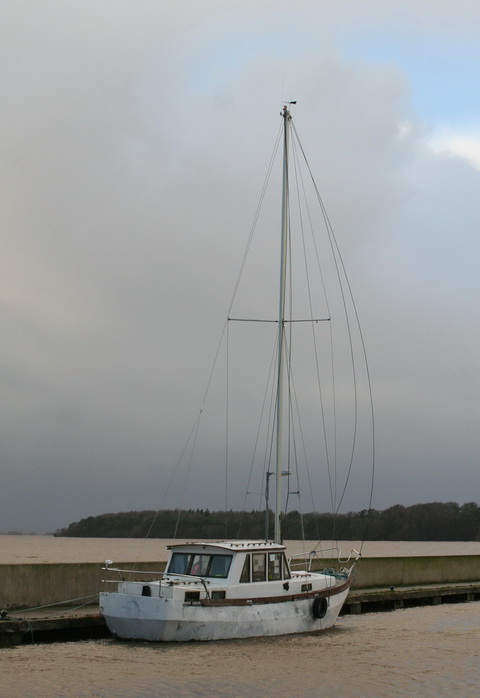
The ghost ship is back

Towers

Dromineer 20131227 05_resize

Dromineer sans ivy

Garrykennedy 20131227 02_resize

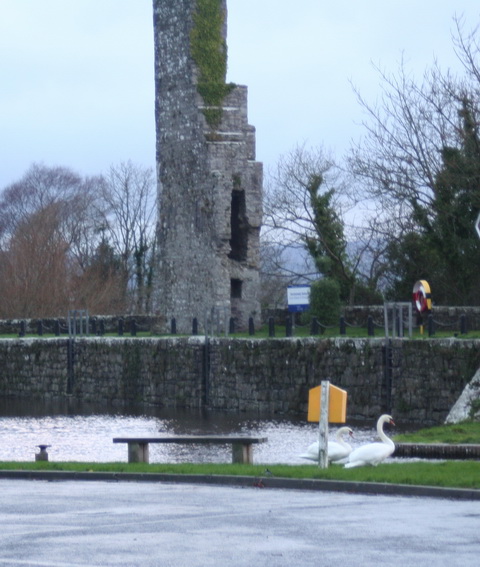
Garrykennedy

Garrykennedy 20131227 11_resize

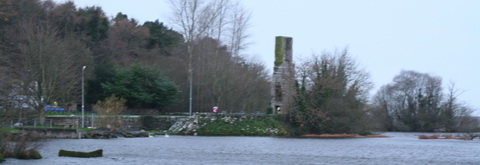
Garrykennedy from a distance

Shelter

Dromineer 20131227 03_resize

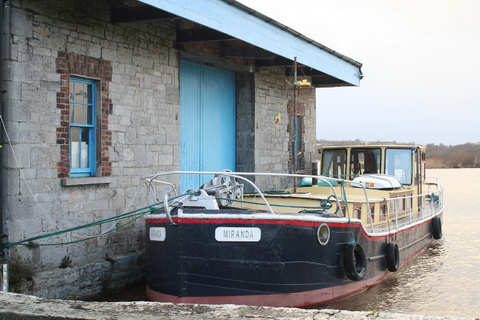
Miranda in Dromineer

Garrykennedy 20131227 04_resize

Garrykennedy 1

Garrykennedy 20131227 05_resize

Fewer boats in WI berths this year, I think

Garrykennedy 20131227 03_resize

Garrykennedy 2