Category Archives: Charles Wye Williams

Horace Kitchener and the peat briquette

I commented recently on the posthumous honour awarded to Kerryman Horace Kitchener, born at Ballylongford near Saleen Quay on the Shannon estuary. Part of the cost of building Saleen was paid by the College of the Holy and Undivided Trinity of Queen Elizabeth neare Dublin (whose present gaffer wants to change its name to something more snappy and brand-like, probably with an exclamation mark or a number in it (maybe he would like something modern: L33T or D00dz!, perhaps). The College of the Holy and Undivided Trinity of Queen Elizabeth neare Dublin owned large bogs in the area and sent turf to Limerick by boat.

Another turf connection has just come to my notice. Donal Clarke, in Brown Gold: a history of Bord na Móna and the Irish peat industry (Gill and Macmillan, Dublin 2010, but it is no longer on their website), says that in the 1850s Horace’s father experimented at Ballycarbery [which seems to be a long way from Ballylongford] “with the production of peat charcoal for se in the manufacture of gunpowder” and, in the process, discovered a way of making peat briquettes.

Not a lot of people (apart from Donal Clarke’s readers) know that.

Incidentally, Kitchener appears in this trip around the world with Irish waterways.

Reading list

Waterways Ireland has been putting out more and more stuff on its website.

If you haven’t already seen them, you can get the full set of Product Development Studies, in PDF format, here.

Even more interesting, to this site, are the waterway heritage surveys. Those for all waterways other than the Shannon are available here. The Shannon study was done some years ago (I remember making some comments on it at the time) and will be uploaded “in due course”.

I was in a WI office yesterday and had a quick look at the Lower Bann survey, which was done by Fred Hamond (so we know it will be good), and I’m looking forward to learning more about the waterway I know least about. It is done thematically and has lots of illustrations: Fred is able to see and present the bigger picture, but a full database, with all the supporting information, is available on request.

Dublin dockyards 1852

Hunt’s Universal Yacht List for 1852 has a small ad from Henry Teall.

Henry Teall,
Ship Builder,
Brunswick Dock Yard and Patent Slip, Dublin

Established 1841

H Teall, begs respectfully to inform the Owners of Yachts, that his Establishment maintains superior facilities for the Building and Repairing of Yachts to any other establishment in Dublin, having always an extensive supply of every requisite in the trade, and employing the best workmen in the port.

It lists these yachts built by Teall:

Brilliant, 8 tons
Rover, 18 tons
Marina, 20 tons
Fairy Queen, 12 tons
Belle, 60 tons
Circe, 20 tons
Trio, 53 tons.

A note on Marina says

This Yacht is of novel construction, the bow being extended sufficiently to set the jib without the bowsprit, giving a much finer entrance as well as allowing more beam.

Our yachting correspondent tells us that Yachts without bowsprits are now becoming common.

Hunt also lists yachts built by George Marchall, Ringsend, Dublin:

Atalanta, 27 tons
Foam, 17 tons
Eagle, 15 tons
Halcyon, 10 tons
Lord of the Isles, 14 tons
Spray, 14 tons
Daring, 17 tons
Kelpie, 18 tons
Swallow, 16 tons
Banshee, 10 tons
Emerald, 10 tons
Water Wyvern, 45 tons
Gipsy, 10 tons
Priestess, 12 tons
Syren, 16 tons
Cormorant, 15 tons
Avenger, 10 tons
Irish Lily, 80 tons

Grace’s Guide and the Brunswick Dockyard

William Watson, of the City of Dublin Steam Packet Company, held patents for a double canal boat, capable of being shortened to pass through locks, and for a form of composite construction for boats, with iron ribs and wooden planking. I found recently that at least one composite boat was built for the CoDSPCo at the Brunswick boatyard in Ringsend, Dublin.

The invaluable Grace’s Guide had no entry for the Brunswick boatyard/dockyard but, when I mentioned the matter, undertook some research and produced a page about it. Grace’s and I would welcome any more information about that yard; as the Guide says:

The precise location of the dockyard has yet to be identified.

Pat Sweeney’s Liffey Ships and Shipbuilding (Mercier 2010) just mentions Henry Teal [sic]; Irish Maritime History’s list is light on early nineteenth century construction.

I would welcome information about other yards that might have built vessels for the CoDSPCo.


Composite construction on Irish inland waterways

I wrote here about Watson’s Double Canal Boat, saying inter alia that, in 1839, William Watson, manager of the inland department of the City of Dublin Steam Packet Company, patented:

an improvement in the construction of ships, and which improvement is also applicable to all kinds of sea-going vessels; and also certain improvements in the construction of boats and other vessels intended to be used on canals and inland navigations. [1]

I quoted the Mechanics’ Magazine of December 1839, which said that:

Three canal barges have already been built upon Mr Watson’s plan of construction, of 60 tons burthen each, and with eminent success.[2]

I said that the size suggested that these canal barges were for the CoDSPCo’s Irish inland operations, but that I had no information about where they were built.  I have now found information about one builder.

SHIP BUILDING

On Thursday, the 22nd instant, a fine new trade boat, built with iron ribs, according to the patent of William Watson, Esq., and belonging to the City of Dublin Steam company, also a new smack, 50 tons measurement, were launched from the Brunswick dock-yard, Ringsend Docks.[3]

I would be grateful for more information.


[1] “List of patents granted for Scotland from 18th March to 18th June 1839” in The Edinburgh New Philosophical Journal , exhibiting a view of the progressive discoveries and improvements in the sciences and the arts Vol XXVII No LIII — July 1839; “List of English patents granted between the 25th of May and the 25th of June, 1839” in The Mechanics’ Magazine No 829, Saturday, June 29, 1839

[2] The Mechanics’ Magazine Vol XXXII No 855 28 December 1839

[3] The Freeman’s Journal Saturday 24 July 1841. An almost identical note appeared in the Dublin Evening Mail of Monday 26 July 1841.

Lough Derg 27 December 2013

Water level

Dromineer 20131227 01_resize

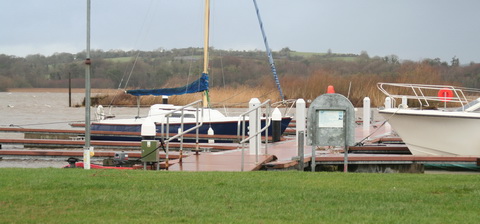
The ramp to the pontoons in Dromineer is now sloping upwards

The water level at Banagher has risen about one metre in the past 35 days.

Wind

Dromineer 20131227 02_resize

Dromineer people need to drink more wine

Dromineer 20131227 04_resize

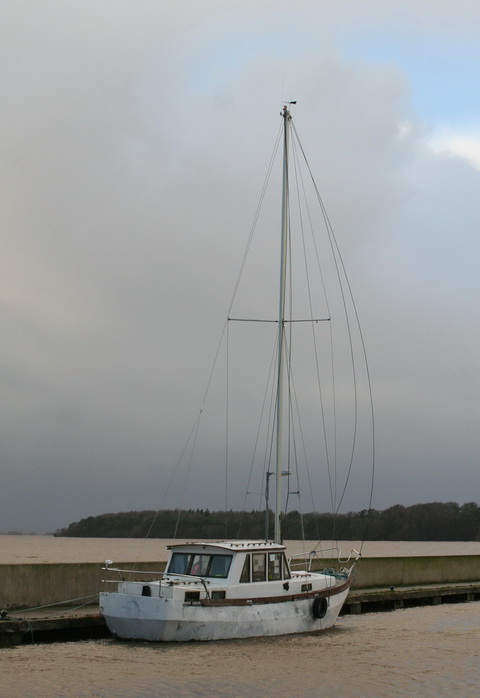
The ghost ship is back

Towers

Dromineer 20131227 05_resize

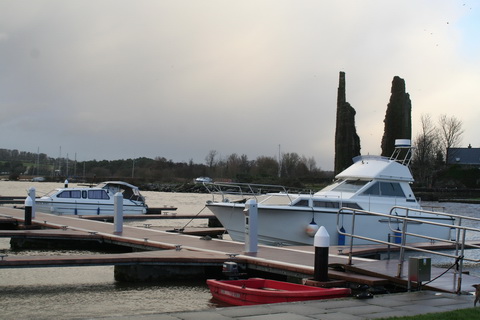
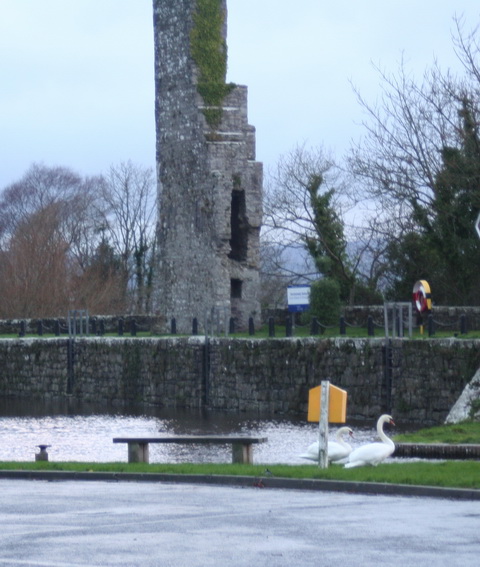
Dromineer sans ivy

Garrykennedy 20131227 02_resize

Garrykennedy

Garrykennedy 20131227 11_resize

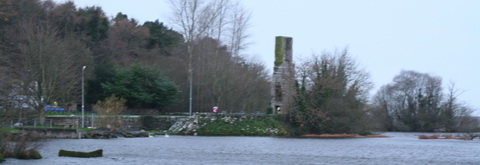
Garrykennedy from a distance

Shelter

Dromineer 20131227 03_resize

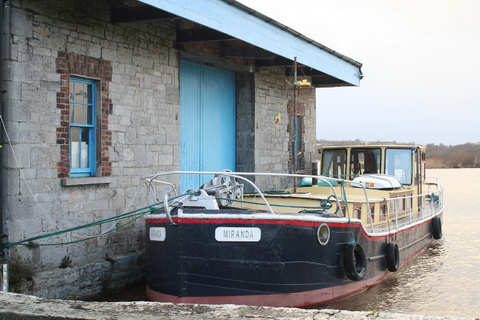
Miranda in Dromineer

Garrykennedy 20131227 04_resize

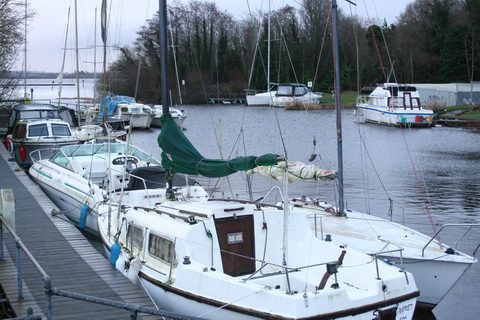
Garrykennedy 1

Garrykennedy 20131227 05_resize

Fewer boats in WI berths this year, I think

Garrykennedy 20131227 03_resize

Garrykennedy 2


Lowtown Canal Yard is for sale

Details here.

If I won the lottery I’d buy it myself. Sad to see Robert and Caroline Few selling, after many years of service to the canal; I wish them all the best in the future.

Up with this sort of thing

Folk interested in the history of the Shannon before 1850 may like to know of a talk …

The smart green technology of the 1830s: the Shannon steamers and the definition of Ireland

… to be delivered to the Thomond Archaeological and Historical Society on Monday 4 November 2013. It’s in Room T.1.17, TARA Building, Mary Immaculate College, Limerick, at 8pm.

A related topic …

Charles Wye Williams and the Anglo-Irish Trade

… will be discussed in one of the papers at the Eighth [British] Waterways History Conference on Saturday 26 October 2013 at the University of Birmingham. Leave a Comment below if you would like contact information for the conference.

Water levels in Athlone

At time of writing, the depth of water at Athlone Weir is 1.7m. “Staff gauge zero is 35.360m above Poolbeg datum”, which means the water level is 37.06m OD (Poolbeg). According to Bob Cullen’s 2002 article for Inland Waterways News [PDF], “The minimum navigation level in Lough Ree is 36.88m OD”, so if the level drops another 0.18m, about 7 inches, there may be a WI Marine Notice.

It seems that the dropping of the level of Lough Ree is intended to provide a buffer against flooding in the area from Athlone downstream to Meelick. According to Brian Hayes “A meeting between the ESB, Waterways Ireland and the Office of Public Works to review the interim operating regime is due to take place shortly.” [I have asked Waterways Ireland for a report on the meeting.]

But, if we are to believe the Dublin Evening Mail, the Shannon Commissioners took a rather more robust attitude to flooding downstream of Athlone: steamers [and PR] came first.

Lough Derg Regatta 1849

The Dublin Evening Mail of 19 September 1849 has come to hand.

LOUGH DERG REGATTA

The Regatta on the above-named beautiful lake came off last week. Monday, the 10th of September commenced the annual aquatic sports: the day was tolerably fine, and at two o’clock, PM, the Commodore, the Right Hon Lord Viscount Avonmore, started four yachts for a 30 Guinea Challenge Cup, with £12 added. After a drifting match (for it fell flat calm shortly after three o’clock), they came in as under:—

Gem, 12 tons, James Spaight, Esq
Hero, 8 tons, Dash Gainor, Esq
Iris, 19 tons, Wills C Gason, Esq
Foam, 24 tons, Lord Avonmore.

This was a time race.

While the yachts were absent several cot races came off.

On Tuesday, the 11th, the yachts sailed down in fleet to Killaloe, but the following day it blew a whole gale of wind, and the match that was to have been sailed for on that day was put off till the next; however, in the evening there were some well contested cot races.

The course was as usual — start from the Jetty, over the diagonal wall (built by the Shannon Commissioners to keep the water to a proper level in summer), under the bridge, round Friar’s Island, and back: to a stranger, it is astonishing to see a boat go down an incline nearly four feet high, which they are obliged to do in the race, and what is more extraordinary, any cot that is not rowed at it pretty fast, is almost certain of being upset.

Thursday, the 12th, at the Commodore’s signal, all the yachts got under weigh, and came to anchor off Derry, and at two o’clock, PM, five yachts started for a Silver Cup, valued at £15, witn £5 added. This was a time race for yachts under twelve tons. The wind was WNW, and blew a fine gaff-topsail breeze; at half-past four o’clock the yachts came in as under:—

Hero, 8 tons, Dash Gainor, Esq
Gem, 12 tons, James Spaight, Esq
Willy Wa, 9 tons, Captain Hon F Yelverton
Vampire, 9 tons, Arthur Vincent, Esq
Midge, 7 tons, Bassett W Holmes, Esq.

This was a beautiful race, all the yachts coming in almost together: the Hero only winning by 27 seconds — indeed she may thank the Midge for winning the prize, as going free the first round she got the Gem under her lee, and kept her back some minutes. Shortly after the signal was given to weigh anchor, and start for Portumna, where the fleet arrived at a late hour. In passing Scilly Island the Foam carried away her rudder head, and was near going ashore.

Next day, Friday the 14th, the yachts assembled off Portumna Castle, and at three o’clock, PM, the Commodore started the following boats for a 40 Guinea Challenge Cup, with a purse of Sovereigns added, for all yachts. A handicap race.

Novice, 4 tons, Dash Ryan, Esq
Midge, 7 tons, Bassett W Holmes, Esq
Vampire, 9 tons, Arthur Vincent, Esq
Gem, 12 tons, James Spaight, Esq
Foam, 24 tons, Lord Avonmore
Iris, 18 tons, Wills C Gason, Esq.

This was a most exciting race, and during the first hour it was difficult to tell which would be the winner. Before rounding the second flag boat the Novice put about and gave up the race, and off Church Island, the Midge carried away the jaws of her gaff, and was obliged to give up the race, which she was almost sure of winning — having gained two minutes the first round. The course was a long one, and the race was not over till after eight o’clock, when the four boats came in as follows:—

Iris
Foam
Gem
Vampire.

During each day of the Regatta, the City of Dublin Steam Company placed one of their fine steamers at the disposal of the Sailing Committee, who took out all their friends, and accompanied the yachts each day during the race.

In the evening, after several cot races and other amusements too numerous to relate. The ladies and gentlemen present were entertained at Belle Isle, the beautiful seat and hospitable mansion of Lord Avonmore; and at a later hour assembled some 120 of the elite of Tipperary, Galway, and King’s County, at the Clanricarde Arms, Portumna, where dancing was kept up with spirit until morning.

The population of the Portumna DED declined by 30.46% between 1841 and 1851.