Category Archives: Industrial heritage

Steamer at Drumsna

Can you help?

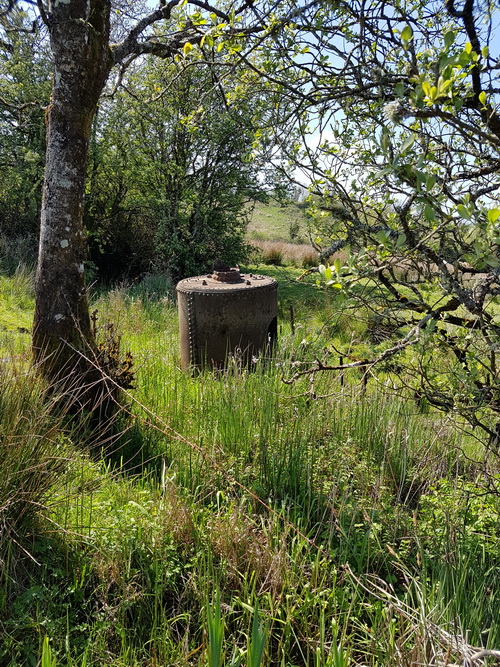
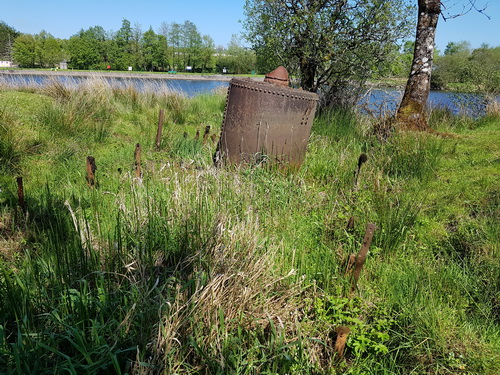
Liam Sherringham has sent me two photos of the remains of a steamer at Drumsna.

I am pretty certain that someone at some time told me something about this vessel, but I’ve lost the information. I think it was said to be a former steam yacht, owned by a family living not too far away and abandoned at the spot, but I am not at all certain about this.

If you are the person who told me about this, I apologise for my lapse and I would be grateful if you could supply the information again. If you are not that person, but know anything about the vessel, do please tell us about it. In either case you can leave a Comment below.

Photo 1 ((c) Liam Sherringham 2017)

Photo 2 ((c) Liam Sherringham 2017)


Waterways History Conference

The ninth Waterways History Conference will be held at the University of Birmingham, UK, on Saturday 24 June 2017. The programme and other details are available here. The theme is Waterways Research? and one of the topics is the Cong Canal.

A new sporting opportunity for the Suir?

This could work, from Carrick-on-Suir up to Clonmel, as there is already a towing-path.

The Lanesborough Trader

Inland Navigation

The numerous individuals interested in the prosperity of the Royal Canal, as well as the Public at large, must be highly gratified to learn, that the trade on the extended line of that navigation has commenced with all the spirit and activity that could have been anticipated by the most sanguine. The first boat from the Shannon (the Lanesborough Trader, Patrick Connor, owner) arrived at the Broadstone harbour on Saturday [31 January 1818], amid the cheers of numerous spectators, with a fiddler playing merrily upon her deck.

Saunders’s News-Letter 2 February 1818

The Dublin to Cork Canal

A Dublin paper has promulgated, at some length, a plan for the improvement of Ireland, which, we are confident, were it brought forward in Parliament, would be unanimously approved of, especially as it can be effectually done without any expense to the Nation. The plan is, a Canal, to be joined to the Grand Canal at Dublin, and to extend, in a Southern direction, to the County of Cork, a distance of 131 miles, which will, at once, penetrate into the centre of the great agricultural districts of Ireland. The expense, calculated at £400000 or £3000 per mile, to be raised by Lotteries, the tickets to be drawn in London, and conducted under the eye of Government Commissioners as our former National Lotteries.

Lancaster Gazette 24 February 1827

New locomotive power

Mr Mullins, MP for Kerry, has made a very important discovery in the scientific world, that of applying galvanism, instead of steam, for propelling vessels and carriages. He is now building a carriage upon this principle, and several of the first engineers, who have seen it, say there is every prospect of success, and that it will supersede steam. — Limerick Star. The Dublin Evening Post claims the merit of this invention for the Rev J W M’Gawley, one of the clergymen of the Roman Catholic Cathedral in that city, who, that Journal says, explained it at the meeting of the British Association of Science there last August. “The discovery,” proceeds our Dublin contemporary, “has excited considerable interest amongst the savans of Germany by Mr M’Gawley’s interesting and important invention, which is to form one of the most attractive features of the proceedings of the British Association at its approaching meeting in Bristol.”

Berkshire Chronicle 13 August 1836

How nice to know that a current MP TD for Kerry, noted for his scientific knowledge, is continuing a great tradition.


Quadrupling Kerry’s canals

I thought there was only one canal in Co Kerry, but there were three more at Lixnaw. They’re still to be seen and they have interesting associations.

Thanks to Ewan Duffy of Industrial Heritage Ireland for the tip-off.

William Dargan on the Dublin–Blessington–Carlow road

1580 Is there an engineer employed to oversee the works on the Blessington Road? — There has been a surveyor, a Mr Dargan.

1581 From the commencement of the Trust? — From the commencement of the Trust.

1582 At what salary is Mr Dargan employed? — About £100 a year.

1583 Is he still in the employment of the Trust? — He is nominally so.

1584 Does he receive a salary at present? — He does not.

1585 But he is still in the employment of the Trust? — He is.

1586 What was the reason, if the Trust continue to employ him, that they should take away his salary? — At that meeting in Baltinglass, in November, there were very general complaints as to the quality of the materials then lying on the road, and also of the quality of materials that had been expended on the road during the year; this induced me to ask the question, whether the surveyor, to whom we paid so high a salary, had attended; and upon further inquiry, I could not ascertain that he had done any duty, or taken any active part whatever in the management of the road, for the twelve months previous; upon which I entered on the books of the Trust a notice, that at the ensuing meeting I would move for the dismissal of Mr Dargan from that situation altogether. At the subsequent meeting I brought forward this motion, when there was a proposal sent in from Mr Dargan, in which he offered to do the duty for £50 a year. Upon further pressing the matter, his friends at the Board stated that he would withdraw all claim whatever for salary, would not ask what he might do for the last half year, and that he would be obliged to us if we would allow him to remain nominally as our surveyor, and pay him as we would any other surveyor when we had occasion to employ one. This was a proposition that I thought only reasonable, and I consented to it, and it was so entered upon the books, and I did not further interfere or further press the proposition that I had originally brought forward.

1587 In any further accounts that were laid before the Board, did any charge appear on the part of the treasurer for a sum of £50 to be paid to Mr Dargan after he had refused to receive any salary? — There was; the very first item in the treasurer’s account was a claim for a credit of £50 for salary to Mr Dargan, which he himself had conscientiously refused to take; so that we were, in fact, putting £50 into Mr Dargan’s pocket, whether he would take it himself or not.

1588 What was the proceeding of the Board upon that item appearing on the accounts of the treasurer? — It was, I presume, a mistake.

1589 Was it actually paid? — I never heard; but the moment I heard that it was a mistake, not to go to the credit of the treasurer, I said no more about it. It is not the loss of £50 to the funds. I only mention it to show the willingness to dispose of the money of that Trust.

[…]

1656 Can good materials be obtained? — As good as possible; there are as good materials on that road as on any in Ireland.

1657 Then you conceive that the putting on of bad materials was the cause of the bad state of the road ever since? — I do; repairs are eternally going on; it is not permanent. They do not screen it properly, so that it is literally drawing on mud and drawing off mud; for this gravel is not properly screened; the consequence is, that what they draw on to-day they draw off to-morrow.

1658 Do they ever employ an engineer? — Mr Dargan is professedly an engineer.

1659 Did not that engineer give directions as to the materials to be employed? — He may have done; but his directions were not attended to, if he gave them.

1660 Still he received his salary? — Still he received his salary.

Evidence of Peter Purcell in Report from Select Committee on Turnpike Roads in Ireland: with the minutes of evidence and appendix Ordered, by The House of Commons, to be Printed, 26 July 1832 645



A Bourne mystery

Here is an ad, from 1785, offering to let flour-mills at Portlaw, Co Waterford, and a bake-house in John Street, Waterford, to a “tenant possessed of abilities”.

The ad is interesting in several respects. First, although the location of the flour-mills is not clear, they may have preceded the iron-works, the famous Malcolmson cotton-mill and the later tannery on the site; they certainly seem to have used the water power of the Clodiagh.

Second, the ad suggests that flour could be carried from the mills by three rivers to Waterford: the Clodiagh, the Suir and St John’s Pill, which is another navigation featured on this site.

Third, the ad invites applications to be sent to either John Thomas Medlycott in Dublin or John Edwards Bourne in Mayfield, Waterford. The Post-Chaise Companion [4th ed] says

Within half a mile of Portlaw, on the L is Glen-house the seat of Mr Bourne.

At Portlaw are the extensive mills built by Edward May Esq, and about a quarter of mile beyond Portlaw on the L is a large house built by the same gentleman.

About a mile from Portlaw, on the R situated on the banks of the Suir, is Mayfield, the noble and delightful seat, with very extensive and beautiful demesnes and plantations, of William Watson Esq and on the L is Coolfin, the seat of the Rev Thomas Monck.

That puts a Mr Bourne in Portlaw, though in Glenhouse rather than Mayfield. The Glenhouse address is confirmed by Matthew Sleater in 1806.

But what interests me is whether the John Edwards Bourne mentioned in the ad is related to John Edwards Bourne of Dunkerrin, Co Offaly, formerly of Nenagh, Co Tipperary, who died in 1799 or so. The Offaly Bourne seems to have had four brothers and three sisters.

I would be glad to hear from anyone who knows anything about the Portlaw Bourne (or indeed any of the other Bournes). If you can help, please leave a Comment below.


St John’s Pill (River) in Waterford

Brian Simpson writes from Waterford:

There’s a new bridge being built on the Waterside in Waterford City and sadly it looks like it is going to be a death blow for the Friends of St John’s River and Waterford Small Boat Owners Association’s attempts to restore navigation along this waterway.

The new bridge at high tide (Brian Simpson)

Please find attached the Facebook link for comments and attached photo of bridge at high tide.

Half our canal was taken by a humpback bridge, Wyse Bridge, being replaced at Poleberry in 1980; this effectively stopped any chance of barges navigating the other part of the waterway, which was being done up to the 1950s.

I do hope that boats will still be able to use the Pill.

Update: a link to a video.