
In German. Bit of a coup for Sven and Anita, I think. Hawthorn‘s bow appears in one photo.
Some of Ireland’s competitors on this and the next two pages.
In German. Bit of a coup for Sven and Anita, I think. Hawthorn‘s bow appears in one photo.
Some of Ireland’s competitors on this and the next two pages.
Posted in Canals, Economic activities, Engineering and construction, Extant waterways, Foreign parts, Ireland, Irish inland waterways vessels, Irish waterways general, Natural heritage, Operations, Scenery, Sea, Shannon, Tourism, Water sports activities, waterways
Tagged Erne, guidebooks, Ireland, Shannon, Shannon-Erne Waterway, waterways, Waterways Ireland
I mentioned, back in April, that an interesting-looking workshop is scheduled for Belfast on 8 September 2014. It’s being held in the Public Record Office of Northern Ireland [PRONI] in the Titanic Quarter and there’s an optional extra tour and reception on the SS Nomadic afterwards. This post is a reminder.
The programme covers waterways, roads, railways and flight. For this site, the opening session is of great interest: Dawn Livingstone, CEO of Waterways Ireland, is to talk about an interactive archive for Waterways Ireland.
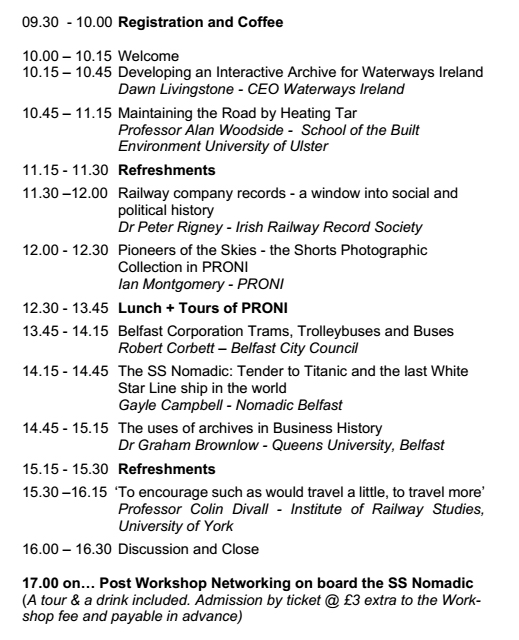
By air, sea and land
The workshop is being organised for PRONI by A²SN, the Archives and Artefacts Study Network, supported by the Historical Model Railway Society, the Business Archives Council and the Postal History Society.
The [two-page PDF] brochure is downloadable here PRONI transport archives workshop. The workshop fee is £20/€25 with an extra £3/€3.50 for the SS Nomadic visit. Sterling cheques are accepted; there is provision for paying in euro by online banking.
Posted in Ashore, Built heritage, Canals, Economic activities, Engineering and construction, Extant waterways, Forgotten navigations, Industrial heritage, Ireland, Operations, People, Rail, Restoration and rebuilding, Shannon, shannon estuary, Sources, Steamers, The cattle trade, Tourism, Ulster Canal, Unbuilt canals, waterways, Waterways management
Tagged archives, belfast, Ireland, PRONI, waterways, Waterways Ireland
… that Pollboy Lock, on the River Suck, can be filled in one minute and fifty-eight seconds?

Pollboy
Waterways Ireland, please don’t copy.
Posted in Canals, Extant waterways, Foreign parts, Operations, Tourism, Waterways management
Tagged Berkhamsted, Canal and River Trust
Er … sorry about the outbreak of headlineitis: it’s corresponding with journalists that does it.
The Tipperary Star reports (on paper, not on its website) that Tipperary County Council intends to issue “swipe cards for boating facilities along Lough Derg”. Michael Hayes, the engineer for Nenagh Municipal District Council, said that the cards were sold along the Shannon but that the revenue went to Waterways Ireland whereas the council bore all the costs. He is quoted as saying that “We are pursuing it to have them pay some of the costs”: another threat to WI’s budget.
Councillor Phyll Bugler said that it was “not acceptable” that shower and toilet blocks closed early, although she is not reported to have commented on the cost of having staff to clean the blocks late at night.
I suspect that Waterways Ireland’s income from the smart cards is minimal.
Posted in Ashore, Economic activities, Engineering and construction, Extant waterways, Ireland, Irish inland waterways vessels, Irish waterways general, Operations, People, Politics, Shannon, Tourism, Water sports activities, waterways, Waterways management
Tagged block, boats, county council, Ireland, Lough Derg, Nenagh, Operations, Shannon, shower, smart card, Tipperary, toilet, vessels, waterways, Waterways Ireland
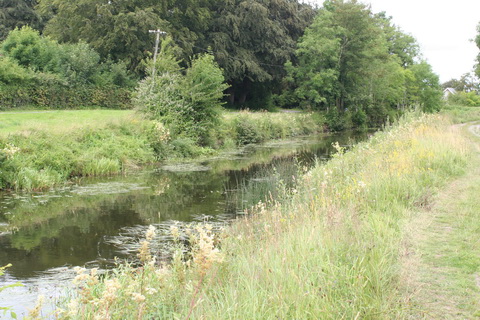
Barrow Line 1
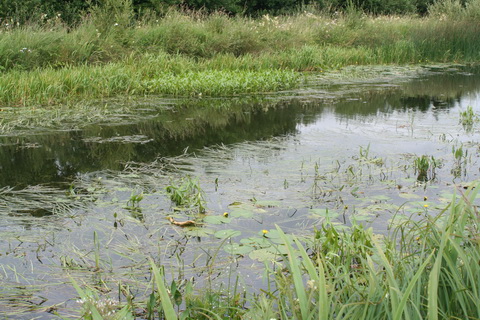
Barrow Line 2
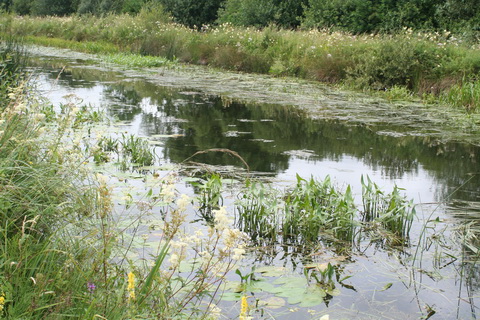
Barrow Line 3
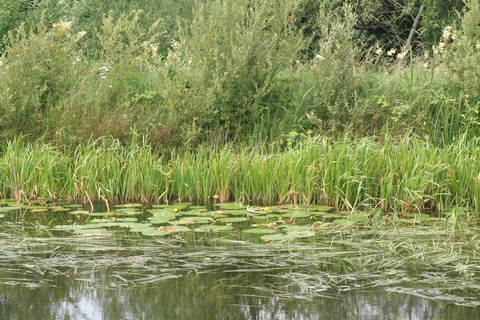
Barrow Line 4
When I get a moment, I must find out how many boats have been down that way in this warm, sunny July, the peak of the holiday season. The warmth will have encouraged the vegetation, but I suspect relatively few boats have been through. And only two boats entered the Royal through Dublin in July, even though two openings were offered.
Apart from giving artistic verisimilitude to an otherwise bald and unconvincing narrative about the value of the canal tourist industry and the abiding love of boaters for the canal, using canals helps to keep the weed down.
Posted in Built heritage, Canals, Economic activities, Engineering and construction, Extant waterways, Industrial heritage, Ireland, Irish inland waterways vessels, Natural heritage, Operations, People, Politics, Tourism, waterways, Waterways management, Weather
Tagged barge, Barrow, Barrow Line, boats, bridge, canal, Dublin, Grand Canal, growth, Ireland, Operations, Royal Canal, traffic, waterways, Waterways Ireland, weed
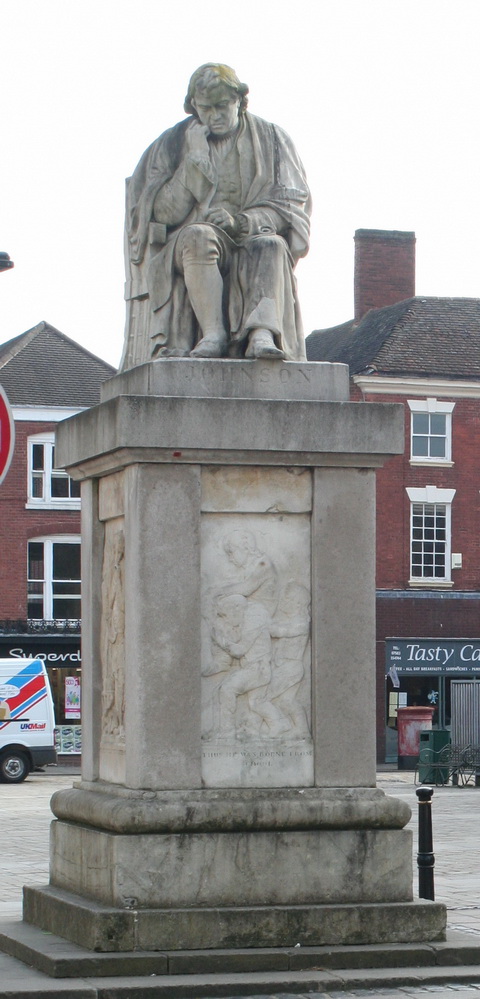
Statue of Dr Johnson near his birthplace in Lichfield
The learned readers of this site will not need to be reminded of the sapient advice of the late Dr Samuel Johnson:
[…] no man should travel unprovided with instruments for taking heights and distances.
There is yet another cause of errour not always easily surmounted, though more dangerous to the veracity of itinerary narratives, than imperfect mensuration. An observer deeply impressed by any remarkable spectacle, does not suppose, that the traces will soon vanish from his mind, and having commonly no great convenience for writing, defers the description to a time of more leisure, and better accommodation. […]
To this dilatory notation must be imputed the false relations of travellers, where there is no imaginable motive to deceive.
Samuel Johnson A Journey to the Western Islands of Scotland W Strahan and T Cadell 1775
The good doctor would, I think, have welcomed the invention of the digital camera with inbuild chronometer. Equipped with just such a device I arrived yesterday at the first lock on the Royal Canal to witness the lifting of the railway bridge and the passage thereunder of fleets of boats. I thought it would be interesting to record how long each stage took.
I have written before about this bridge: reporting a question by Maureen O’Sullivan TD in October 2013 and another in November 2013 and providing statistics on usage a few days later:
A lift scheduled for early July 2014 was cancelled; yesterday’s lift catered for just two boats, whose passage was assisted or monitored by eight Irish Rail staff and four from Waterways Ireland. Four of the Irish Rail people may have been in training as others seemed to be demonstrating things to them, but that’s only a guess. Three of the WI staff travelled together in WI’s stealth van and operated the first lock; the other, who travelled separately in a 4WD vehicle, visited from time to time. As far as I could see there was no contact between the Irish Rail and WI teams.
The bridge was scheduled to be lifted by 1100.
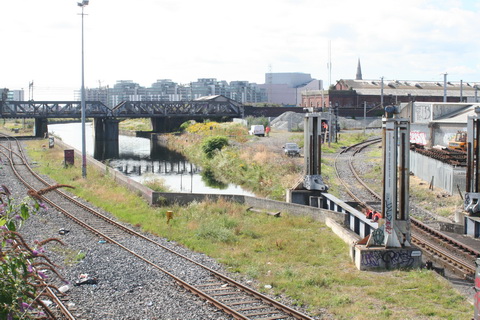
Before the lift: 0945. The lifting bridge is on the right of the photo
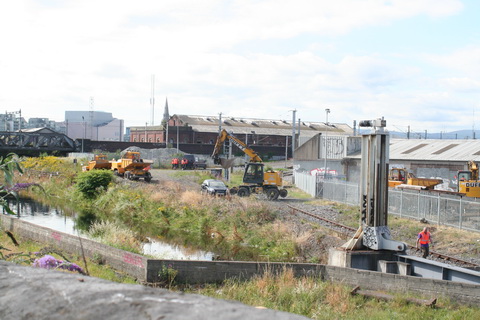
One minute later: 0946. A separate group of workers, perhaps contractors, is going down the west side of Spencer Dock with equipment
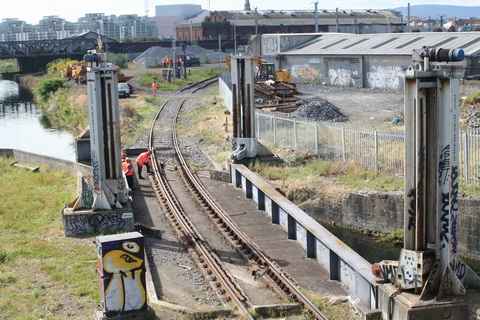
Four men still on the bridge 0949
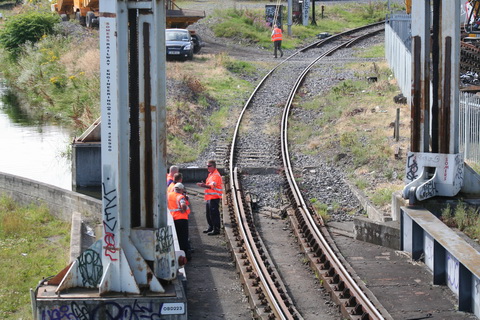
Two minutes later
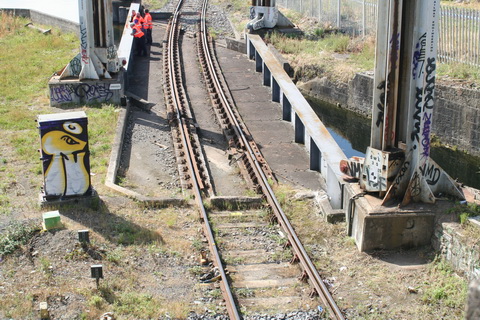
On the bridge 0956
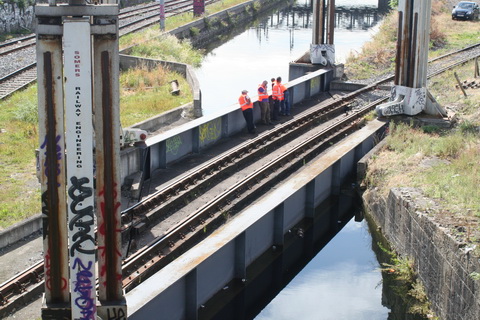
Still there 0958
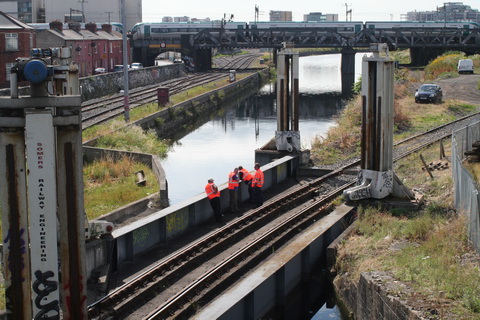
One minute later
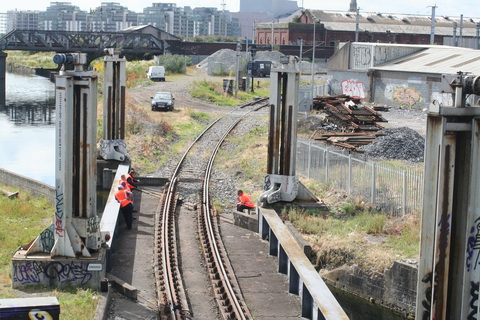
The bridge 1006
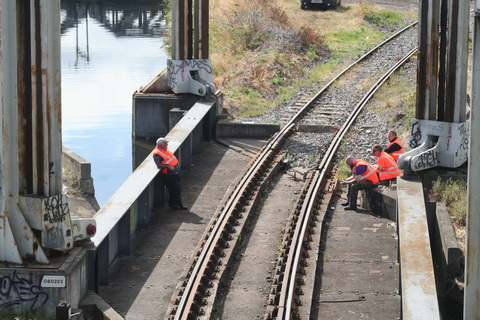
The bridge 1012
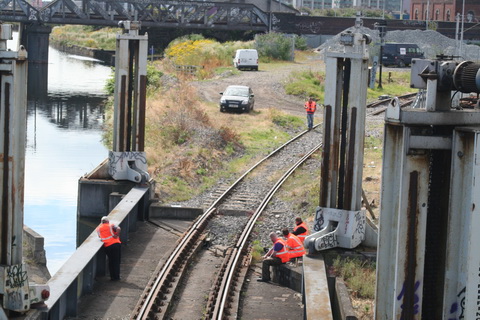
The bridge 1015: another person approaches
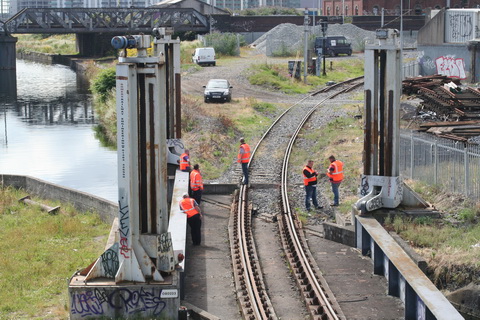
Six men at the bridge at 1020
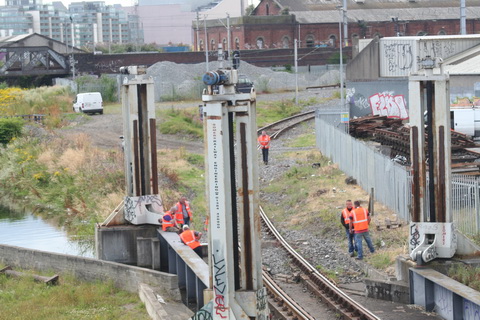
A seventh man approaches at 1028
The preparation stage, presumably involving the unlocking of some mechanism, took about five minutes altogether.
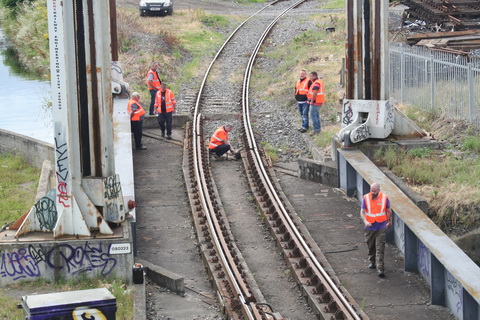
One man worked on the far end while another walked to do the same at the near end
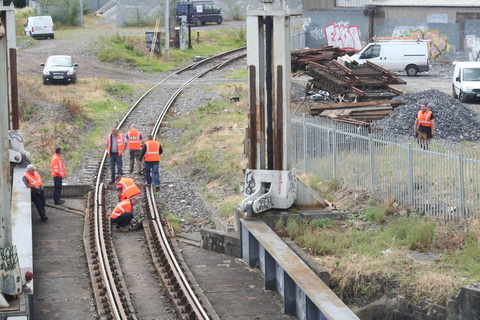
An eighth man, behind the fence on the right, seemed to summon two of the men on the bridge
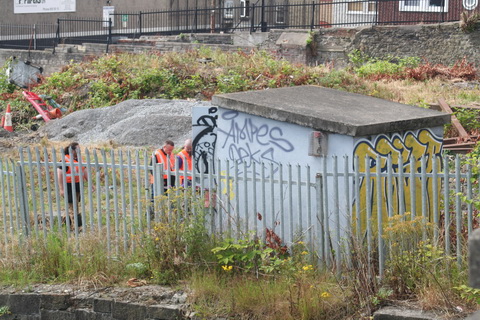
They went to this building, which I guess houses the controls for the bridge
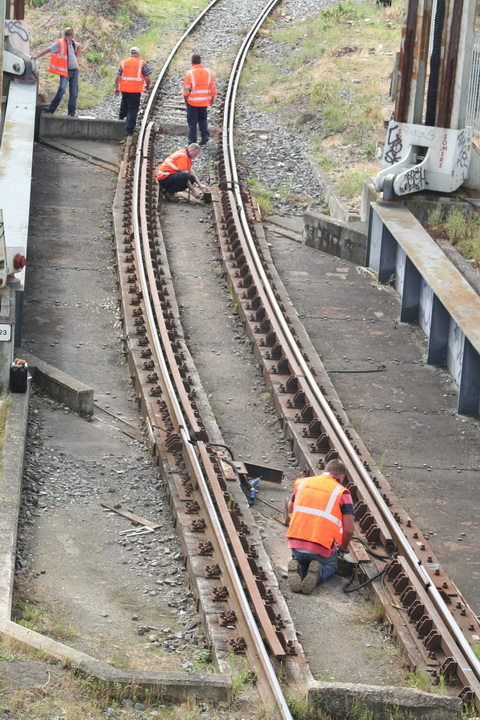
Meanwhile work continued on the bridge itself
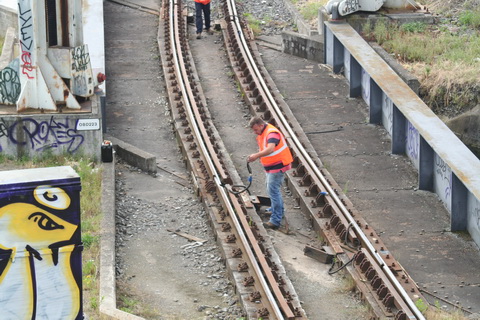
Almost done
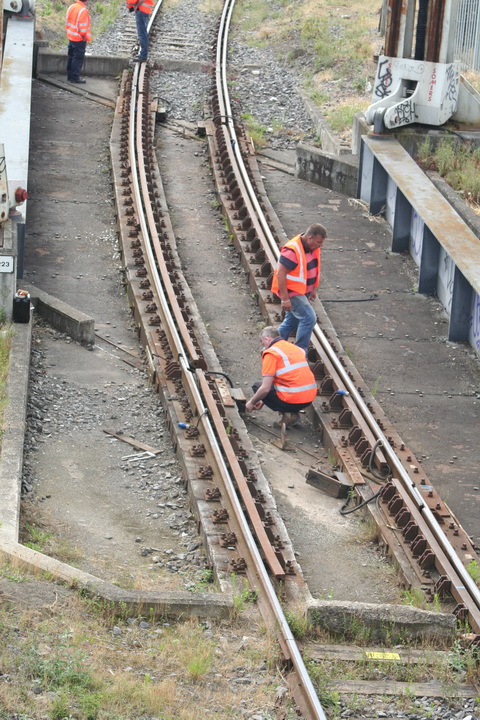
A final check
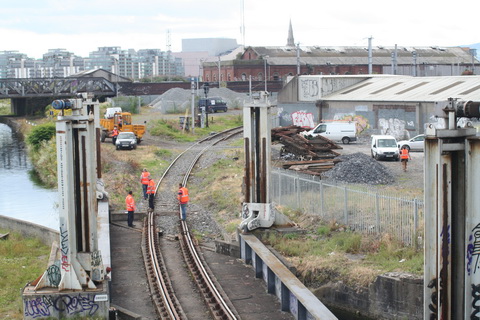
Everybody was off the bridge by 1033
The lift itself took just over nine minutes; the bridge was up before 1044, in good time for the arrival of the boats.
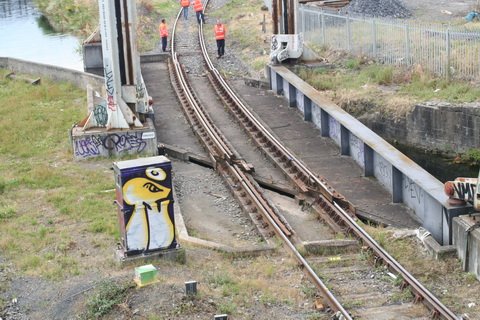
After about one minute
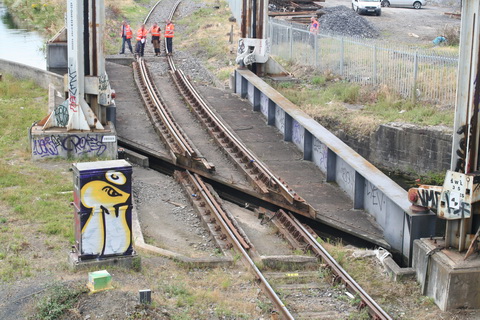
Another minute later
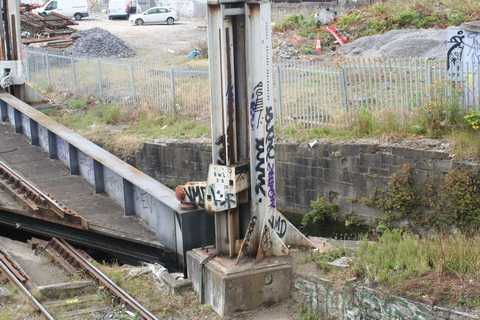
Another minute (or so)
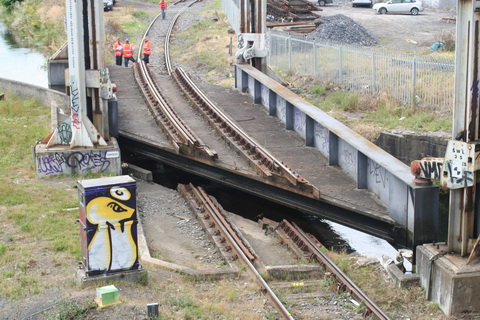
About four minutes have elapsed
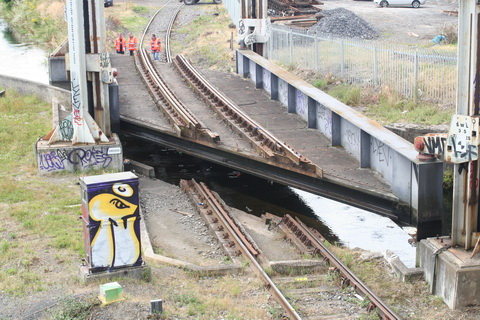
After five minutes. The sides are clear of the water in which they usually rest; they are dripping on to the canal below
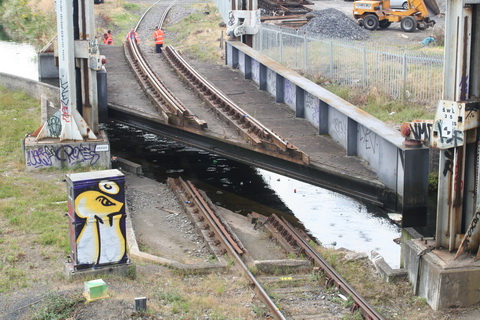
Six minutes in
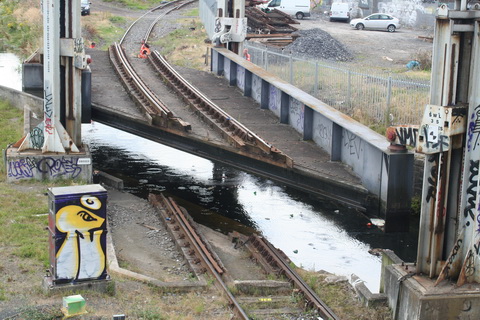
Seven minutes
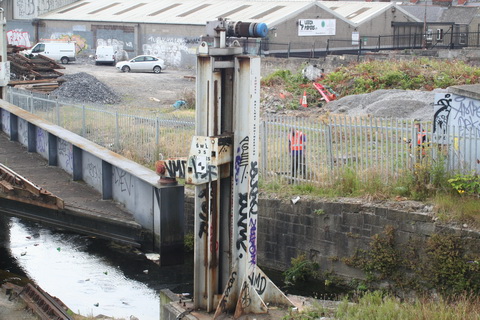
The men behind the fence may be controlling the lift
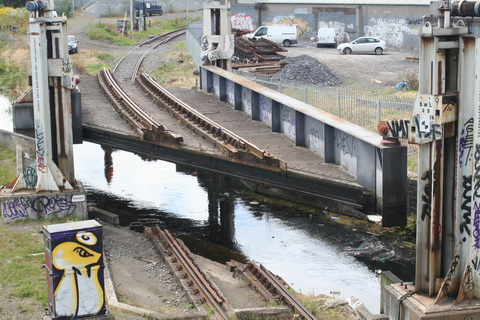
Not much further to go
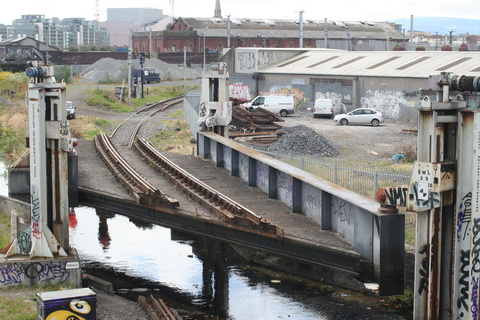
Eight minutes
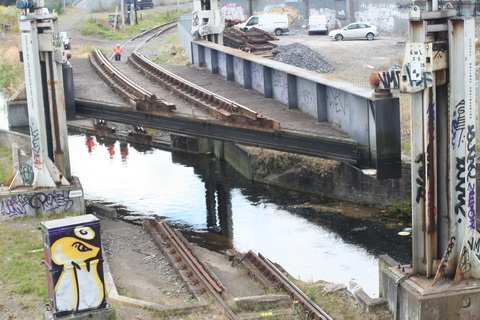
It’s up
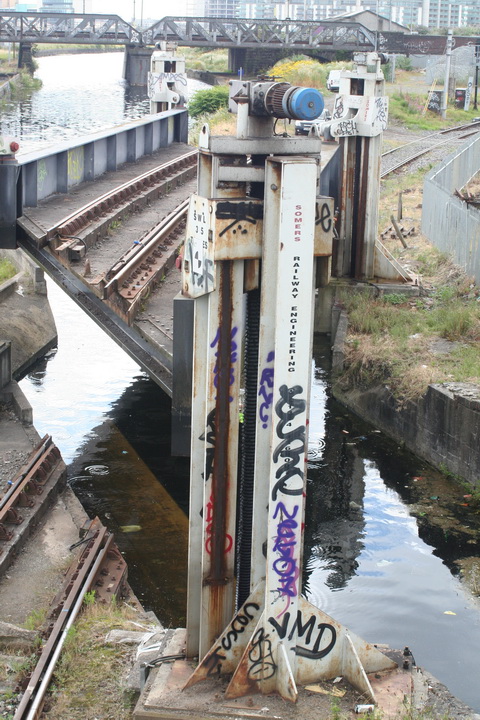
One of the jacks
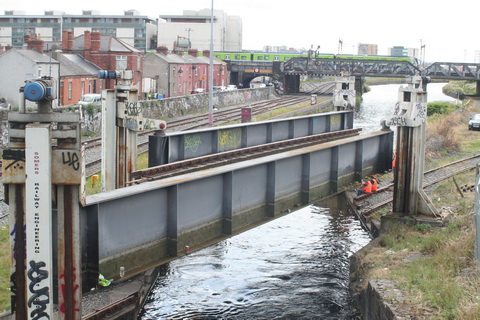
Side view (taken after the boats had gone through)
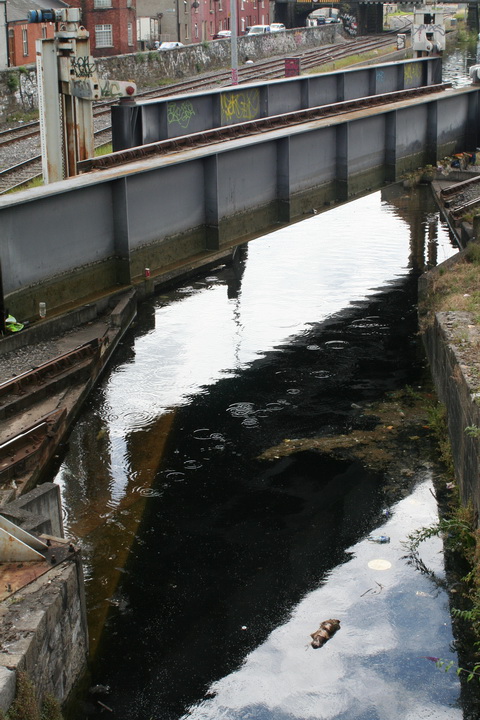
Water under the bridge
It took just over three minutes for the two boats to go under the bridge.
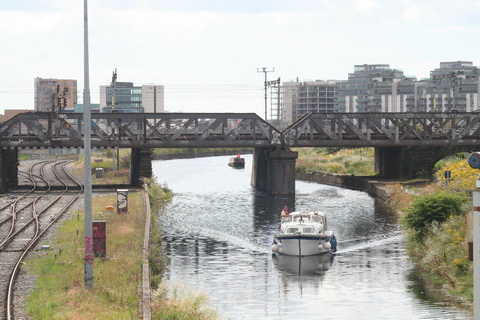
Cruiser approaches; steel boat visible through the bridge
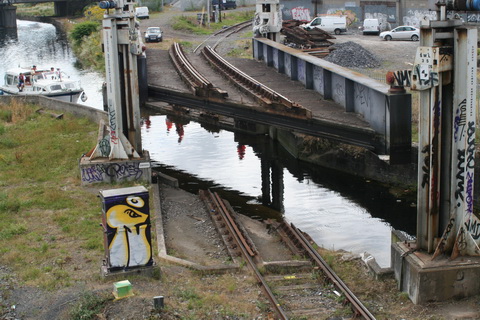
Cruiser about to enter
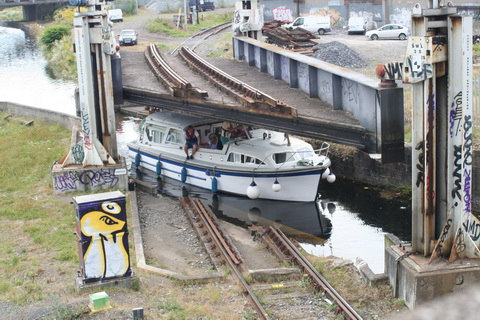
Heads down
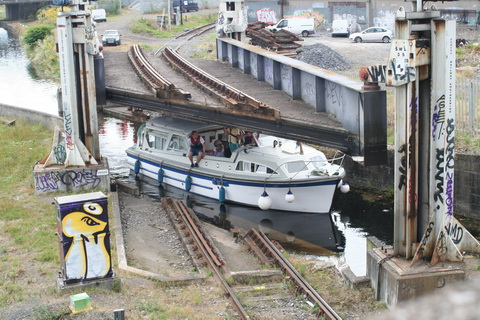
Half way through
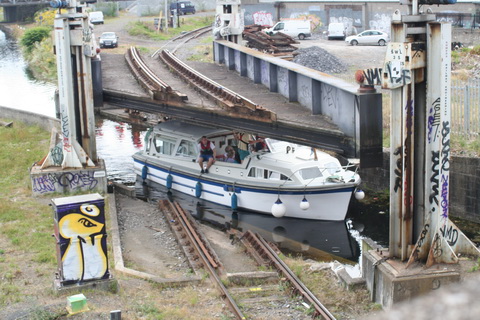
Leaving
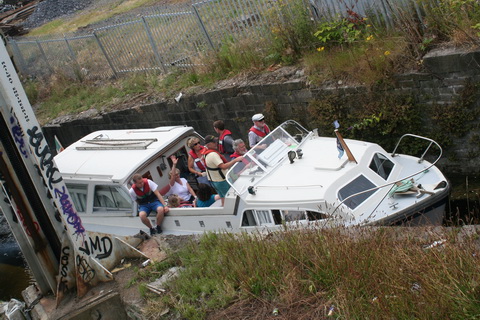
Out
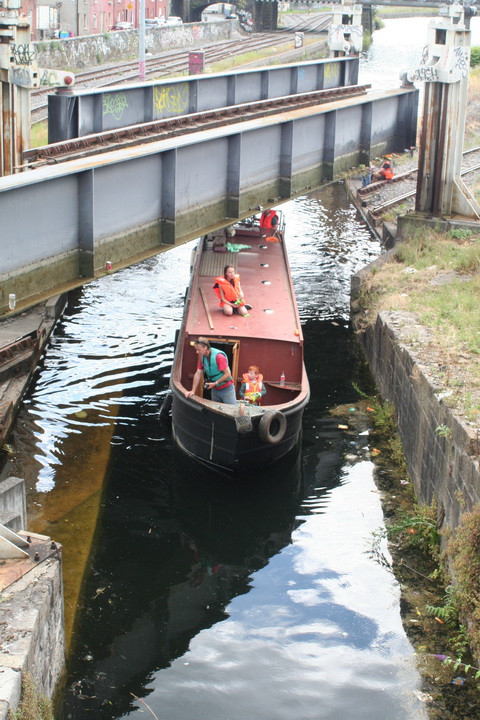
Steel boat entering
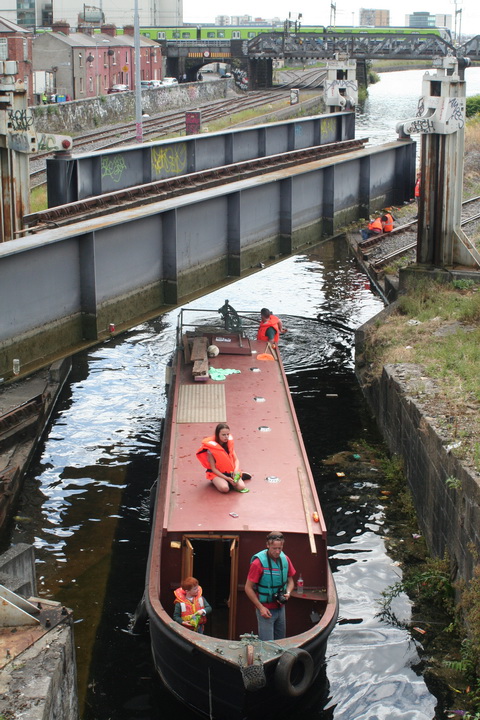
Almost through
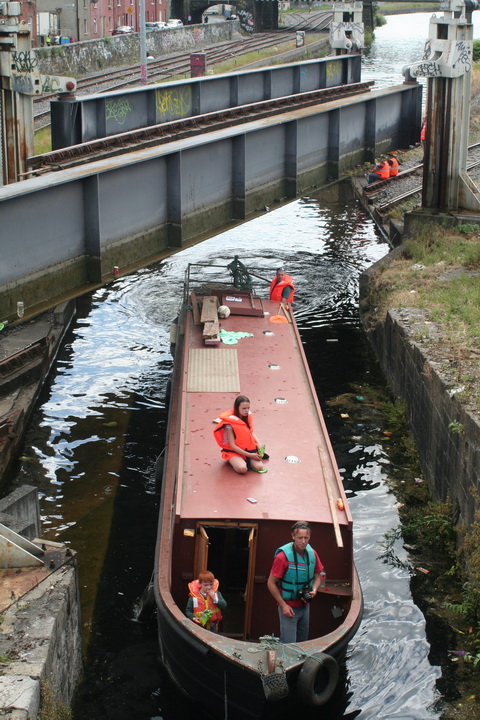
Looking ahead to the lock
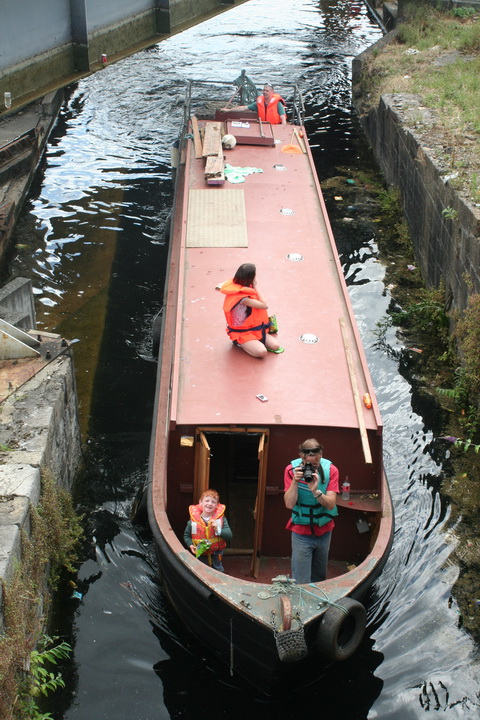
Done
I did not record the lowering of the bridge, which I presume took much the same time as the raising.
Preparation 5 minutes, lifting 9 minutes, passage 3 minutes, lowering and locking say another 14 minutes: say 45 minutes altogether, allowing some margin. But a large number of boats would take much longer as the rate at which they could move on from the bridge would be limited by the time taken to work through the lock.
Posted in Built heritage, Canals, Economic activities, Engineering and construction, Extant waterways, Industrial heritage, Ireland, Irish inland waterways vessels, Non-waterway, Operations, People, Politics, Rail, Restoration and rebuilding, Safety, Sources, Tourism, Uncategorized, Water sports activities, waterways, Waterways management
Tagged Alice O, barge, boats, bridge, canal, Dublin, Effin Bridge, Iarnrod Eireann, Ireland, Irish Rail, lock, Newcomen Bridge, Operations, Royal Canal, vessels, Waterways Ireland
Waterways Ireland’s proposed new moorings on Lough Erne. Note that the links at the bottom of the page [which do not include this or this] are to PDFs.
The “heaviest cruisers”, eh? Hmph. And “egress” is not the mot juste. But let us not carp: perhaps the idea will, in time, be applied on some southron waterways too.
Posted in Economic activities, Engineering and construction, Extant waterways, Foreign parts, Ireland, Irish inland waterways vessels, Natural heritage, Operations, Safety, Scenery, Sources, Tourism, Water sports activities, waterways, Waterways management
Tagged boats, buoy, Erne, Ireland, mooring, Operations, vessels, waterways, Waterways Ireland

 Irish waterways history