
WI says today, of its sale of surplus barges:
The ” Fox” workboat/barge currently located at Roosky has been withdrawn from the Sale .
A visitor to my page on the tidal Barrow is a descendant of ferrymen at Ballinlaw on the Barrow. He would like to find a photograph (or, presumably, other illustration) of the ferry boat and I would welcome more information about the service (eg when it ended).
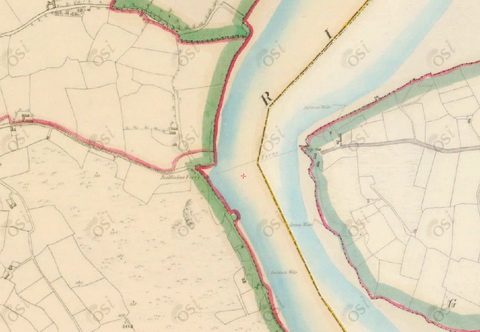
Ballinlaw ferry (OSI ~1840)
If anyone knows of a possible source of information or illustration, I will pass it on to the enquirer.
Update January 2019: much information about Ballinlaw Ferry from Andrew Doherty here.

Posted in Ashore, Built heritage, Economic activities, Extant waterways, Industrial heritage, Ireland, Irish inland waterways vessels, Operations, People, Sea, Sources, waterways, Waterways management
Tagged Ballinlaw, Barrow, boats, estuary, ferry, Ireland, Operations, tidal Barrow, vessels, waterways, workboat
The ESB is currently letting more water down the old course of the Shannon, from Parteen Villa Weir through O’Briensbridge, Castleconnell and the Falls of Doonass. This channel gets the first 10 cubic metres per second from the Shannon; the next 400 go through Ardnacrusha and anything left over is sent down the old course.
The result is to help to reduce the water level on Lough Derg while raising it on the old course.
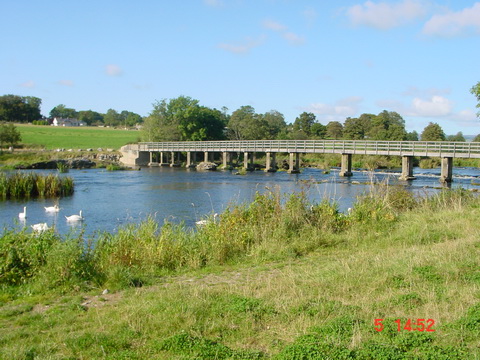
The footbridge in Castleconnell at normal summer level in 2002
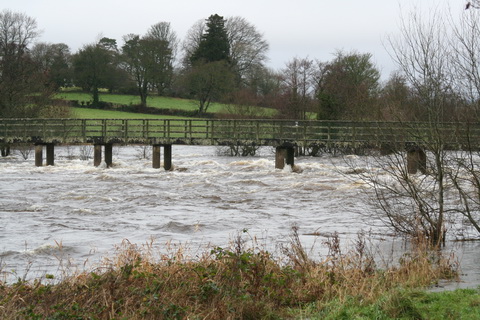
The footbridge on 1 January 2014
Before Ardnacrusha was built, the old channel took the entire flow of the Shannon, so it can take more than it has now.
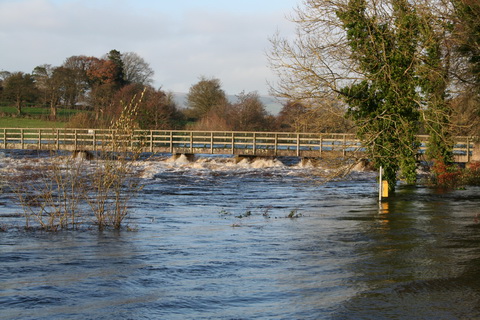
The footbridge in the floods of November 2009
The level is still below that of 2009, when the land around the old channel flooded in several places. But much land is waterlogged: I saw yesterday that the upper reaches of the Nore, the Barrow and other rivers were in flood. And more rain is forecast.
Wouldn’t it be nice if some of that could be sent to Dublin instead? I see that some folk claim (on what looks like a website that hasn’t been updated for a while) that the evil Dublin folk want to extract 350 million litres of water from the Shannon every day; the original idea was to take it from Lough Ree but now it seems that Lough Derg is the preferred source.
Now 350 million litres sounds like a lot, but it’s 350 000 cubic metres per day, 14 583.3 per hour, 243.05 per minute, 4.05 per second, which is less than 1% of normal flow through the two channels draining Lough Derg. There’s a lot more at the moment, and the good citizens of Dublin are welcome to come down and fill their buckets. I suspect that Clare TD Michael McNamara has got things out of proportion.
Addendum: 350 million litres per day, over a lake whose area is 130 square kilometres, would lower the level of the lake (if my calculations are correct) by 2.69 millimetres. If no water entered the lake, the level would be down 983 mm after a year, ignoring evaporation and other abstractions and assuming that the Shannon and other tributaries no longer flowed in and that there was no rain.
Posted in Ashore, Built heritage, Drainage, Economic activities, Engineering and construction, Extant waterways, Industrial heritage, Ireland, Natural heritage, Non-waterway, Operations, People, Politics, Shannon, shannon estuary, Sources, waterways, Waterways management, Weather
Tagged abstraction, Ardnacrusha, boats, canal, Castleconnell, Clare, Dublin, ESB, estuary, floods, flow, Ireland, Killaloe, Lough Derg, O'Briensbridge, Operations, Shannon, water level, waterways
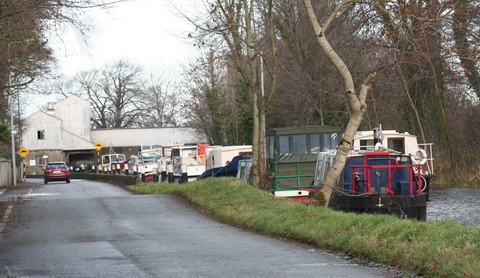
At Leinster Mills, Naas Branch, new year’s eve 2013
Posted in Ashore, Built heritage, Economic activities, Engineering and construction, Extant waterways, Industrial heritage, Ireland, Irish inland waterways vessels, Operations, waterways, Waterways management
Tagged barge, boats, bridge, canal, Grand Canal, Ireland, Naas Branch, Operations, vessels, water level, waterways, Waterways Ireland
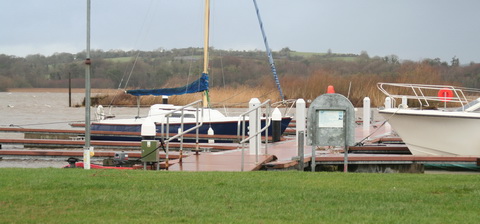
The ramp to the pontoons in Dromineer is now sloping upwards
The water level at Banagher has risen about one metre in the past 35 days.
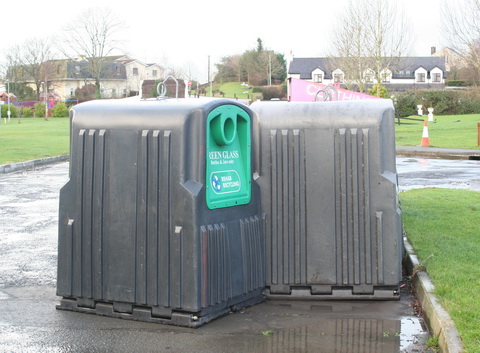
Dromineer people need to drink more wine
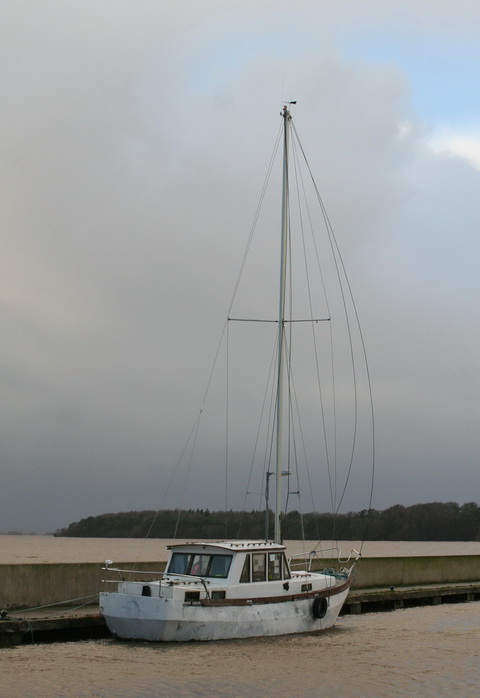
The ghost ship is back
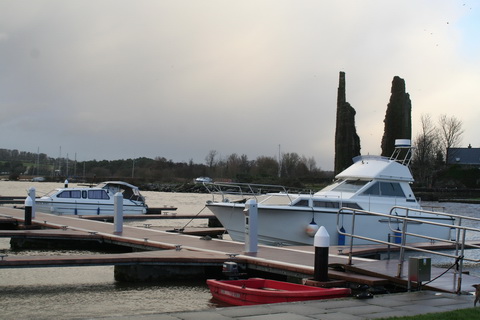
Dromineer sans ivy
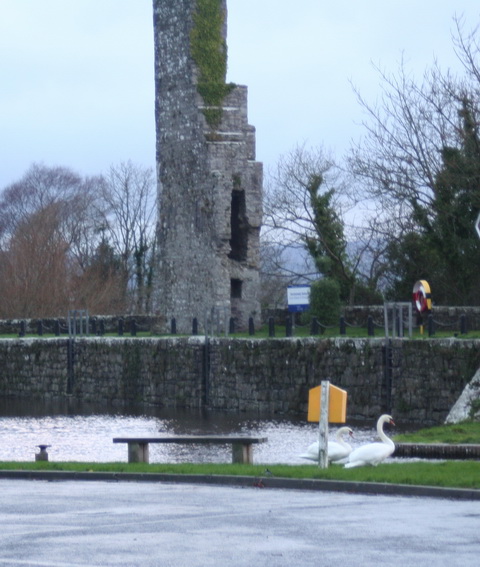
Garrykennedy
Garrykennedy from a distance
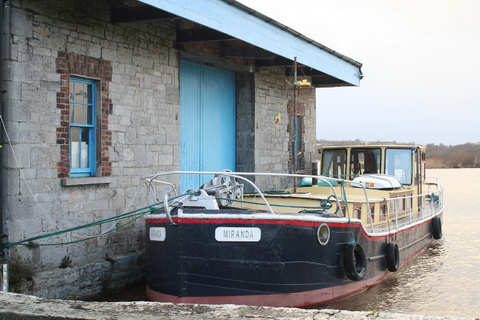
Miranda in Dromineer
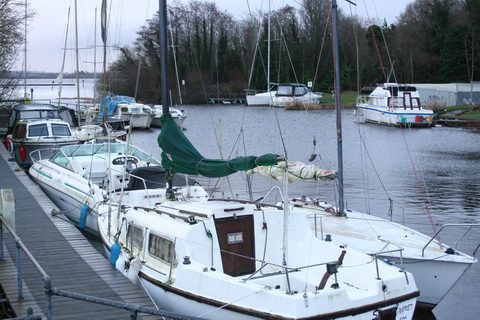
Garrykennedy 1
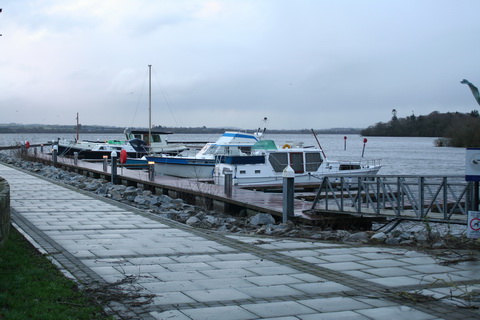
Fewer boats in WI berths this year, I think
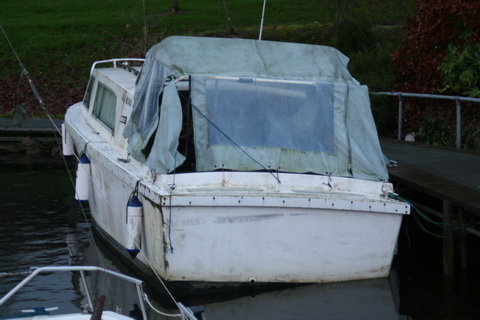
Garrykennedy 2
Posted in Ashore, Built heritage, Charles Wye Williams, Economic activities, Engineering and construction, Extant waterways, Industrial heritage, Ireland, Irish inland waterways vessels, Restoration and rebuilding, Safety, Scenery, Shannon, Sources, waterways, Waterways management, Weather
Tagged Banagher, boats, Drominer, Garrykennedy, Ireland, Lough Derg, Operations, Shannon, Tipperary, vessels, Waterways Ireland
In The Cookin’ Woman: Irish country recipes (Blackstaff Press, Belfast and Dover New Hampshire, facsimile edition 1986), Florence Irwin says of Lough Neagh:
This lake, 153 square miles, has always provided much sea-food. Eeels [sic], pollan, trout, grunts and their elderly relatives, perch, to mention the most common fish eaten by the loughsiders and sold by them.
No doubt that is true for certain values of “sea”.
She says that the (Irish) pollan is found only in Lough Neagh, but that does not seem to be true. I had not come across the grunt before: earlier, in her chapter on soups, Ms Irwin has a recipe, from Moortown, for grunt soup, which requires 1 dozen grunts; she explains that
Grunts are the young of perch.
Perch we called “grunts” …
which suggests that perch are grunts or vice versa. Wikipedia says
The grunts are a family, Haemulidae, of fishes in the order Perciformes.
The taxonomy set out on its page about Perciformes suggests a relationship between grunts and perch that is more complex than either Ms Irwin or Mr Heaney allows, but says
Classification is controversial.
I am left wondering whether there are still grunts in Lough Neagh and, if so, whether they are of the Haemulidae family or whether the name is simply used locally for perch, young or old.
Here is a page about the Lough Neagh fisheries.
Folk who have boats tied to fixed jetties on Lough Derg might like to check their ropes: the water level has risen quite a bit and some ropes are bar-taut.
Waterways Ireland removed boats from Charlotte Quay in the Grand Canal Dock at Ringsend today.
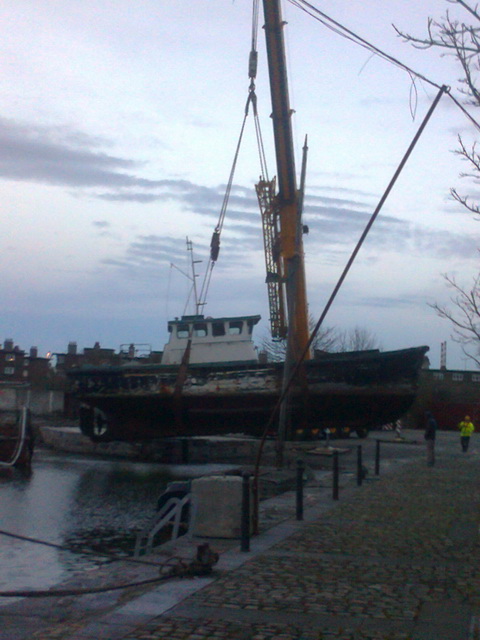
Being lifted
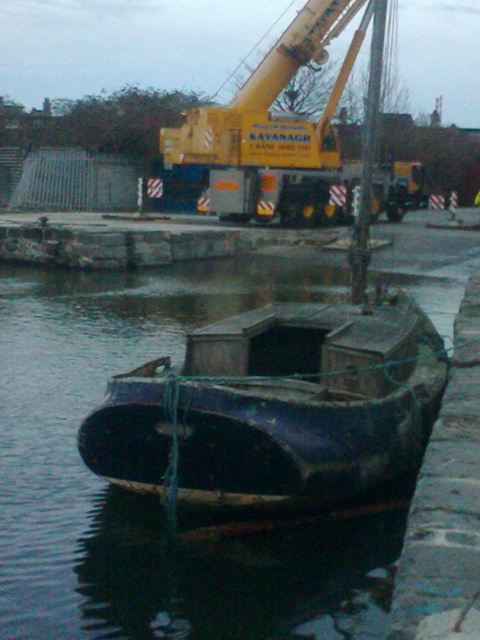
Getting ready
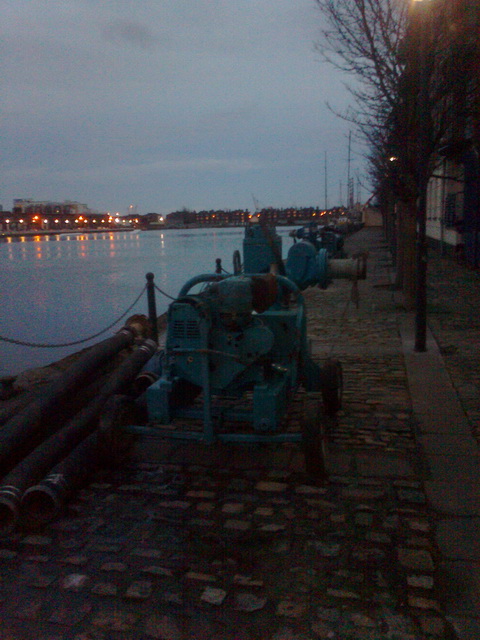
Pumps on the quay
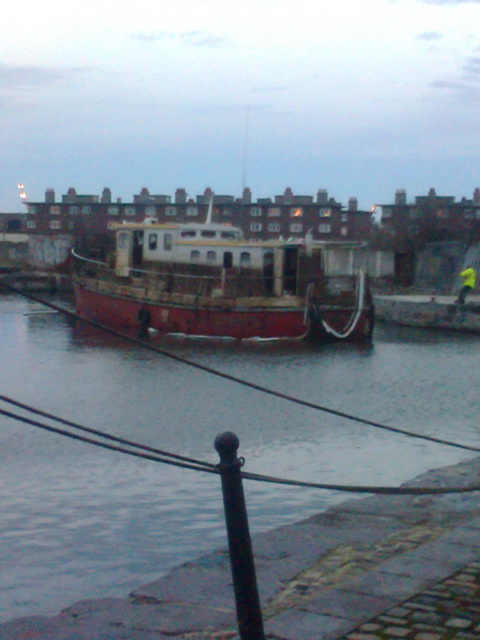
Ready for the slings
Thanks to Paul Quinn for the information and photos.
Posted in Ashore, Economic activities, Engineering and construction, Extant waterways, Ireland, Irish inland waterways vessels, Operations, waterways, Waterways management
Tagged barge, basin, boats, canal, Charlotte Quay, crane, Dublin, Grand Canal, Grand Canal Dock, Ireland, lift, lock, Operations, Ringsend, vessels, waterways, Waterways Ireland

 Irish waterways history