Tag Archives: canal

Crossing the Barrow

The trackway [towing-path] on the River Barrow changes from the east {left) bank to the west at Leighlinbridge and back again at Graiguecullen/Carlow.

It seems to me that there may have been some difficulties in getting horse-drawn boats from one side of the river to the other and I have found no evidence on how it was done, so here is some speculation instead.

Saunderson’s Sheugh and northsouthery

Northern Ireland Assembly written question AQW 42836/11-15 tabled 25 February 2015

Mr Cathal Ó hOisín [SF, East Londonderry]: To ask the Minister of Culture, Arts and Leisure to outline the North South co-operation and coordination involved in the recently announced Ulster Canal restoration project.

Ms Carál Ní Chuilín [SF, North Belfast; Minister of Culture, Arts and Leisure]: Arising from the Agreement establishing the North South Implementation Bodies Waterways Ireland was tasked with progressing the possible restoration and development of the Ulster Canal. Waterways Ireland, in conjunction with my Department and The Department of Arts, Heritage and the Gaeltacht as sponsor Departments north and south, identified the progression of the project in a phased approach as the preferred option. The recent announcement refers to phase 1 of the restoration, which will be capital works along the River Erne from Quivvy Lough to Castlesaunderson. Waterways Ireland intends to commence the works in April 2015.

The Liffey link lottery

In The Grand Canal of Ireland [David & Charles, Newton Abbot 1973], Ruth Delany says

In 1784 the construction of a link with the River Liffey had been discussed.

John Brownrigg had suggested a link from the Grand Canal Company’s harbour at James’s Street, but the plan eventually adopted was that of the Circular Line, the four-mile canal we have today, joining the Liffey via the Grand Canal Docks at Ringsend.

However, I have found a piece of evidence showing that the company considered the Liffey link ten years earlier, in 1774. Delany says that there are no board minutes for two years between 1773 and 1775, which would explain why this earlier plan has not hitherto been noticed. The evidence is from the Hibernian Journal; or, Chronicle of Liberty 19 October 1774.

The Trustees for executing the Canal of Communication between the Canal and the Harbour of Dublin, Toll free, confiding in the Favour of the Public for the Support of a Work of so great national Utility, have unanimously resolved upon the following Scheme, grafted upon the State Lottery for this present Year, for raising a Fund for that Purpose.

The Necessity of this Application to the Public at present, will appear from a Report of the Committee of Works of the Canal Company, certifying that the Works contracted for by Mr Traill between the Liffey at or near Sallins and the City Bason, are in such Forwardness as to render it absolutely necessary to proceed in making the above mentioned Communication early in the next Year; the said Report is in the Hands of the Secretary to the Canal Company.

2 prizes of                      £2000          is £4000
4 prizes of                         £750          is £3000
5 prizes of                         £150          is   £750
10 prizes of                          £50          is   £500
20 prizes of                          £40         is   £400 *
40 prizes of                             £5        is   £200
180 prizes of                            £1/10   is   £270
600 prizes of                           £1         is   £600
19150 prizes of                          £0/6     is £5740 *
First drawn first three days £40          is   £120
Last drawn                          £200          is   £200
£15780

NB Not quite two Blanks to a Prize; and the Publick will take notice, that £35 is accounted for more than the Tickets will amount to.

Ten per Cent to be deducted from the Prizes for the Use of the Scheme.

15000 Tickets, 4 Numbers each, at £1 1s each to Subscribers for a Lot not less than 50 Tickets.

Price to Non-subscribers, one Guinea each Ticket.

Subscriptions are now receiving, and Tickets delivering out at the Navagation-house [sic] in Grafton-street, where the Prizes will be paid immediately after the Arrival of the Numerical Book from London. The Securities required from the Subscribers, viz Bankers Notes, Government and Fire-office Insurance Debentures, and City of Dublin Bonds, are to be lodged in the Bank of Thomas Finlay, Esq, and Company.

The Names of the Trustees for carrying the above Scheme into Execution, may be seen at the Navigation-House [sic], in Grafton-street.

There’s an idea for DAHG.


* sic

Shannon history

Folk interested in the history of the Shannon Navigation, and in particular in the work of the Shannon Commissioners in the 1840s, may like to get hold of an article “Steam, the Shannon and the Great British breakfast”, published in the Journal of the Railway & Canal Historical Society Vol 38 Part 4 No 222 March 2015.

They’re taking the [bodily fluid]

Of the cost of land to be acquired for a canal to Clones:

We understand that the costs of land acquisition are based on the purchase of 46 hectares of land (equivalent to approx. 114 acres), the majority of which is poor quality agricultural land for a total estimated cost of €6m. This is equivalent to an average price for acquisition of just over €52,500 per acre, although the total acquisition costs would also include legal costs associated with the process.

Nevertheless, an average price of €52,500 would appear to be very high compared with the average price at which agricultural land is currently sold in the area. If an average price of €25,000 per acre (including legal costs) was applied, then total land acquisition costs would be reduced to €2.85m. This is still a generous assumption. The average RoI price of agricultural land in 2014 was less than €10,000. [Irish Farmers’ Journal Agricultural Land Price Report 2013 January 2014]

That’s from Department of Arts, Heritage and the Gaeltacht Restoring the Ulster Canal from Lough Erne to Clones: Updated Business Case February 2015. Hats off to Fitzpatrick Associates for checking and for leaving the information in the final report. I have written to Waterways Ireland to ask for more information:

I would be grateful if you could let me have a list of

  • the names and addresses of the owners of the land you propose to buy to build a canal to Clones

  • map references or maps showing the location of that land

  • the size and nature of each plot of land you propose to acquire

  • the amount you propose to pay for each plot

  • the justification for each such amount.

Actually, I have the list of landowners in Co Monaghan, because it’s in the planning application. I can’t find the equivalent on the NI Planning Service’s website because I can’t work out how to search by applicant.

The stony grey soil of Monaghan must be worth more than one might think. Either that or this proposal is a steaming dunghill.

DAHG and the unicorns

In purely quantifiable monetary terms, it is clear from these estimates that the project has a very significant capital cost of circa €46m and that the quantified annual net economic benefits are at most €323.5k per annum. The latter thus covers the annual revenue costs of €308.8k per annum only. Applying any cost benefit analysis, whether payback period or net present cost, will result in a large negative for the project.

The justification of the project therefore relies largely on the unquantifiable benefits associated with the project and the disadvantaged area in which these will occur.

Department of Arts, Heritage and the Gaeltacht Restoring the Ulster Canal from Lough Erne to Clones: Updated Business Case February 2015

The project will give this border region, which has suffered greatly from economic deprivation, a much needed boost in terms of job creation and tourism. There is significant potential for growth in the waterways based tourism market and I have no doubt that the reopening of this section of the canal will help to attract significant numbers of visitors to the area.

Heather Humphreys quoted in Department of Arts, Heritage and the Gaeltacht press release Minister Humphreys secures Government approval to restore Ulster Canal from Upper Lough Erne to Castle Saunderson 24 February 2015

If “quantified annual net economic benefits are at most €323.5k per annum” for a sheugh running all the way to Clones, it is hard to see how a shorter sheugh to Castle Saunderson is going to result in “a much needed boost in terms of job creation and tourism”.

But that’s where the unicorns come in: it will all happen by magic.

What DAHG knows about waterways history

Commercial traffic on all waterways in Ireland ended during the first half of the 20th century.

For certain values of “half”.

Shagging the Shannon to shovel the sheugh

On 24 February 2015, the Irish Times published an article headed

First stage of Ulster Canal restoration due to begin in April
Some €2m will be spent on a section of the Shannon-Erne waterway

It ended with these sentences:

The €2 million will be drawn from the funds of Waterways Ireland, a north-south implementation body. It will carry out the dredging of a 2km section of the Erne river and the construction of a new navigation arch at Derrykerrib Bridge to accommodate boat traffic, with a target completion date of April 2016.

It may be that the Irish Times doesn’t know very much about waterways. If it did, it might have been aware that, on 18 December 2014, the North South Ministerial Council approved Waterways Ireland’s Business Plan 2015, which included this Action:

3.6 Progress the restoration of the Ulster Canal on an incremental basis. €1,000

So on 18 December 2014 the North South Ministerial Council — which for all practical waterways purposes consists of Heather Humphreys, the southern minister for waterways and other stuff, and Carál Ní Chuilín, her northern counterpart — approved the allocation of €1,000 to the Ulster Canal in Waterways Ireland’s 2015 plan. Yet, just over two months later, they expect Waterways Ireland to spend about €2 million on the blasted thing, about €1.5 million of it in 2015.

The southern government’s party of treasure-seekers seems to have disappeared entirely: at any rate it doesn’t seem to have found any money. And the two ministers’ departments have presided over successive years of cuts in Waterways Ireland’s current and capital budgets, cuts whose effect has been worsened by the woefully inadequate provision for an ever-increasing pensions bill. Waterways Ireland’s Corporate Plan 2014–2016 shows a cumulative increase of €984,000 in pension costs over the period of the plan, which wipes out a lot of savings in other areas.

I suppose that curiosity is a weakness in journalism. Were it not so, two questions might have struck the Irish Times:

  • how is Waterways Ireland to come up with €2 million out of an ever-decreasing budget?
  • why has Waterways Ireland’s Business Plan been so violently disrupted only two months after it was approved? The €2 million is half WI’s total capital budget spending in for the republic in 2015; it will be recalled that the republic, in a fit of more than usually nitwitted arrogance, undertook to pay for a canal to Clones, which is what the powers-that-be are pretending Saunderson’s Sheugh is.

I can answer the first question, at least for 2015, during which WI expects to spend €1,416,000:

  • €166,000 will come from Heather Humphreys’s department
  • €900,000 will (WI hopes) come from the sale of property assets
  • €150,000 will come from the postponement of an IT programme
  • €220,000 will come from the postponement of non-navigation works on the Shannon
  • €90,000 will come from postponing development of the Barrow Blueway.

I don’t know what property assets WI can sell to bring in the requsite amount. It seems that damage to everyday navigation has been avoided, but the Shannon and the Barrow are to suffer to pay for dredging a river that merely provides a small extension of the Erne navigation.

As for the second question, I suspect that Sinn Féin put a gun to someone’s head: “We’re fed up waiting for our sheugh. Start digging or the baby gets it.” The baby might have been Heather Humphreys’s Dáil seat or it might have been something more important. And the gun was, I suspect, a message accompanying the “business case” prepared by the northern department and sent to the southern. [I have asked both departments for copies and other information.]

Arthur Aughey, then lecturer in politics at the University of Ulster, wrote in Magill magazine in February 2001:

Puritanical republicans grieve at the thought that the hunger strikers [of 1981] died to achieve the Waterways Ireland Implementation Board.

I suspect that the less puritanical republicans, those who operate in the devolved institutions of Northern Ireland, are now demanding that the southern government deliver, through the “Waterways Ireland Implementation Board”, what nitwitted previous governments promised. It’s a pity that Sinn Féin and those previous governments couldn’t have come up with a more sensible list of waterways and other infrastructural projects.

 

Boater’s handbook

The Canal & River Trust have a useful PDF Boater’s handbook available for download, free of charge, from this page; there is also a video thingie.

The handbook naturally concentrates on British inland waterways, with narrowboats on canals and rivers but not on lakes, but there is nonetheless much useful material. Even experienced boaters might find it of interest, if only for briefing any non-boaty friends they’ve invited along for a trip.


Ulster Canal restoration: a history

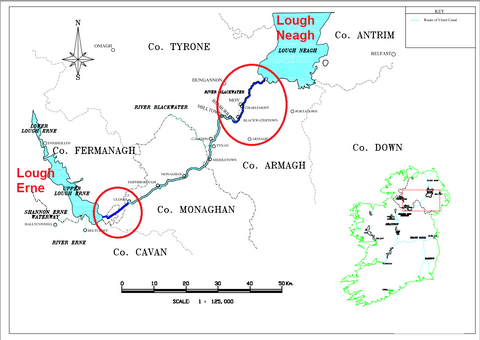
Ulster Canal 01 whole_resize

Studies 1994–2000

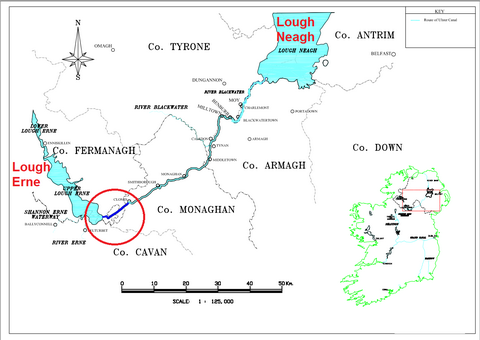
Ulster Canal 02 whole_resize

Socio-economic summary report and feasibility study 2006

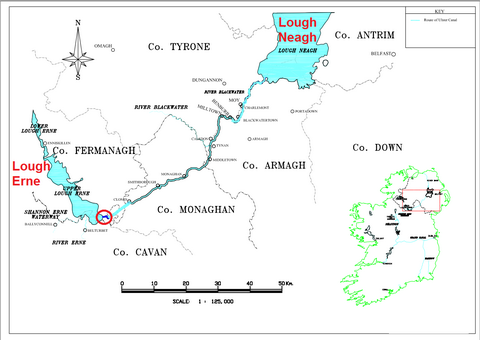
Ulster Canal 03 whole_resize

North/South Ministerial Council agreement 2007, with the Irish government to pay the full cost

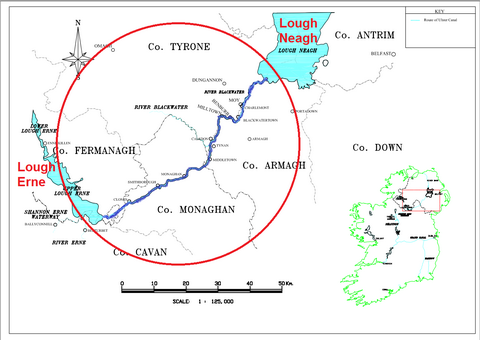
Ulster Canal 04 whole_resize

DCAL business case to DAHG 2015

Exhaustive coverage begins here but use the search facility for updates. More to come.