Category Archives: Forgotten navigations

It hasn’t gone away, you know …

Yes, the Clones Sheugh, one of Sinn Féin’s favourite inland waterways, hasn’t gone away, although SF is now allowing FF to make the running. From the invaluable KildareStreet.com:

Brendan Smith [FF, Cavan-Monaghan]: To ask the Minister for Arts, Heritage and the Gaeltacht the stage of the proposal to restore the Ulster Canal; the funding provided in her Department estimates in 2016 for this project; when this project will proceed to the next stage; and if she will make a statement on the matter.

I suppose he could have read the Estimates himself, but maybe that would be too much to ask. Anyway, his constituency colleague [Heather Humphreys, FG, Cavan-Monaghan] replied:

Government approval to restore a 2.5km stretch of the Ulster Canal from the Shannon-Erne Waterway to the International Scout Centre at Castle Saunderson, Co. Cavan, was granted on 24 February 2015. The project, which comprises three work phases, is being undertaken by Waterways Ireland.

Phase 1, the site investigation work, has been completed. Phase 2, dredging of the River Finn, is in progress. I have been informed by Waterways Ireland that completion of this phase has been delayed as a result of contractual issues but that efforts to resolve these matters are ongoing. It is intended that Phase 3 of the restoration work, the construction of a new bridge and canal section, will proceed following completion of phase 2.

Waterways Ireland has an allocation of €2.7m in its 2016 budget for the Ulster Canal project. This is comprised of €1m from my Department’s capital allocation to Waterways Ireland of €2.689m for 2016, with the balance coming from the organisation’s own resources.

We are, it will be recalled, pretending that the River Finn is part of the Ulster Canal, and that Castle Saunderson, that shrine of Ulster Unionism, was on the canal’s route: we don’t want to upset the shinners, so say nothing to them.

Quite why folk are expected to want to visit the scouting establishment now on site I do not know; boating does not seem to be amongst the activities offered.
REWARD — OUTRAGE

Whereas, on the Evening of Sunday, the 3d inst, several Men entered the Yard of the Royal Canal Company, at the Broadstone, and, with sledges (with which they came prepared), did break Ten Casks of Porter, which had been left there the previous evening, to be forwarded by the Canal.

Now, We, the undersigned, being desirous of bringing to punishment the persons who committed this outrage, and also those parties who, from mercenary motives, are supposed to have instigated them to the act, do hereby offer a Reward of

FIFTY POUNDS

to any person who shall, within Three Months, prosecute to conviction the persons who committed said act, or those who may have instigated them to its commission.

ARTHUR GUINNESS, SONS, & Co
James’s-gate Brewery, Dublin, Sept 8 1837


The Court of Directors of the Royal Canal do hereby offer a further Reward of

FIFTY POUNDS

for the Conviction of the Persons guilty of the foregoing Outrage.

By order, Samuel Draper, Secretary
Royal Canal House, 8th Sept, 1837

Freeman’s Journal 9 September 1837. From the British Newspaper Archive run by Findmypast Newspaper Archive Limited, in partnership with the British Library.

And the prize goes to …

… Niall Galway, who identified the Cong Canal. bjg

Blessington Street basin

Blessington Street Basin (Michael Geraghty) November 2015 01_resize

Blessington Street Basin (Michael Geraghty 2015)

One of North Dublin’s less-well-known treasures, this is Blessington Street Basin, off the (former) Broadstone Line of the Royal Canal. Thanks to Michael Geraghty for the photo, taken in November 2015.

Limerick water levels 14 December 2015

The Abbey River

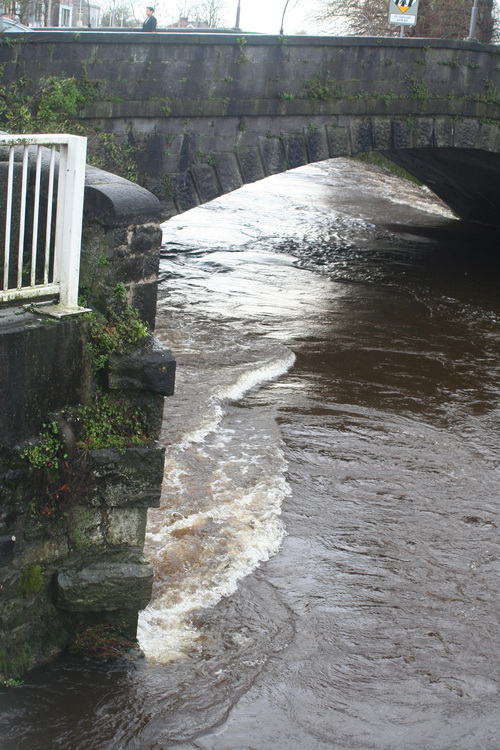
Abbey Bridge 20151214 01_resize

Abbey Bridge

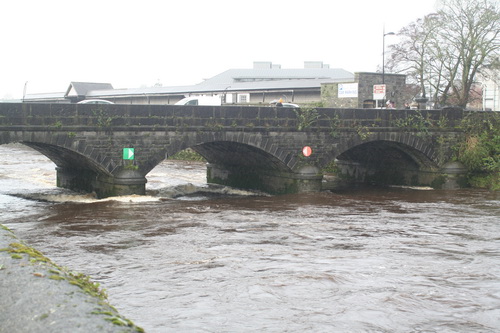
Baal's Bridge 20151214 04_resize

Baal’s Bridge

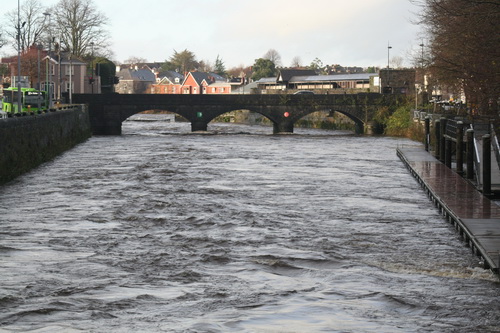
Mathew Bridge 20151214 01_resize

Mathew Bridge

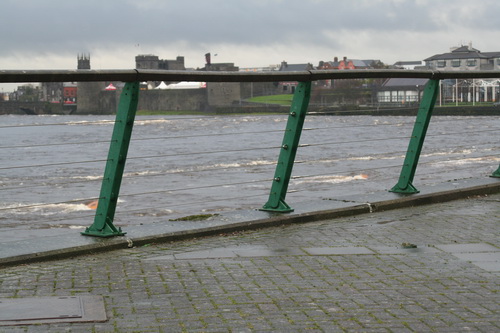
Mathew Bridge 20151214 05_resize

Current heading for Mathew Bridge

The Shannon in Limerick

Shannon in Limerick 20151214 02_resize

The weir

Plassey

Plassey 20151214 01_resize

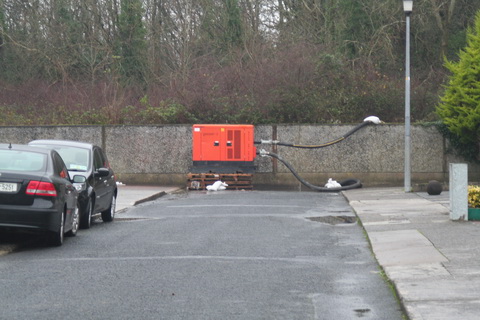
Lots of pumps running and equipment trundling about the place

Plassey 20151214 02_resize

Trouble at t’mill

Plassey Millstream 20151214 01_resize

T’millstream

Plassey 20151214 10_resize

Cots on the bank

Plassey Black Bridge 20151214 01_resize

The Black Bridge getting another hammering

Annacotty

I have been told that the Mulkear River rose very rapidly on Saturday night and that, at one time, it was feared that the (older) bridge would be swept away. I gather that folk working in other areas were called to Annacotty to deal with the emergency.

Annacotty 20151214 01_resize

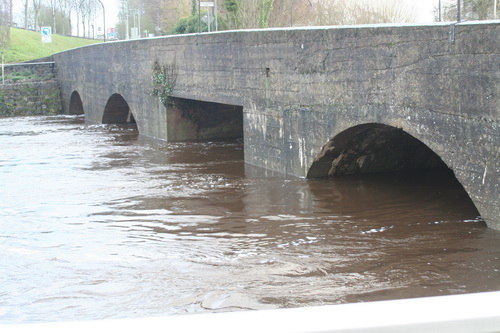
The old bridge at Annacotty (downstream face)

Annacotty 20151214 12_resize

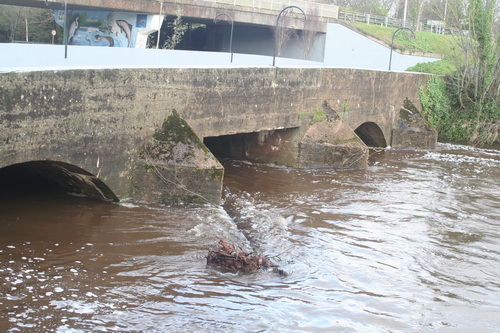
A tree in the water above the bridge

Annacotty 20151214 14_resize

There’s a weir in there somewhere

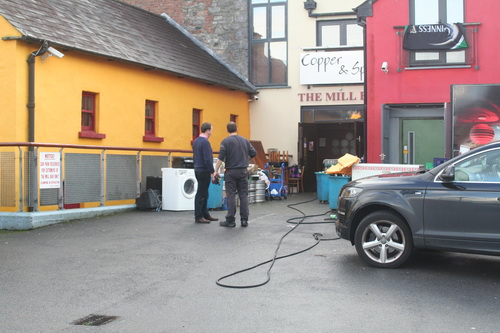
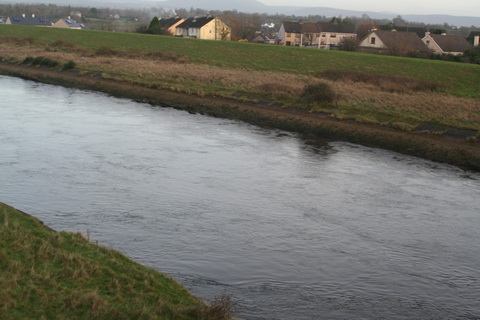
The Mill Bar in Annacotty was closed today after being flooded.
Annacotty 20151214 15_resize

The Mill Bar

Annacotty 20151214 03_resize

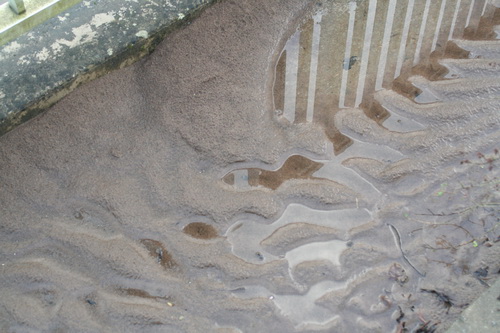
This, from a small garden beside the bridge, suggests that the Mulkear may have carried and deposited a lot of silt

The Park Canal

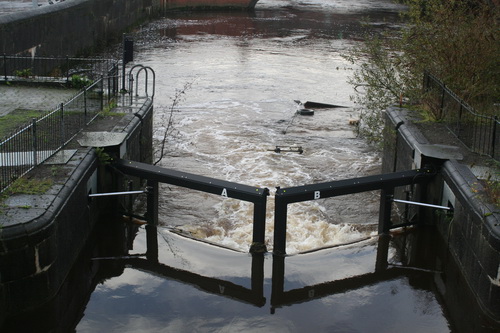
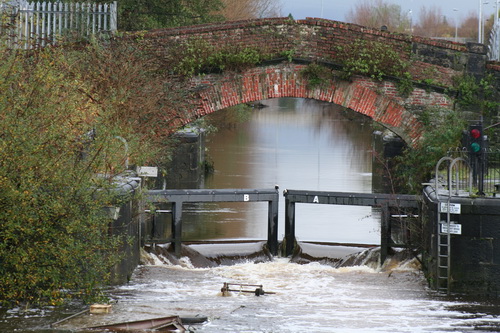
I gather that the Mulkear’s waters, added to those of the Shannon itself, raised the level of the Park Canal (the bottom section of the Limerick Navigation). A problem with opening the lock gates, to release the water, meant that a few houses in Corbally were flooded. A Sinn Féin councillor, whose party colleague has been responsible [with her southern counterpart] for slashing Waterways Ireland’s budget in recent years, is quoted as saying
I am in no doubt it was primarily caused by the ineptitude of Waterways Ireland.
Alas, the news story does not tell us the source of the councillor’s certainty.

The article also says that

[…] the force of this water meant it was not possible to open the lock gates by hand.

That is, I think, misleading: neither set of gates has gate beams, so they are not opened by hand.

park canal mist 03_resize

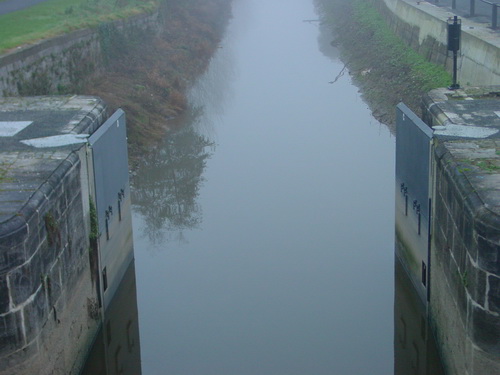
The upper gates in 2004, shortly after installation. Note the absence of gate beams. Note also the two sluices or paddles on each gate

Park Canal 20151214 31_resize

Control pedestal and gear

Park Canal 20151214 11_resize

The upper gates open today

I see no sign of the paddles or sluices. Perhaps the level is so high that they’re underwater. I must try to check next time I’m at the canal harbour.

Canal lower lock floods 20091128 1_resize

The upper gates in the floods of 2009

In the floods of 2009 the upper gates were held slightly open and all four sluices were discharging water. That would have lowered the level in the canal; it would also, I think, have made it easier to open the gates fully.

I am guessing, but I imagine that on Saturday night some sort of hydraulic machine was brought in this way …

Park Canal 20151214 21_resize

Two bollards have been moved from the gateway and stacked beside it

… and used to push or pull open the near-side upper gate. There seems to be some slight damage to the stone and iron work.

Park Canal 20151214 10_resize

Slight damage

One other possibility that struck me is that silt from the Mulkear might have built up behind the gates, making them difficult to open, but I have no evidence on the matter.

Park Canal 20151214 12_resize

The lower gates

Park Canal 20151214 22_resize

From the outside looking in


What’s a cumec, Daddy?

I don’t know, but here’s a picture of 415 of them flowing through Castleconnell. [Update 13 December: that may be only 405 cumec.]

Castleconnell 20151212 10_resize

415 cumecs on 12 December 2015

Actually, a cumec is one cubic metre of water per second, which is roughly one ton per second, which is a lot of water. And 415 cumec is the amount that, according to the blatts, the ESB is currently letting down the original course of the Shannon from Parteen Villa Weir; the minimum flow in that channel, as seen in summer, is 10 cumec.

Castleconnell 12 December 2015

Castleconnell 20151212 02_resize

Younger trees getting their feet wet

Castleconnell 20151212 11_resize

Who’d have guessed?

Castleconnell 20151212 14_resize

Below the bridge

Castleconnell 20151212 21_resize

Above the bridge

Castleconnell 20151212 34_resize

Stormont

Castleconnell 20151212 37_resize

Pump

Castleconnell 20151212 40_resize

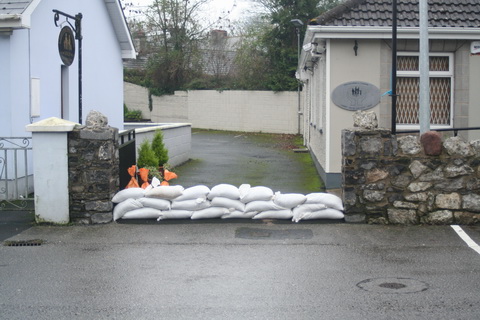
Sandbags

Castleconnell 20151212 42_resize

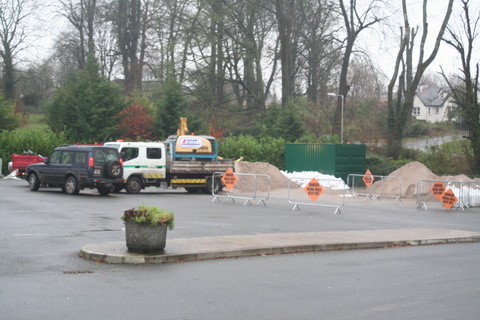
Sandbag Central

Castleconnell 20151212 43_resize

Sandbags filled here for distribution

Castleconnell 20151212 46_resize

Army engineers

Castleconnell 20151212 50_resize

More equipment arriving

Clonlara 11 December 2015

Headrace Clonlara 20151211 01_resize

Ardnacrusha headrace, said to take 400 cumec

PEC Errina Bridge 20151211 04_resize

Errina bridge on the Plassey-Errina Canal

PEC Errina Bridge 20151211 01_resize

The stop planks seem to be quite effective …

PEC Clonlara upstream 20151211 01_resize

… as there is little water getting down the canal to Clonlara bridge

Park Canal 9 December 2015

Park Canal 20151209 01_resize

Depth gauge at Park Lock

Park Canal 20151209 03_resize

Lock chamber

Park Canal 20151209 04_resize

Full canal upstream


They haven’t gone away, you know

Yes: it’s the DUP which, according to an Irish Times article which will probably disappear behind a paywall at some stage, has actually agreed with Sinn Féin on something: it wants the Free State to waste €550 million on useless projects:

  • the A5 road
  • an eastern bypass of Newry in the wrong place, ie at Narrow Water instead of near Newry and
  • the dreaded Clones Sheugh.

I can quite see why the DUP might want to bankrupt the Free State [although its assistance may not be necessary], but why do the Shinners share that desire? Do they perhaps wish to discredit the notion of public investment by demonstrating that it does not provide worthwhile returns? Or do they want to show that they are willing to implement Fianna Fáil projects, in preparation for a future Free State coalition overnment?

Broadstone Luas works

Thanks to Niall Galway for these photos of work under way at the Broadstone for the new LUAS line.

Broadstone October 2015 (Niall Galway) 01_resize Broadstone October 2015 (Niall Galway) 02_resize Broadstone October 2015 (Niall Galway) 03_resize Broadstone October 2015 (Niall Galway) 04_resize Broadstone October 2015 (Niall Galway) 05_resize Broadstone October 2015 (Niall Galway) 06_resize Broadstone October 2015 (Niall Galway) 07_resize


Placing Percy

Back in May 2013, I wondered whether 53 Percy Place, Dublin 4, which Waterways Ireland was being forced to sell to dig the Clones Sheugh, would still be on its hands in a year or two. And so it was, but in August 2015, I noted that the property was for sale to fund Saunderson’s Sheugh, which we’re all pretending is the Clones Sheugh (aka the Ulster Canal).

The interesting point was that Messrs CBRE wanted over €1.6 million for the site, which was the valuation put upon it in 2008. The 2012 valuation was €650,000 and the 2013 €800,000. I wrote:

On the basis of its asking price for Percy Place, WI seems to believe that the property collapse is over; perhaps it is even now in negotiation to develop Plot 8 and build a sheugh all the way to Clones. In the meantime, if it gets €1.6 million for Percy Place, that will help to alleviate the damage caused by the smash-and-grab raid carried out by the Department of Fairytales to pay for Saunderson’s Sheugh.

Well, it seems that the boom is back. According to the respectable people’s Sunday newspaper, the Sunday Business Post, of 18 October 2015, WI got over €2 million for the site. The SBP is paywalled and I can’t find online confirmation elsewhere, but it’s a high price.

I did note on the CBRE site that the Twelfth Lock Hotel, that haunt of Stakhanovite homoeroticism on the Royal Canal in Blanchardstown, is for sale again. I haven’t been there for some years, so I don’t know whether the mural is still extant.


Tidal passage boats on the Suir

So late as the year 1807 the mail bags between Waterford and Clonmel were carried in a common cart and there was no public mode of conveyance between Carrick-on-Suir and Waterford but passage boats, the chief of which is well remembered as Tom Morrissey’s boat. These dropped from one town to the other as the tide served, fare fourpence a head, distance twelve miles, time occupied seven hours.

George Lewis Smyth Ireland: Historical and Statistical Vol II Whittaker and Co, London 1847, Chapter 14