Category Archives: Rail

The King of Dalkey

The King of Dalkey and the Dublin and Kingstown Railway Company

A report being generally circulated that the Dublin and Kingstown Railway Company contributed liberally to defray the expenses of the revival of this old custom, the Committee of Management regret to say such is not the fact, notwithstanding the immense increase of traffic as returned by the company’s accounts. The loss sustained by the principals in this transaction is very considerable. The committee for the present will decline any further interference in the Kingstown locality. His facetious Majesty Henry the First will issue his proclamation when and where he next intends to appear in public, which will be strictly select.

Freeman’s Journal 27 August 1850. From the British Newspaper Archive run by Findmypast Newspaper Archive Limited, in partnership with the British Library.

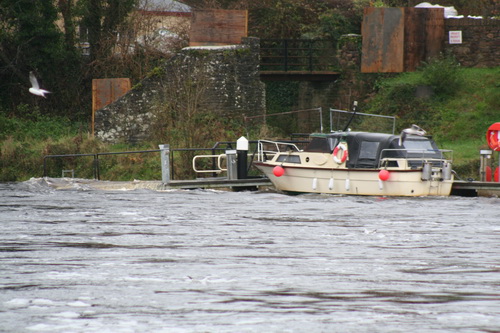
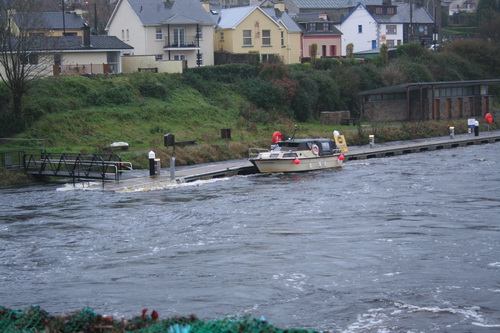
The Ballina pontoon

That’s Ballina, Co Tipperary, on the Shannon, opposite Killaloe.

Killaloe 20160101 14_resize

Looking upstream

Killaloe 20160101 15_resize

The ramp

Killaloe 20160101 20_resize

Looking downstream

Killaloe 20160101 21_resize

From the railway footbridge

Photos taken on 1 January 2016.

The pontoon seems to be more severely affected than it was in the last big floods, on 22 November 2009.

New Ballina pontoon in floods 20091122 1_resize

From across the river

New Ballina pontoon in floods 20091122 2_resize

From the bridge


Remember, remember the twenty-fifth of November

25 November 2015 will be the 170th anniversary of the sinking of the Royal Canal passage-boat Longford and the deaths of fifteen people.

This was not (pace Ruth Delany in Ireland’s Royal Canal 1789–2009 Lilliput Press, Dublin 2010) “the worst accident ever to happen on the Irish waterways”: that melancholy distinction belongs to the drowning at Carrick-on-Suir of about 111 people in 1799 [see “The cries at the bridge” on this page], while the second-worst was the drowning of twenty people on Lough Corrib in 1828, the event commemorated by Antoine Ó Raifteiri in his poem Eanach Dhúin.

But the 1845 accident, between Porterstown and Clonsilla Bridges, was the worst to occur on an Irish canal. Evidence at the inquest and subsequent trial suggests great laxity in the management of the Royal Canal Company’s affairs, even if the immediate cause was an act of insane irresponsibility on the part of the boat’s temporary steerer.

I do not know whether any plaque or other artefact commemorates the event.

Aw sheughs

On 6 November 2015 there was a meeting of the Inland Waterways flavour of the North South Ministerial Council, whereat the Minister for Fairytales (RoI) and the Minister for Marching Bands (NI), each with a sidekick, discussed waterways matters. The joint communiqué, artfully written to provide outsiders with as little information as possible, is available here [PDF], but here’s a summary:

  • WI’s “capital expenditure focused on infrastructure repairs”, presumably because it has no money for any improvements or extensions, except a bit of dredging in or near the constituency of the Minister for Fairytales
  • yes, that means the River Finn, Saunderson’s Sheugh, which we’re pretending is or was part of the Clones Sheugh or Ulster Canal
  • WI has managed to get “third party funding” of over €1 million for waterside developments, which is good: much better than transferring WI money to other bodies. WI is trying to nab euroloot but, as there were no announcements of success, we must assume that this is work in progress. Mind you, the ministers would probably claim the success (and the photoshoots) anyway
  • WI may sell some unspecified property
  • the important one:

LEGACY SCALE LINKAGES FOR NORTHERN BASED WATERWAYS IRELAND STAFF

The Council approved the determination made by Waterways Ireland regarding legacy scale linkages for northern based staff.

I knew you’d want to know about that. Whatever it means.

On 17 November 2015 the latest attempt to get the boys and girls of the Northern Ireland Assembly to be nice to other reached some sort of conclusion, which you can read about in the Irish Times (until it disappears behind a paywall) and the Manchester Guardian. But of course the important question is whether we southron loons have to buy sweeties (sheugher candies) for our northern brethren to persuade them to be polite. For that, gentle reader, you must turn to the inspiringly-titled A fresh start — the Stormont Agreement and implementation plan, available here [PDF].

You will not, of course, want to bother reading most of it, so we can skip straight to Section E Irish Government Financial Support on page 30. New readers may wish to know that, many NI disagreements ago, the Irish government, led at the time by a group of leprechauns who believed they possessed a pot of gold, resolved to impress the poor benighted northerners with a display of southern wealth and power. Accordingly, it promised to pay for all sorts of transport infrastructure, provided that it could be claimed to have some sort of cross-borderality and preferably looked iconic. Whether there was any point to any of the schemes was a matter omitted from consideration.

The three main proposals, IIRC, were

  • the A5, a road in Northern Ireland
  • the Narrow Water Bridge, which would cross the Newry River in the middle of nowhere (whereas a south-eastern bypass of Newry might actually be useful). And it would have an opening span for the many vessels that visit Newry by the Ship Canal
  • the Clones Sheugh, a short section of the Ulster Canal.

Unfortunately the hardheaded northerners have long memories and they keep looking for their three sweeties long after the Free State realised that it couldn’t afford them. So has this latest throwing of their toys out of the pram forced the Free Staters to give in and buy them the A5, the iconic bridge and the Clones Sheugh?

Up to a point, Lord Copper.

The Irish government says it’s all in favour of, er, “investing” in infrastructure “to support North-South co-operation to help unlock the full potential of the island economy”, where no doubt eighteenth century transport methods will prove to as important as they were in the time of Grattan’s Parliament. But with that, and all the other waffle and irrelevancies shoved in at the start of the section, it is clear that the Irish government is trying to big up a small contribution. It drags in the European Union, the Dublin to Belfast railway, flood relief, energy, communications and health, which have nothing to do with the case, but which between them fill almost the whole of the first page.

From there, though, it has to get specific, or at least look as if it’s doing so. Accordingly, each of the three white elephants gets a subsection to itself, with numbered paragraphs, from which we learn that:

  • the Free State government “remains supportive of the commitment under the St Andrews Agreement” to co-fund the A5. It’s going to pay more (I think): £25 million a year in the years 2017–2019, up from a total of £50 million
  • the Free State government “remains committed to the concept of the Narrow Water Bridge”, which has “potential to provide jobs” [how?]; it will review the plans with the NI Executive and think about it by June 2016. It says nothing about the disappearance of funding
  • the Free State government does not say that it “remains supportive of the commitment under the St Andrews Agreement” to fund the Clones Sheugh. Nor does it say that it “remains committed to the concept”. What it does say about the sheugh is that it is funding Saunderson’s Sheugh (see above), it will think about more cross-border greenways and blueways including the Ulster Canal and it and the NI Exec will identify “options for jointly developing future phases of the Ulster Canal restoration project”, which I take to mean that the southron taxpayer won’t be stuck with the entire bill. Oh, and it’s going to think about funding a bleeding sail training vessel, another exercise in pointlessness and nitwittery.

That’s almost it: there is something about a north-west thingie, senior officials will meet and there will be progress reports.

These documents are not necessarily constructed to provide information to outsiders, but my sense is that the Clones Sheugh danger to the southron taxpayer has receded for the moment, although the Narrow Water Bridge and the sail-training nitwittwery need to be blown out of the water (or into it). The A5 road is to go ahead: I don’t know much about it but it might be the least objectionable of the lot.


Broadstone Luas works

Thanks to Niall Galway for these photos of work under way at the Broadstone for the new LUAS line.

Broadstone October 2015 (Niall Galway) 01_resize Broadstone October 2015 (Niall Galway) 02_resize Broadstone October 2015 (Niall Galway) 03_resize Broadstone October 2015 (Niall Galway) 04_resize Broadstone October 2015 (Niall Galway) 05_resize Broadstone October 2015 (Niall Galway) 06_resize Broadstone October 2015 (Niall Galway) 07_resize


From the blatts

Walls

Low wall on the right

Low wall on the right

The Irish Times reported on 24 August 2015 [may disappear behind a paywall at some stage] that a woman with “a blood alcohol level of 280mg per cent” [I am unable to make sense of that measurement] had drowned in the Grand Canal near Portobello in Dublin. The account includes no evidence that the woman tripped over the low wall that borders the canal; I do not know whether such evidence was presented. Nonetheless

Dr Farrell [the coroner] said he would write to Waterways Ireland for the matter of the height of the wall to be evaluated in the public interest.

I hope that the first step will be a cost-benefit analysis of any proposed change.

Percy Place

On 26 August 2015 [possible paywall alert] the Irish Times said that

Waterways Ireland is to sell an infill development site at 53 Percy Place, Dublin 4, which could accommodate a four-storey office block or residential scheme. CBRE is seeking more than €1.6 million for the 0.04 hectare (0.1 of an acre) site on which there is a two-storey derelict building.

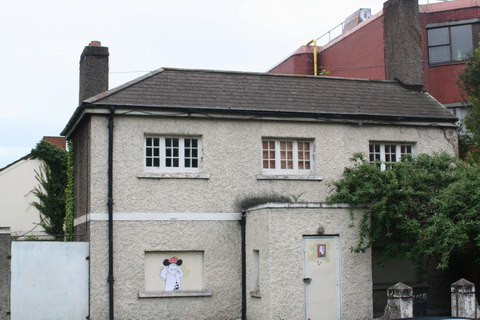
53 Percy Place, Dublin

53 Percy Place, Dublin

The price is interesting. The property was valued at €1.6 million in 2008. WI’s Annual Report and Accounts for 2013 say

Surplus assets represent those assets that the Body deem are not strategic and are available for sale. Valuations of surplus assets are based on Recoverable Market Value from Internal and External valuations reports.

Plot 8 valued at €7,000,000 (2012: €7,000,000); this was valued in September 2013 by GVA Donal O’Buachella.

Percy Place was valued at €800,000 (2012: €650,000) by Felicity Fox FRICS FSCSI Auctioneers Valuers & Estate Agent in December 2013.

47 Lennox Street was valued at €270,000 (2012: €195,000) by Richard Fawcett BSc (Hons) Valuation & Estate Management Valuer, Waterways Ireland based on expected sales proceeds at December 2013. Previously valued at €380,000 by CBRE in October 2008.

The Hatch Bar valued in 2012 at €45,000 (2012: €45,000) by Richard Fawcett BSc (Hons) Valuation & Estate Management Valuer, Waterways Ireland in 2012.

The first three properties were to be sold to fund the construction of the Clones Sheugh. I have heard nothing more of the other two sites, Lennox Streeet near Portobello and Plot 8 in the Grand Canal Dock at Ringsend, and I didn’t see what WI got for the Hatch Bar. However, WI may have done very well on the sale of some other surplus assets, achieving four times what it expected:

The Barges were valued in 2013 at €51,000 based on bids received. Previously valued in 2011 by Bryan Millar, Consultant Engineer Naval Architect and Marine Engineer at €13,000.

On the basis of its asking price for Percy Place, WI seems to believe that the property collapse is over; perhaps it is even now in negotiation to develop Plot 8 and build a sheugh all the way to Clones. In the meantime, if it gets €1.6 million for Percy Place, that will help to alleviate the damage caused by the smash-and-grab raid carried out by the Department of Fairytales to pay for Saunderson’s Sheugh.

Derg Marina

The same edition of the Irish Times reports that Derg Marina in Killaloe has been sold for €1.7 million to “a local investor”. It suffered in the floods of 2009 and would need considerable investment were it to be restored to its former use. The site may contain remains of the PS Lady Lansdowne.

Greenway blues

The Weekly Observer of 26 August 2015 reports in its print edition [the story is not yet online] that Great Southern Trail Ltd, the voluntary body that manages part of the old Limerick to Tralee railway route as a greenway, is to cease doing so on 8 November 2015. GST, said to be the only voluntary group in Europe to manage a greenway, hopes that CIE and Limerick City and County Council will take over the management of the route. The newspaper account suggests that the burden of maintaining the greenway and cycleway to EU standards was too great for a voluntary group:

In particular, a very small number of farm crossings are the subject of unfavourable comment due to the difficulties encountered in keeping them clean.

Art

The Ulster Canal Greenway has an artwork. Waterways Ireland is to be in charge of the Ulster Canal Greenway. But the Shinners haven’t gone away, you know:

[…] Sinn Féin councillor Brian McKenna voiced strong criticism of the efforts made at Government level over the past two decades to put in place the substantial funding necessary to guarantee that the reopening of the Canal – long identified as a crucial project for Co Monaghan tourism – was realised in full.

If their dedication to the Clones Sheugh is a mark of Sinn Féin’s approach to economic policy and public investment, we may expect grants for flax-growing to be reinstated immediately they’re elected. And for opening coal-mines and carrying corn to Dublin.


Please don’t look at these photos

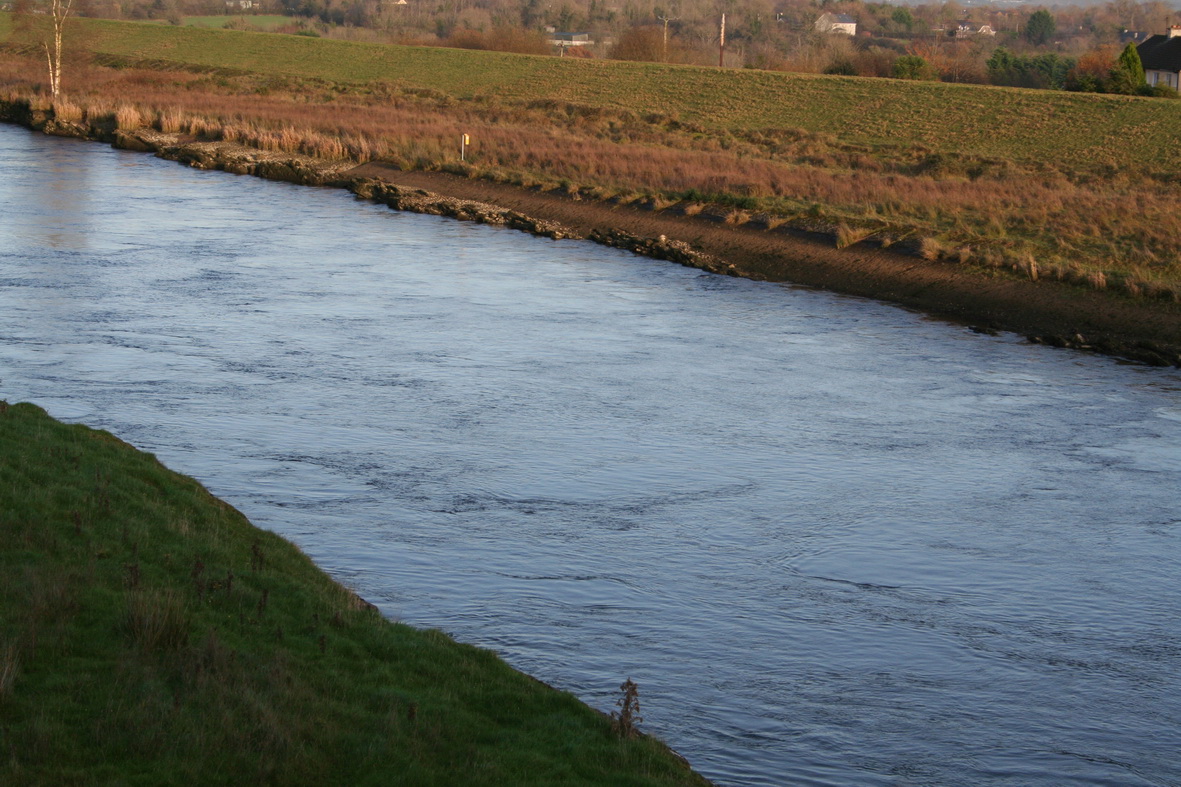
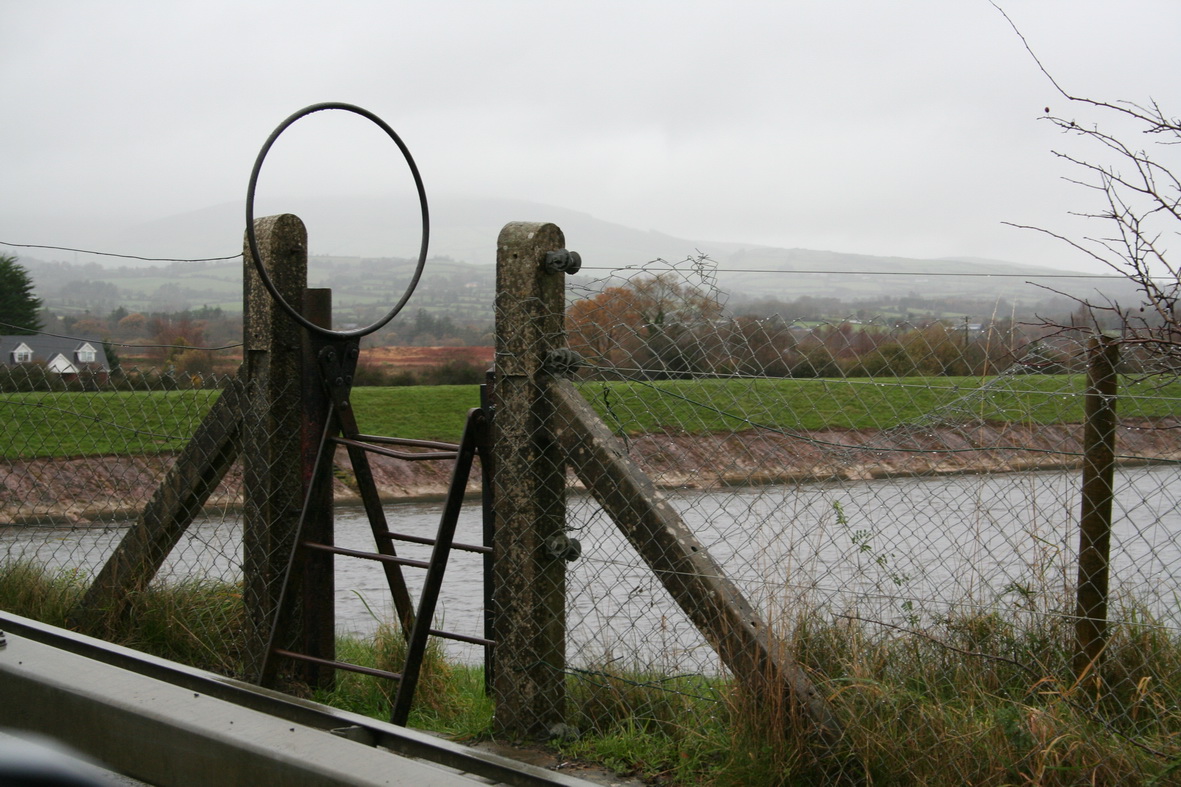
I regret to say that I have published, on these pages, several photos of the Shannon, Parteen Villa Weir, Ardnacrusha hydroelectric power station and its headrace and tailrace canals.

The storage basin between the road bridge over the River Shannon at Killaloe and the weir and canal intake at Parteen, including the right and left embankments constructed to form the said storage basin, together with the land outside and along the said right embankment delimited and separated from the adjoining land by post and wire fencing and also the land outside and, along the said left embankment delimited by the left bank of the Kilmastulla River Diversion.

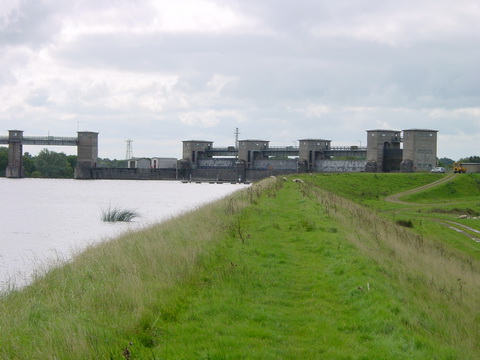
Parteen Villa Weir from the embankment upstream (2008)

Parteen Villa Weir from the embankment upstream (2008)

The flooded area above Parteen Villa Weir

The flooded area above Parteen Villa Weir

The weir and canal intake, the embankments constructed to form abutments to the said intakes, the syphon under the said canal intake, and adjoining lands inside and bounded by post and wire fencing.

Parteen Villa Weir

Parteen Villa Weir

Parteen Villa Weir from upstream

Parteen Villa Weir from upstream

The six sluices controlling discharges down the old course of the river

The six sluices controlling discharges down the old course of the river

The head race between the canal intake and the power station including the right and left embankments constructed to form the said head race, together with the land outside and along the said embankments delimited and separated from the adjoining land by post and wire fencing, and also the road bridges over and the syphons and culverts under the said race.

The headrace from the bridge at Clonlara 20 November 2009

The headrace from the bridge at Clonlara 20 November 2009

The headrace from the bridge at O'Briensbridge 22 November 2009

The headrace from the bridge at O’Briensbridge 22 November 2009

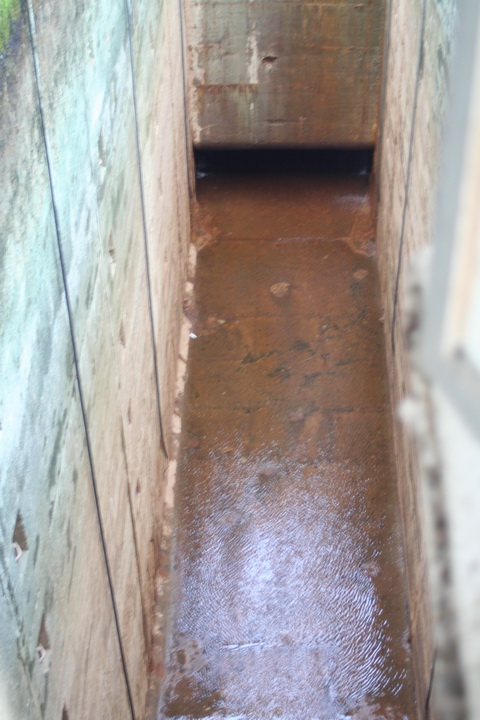
The power station, the intake to the said power station, the locks and all adjoining buildings and land within the area around the said power station, all of which are delimited and separated from the adjoining land by post and wire fencing.

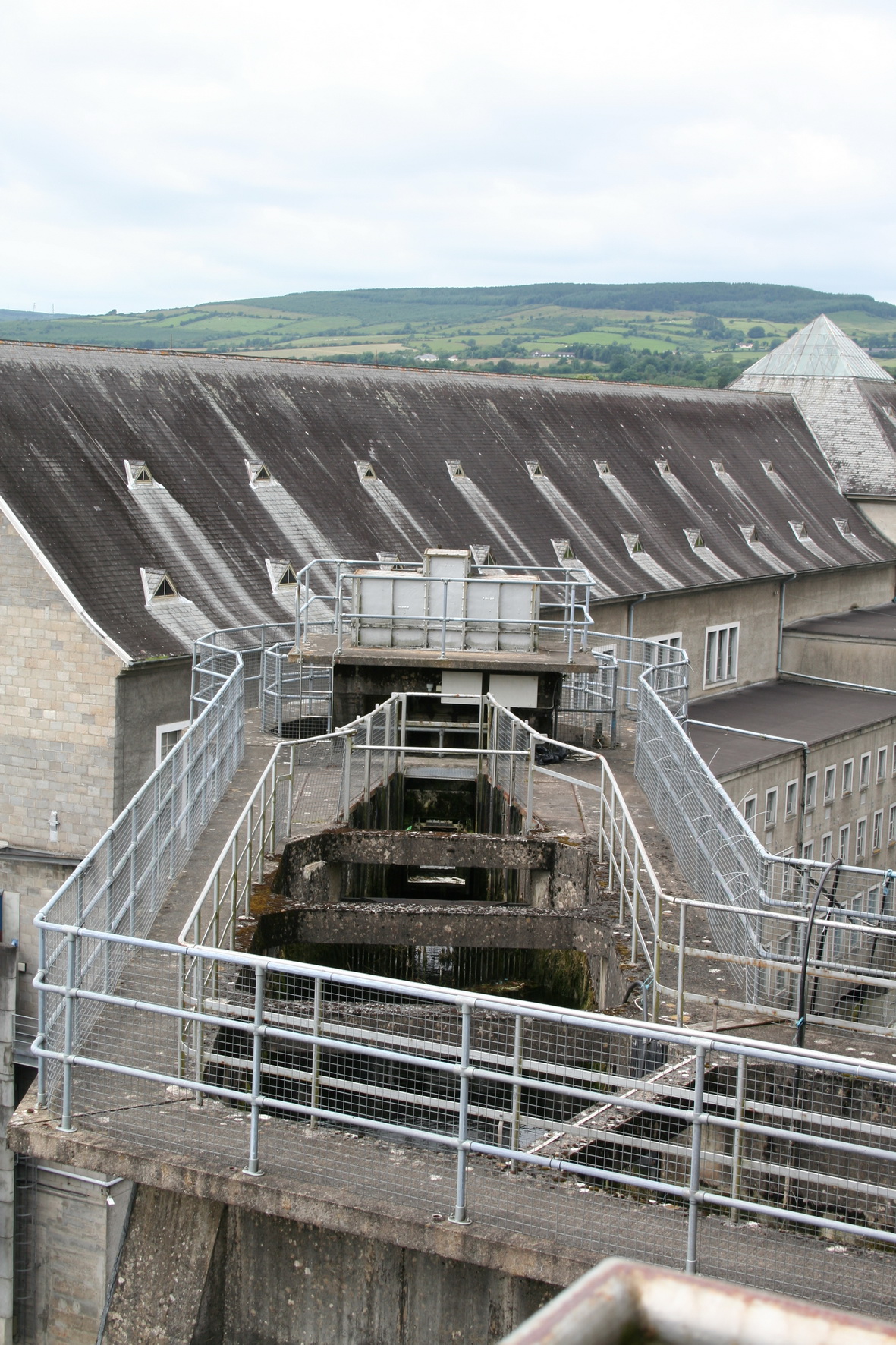
The upper chamber at Ardnacrusha lock

The upper chamber at Ardnacrusha lock

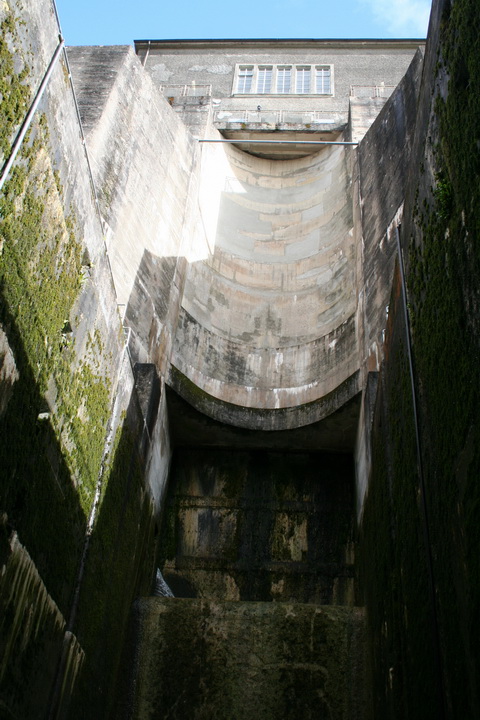
Ardnacrusha: looking up at the top chamber from the bottom

Ardnacrusha: looking up at the top chamber from the bottom

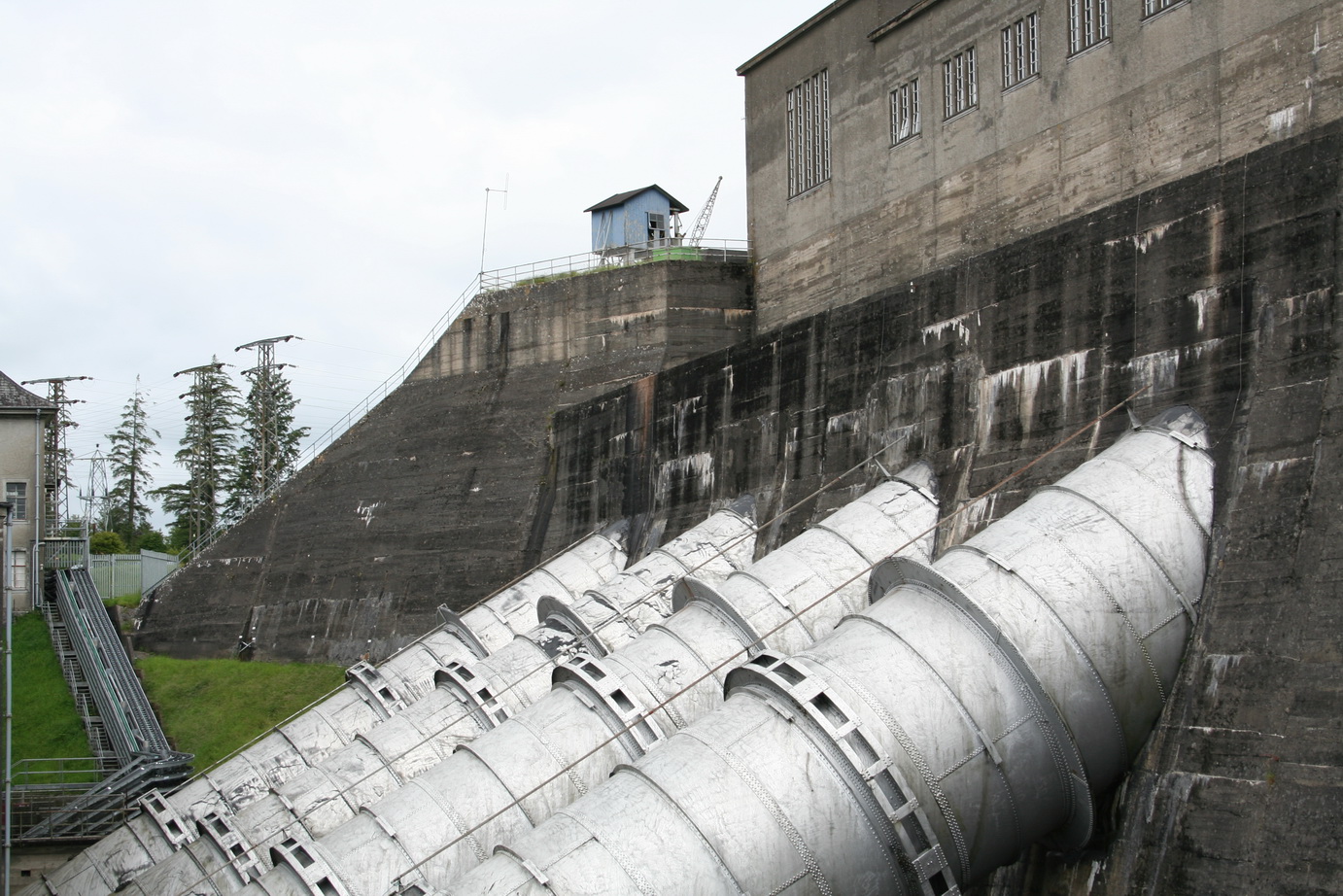
The penstocks that feed the turbines at Ardnacrusha

The penstocks that feed the turbines at Ardnacrusha

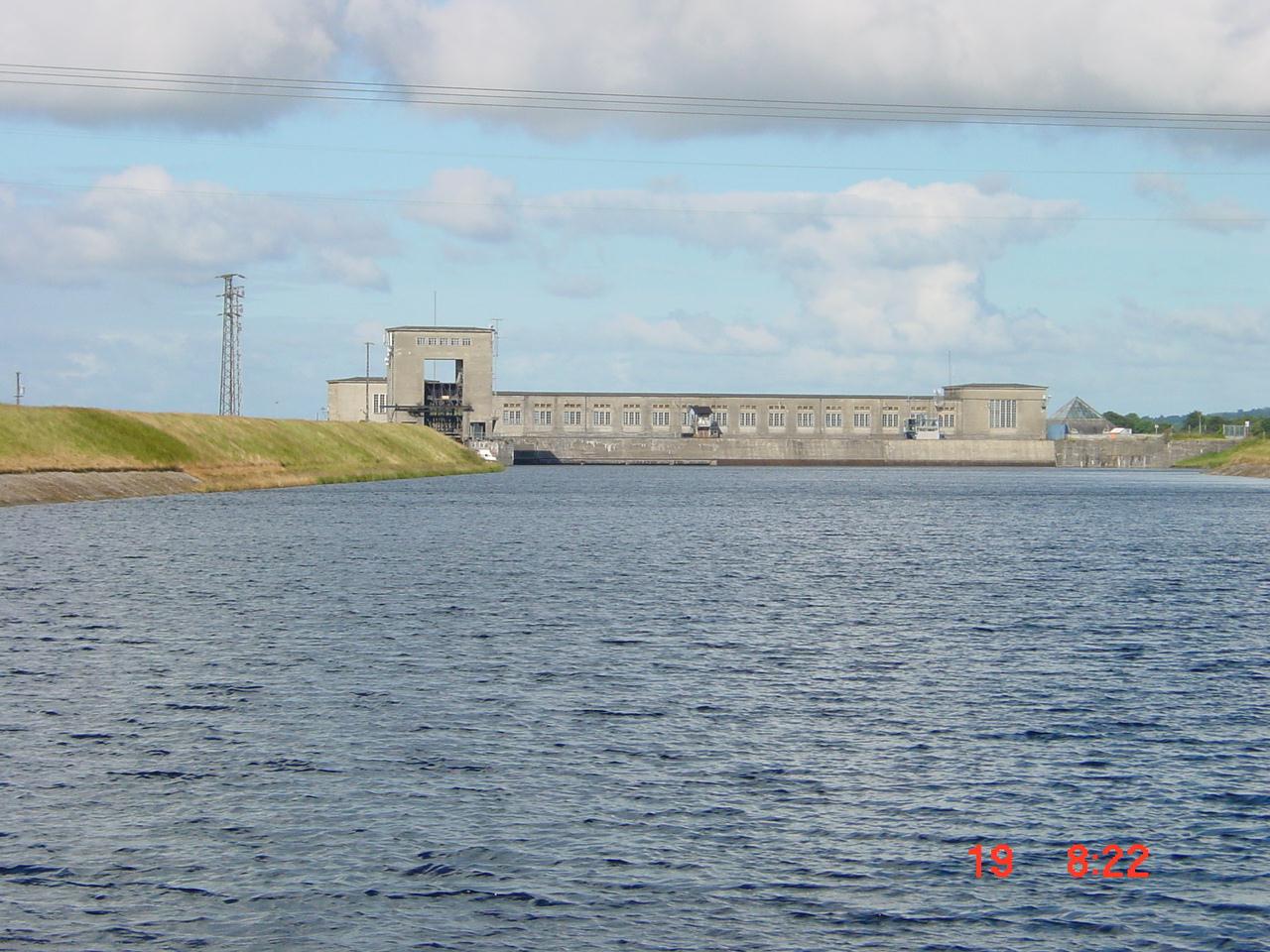
Ardnacrusha power station from the headrace

Ardnacrusha power station from the headrace

The fishpass

The fishpass

The tail race from the power station to the River Shannon, the branch railway running along the said tail race, and the land on either side of the said tail race, all of which are delimited and separated from the adjoining land by post and wire fencing.

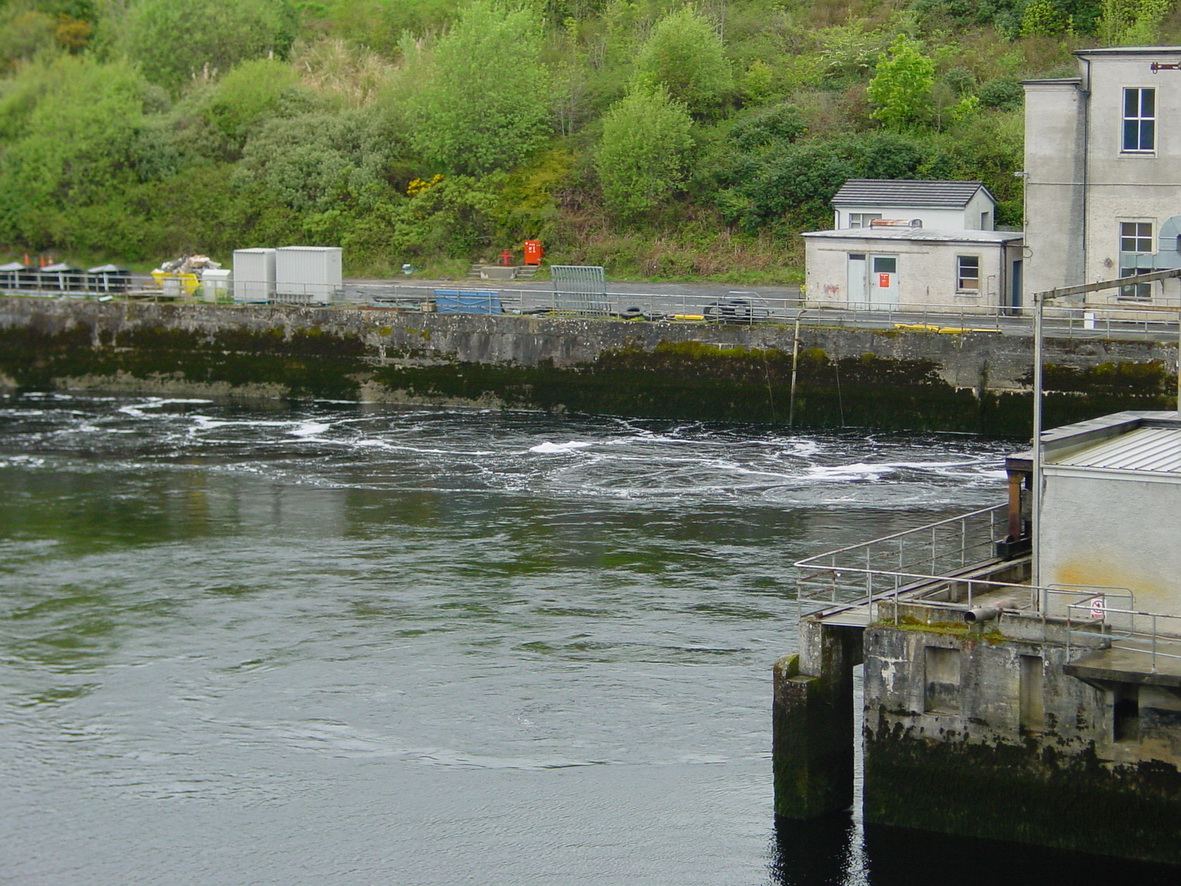
Outflow

Outflow

And I have lots more photos … here and here and here, which I ask readers not to look at either.

You see the thing is, Your Honour, Sir, I didn’t know. I didn’t realise that, under Statutory Instrument 73 of 1935 Shannon Electricity Works (Declaration of Prohibited Place) Order 1935, the places as described are prohibited places under paragraph (d) of Section 3 of the Official Secrets Act 1911, as amended by the Official Secrets Act 1920, and as adapted by or under the Adaptation of Enactments Act 1922 (No 2 of 1922). That’s because

information with respect thereto, or the destruction or obstruction thereof, or interference therewith, would be useful to an enemy.

Apparently, under those acts, giving anyone information about a prohibited place is a felony, punishable by imprisonment for up to fourteen years.

Wikipedia says that, in Ireland, those acts were repealed by the Official Secrets Act 1963, but was the statutory instrument repealed? I don’t know, but I’ve written to the Department of Justice to ask.

In the meantime, please don’t look at the photos, especially if you’re a Foreign Agent: a term that, under the 1963 act,

includes any person who is or has been or is reasonably suspected of being or having been employed by a foreign power either directly or indirectly for the purpose of committing an act (whether within or outside the State) prejudicial to the safety or preservation of the State, or who has or is reasonably suspected of having (whether within or outside the State) committed or attempted to commit any such act.

I wonder whether that includes the European Central Bank.

Hurrah for the red, white and orange

Colour discrimination seems to be rampant in Ireland. Of the sets of colours [red, white and blue] and [green, white and orange], there is Official Endorsement of two, green and blue, while red, white and orange are ignored. Even the North/South Ministerial Council has got in on the act, with a whole page on its website about greenways and blueways. They must have been overdosing on the Erne flag. Their page is a list of links, sort of plonked there without context or explanation, but there’s probably some hands-across-the-borderism or something going on.

I read in the Guardian today of a proposal for a greenway on the former railway line between Roscrea and Portumna via Birr. And a jolly good thing too, but how many greenways and blueways can one small island accommodate? How thinly will the tourists be spread? And what about those of us who hate walking, cycling, kayaking and other such energetic pursuits?

The industrial heritage of Mullingar …

in song.

For railway enthusiasts

The economics of the current Irish railway system have received insufficient attention. If they had, the entire system (with the possible exception of some commuter lines) would have been closed down years ago and we wouldn’t have the current mad proposal to reopen the railway line to Foynes [h/t COM] at the same time as a road improvement scheme is being studied.

Happily, however, the railways of the neighbouring island have recently been the subject of considerable attention. Duncan Weldon considers here the “economic, financial and business questions raised” by the railway systems of the island of Sodor, concluding:

Economists do not fully understand the long term drivers of productivity growth. But the lesson of Sodor is this: over investing in a technologically backward, sheltered and protected from competition railway is not the road to prosperity.

And yet despite stagnant living standards the people/engines of Sodor appear content. Indeed it is unclear if they get paid at all — instead they seek meaning and joy in a Stakhanovite desire to be “really useful engines”. The great trick of Sir Toppham is employ engines who essentially evoke the image of the New Soviet man in the service of a proto-capitalist, semi-feudal enterprise.

Responding, James Kwak said:

Sodor Railways seems to be the epitome of a fat, dumb, and happy company. Labor is incompetent, yet management does nothing about it, and in return labor is eternally loyal to management. Who loses? Customers and shareholders.

However, Dan Davies offers a different perspective here. But Tracy Van Slyke has spotted other issues. I wonder whether any university offers courses in TtTE Studies.

But back to Foynes. I see that Councillor Emmett O’Brien believes that

[…] the tourism potential of this line could be explored with the possibility of steam train tourism linking Adare to Askeaton and Foynes.

The appropriate information is here.