
The Carrick-on-Suir creamery chimney (Shannon Scheme electrification)
The Carrick-on-Suir creamery chimney (Shannon Scheme electrification)
Posted in Ashore, Built heritage, Drainage, Economic activities, Engineering and construction, Extant waterways, Industrial heritage, Ireland, Operations, Safety, Scenery, Shannon, Suir, waterways, Waterways management, Weather
Tagged Ardnacrusha, Athlone, Banagher, bridge, Carrick-on-Suir, Clare, Cosgrave, creamery, electrification, ESB, floods, flow, Ireland, Operations, pylons, Shannon, Suir, waterways
Parteen Villa Weir is sending large amounts of water down the original channel of the Shannon, and over the Falls of Doonass, to draw water off from the upper reaches of the river.
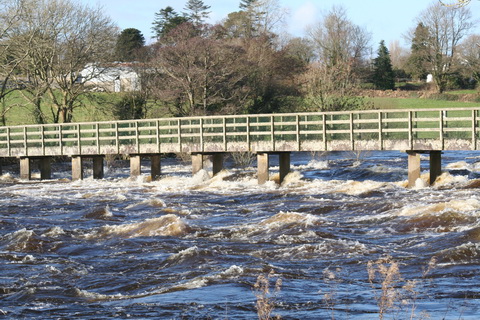
The footbridge at Castleconnell
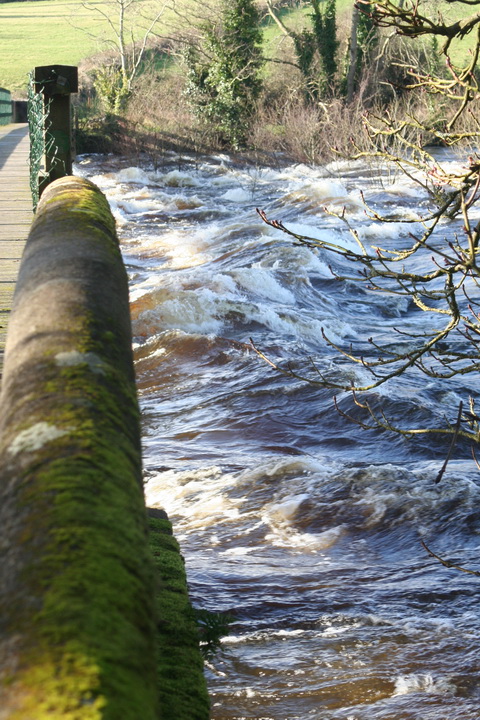
Above the bridge
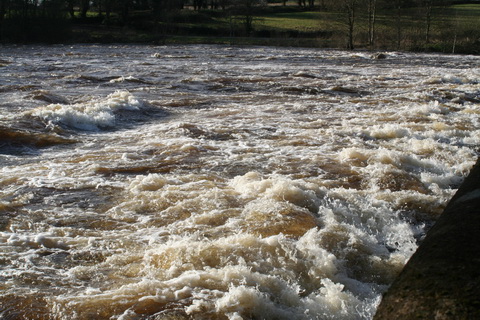
The downstream side of the bridge
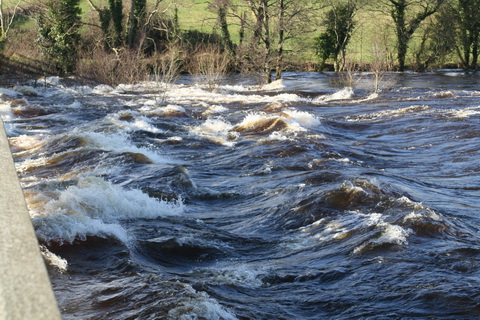
A bumpy ride
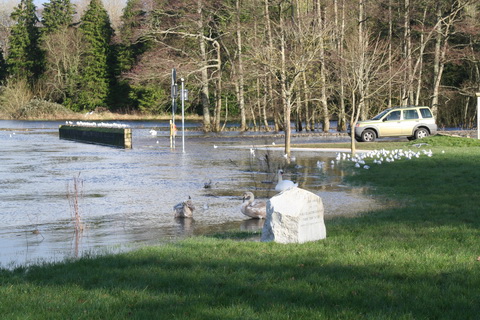
At normal levels the bottom of the wall is several feet above the water
Levels below Parteen Villa have not yet reached those of 2009 and the channel can probably take more before folk get flooded.
The Old River Shannon site has some photos taken at Parteen Villa Weir.
Posted in Built heritage, Canals, Charles Wye Williams, Drainage, Economic activities, Engineering and construction, Extant waterways, Industrial heritage, Ireland, Natural heritage, Operations, Safety, Shannon, Sources, Tourism, Water sports activities, waterways, Waterways management, Weather
Tagged boats, bridge, canal, Castleconnell, Clare, ESB, floods, flow, Ireland, Killaloe, Limerick, lost, O'Briensbridge, Operations, Parteen Villa Weir, quay, Shannon, turf, vessels, water level, waterways, Waterways Ireland, weir
I emailed Waterways Ireland on 4 February 2014:
I would be grateful if you could tell me whether any person applied, under byelaw 38q, for permission to hold an aquatic event on the Grand Canal at or near Sallins on or after Friday 24 January 2014.
WI said:
No-one applied to hold an aquatic event on or around that date on the Grand Canal.
If I were Waterways Ireland, and I heard a rumour (or got a tip-off from the NSA) to the effect that some boaters were going to hold a demo at Sallins, and if nobody had asked permission to hold the demo, or made any arrangements with me about it, and if I expected work to start shortly at Sallins, I might be worried that the demo might turn out to be more than a photo opportunity: that it might turn into an occupation or moor-in, one that would delay the work and possibly expose me to additional costs.
So I would do what I could, within the byelaws, to prevent the holding of the aquatic event. I would note byelaw 18 (2) (b):
(2) The Commissioners, or any authorised officer, may prohibit navigation on the canals or any part thereof from time to time for the purposes of—
( a ) an emergency, or
( b ) preventing the passage of a boat in respect of which a permit has not been issued under these Bye-Laws, or has been withdrawn, or is not displayed in the manner prescribed in Bye-law 40 of these Bye-laws.
If I were not Waterways Ireland, then, but a would-be demonstrator, I would make a note to inform the authorities next time I planned a demo so that there would be no surprises on either side.
I am, however, neither WI nor a would-be demonstrator, so (apart from the information I gleaned from WI) I know nothing of what either side may have done or not done, thought or not thought.
Posted in Ashore, Built heritage, Canals, Economic activities, Engineering and construction, Extant waterways, Ireland, Irish inland waterways vessels, Operations, People, Politics, Restoration and rebuilding, Safety, Sources, Tourism, Water sports activities, waterways, Waterways management
Tagged boats, bridge, canal, demo, department of arts heritage and the gaeltacht, Dublin, Echelon, Grand Canal, Ireland, jetties, Kildare, lock, NSA, occupy, Operations, quay, Sallins, vessels, waterways, Waterways Ireland
See Fergal.b’s post today on boards.ie. Scrapping sounds like a good idea to me, but it would be nice (if it hasn’t already been done) to take as many photos as possible of the vessel.
Posted in Built heritage, Canals, Economic activities, Engineering and construction, Extant waterways, Industrial heritage, Ireland, Irish inland waterways vessels, Operations, People, Politics, Restoration and rebuilding, Safety, Sea, Sources, Tourism, Water sports activities, waterways, Waterways management
Tagged boats, canal, department of arts heritage and the gaeltacht, Dublin, Grand Canal, Grand Canal Dock, graving dock, Ireland, Naomh Eanna, Operations, Ringsend, scrap, vessels, waterways, Waterways Ireland
There was a proposal in the 1830s for a ship canal along the coast, outside the railway embankment, from Dublin to the asylum harbour at Kingstown. A preliminary report was provided by William Cubitt after the House of Commons Select Committee on the Dublin and Kingstown Ship Canal had reported in July 1833.
Henry E Flynn was opposed to the idea and, in his A Glance at the Question of a Ship Canal connecting the asylum harbour at Kingstown with the river Anne Liffey at Dublin &c &c &c [George Folds, Dublin 1834], dedicated to Daniel O’Connell, he wrote eloquently of the drawbacks of the proposal, which included this:
Be it remembered, that the whole coast from Ringsend to Merrion is the bathing ground for the less affluent classes of the Citizens; and hundreds get their bread by attending on and bathing the females who frequent it.
And are the patriotic Would-be’s who support a Ship Canal equally reckless of the health, the morality, and the existence of those persons? Would they have no objection to expose their mothers, wives, sisters and daughters to the immediate wanton gaze, the scoffs, the jeers, the immodest jest, the filthy exposure and indecent exhibitions which the most abandoned race of men [ie sailors] could find in their dissolute minds to perpetrate in their view, and within their hearing? And yet, all this must be the consequence of a Ship Canal in the immediate vicinity of the female baths and bathing ground along the line.
Happily, the canal was never built.
Posted in Ashore, Built heritage, Canals, Charles Wye Williams, Drainage, Economic activities, Engineering and construction, Extant waterways, Industrial heritage, Ireland, Non-waterway, Operations, People, Politics, Rail, Safety, Sea, Shannon, Sources, Steamers, The cattle trade, The fishing trade, Tourism, Water sports activities, waterways, Waterways management, Weather
Tagged cattle, Daniel O'Connell, Grand Canal Dock, Henry E Flynn, Liffey, North Wall, Richard Bourne, strand, William Cubitt, women
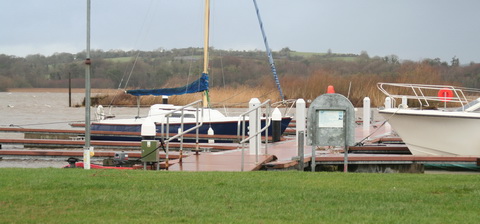
The ramp to the pontoons in Dromineer is now sloping upwards
The water level at Banagher has risen about one metre in the past 35 days.
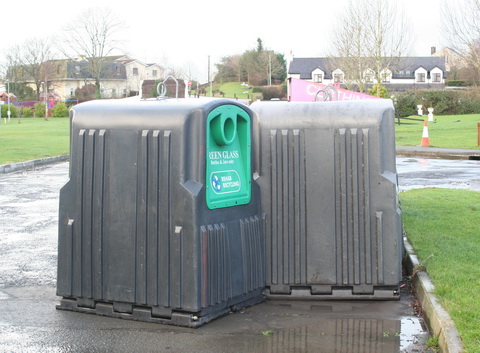
Dromineer people need to drink more wine
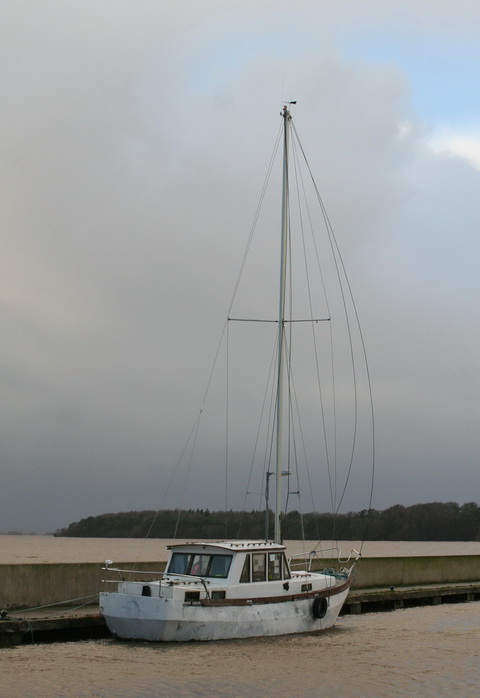
The ghost ship is back
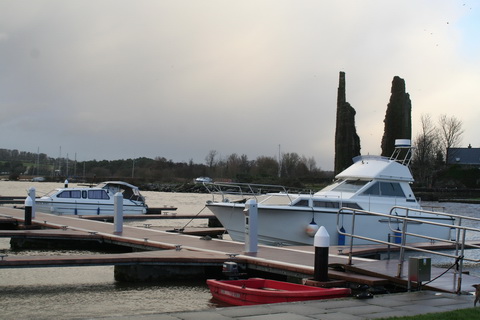
Dromineer sans ivy
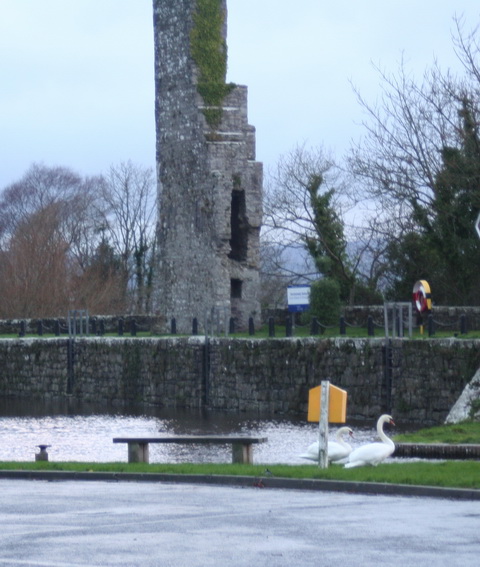
Garrykennedy
Garrykennedy from a distance
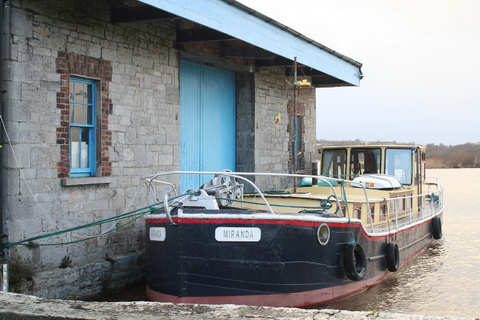
Miranda in Dromineer
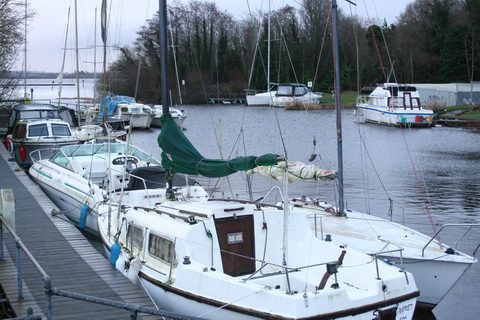
Garrykennedy 1
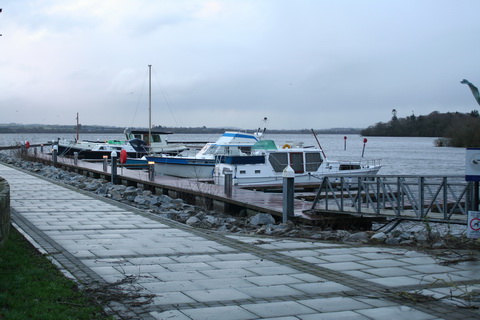
Fewer boats in WI berths this year, I think
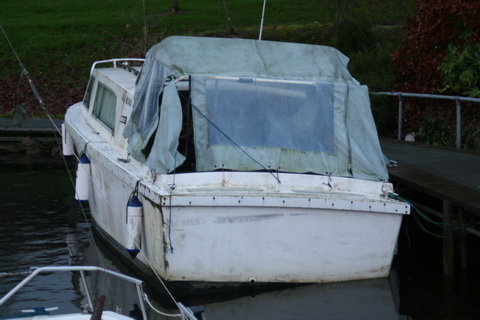
Garrykennedy 2
Posted in Ashore, Built heritage, Charles Wye Williams, Economic activities, Engineering and construction, Extant waterways, Industrial heritage, Ireland, Irish inland waterways vessels, Restoration and rebuilding, Safety, Scenery, Shannon, Sources, waterways, Waterways management, Weather
Tagged Banagher, boats, Drominer, Garrykennedy, Ireland, Lough Derg, Operations, Shannon, Tipperary, vessels, Waterways Ireland
Folk who have boats tied to fixed jetties on Lough Derg might like to check their ropes: the water level has risen quite a bit and some ropes are bar-taut.

 Irish waterways history