Category Archives: Shannon

The opening of the Royal Canal

On 27 May 2017 the Royal Canal Amenity Group and Waterways Ireland are to commemorate the fact that

In May 1817 the Royal Canal was officially opened from Dublin to the Shannon ….

[Unfortunately I am unable to find anything about the commemorative event on WI’s website, although they did send me some information about it.]

I wondered how the opening might have been celebrated in 1817, but I haven’t been able to find out anything about it. I am hoping that some more knowledgeable person might be able to provide information: please leave a Comment below if you can help.

Ruth Delany gives 26 May 1817 as the date on which the contractors said that the western end of the canal (to the Shannon at Richmond Harbour) would be ready to hand over to the Directors General of Inland Navigation, who were running the show after the Royal Canal Company collapsed under the weight of its debts.

However, as far as I can see, the British Newspaper Archive contains no mention of any opening ceremony at any time in 1817. The Lanesborough Trader, the first boat to travel from the Shannon to Dublin did so in January 1818 [Saunders’s News-Letter 2 February 1818] and in May Mr Peel moved that a further £15000 be granted for completion of the navigation, where “shoals were
found to interfere” [Dublin Evening Post 23 May 1818].

Traffic increased later in 1818: in October the directors of the New Royal Canal Company went by boat

… from Dublin to Tarmonbury, and thence to the termination of the Canal, near the river Shannon, to inspect the works and give every necessary direction for the entire completion of that great and important undertaking ….
[Dublin Evening Post 20 October 1818]

The same newspaper reported that several boats of coal, found on the banks of the canal near Tarmonbury, had arrived in Dublin. It seems, therefore, that the canal was usable even if not entirely finished.

Later that month Christopher Dillon of Athlone, who had been trading on the Grand Canal and the Shannon, announced that he was moving his boats to the Royal Canal — but the western terminus for his boats was at Ballymahon, from which (although he did not say so) goods could be carried by road to Athlone: just the situation the Grand Canal Company had feared. [Dublin Evening Post 27 October 1818]

I have found no evidence of an opening ceremony in 1817; nor have I found evidence that the canal was actually open from the Shannon to the Liffey (or the Broadstone) in 1817, in that no boat seems to have travelled between the Shannon and the Liffey. At least one boat did so in 1818, but again I have no evidence of any opening ceremony.

There is one further mystery. The Royal Canal harbour at the junction with the Shannon is called Richmond Harbour. I presume that that is a compliment to the Lord Lieutenant of Ireland, His Grace Charles Lennox, 4th Duke of Richmond, 4th Duke of Lennox, 4th Duke of Aubigny, KG, PC. But he had ceased to be Lord Lieutenant in 1813 and was presumably unable to dispense favours after that, so why was the harbour named after him? I don’t know when the construction of the harbour was begun or finished.

I have not visited the National Archives in Dublin to look at the papers of the Directors General of Inland Navigation, which may have something on the events of 1817 and 1818. Perhaps WI’s archive has something relevant too. I would therefore be glad to hear from anyone who has searched those archives or found other evidence about the period.

Newspapers cited here were accessed through the British Newspaper Archive.

 

Float Bridge

This post was originally entitled “The avarice of the ferryman” but, as more information has been added, it seemed best to name the post for the remarkable Float Bridge itself, which links road, rail and waterway transport.

The avarice of the ferryman

Castlepollard, Sept 11. Last Week the following Accident happened at the Ferry, or Float, plying for Passengers over the River Inny, in the County of Westmeath: — A Post-Chaise and Four, with a Lady and Gentleman, were imprudently put upon this dangerous Conveyance, without separating the Cattle from the Carriage; unfortunately a Car and Horse had been put in before them, which, with the Post-Chaise and Horses, occupied the full Length of the Float.

On the Passage, the Car Horse grew very uneasy, and going back, the Car annoyed the Post-Chaise Horses, which occasioned them to back in like Manner, until the Post-Chaise fell into the River, and dragged the Horses after it; three of the Horses were drowned, being entangled with the Harness; the other broke through his Harness, and swam over to a boggy Place, but could not get upon Land; one of the men followed him in a small Boat, to lead him to a proper landing Place, but not being able alone to guide the Horse and row the Boat, the Horse got too near it, and striking it with one of his Feet, overset and sank it, by which the Man was drowned; the Horse then swam, and was saved.

It was very lucky for the Lady and Gentleman that they alighted from the Chaise at going into the Float. The Carriage, which belonged to the Gentleman, was got out with much difficulty; the Horses were Hacks. The Avarice of the Ferryman occasioned this melancholy Accident.

Hibernian Journal; or, Chronicle of Liberty
18 September 1775


That report came just about a year after this next one.

Good shot wanted

FERRY-BRIDGE, over the River Inny, between the County of Westmeath and Longford, 3 miles from Castlepollard, 12 miles from Mullingar and Longford, Sept 1st, 1774. Complaint having been made, that the Smallness of the Float rendered it inconvenient, and occasioned timorous People to drive or ride many Miles round to avoid the Ferry, the Proprietor therefore has undertaken to build a Bridge at his own Expence, which will be finished with all convenient Speed; in the mean Time, a Part of the intended Bridge, above 30 Feet long, Battlements fixed on each Side, properly gravelled over &c, will be made Use of to ferry over Carriages, &c. A Coach and four may now pass with the utmost Safety, without taking off the Horses, or 20 Head of Cattle, &c in less than 2 Minutes; and, to accommodate Graziers and others, as soon as said Bridge is compleated, Droves of large Cattle, above 30 in Number, will be passed over at the Rate of a British Shilling per Score, private Soldiers with Furlows from their Commanding Officers, in Time, gratis, all other Passengers, Cattle, &c at the usual Rates taken above these 20 Years.

This Road is now in good Repair, and well known to be many Miles nearer from Dublin to the County of Longford, Leitrim, Roscommon, Sligo, Mayo, &c than any other Road; a commodious Inn, near Ferry-bridge, on the Westmeath Side, is building, and a Carriers Inn on the Longford Side, will be both soon finished, and proper People to keep them.

Wanted, to take Care of said Bridge when finished, and to collect the Toll, &c a sober, honest, careful, active, middle-aged, single Man; he must be a Protestant, write a good Hand, and if a good Shot, and understands fishing in Lakes and Rivers, and delights in those Amusements, it will be more agreeable &c. Comfortable Lodging and Board, and not less than £12 per Ann will be made good to the Person approved of, and shall be treated (as far as can be reasonably expected) agreeable to his former Manner of Life. None need apply but such as have an undeniable good Character, as to Honesty and Sobriety, from his former Employers or Neighbours. Inquire of the Printer hereof.

Saunders’s News-Letter
2, 7, 9, 12, 14 September 1774

Sir Thomas Chapman

The Dublin Evening Post of 9 August 1810 advertised part of the Meath and Westmeath estates of Sir Thomas Chapman Bart to be let. They included

The Tolls of the Float near Castlepollard
And an excellent house and fifty acres of land

Applications were to be sent to Sir Thomas at St Lucy’s, Athboy, or to Mr High Dickison at the same address.

St Lucy’s was also known as Killua Castle, set of the Chapman baronets, of whom Sir Thomas was the second. Do be sure to read about the seventh baronet.

Sir Benjamin Chapman

Sir Benjamin James Chapman was the fourth baronet. Ewan Duffy writes:

Float bridge was a privately owned toll bridge. Its owner, Sir Benjamin Chapman, offered the bridge to the Midland Great Western Railway if they would build a station at Float, for which he would also give the necessary land. He subsequently suggested a variation on the agreement that if the company were to cease using the station, the land and bridge should be re-conveyed to him!* As the bridge remained in CIE ownership up to 1971, when it was transferred to Westmeath County Council under the Transport (Miscellaneous Provisions) Act 1971, he clearly did not get such a deal!

The original bridge is no longer there — I paid a site visit there last year, given its railway connection, but it has been replaced sometime in the 20th Century.

* W E Shepherd “The MGWR’s Cavan Branch – 1” JIRRS Vol 16 No 104, pp 282–3


Waterways Ireland’s boat register

A boat-owner of my acquaintance received a text message today. [A text message is a new-fangled form of telegram sent to a telephone, using technologies that need not concern us here.] The message, which I have redacted, read:

Hi, Boater, Waterways Ireland is currently data protecting the boat register. Please confirm your boat registration number S[????] by replying with your email address or to stop text WWSTOP to [?????].

This is not a type of communication that is familiar to me: if it were genuine, I would have expected some more formal message, perhaps a letter or a Marine Notice, to emanate from Waterways Ireland. Furthermore, the phrase “currently data protecting the boat register” is nonsense. And the acquisition by the originator of the boat-owner’s email address does nothing to validate or update the register of boats on the Shannon.

Accordingly, I regard this with deep suspicion, and I have advised the owner to ignore it. However, the owner tells me that the registration number given in the message was correct. That might mean that some evildoer has gained access to the Waterways Ireland register of boats and is now, for some unknown but nefarious purpose, seeking to match email addresses to boats.

I would be glad to hear from anyone who knows more about this. I would also be glad to be assured of the sanctity of WI’s boat register.

Update 13 May 2017

Usually reliable sources tell me that the communication is from Waterways Ireland and represents an attempt to check and update their register of boats. Two points, however, remain:

  • I cannot tell [though others more skilly in these matters may be able to do so] how the, er, lay reader can be assured that such a communication is genuine
  • the communication is itself unclear: I would prefer a more explicit statement of what WI is trying to do and what the recipient is expected to do.


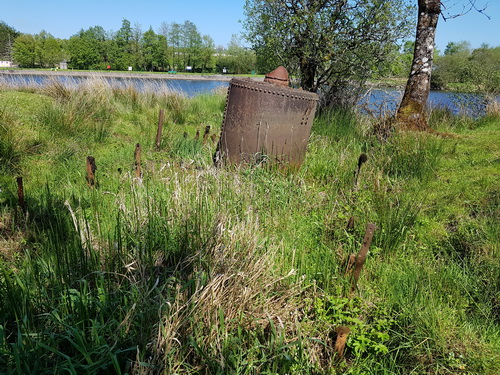
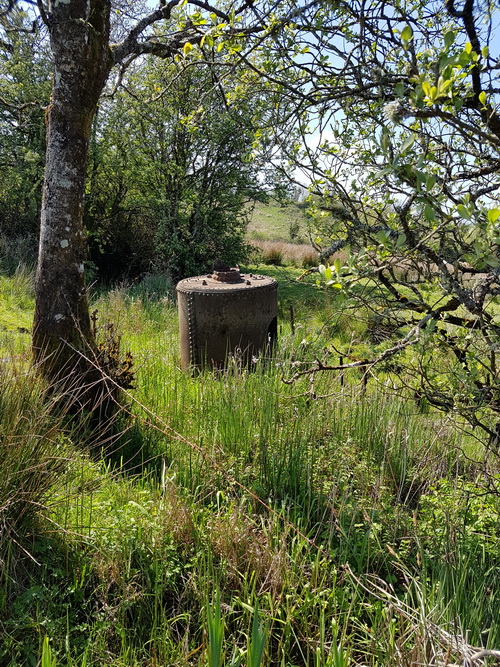
Steamer at Drumsna

Can you help?

Liam Sherringham has sent me two photos of the remains of a steamer at Drumsna.

I am pretty certain that someone at some time told me something about this vessel, but I’ve lost the information. I think it was said to be a former steam yacht, owned by a family living not too far away and abandoned at the spot, but I am not at all certain about this.

If you are the person who told me about this, I apologise for my lapse and I would be grateful if you could supply the information again. If you are not that person, but know anything about the vessel, do please tell us about it. In either case you can leave a Comment below.

Photo 1 ((c) Liam Sherringham 2017)

Photo 2 ((c) Liam Sherringham 2017)


The Lanesborough Trader

Inland Navigation

The numerous individuals interested in the prosperity of the Royal Canal, as well as the Public at large, must be highly gratified to learn, that the trade on the extended line of that navigation has commenced with all the spirit and activity that could have been anticipated by the most sanguine. The first boat from the Shannon (the Lanesborough Trader, Patrick Connor, owner) arrived at the Broadstone harbour on Saturday [31 January 1818], amid the cheers of numerous spectators, with a fiddler playing merrily upon her deck.

Saunders’s News-Letter 2 February 1818

Quadrupling Kerry’s canals

I thought there was only one canal in Co Kerry, but there were three more at Lixnaw. They’re still to be seen and they have interesting associations.

Thanks to Ewan Duffy of Industrial Heritage Ireland for the tip-off.

Lough Allen to Limerick 1786

The hopes of a gentleman of Limerick ….

The Slieve Anierin Canal

Carthach O’Maonaigh very kindly drew my attention to an item in The Schools’ Collection, “a collection of folklore compiled by schoolchildren in Ireland in the 1930s” made available on Dúchas.ie. The item in question, which has been scanned and transcribed, is what Patrick McLoughlin, aged 59, told Mary Josephine reynolds of Cormongan, Co Leitrim; it can be seen here but Dr Críostóir Mac Cárthaigh, Interim Director of the National Folklore Collection at UCD, has very kindly given me permission to reproduce the text here.

Slieve Anierin Canal and Cornashamsoge Furnace

About the year 1650, there was a furnace for smelting Iron ore in the townland of Cornashamsogue, situated on the east side of Lough Allen. The ore had to be conveyed to the furnace for a distance of about 3 miles.

For this purpose a canal was made. The canal ran by the foot of the mountain. Several rivers flow westward from the mountain into Lough Allen. The largest of these is the Stoney river, a river that becomes a roaring torrent in times of heavy rain, often overflowing its banks, and causing great destruction, to lands, crops and houses.

At the time mentioned above, about the year 1650, the water of the Stoney river was diverted into the canal. The canal then was fed principally by this river, and in a lesser degree by the other smaller rivers that ran in the same direction. All the rivers ran at right angles to the canal.

The water also supplied the power that worked the furnace. The site of the furnace can still be pointed out, and the field in which it is situated has got the name of the Furnace Meadow. This furnace was in operation about the same time as, and may have some connection with the furnace, or furnaces, at Drumshanbo, which would be about 3 miles away.

Iron ore was conveyed to the Drumshanbo furnaces by boat, on Lough Allen. The sources of supply, were, the Slieven an Iern, Ballinaglera, Arigna mountains, all situated around Lough Allen. It is thought that the town of Drumshanbo had its origin in these industries. As to the Slieve an Iern canal, there are but very meagre traces of it at the present time.

A canal built in 1650 would be a very early canal and I would be grateful for any information anyone can provide about it; please leave a Comment below if you can help. I can’t see any trace of either canal or furnace on the OSI 6″ and 25″ maps but I may not be looking for the right shapes.


Maps

Many thanks to the learned Eoin C Bairéad for the information that the good people at logainm.ie have scanned many old maps, and other documents, and made them available here, free of charge. They include maps of counties bordering the Shannon, Murdoch Mackenzie’s 1775 chart of the Shannon Estuary (with some soundings) and Mackenzie’s Views of the West Coast of Ireland.

Note: some of the files are very large.


Building Ardnacrusha

I had a page with photos of the construction of Ardnacrusha in 1930; I have expanded that page to include

  • photos taken in the 1920s by Eyre Chatterton and kindly supplied by Tony and Blair Chatterton
  • links to the ESB Archive’s reports made by Siemens during construction; h/t Carthach O’Maonaigh for drawing them to my attention.