Category Archives: Uncategorized

The agency model

I have been told that, until recent years, travel agents in Germany and elsewhere would buy packages of weeks on Irish hire-boatsa and then sell them on to their own clients. I have also been told that this “agency model” ceased to be used [or became less used], perhaps because of the growth of internet booking. And it has been suggested that this was one of the factors in the decline of the Shannon hire-boat trade, to which I have repeatedly drawn attention [most recently here].

I do not know whether this phenomenon has been documented or formally studied. If it has, I would be grateful if any reader can point me to the documents or studies. I would also welcome other Comments on the proposition.

Packaging and marketing

I mention it now because, when launching the Shannon Blueway project, the waterways minister Heather Humphreys said:

The launch of the Blueway will allow local businesses [to] capitalise on an increase in demand for transport, equipment hire, accommodation and entertainment.

I think that the Blueway is an excellent idea, but I am concerned about whether small local companies will be able to package and market it effectively to overseas tourists. If the long-established cruiser-hire-firms were or are finding effective marketing difficult, why would (say) a canoe- or bicycle-hire-firm in Drumshanbo find it any easier?

Marketing to anglers

There was an interesting discussion at the Joint Oireachtas Committee on Transport and Communications about “Depletion of Inland Fish Stocks and Impact of Estuary Poaching: Inland Fisheries Ireland” on 22 October 2014. Note in particular the contributions of Dr Ciaran Byrne from 10:25 onwards about how Inland Fisheries Ireland markets Irish angling to overseas anglers.

What struck me was not that IFI uses any particularly magical marketing methods but that it is dealing with a well-defined interest group: people who are committed to a particular activity and have invested heavily in it (buying rods and stools and nets and umbrellas and maggots and whatever else anglers use).

Identifying potential customers

Anglers form one segment of the market for inland waterways holidays, but the task of selling to other segments is harder if they lack a single compelling interest. Hence, no doubt, those rather demented attempts by Fáilte Ireland or Tourism Ireland to categorise potential customers as ‘Sightseers and Culture Seekers’, ‘Family & Loved Ones’, ‘Relaxers’ and ‘Outdoor Actives’. None of their interests strikes me as being exactly compelling: there are several countries where you can relax, engage in outdoor activities or look at sights.

What you really need is obsessive customers: folk, with money to spare, who are really interested in one thing. Then you entice them to your area and take their money from them: not, as Brian Ború would have done, by hitting them over the head and stealing it, but by selling them overpriced goods and services.

Lough Derg

If you don’t have obsessive customers, who are compelled by their inner urges to dangle maggots in your waters (or whatever else turns them on), then you might try offering a compelling attraction: something that is so interesting that folk put it on their to-do lists. Unfortunately, as Fáilte Ireland’s Lakelands Lough Derg Roadmap [PDF, 6.7MB; well worth reading] admits,

Lough Derg does not have suffient key attractions that act as a draw to the area.

The same thought has often struck me. As you drive around the lake, you see signs pointing towards it. But suppose you’re a casual tourist who hasn’t already booked an activity. When you get to the lake, about the only thing you can do is look at the water (which becomes less interesting after a while) or at the jolly people enjoying themselves on boats (ditto).

You can, in some places, go to a pub or eatery, but you don’t need to come to Ireland to do that. Or you can paddle. If you fish, you can fish, but I’m trying to think of things for non-anglers. In Killaloe, you can take a boat trip; in Dromineer, you can hire a sailing boat; in Mountshannon, you can visit Holy Island. But there is nothing you would come to Ireland for: nothing you can’t do in other places.

Roadmap remedies

The Roadmap proposes these remedies:

The following three key tourism products are proposed:

  • A Discovery Point and Trailhead at the Portroe lookout
  • A Lough Derg Canoe/Kayak trail
  • An enhanced offering and facilities at University of Limerick Activities Centre (ULAC).

Two additional tourism products are proposed:

  • Portumna eco-park (masterplanning required)
  • Publications to promote and support active enjoyment of Lough Derg and surrounds.

There is, alas, another set of categories of potential visitors:

The three market segments identified with the best potential for delivering international visitors to Lough Derg have been identified as Curiously Cultural, Great Escapers and Nature Lovers.

Other, less exploitable, market segments are identified too, but I can’t bring myself even to name them.

Finding the punters

I’d hate it to be thought that I was a marketing expert, but it seems to me that this segmentalisation is coming at things from the wrong end. In effect, it’s saying “We have these things; what sort of person might be induced to buy them?” Then you give each of those sorts of person a category and say that you’ve found your market.

But compare that with what the fisheries folk do. They can identify magazines that anglers read, maybe (for aught I know) television programmes they watch, trade shows they visit. Identification is easy: the titles will include words like “fishing” or “angling”.

But what magazines — other than those on the top shelf — have “Curiously Cultural” or “Nature Lovers” in the title? How do you track down “Great Escapers”? It seems to me that these categories might help you to tailor a message that is broadcast to large audiences through mass media: in such cases it doesn’t matter if you appeal to only 1% of the audience, provided that that audience is large enough. However, that’s not an option available to those with small budgets: they need cheaper marketing through channels that will provide much higher returns.

Small operators

And that’s where we come back to the fact that most of the potential tourism operators around Lough Derg are pretty small. Who is going to put together packages of activities that will appeal to the curiously cultural? I’m interested only in filling my B&B and you’re interested in hiring out bicycles. I’m happy to refer customers to you and vice versa, but are we going to get together to provide packages and to share our marketing budgets? There is a Lough Derg Marketing and Strategy Group, but it seems to be dominated by representatives of public sector bodies, and there is a limit to what they can do.

To compete on a European scale, what’s really needed is a large commercial organisation. I suggest, therefore, that the best thing to do would be to get Goldman Sachs to advise on how Lough Derg might be privatised.

Second-best would be the formation of a tourism cooperative.


Airholes

My attention was recently drawn to an article [PDF] by Mike Clarke about airholes.

The article is in Clogs and Gansey, the newsletter of the Leeds & Liverpool Canal Society, of which Mike is Founder and President. He is an extraordinarily knowledgeable person and it is well worth while looking around his website: for instance, there’s some material of Irish interest here, a list of publications here and material about the Leeds & Liverpool Canal here including a really excellent document about locks [PDF].

But back to the airholes.

Not being an engineer, or at all technically competent, I’m always reluctant to try explaining these mysteries, so I’ll welcome corrective Comments from any more technically-minded folk.

Water levels

If the water level on the upstream side of a lock gate is higher than that on the lower, the gate will be difficult to open. If the gate is the tail gate [bottom or lower gate] of a lock, you can raise a rack [paddle] and allow water to flow from the upstream side, which is the chamber of the lock, to the downstream side, thus making a level and allowing the gate to be opened easily.

If the gate is the breast gate [head or upper gate] of a lock, the same applies: you can lift a rack [paddle] in the upper gate, allowing the excess water to flow into the lock chamber.

However, the relationship between the heights of the two gates (or pairs of gates) then becomes important: if the breast gates are higher than the tail gates, the water level in the lock chamber will not be able to reach the height of the water above the lock (at least until you’ve drained down the entire level [pound] back to the next lock upstream).

But for efficient operation, you want to reduce the amount of adjustment that has to be done after the boat reaches the lock but before it can enter the lock chamber. You want a system that is, as far as possible, automatically self-adjusting. That means, in particular, one that ensures that the level of water above the lock is not too high.

Byewashes

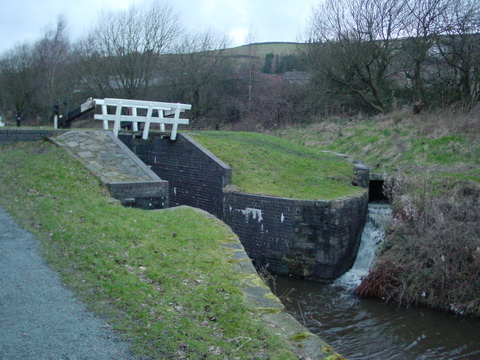
On many English canals, that is done by using byewashes.

Byewash on the Huddersfield Narrow Canal (E) at Marsden

Byewash on the Huddersfield Narrow Canal (E) at Marsden

As far as I know, though, few Irish canal locks have them, and I have heard British boaters comment on their absence. If memory serves, the canal (Leitrim) end of the Shannon–Erne Waterway does, but I have no suitable photo. I should confess that I have no idea what proportion of Irish and English canal locks are so equipped; I will be glad if anyone who can supply, or point to, the information will leave a Comment below.

Airholes

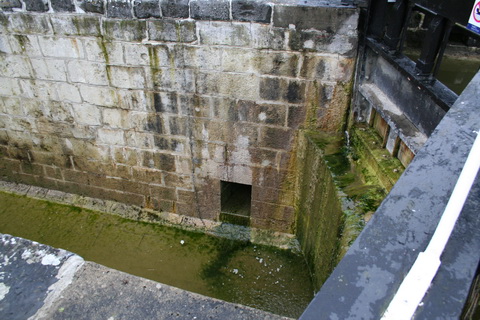
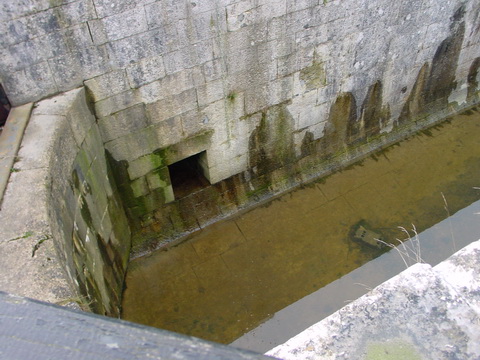
Mike Clarke’s PDF article, to which I pointed at the top of this page, provides a possible explanation for the absence of byewashes on Irish canals. He says that airholes were used instead on canals “built or influenced” by William Jessop. Jessop worked on the Grand Canal as assistant to John Smeaton from 1773 and was consultant engineer to the Grand Canal Company until 1802 [Ruth Delany The Grand Canal of Ireland David & Charles, Newton Abbot 1973].

Mike Clarke also says that Jessop trained John Killaly: Killaly joined the Grand Canal Company in 1794 and became its engineer in 1798 [Delany op cit]; furthermore, his designs were used on the Royal Canal from Coolnahay to the Shannon [Ruth Delany and Ian Bath Ireland’s Royal Canal 1789–2009 The Lilliput Press, Dublin 2010].

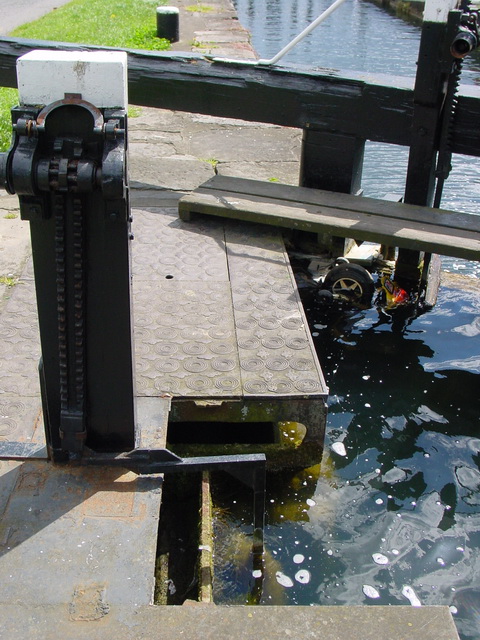
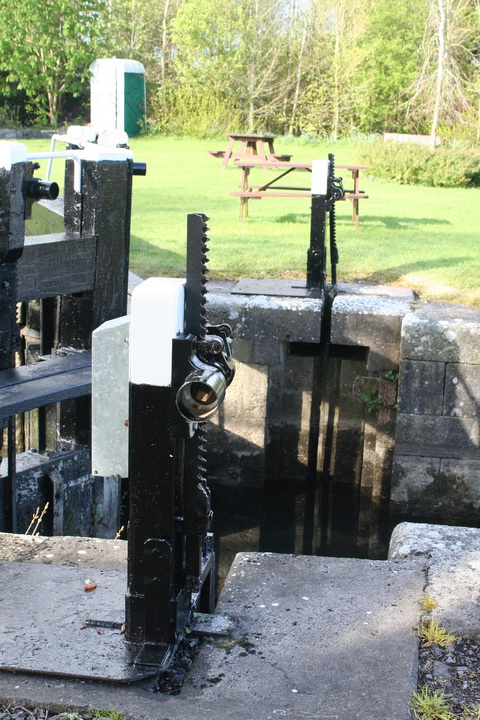
If I’ve understood Mike Clarke’s article correctly, the airhole system uses the channel for the ground paddle [land rack] sluice instead of building a separate byewash channel. From his photograph, I gather that there is a separate letterbox-like slot in the recess for the rack mechanism: I presume that excess water flows in through the slot, falls to the level of the sluice or channel from there to the lock chamber and thus flows into the chamber. If the tail [lower] gates are left open, or with one rack [paddle] lifted, the water can then flow out into the lower level.

Questions about Irish locks

Is my understanding correct?

What proportion of locks on each Irish waterway are equipped with airholes?

Are they still maintained and used?

Belmont Lock May 2009 IHAI 5_resize

Land rack [ground paddle] outlet, Belmont Lock, Grand Canal

Royal Lock 43 Killashee 18-02-2007 01_resize

Ground paddle [land rack] outlet, Lock 43 Killashee, Royal Canal

Royal Lock 6 02_resize

Possible inlet, Lock 6, Royal Canal

The next three photos were taken at Coolnahay, on the Royal Canal, during the period of very low water levels in 2012.

Coolnahay in drought April 2012 08_resize

Letterbox-like slot at Lock 26, Coolnahay, Royal Canal. I must look for similar features on Grand Canal locks and photograph them (if they exist)

Coolnahay in drought April 2012 19_resize

A second slot forward of the first (hidden by the land rack mechanism in the previous photo)

Land rack locked open at Lock 35_resize

Land rack mechanism locked slightly open: the slots were well above the water level at the time

It is of course entirely possible that all of this is so obvious that everybody else already knows all about it, but that I just didn’t understand what I was looking at. I read WI’s Heritage Survey of the Royal Canal [PDF], but it didn’t say anything about this sort of thing: or at least if it did I didn’t spot it. The report uses some non-standard terminology [eg “head gates”] so I may have missed its identification of the canal’s water-management features.

If, Gentle Reader, you know of the existence of papers or other published materials on these arcana, do please leave a Comment and, if possible, relevant links to online sources. It seems to me that there is a shortage of information about these technical matters as they apply to Irish waterways; it would also be nice if we were able to say which technologies were applied when to which waterways. I do not know whether, for example, we can assume that the lock gate designs in use today were always used on all Irish waterways.

Where do correct ideas come from?

Where do correct ideas come from? Do they drop from the skies? No. Are they innate in the mind? No. They come from social practice, and from it alone; they come from three kinds of social practice, the struggle for production, the class struggle and scientific experiment.

Readers will not, I am sure, need to be reminded that those are the words of the late Comrade Mao Tse-tung [or Mao Zedong, as the younger comrades say] in the Draft Decision of the Central Committee of the Chinese Communist Party on Certain Problems in Our Present Rural Work of May 1963.

Maurice Semple, in By the Corribside [self-published, 1981], lists writers who, from 1868 onwards, agreed with the view of the Cong Canal expressed by Sir William Wilde:

[…] for it was discovered, that like many other undertakings, the great canal at Cong “would not hold water.”

Those writers’ view is echoed by local people, and even by engineers, to the present day. Their case is, in effect, that the Board of Works engineers did not know what they were doing or did not properly survey the ground and were therefore surprised to find, on admitting water to the bed of the canal, that it vanished into sinkholes or swallow-holes in the karst.

One oddity about that belief is that the Cong Canal does actually hold water: it is full in winter, as the photos on this page, taken in February 2013, clearly show. It is empty in summer, but that is because water is unable to get in at the upper end, not (I suggest) because it flows out through the bottom.

What interests me at the moment is that I can find no evidence to support Wilde’s contention. Samuel Roberts, the engineer in charge of the work, knew that the work would be difficult but there is no hint in any of his annual reports that he feared that the difficulties might be insuperable. Furthermore, it is clear from his own reports and from other evidence that he was ordered to cease work on the navigation aspects of the canal before it was finished: there was never a moment when water was admitted to a completed navigation canal.

I have not been able to find any report from the 1850s in the Freeman’s Journal, the Cork Examiner, the Dublin Evening Mail or the Belfast News-Letter, or in any British newspaper, that supports William Wilde’s account of events. What, then, is its basis?

Of course my inability to find evidence does not mean that it doesn’t exist, but I would be grateful if anyone could point me towards it. I should say that I do not regard later accounts, like Wilde’s, as valid unless they include some evidence from 1854, the year of which Roberts wrote

The masonry in the Cong lock was commenced in March, and was progressing rapidly when I received instructions from the Board, in April, to suspend the execution of all navigation works in this division of the district, and complete only such as were necessary for the regulation of the waters of Lough Mask, for drainage purposes.

What I am looking for is an eyewitness, an official or some other reliable account, from 1854, that says “the canal was completed; water was let in; it vanished, to the surprise of the engineers”. If no such account exists, I may be forced to conclude that Wilde’s style of work is opposed to the fundamental spirit of Marxism-Leninism. As the Great Helmsman put it in the Little Red Book:

To behave like “a blindfolded man catching sparrows”, or “a blind man groping for fish”, to be crude and careless, to indulge in verbiage, to rest content with a smattering of knowledge — such is the extremely bad style of work that still exists among many comrades in our Party, a style utterly opposed to the fundamental spirit of Marxism-Leninism. Marx, Engels, Lenin and Stalin have taught us that it is necessary to study conditions conscientiously and to proceed from objective reality and not from subjective wishes; but many of our comrades act in direct violation of this truth.


Effin mensuration

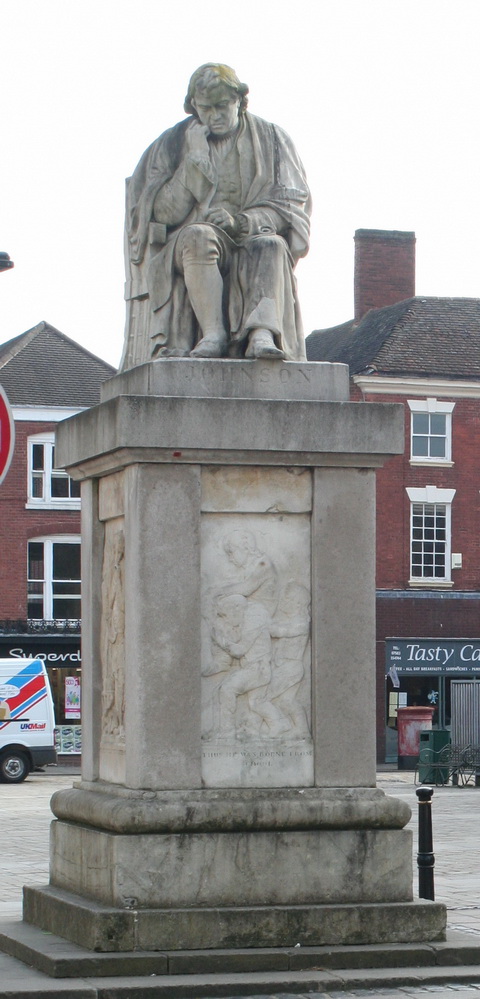
Statue of Dr Johnson near his birthplace in Lichfield

Statue of Dr Johnson near his birthplace in Lichfield

The learned readers of this site will not need to be reminded of the sapient advice of the late Dr Samuel Johnson:

[…] no man should travel unprovided with instruments for taking heights and distances.

There is yet another cause of errour not always easily surmounted, though more dangerous to the veracity of itinerary narratives, than imperfect mensuration. An observer deeply impressed by any remarkable spectacle, does not suppose, that the traces will soon vanish from his mind, and having commonly no great convenience for writing, defers the description to a time of more leisure, and better accommodation. […]

To this dilatory notation must be imputed the false relations of travellers, where there is no imaginable motive to deceive.

Samuel Johnson A Journey to the Western Islands of Scotland W Strahan and T Cadell 1775

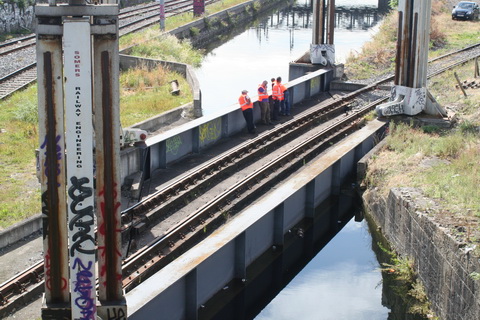
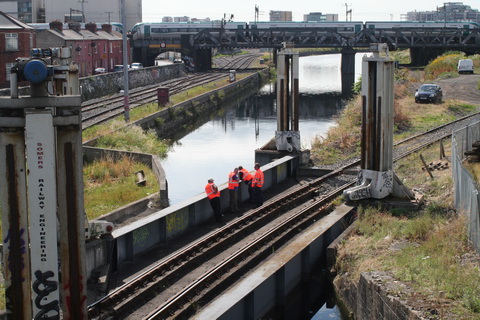
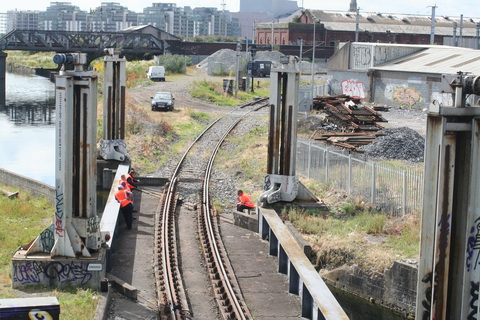
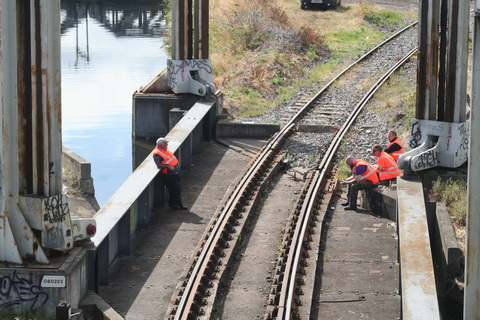
The good doctor would, I think, have welcomed the invention of the digital camera with inbuild chronometer. Equipped with just such a device I arrived yesterday at the first lock on the Royal Canal to witness the lifting of the railway bridge and the passage thereunder of fleets of boats. I thought it would be interesting to record how long each stage took.

I have written before about this bridge: reporting a question by Maureen O’Sullivan TD in October 2013 and another in November 2013 and providing statistics on usage a few days later:

  • only 58 boats went through in 2013
  • the bridge was lifted on seven dates
  • two other scheduled lifts were cancelled as no boats wanted to travel
  • Irish Rail charged Waterways Ireland €1200 per weekday lift and €2000 per weekend lift.

The first 45 minutes

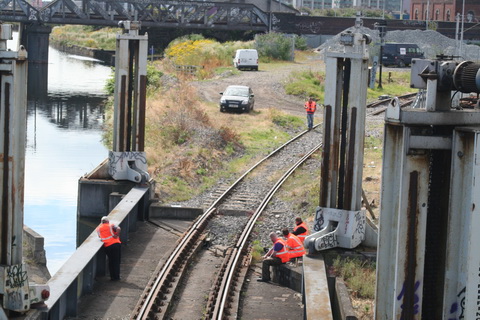
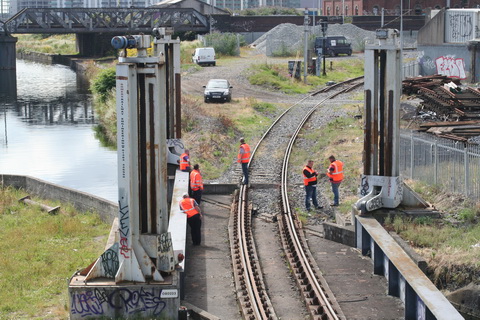
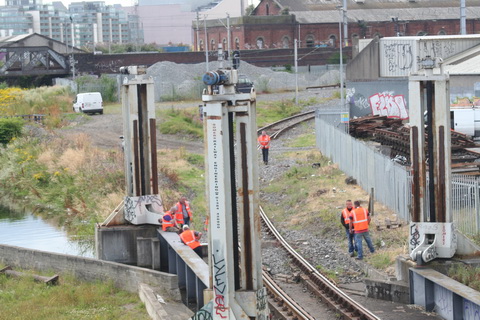
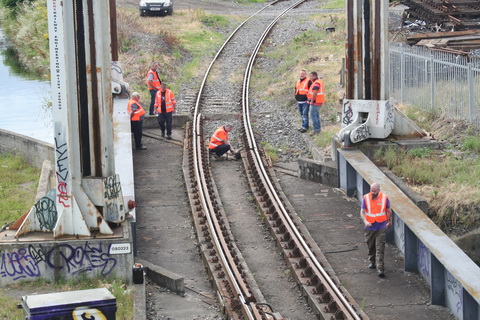
A lift scheduled for early July 2014 was cancelled; yesterday’s lift catered for just two boats, whose passage was assisted or monitored by eight Irish Rail staff and four from Waterways Ireland. Four of the Irish Rail people may have been in training as others seemed to be demonstrating things to them, but that’s only a guess. Three of the WI staff travelled together in WI’s stealth van and operated the first lock; the other, who travelled separately in a 4WD vehicle, visited from time to time. As far as I could see there was no contact between the Irish Rail and WI teams.

The bridge was scheduled to be lifted by 1100.

Before the lift 0945

Before the lift: 0945. The lifting bridge is on the right of the photo

Before the lift 0946

One minute later: 0946. A separate group of workers, perhaps contractors, is going down the west side of Spencer Dock with equipment

Before the lift 0949

Four men still on the bridge 0949

Before the lift 0951

Two minutes later

Before the lift 0956

On the bridge 0956

Before the lift 0958

Still there 0958

Before the lift 0959

One minute later

Before the lift 1006

The bridge 1006

Before the lift 1012

The bridge 1012

Before the lift 1015

The bridge 1015: another person approaches

Before the lift 1020

Six men at the bridge at 1020

Before the lift 1028

A seventh man approaches at 1028

Preparing to lift

The preparation stage, presumably involving the unlocking of some mechanism, took about five minutes altogether.

Preparing the bridge 5 mins 03_resize

One man worked on the far end while another walked to do the same at the near end

Preparing the bridge 5 mins 06_resize

An eighth man, behind the fence on the right, seemed to summon two of the men on the bridge

Preparing the bridge 5 mins 14_resize

They went to this building, which I guess houses the controls for the bridge

Preparing the bridge 5 mins 15_resize

Meanwhile work continued on the bridge itself

Preparing the bridge 5 mins 19_resize

Almost done

Preparing the bridge 5 mins 22_resize

A final check

Preparing the bridge 5 mins 25_resize

Everybody was off the bridge by 1033

Lifting

The lift itself took just over nine minutes; the bridge was up before 1044, in good time for the arrival of the boats.

The lift 9 mins 02_resize

After about one minute

The lift 9 mins 08_resize

Another minute later

The lift 9 mins 11_resize

Another minute (or so)

The lift 9 mins 15_resize

About four minutes have elapsed

The lift 9 mins 18_resize

After five minutes. The sides are clear of the water in which they usually rest; they are dripping on to the canal below

The lift 9 mins 20_resize

Six minutes in

The lift 9 mins 23_resize

Seven minutes

The lift 9 mins 24_resize

The men behind the fence may be controlling the lift

The lift 9 mins 28_resize

Not much further to go

The lift 9 mins 32_resize

Eight minutes

The lift 9 mins 40_resize

It’s up

The bridge up 16_resize

One of the jacks

After the boats passed_resize

Side view (taken after the boats had gone through)

The bridge up 13_resize

Water under the bridge

Boats go through

It took just over three minutes for the two boats to go under the bridge.

Boats approach 12_resize

Cruiser approaches; steel boat visible through the bridge

Cruiser goes through 03_resize

Cruiser about to enter

Cruiser goes through 04_resize

Heads down

Cruiser goes through 06_resize

Half way through

Cruiser goes through 07_resize

Leaving

Cruiser goes through 08_resize

Out

Steel boat goes through 12_resize

Steel boat entering

Steel boat goes through 20_resize

Almost through

Steel boat goes through 22_resize

Looking ahead to the lock

Steel boat goes through 25_resize

Done


I did not record the lowering of the bridge, which I presume took much the same time as the raising.

Preparation 5 minutes, lifting 9 minutes, passage 3 minutes, lowering and locking say another 14 minutes: say 45 minutes altogether, allowing some margin. But a large number of boats would take much longer as the rate at which they could move on from the bridge would be limited by the time taken to work through the lock.


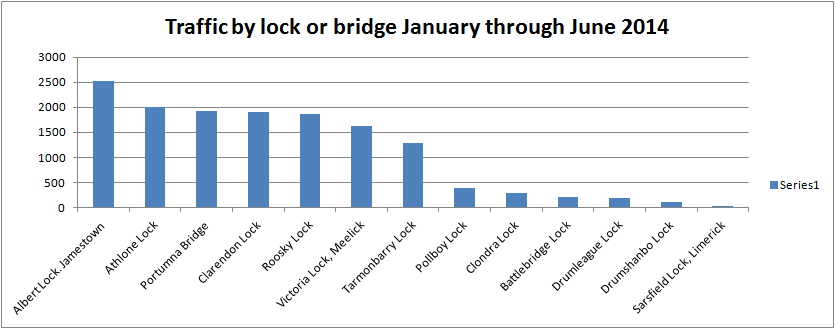
Shannon traffic figures for June


I am grateful to Waterways Ireland for letting me have the Shannon traffic figures for June 2014. All the usual caveats apply:

  • the underlying figures do not record total waterways usage (even for the Shannon) as, for instance, sailing, fishing or waterskiing on lakes or river stretches, which did not involve a passage through a lock or Portumna Bridge, would not be recorded
  • the passage records would not show, for instance, a change in the balance of types of activities from those in larger cruising boats to those in smaller (sailing, fishing, waterskiing) boats
  • figures like these, for a small number of months, will not necessarily be representative of those for the year as a whole. The winter months, January to March, see little traffic in any year; for April, May and June, the weather can have a large influence on the amount of activity especially, I suspect, in private boats.

On the other hand, the figures do include the Shannon’s most significant tourism activity, the cruiser hire business. And they are our only consistent long-term indicator of usage of the inland waterways.

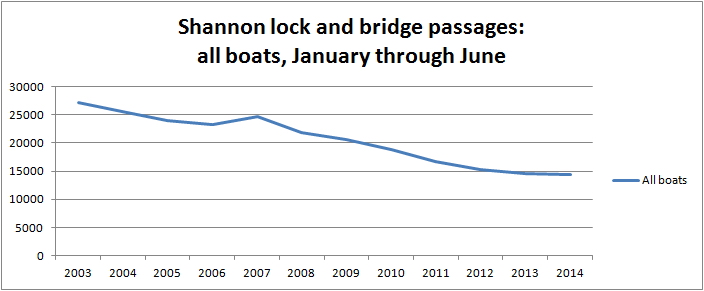
Total (private + hired) traffic for the first six months of each year

Total (private + hired) traffic for the first six months of each year

Total traffic is down again, but only slightly. The decline does seem to be levelling off and a continuation of the relatively good weather could increase usage.

SnnNav JanJun 2

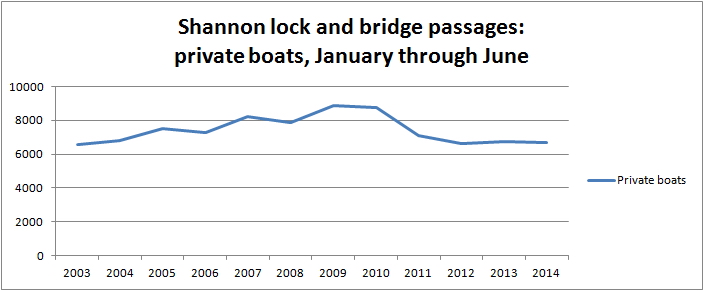
Private-boat traffic for the first six months of each year

Private traffic is down slightly on last year, but it has been pretty much the same for three years. I had thought that the good weather might have caused something of an increase, but on the other hand my own impression of Lough Derg traffic (not reflected in the passage figures) is that it has been fairly light.

SnnNav JanJun 3

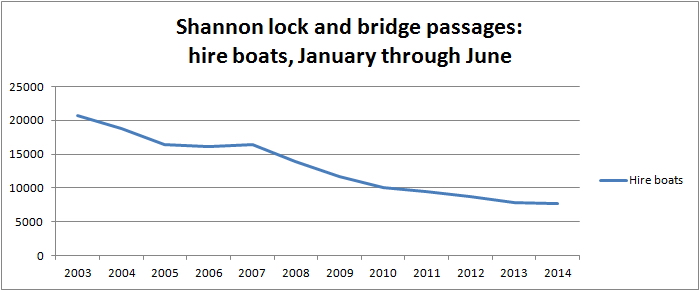
Hire-boat traffic for the first six months of each year

For hire-boat traffic, there is no sign of an upturn, although the drop on last year’s figures is not very large.

SnnNav JanJun 4

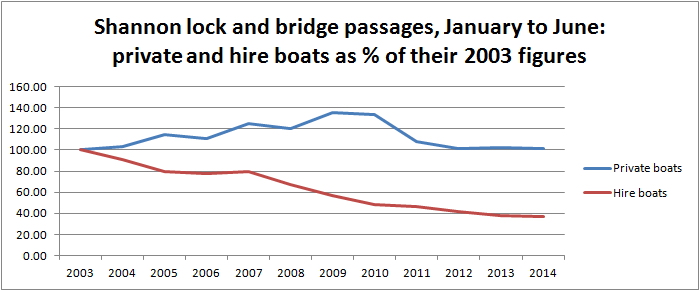
Changes since 2003: private and hired boats

That table amalgamates the two before it, but shows the figures as percentages of the 2003 figures. For private boats, the Celtic Tiger (nach maireann) caused an increase; that effect has worn off and usage has not changed much since about 2011. For hired boats, the decline began long before the Celtic Tiger idiocy.

SnnNav JanJun 5

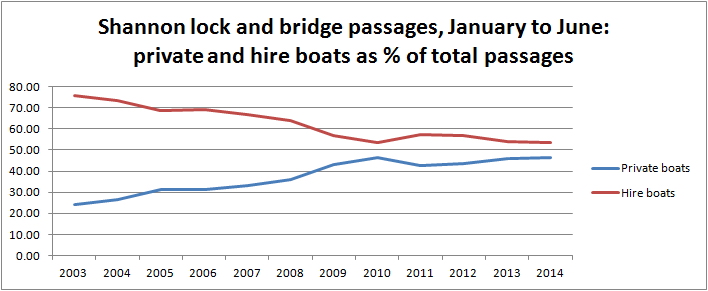
From 75/25 to 50/50

Hired boats were once the major users; private boats have almost caught up.

SnnNav JanJun 6

How to save money

I don’t know how much the various locks cost to run, so I can’t work out any measure of value for money, but the sea lock in Limerick and the Lough Allen Canal must surely be candidates for the chop.


Thon sheughery business

It will be recalled that Her Majesty’s Loyal Home Rule Government in Belfast is considering investing in the Clones Sheugh [aka Ulster Canal] and that I asked DCAL, the department responsible, for a copy of the Business Case. To my surprise, it said:

Your request is being treated as a Access to Information request and will be handled under either Freedom of Information Act 2000 or the Environmental Information Regulations 2004.

Either way, DCAL has now told me that I can’t see it. The Business Case, which is apparently an addendum to the 2007 Business Case (which was rotten: see here passim), won’t be complete until November. I have made a note to remind myself to ask for it then.

I quite sympathise with the DCAL folks: it can’t be easy thinking of any good reason to spend taxpayers’ [British or Irish] money on the Clones Sheugh. But perhaps DCAL can spin it out until the Shinners have taken over the Free State, at which point the economics of Grattan’s Parliament will be in vogue and we can all take up growing flax, spinning and weaving, giving grants for canals and making money out of the slave plantations.

Speaking of Shinners, there’s one called Cathal Ó hOisín, a member of HM Loyal Home Rule Government in Belfast representing East Londonderry, who said there recently:

The possibility of the reopening of the Ulster canal would open up limitless opportunities in tourism. The idea that, once again, we could travel from Coleraine to Limerick, Dublin and Galway by boat would be absolutely wonderful.

Well, you can do that: by sea. There was never an inland navigation from Coleraine, Limerick or Dublin to Galway, despite the urgings of Lord Cloncurry and the nitwitted ideas of Sir Edward Watkin.

As for a connection between Limerick or Dublin and Coleraine, I suspect that Mr Ó hOisín is perpetuating the error into which Her late Majesty Victoria, by the Grace of God of the United Kingdom of Great Britain and Ireland Queen, etc, seems to have fallen when she appointed

Commissioners to inquire respecting the System of Navigation which connects Coleraine, Belfast, and Limerick

which Commissioners reported in 1882. There was no such system and, if Mr Ó hOisín can provide evidence that any vessel ever travelled by inland navigation between Coleraine and Limerick, I would be glad to hear of it. I prefer to think of the Commissioners’ conclusion that

As an investment for capital the whole canal system in Ireland has been a complete failure.

I see no reason why politicians of the twenty-first century should repeat the errors of their predecessors in the eighteenth, nineteenth and twentieth centuries.

You expect the Parnellite members to have a bit more sense, but one John Dallat said in the same debate:

[…] when the Ulster canal is open, tourists will come in their thousands and that will benefit the Lower Bann, the Foyle as well, and right over to Scotland.

Er, John? There are actually canals in other countries. Even in Scotland. Folk are familiar with canals. They’ve seen them before. And a short sheugh to Clones is not going to attract tourists (apart from the relatively small number of canal twitchers, who will need to tick it off on their lists) unless the town of Clones is particularly attractive. Which … well, let me put it this way: why not look it up on TripAdvisor?
Of course I’m all in favour of Clones myself: I am quite interested in concrete engine-sheds and former canal stores.


UK considers business case for investing in Ireland [updated]

DCAL, the Northern Ireland Department of Culture, Arts and Leisure, is still considering investing in the Clones Sheugh, as the Northern Ireland Assembly heard on 27 May 2014 [h/t TheyWorkForYou.com]:

Dolores Kelly [SDLP] asked the Minister of Culture, Arts and Leisure how many business cases are with her Department and awaiting a decision.

Carál Ní Chuilín [SF; Minister]: I thank the Member for her question. DCAL is considering five business cases. They are at various stages, and my officials are continuing to work with the relevant organisations to ensure that each case is of sufficient quality to facilitate a timely decision on the investment of public funds.

In addition, DCAL has provided feedback on two further business cases and is awaiting the submission of revised drafts. Work is also ongoing in the Department on the development of a further four business cases for projects that we hope to progress in the near future.
Dolores Kelly: I thank the Minister for her answer. I take it that there are nine business cases in total: the five plus the four. Will she give us a flavour of the business cases, the impact on the budget and whether the spend will be met? Indeed, what does that mean if some are to be spent within the school term timetable?
Carál Ní Chuilín: I am not sure about the school term timetable; I am going by own timetable. As for the flavour of the business cases, although there are nine cases today, I could go in next week, and there could be a further two. That is the nature of the progression, which is good because it means that we are moving in the right direction.

We are looking at the refurbishment of Coleraine library at a cost of over £2 million; the Arts Council gifting of musical instruments at almost £60,000; Tollymore National Outdoor Centre at almost £2·5 million; Dungiven sports provision; Omagh Riding for the Disabled Association; the Ulster canal; T: BUC; and the strategic outline business cases for the subregional stadia programmes.

I have asked for a copy of the Ulster Canal business case, although it is not clear whether it has yet been completed.

Update

DCAL says:

Thank you for your email on 30th May 2014 to DCAL Communications Office requesting a copy of the business case for the Ulster Canal.

Your request is being treated as a Access to Information request and will be handled under either Freedom of Information Act 2000 or the Environmental Information Regulations 2004.

As per either legislation, you should receive a response from the Department on or before 27 June 2014.

Please use reference number DCAL/2014-0292 on any further correspondence relating to this request.

Well I never.


Marketing

What is Waterways Ireland’s marketing department doing today?

Another turf canal system

Here is a short page about a canal system I had not heard of before today. It was a network of turf canals, with a sea lock, on the estate of Scotts of Willsborough, near Eglinton, on Lough Foyle; the Scotts supplied [London]Derry with turf and, like James Macnab at Portcrusha, reclaimed the land from the bog.

Canal tourists or canal pensioners?

The Village at Lyons 265_resize

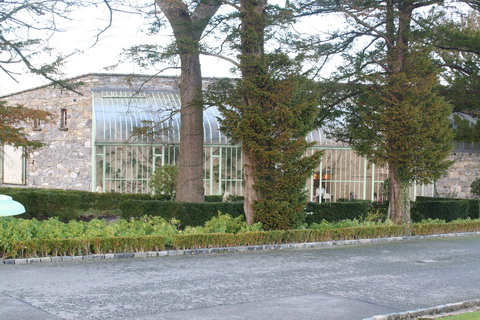
La Serre

Nibbling yesterday on a morsel of cured salmon, with fennel and apple salad, lemon crème fraiche and lavender jelly, at the excellent La Serre restaurant at the Village at Lyons, I looked forward to walking outside afterwards, on to the canal bank, to view the many boats that would undoubtedly be moored there, above the thirteenth lock, as their owners lunched at La Serre’s sister institution, the Canal Café.

The thirteenth lock (and its wonderful O)

The thirteenth lock (and its wonderful O)

Judge of my surprise, then, when I found not a single boat outside. I realised, though, that boaters probably walked from nearby Hazelhatch and even from Sallins. For we know, do we not, that boaters are vital to tourism? Even Joe Higgins of the Socialist Party tells us so, which means that they must be out and about along the canals, spending money (and where better to spend it than at the Canal Café?).

The Canal Café, mere feet from the canal bank

The Canal Café, mere feet from the canal bank

But a difficulty has struck me. Mr Higgins’s position is that boaters have money available for discretionary expenditure, but Senator John Kelly tells us that most boaters are “retired couples from England who are receiving small English pensions”. So one politician tells us that boaters have disposable incomes and that they should not pay money to Waterways Ireland because they spend money in pubs and restaurants along the canals; another politician tells us that boaters should not pay money to Waterways Ireland because they have none to spare.

I find it difficult to reconcile these two positions.