Tag Archives: bridge

CWW bridge

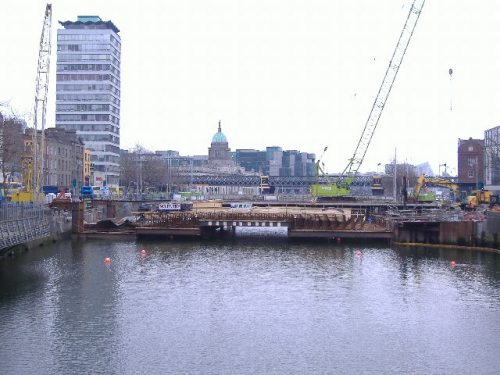
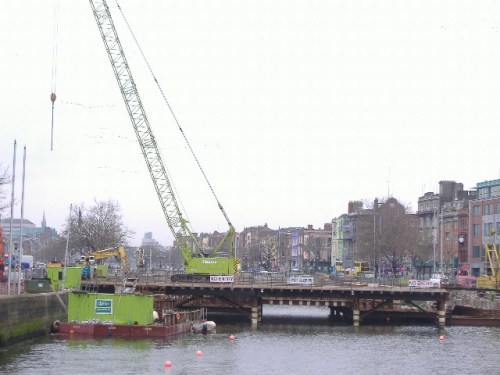
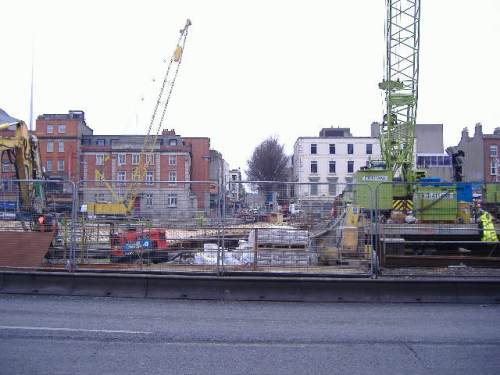
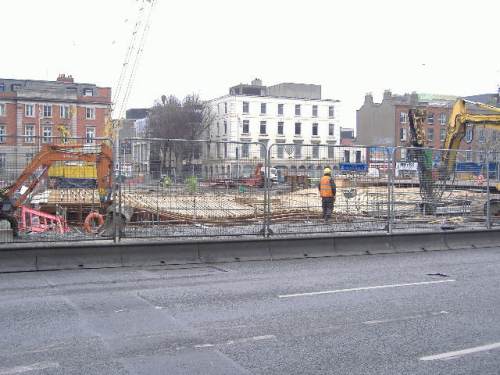
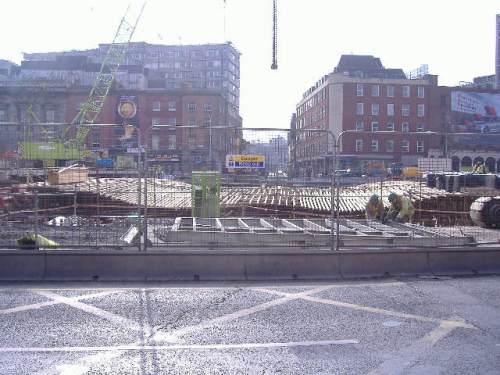
Paul Quinn’s photos showed the new Marlborough Street Bridge being constructed across the Liffey. Last Saturday’s Irish Times reported that Dublin City Council would soon be advertising to seek suggestions for naming the bridge; it said that a body called Labour Youth [whose members may be socialists, I fear] wanted it named after one Rosie Hackett, who went on strike  many years ago. It did not report that there is another campaign to have the bridge named after E T S Walton, a physicist.

The north-eastern corner of the bridge features the site of the offices of the City of Dublin Steam Packet Company, whose crest still adorns the walls. I suggest that the bridge be named after the company’s founder, the remarkable Irish entrepreneur Charles Wye Williams: the father of the Shannon, the master of scheduled steam shipping, the founder of the CoDSPCo and a founder director of the Peninsular and Oriental Steam Navigation Company, godparent of the Irish livestock industry, innovator in marine safety, promoter of the turf industry, writer and experimenter on steam technology, tireless campaigner ….

Apart from his company’s crest on Eden Quay, and his name on a bridge he caused to be built in Limerick, there is no monument to this remarkable man. Name the bridge after him and move the plaque to it (and protect it adequately).


Crossing the Liffey

Thanks to Paul Quinn for pics of the construction of the new LUAS bridge across the River Liffey in Dublin.

DSCF0945

The Powers That Be

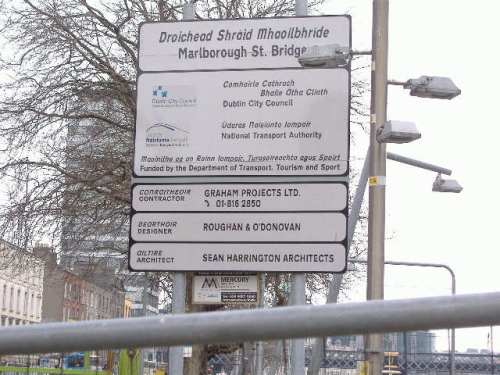
Dublin City Council tells us that “Construction on the bridge is due to commence in Autumn 2011”, which is nice to know, although an update would be nicer. Its PDF has a diagram of the bridge. If you can find anything about the bridge on the website of the National Transport Authority (which is paying for it), do please let me know. Incidentally, I hadn’t realised that the NTA’s reach had extended to passengers on ships, including those on inland waterways.

graham projects

The contractors

DSCF0939

Drilling contractor

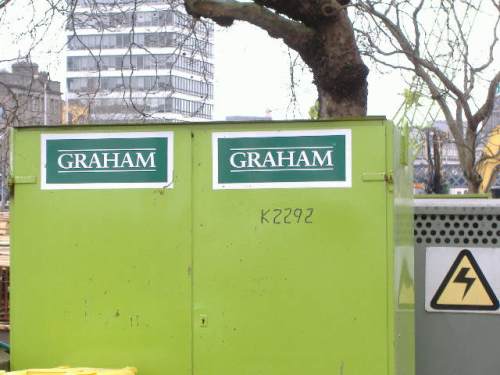
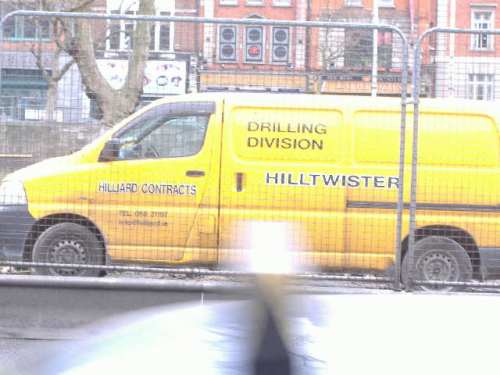
The contractor is Graham Projects Ltd; Quinn Piling were working there a few weeks ago, but seem to have finished their end of things by now; I can’t find a website for Hilliard & Hilltwister Ltd of Listowel, Co Kerry.

from o'connell brg.

Looking east from O’Connell Bridge

from butt bridge looking west

Looking west from Butt Bridge

looking north

Looking north from Burgh Quay

looking north from burgh quay

Looking north to the City of Dublin Steam Packet Company offices

looking south from eden quay

Looking south from Eden Quay

Mystery solved

Nobody tried the Spot the canal I set the other day, so I must now reveal that the eel weir shown is at the upper end of the Cong Canal. There are many photos and maps on that page.

Revising the Royal

Ewan Duffy of IndustrialHeritageIreland and I have both, in recent times, uncovered new information about the history of the Royal Canal after it was taken over by the Midland Great Western Railway in 1845: a period that, because (I think) of the absence of company archives, is not well covered in published histories of the Royal. Ewan today said that he will be posting new material about the stretch from Lock 1 to Lock 5 on 30 March 2013, so watch that space.

Dargan, O’Regan, steam and the Newry Canal

I wrote here about Simon O’Regan’s passenger-carrying screw steamer tried on the Grand Canal in Dublin in 1850. I am grateful to John Ditchfield for pointing me to an article about what happened next: steam trials on the Newry Canal in 1850, but this time with a lumber (freight) boat.

I would welcome more information about Simon O’Regan or about the use of steam power on the Newry Canal.

Wexford

Here is a great account of the development of Wexford Harbour, with a history of its shipping here.

The glory that was Greese

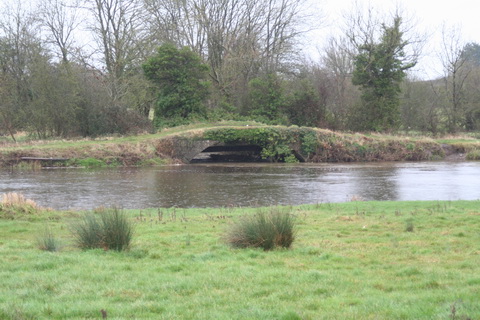
The River Greese is a tributary of the River Barrow, joining it below Maganey Lock. The photo is taken from the road on the west bank of the Barrow.

River Greese joins the Barrow 01_resize

The Greese joins the Barrow: the trackway passes over it on a bridge

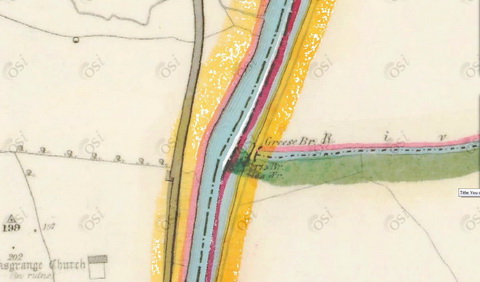
You can locate it on the OSI map by zooming out from here; the extract below shows the confluence.

Greese_resize

The confluence

My OSI logo and permit number for website

The dangers of canal bridges …

… to Her Majesty’s mails.

Lismore to Fermoy

A meeting was held in Fermoy in 1844 to promote a proposal to make the Blackwater navigable from Lismore upstream to Fermoy. Here is the Cork Examiner‘s account of the meeting.

Fermoy railway station opened in 1860.

The Suir towing-path

His late Most Excellent Majesty Henry the Eighth, by the Grace of God, King of England and France, Defender of the Faith, Lord of Ireland and of the Church of England and also of Ireland in Earth Supreme Head, has many claims to fame, but the greatest is undoubtedly his Act for the Weares upon the Barrow, and other Waters in the County of Killkenny of 1537, which begins thus:

Prayen the commons of this present Parliament assembled, That where at all times necessarie boates, scowts, wherries, clarans, cottes, and other vessels, loden and bestowed with goods, merchandizes, and other stuffe, have beene used to passe and repasse thorough and in the King’s most excellent Majesty’s rivers and waters of the Barrow, the Noyre, the Suyr, and the Rie, within this land, which Rie is in the county of Kilkenny, to and from the King’s citie of Waterford, and the townes of Kilkenny, Rosse, and Clomel [sic], to and from diverse borrowe and corporate townes, and other places, being sitiated in the counties of Kyldare, Catherlagh, Wexford, Kilkenny, Waterford, and Tipperary, through which great commoditie and profit hath growen and might grow to the said citie, townes, noroughes, and other places, and to all and every the King’s true subjects adjoyning to the same waters and rivers: […]

We resume a couple of pages later:

[…] and that the said owners, their servants, marryners, boatmen, and other rulers and conveyers, and all other persons coming in ayd and help of them and every of them, at all such times as the said mariners, boatemen, and other rulers and conveyers shall thinke the same necessarie and needfull, shall have and occupie at every of their wills and pleasures, the space and breadth of seven foote or more, as need require, of plain ground, upon every part of the land, of every side of every the said rivers and waters, next adjoyning to the said rivers and waters, and that to bee where they must needs draw the said boats and other vessels afore named, with strength of horses or men, by land […].

So His late Most Excellent Majesty provided that those drawing boats, using manpower or horsepower, could use a space seven foot wide on either side of the river. From the 1750s onwards, work was done on building a towing-path along the Suir between Carrick and Clonmel; work seems to have been finished before 1789 and the towing-path continued in use until the early years of the twentieth century.
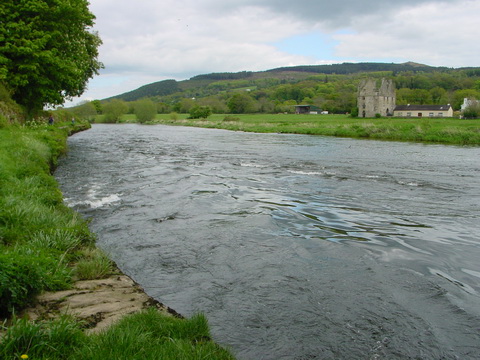
Kincor Castle below Sir Thomas's Bridge at Ferryhouse

Kincor Castle below Sir Thomas’s Bridge at Ferryhouse

Much, but not all, of the towing-path is accessible, and maintainted by South Tipperary County Council; as well as providing a walking route, it allows anglers, boaters and other leisure users to get to the river. However, some sections are impassable, so that it is not possible to walk the whole length of this extremely scenic route between Clonmel and Carrick.

South Tipperary County Council is now considering declaring public roads on the towing-path and thus taking it in charge.

South Tipperary County Council's newspaper ad about declaring public roads on the Suir towing-path

South Tipperary County Council’s newspaper ad about declaring public roads on the Suir towing-path

The Council’s documents are here. I think that this is a good idea and I have written to the Council (and to local newspapers) to declare my support.