Category Archives: Built heritage

Fish in canal shock

I see from the blatts (or at least from the Cork Examiner) that there is much free food to be had in the Tralee Ship Canal, which has, it is said, “Literally millions of sprat and mackerel” as well as eels, baby ray and shrimp. According to the story,

Kerry County Council said engineers were meeting yesterday to find a resolution and to organise a clean up.

Perhaps a call to Captain Birdseye?

Placing Percy

Back in May 2013, I wondered whether 53 Percy Place, Dublin 4, which Waterways Ireland was being forced to sell to dig the Clones Sheugh, would still be on its hands in a year or two. And so it was, but in August 2015, I noted that the property was for sale to fund Saunderson’s Sheugh, which we’re all pretending is the Clones Sheugh (aka the Ulster Canal).

The interesting point was that Messrs CBRE wanted over €1.6 million for the site, which was the valuation put upon it in 2008. The 2012 valuation was €650,000 and the 2013 €800,000. I wrote:

On the basis of its asking price for Percy Place, WI seems to believe that the property collapse is over; perhaps it is even now in negotiation to develop Plot 8 and build a sheugh all the way to Clones. In the meantime, if it gets €1.6 million for Percy Place, that will help to alleviate the damage caused by the smash-and-grab raid carried out by the Department of Fairytales to pay for Saunderson’s Sheugh.

Well, it seems that the boom is back. According to the respectable people’s Sunday newspaper, the Sunday Business Post, of 18 October 2015, WI got over €2 million for the site. The SBP is paywalled and I can’t find online confirmation elsewhere, but it’s a high price.

I did note on the CBRE site that the Twelfth Lock Hotel, that haunt of Stakhanovite homoeroticism on the Royal Canal in Blanchardstown, is for sale again. I haven’t been there for some years, so I don’t know whether the mural is still extant.


Swimming in the Naller

On 22 September 2015 Eric Byrne [Labour, Dublin South Central] put a written question to the Minister for Fairytales:

To ask the Minister for Arts, Heritage and the Gaeltacht her plans to review the no swimming in locks and harbours under the by-law within the Canals Act by-laws of 1988 in view of the fact that there is no penalty for ignoring such signs; and if she will make a statement on the matter.

The minister replied:

I have been informed by Waterways Ireland that while it has not determined a need for an associated penalty with this by-law at this time, the matter is being kept under review. I am advised also that the locks, docks and harbours are manned and/or frequently visited by Waterways Ireland Operations and Inspectorate Authorised Officers. Where swimmers are encountered, they are made aware of the by-law provision and the dangers of swimming in or near canal infrastructure and they are requested to remove themselves from the navigation. Such requests are normally acceded to. In the event of persistent offender(s) unwilling to obey direction from Waterways Ireland Authorised Officers, the assistance of An Garda Síochána is sought to remedy the situation.

Sometimes I wonder whether politicians have any grasp on reality. Swimmers in the Naller are a force of nature and are as far beyond the control of Waterways Ireland, the police and indeed politicians as hurricanes, the economy or Mick Wallace. People have been swimming in the canals, in Dublin and no doubt elsewhere, for generations, and nothing or nobody has been able to stop them.

I suspect that more people have swum in the canals than have ever boated on them; swimming is therefore a legitimate topic for waterways studies. Here is a preliminary contribution to the field.

WI and the RoI budget for 2016

Budget documents [available here] include the Part IV Estimates for Public Services 2016 [PDF]. The Summary of Gross Expenditure (Capital and Current) by Ministerial Vote Group shows that the Department of Fairytales [aka Arts, Heritage and the Gaeltacht], RoI parent of Waterways Ireland, is to get an increase in its budget.

Its forecast outturn for 2015 matches its estimate for the year at €277,434,000, of which €215,854,000 is current and €61,580,000 is capital spending. However, the estimates for 2016 show €234,430,000 current + €76,000,000 capital = €310,430,000 total, an increase of €32,996,000. Current spending is up 8.6% and capital by 23.4%; total spending is up by 11.9%. Perhaps the extra €14,420,000 in capital spending is to extend Saunderson’s Sheugh to Clones?

Skipping the numerous tables that repeat more or less the same gen in different ways, and skipping too the unimportant government departments, we zoom forward to the details of the Department of Fairytales estimates.

But there we find, alas, that while the department as a whole has secured lots of extra lolly — and it’s going to be shovelling 18% more to the luvvies [Arts, Culture and Film], 11% more to heritage and 3% more to the BéalBochters — it intends to cut spending on North-South Cooperation, which is where Waterways Ireland gets its money.

The 2015 estimate for NSCoop current expenditure was €35,072,000; the 2016 estimate is €34,925,000, which is a cut of only about half of one per cent. But capital spending on NSCoop is down almost 20%, from €3,487,000 to €2,799,000, and total spending down 2% from €38,559,000 to €37,724,000.

The NSCoop figures are “subject to the North-South Ministerial Council”, which means that the (southern, Fine Gael) Minister for Fairytales has to persuade the (northern, Sinn Féin) Minister for Marching Bands that the cross-border language and waterways bodies aren’t getting any increase in their funding from the Free State, at least not while there is an election to be won. However, HM Devolved Administration didn’t seem too keen on allocating extra money to waterways last time I looked.

Regular readers will not need to be reminded that 85% of WI’s current budget is supplied by the RoI government and 15% by the NI administration, while capital expenditure is paid for by the state in which it occurs.

The estimates figures as shown don’t tell us the precise impact on Waterways Ireland’s current budget: the money is divided between WI and the language shamrock but the document doesn’t tell us which gets how much. [The last time a breakdown was given was in 2011, when WI got roughly 60% of the total.] However, most of the department’s NSCoop capital expenditure is undertaken by WI, and little or none of it by the language shamrock, so we can say that the 20% cut in NSCoop capital spending means a 20% cut in capital spending on waterways in the Free State.

The breakdown of the Multi-Annual Capital Investment Framework confirms that: in 2015 €3,368,000 of the €3,487,000 NSCoop capital budget (96.5%) went to WI, and in 2016 WI will get €2,680,000 of the €2,799,000 NSCoop capital budget (95.7%). I imagine that the language folk prefer sitting i dtóin an tí and don’t want fancy buildings.

WI’s capital budget for RoI is down from €11,000,000 in 2008.

According to the Multi-Annual Capital Investment Framework 2016 to 2021 (Table 1), the Department of Fairytales as a whole is getting an unusually large amount, €76,000,000, of Exchequer Capital Funding in 2016; the total is to fall back to €45 million in 2017 and €43 million in 2018, before rising to €46 million in each of the years 2018, 2020 and 2021. So, in a year in which the department is getting much more money for capital spending, NSCoop and, specifically, waterways are getting significantly less.

Looking at the breakdown (Table 2), it seems that the big changes in the department’s capital spending are:

  • a major cut in the grant-in-aid to the Crawford Gallery (€12,100,000 to €6,100,000)
  • cuts of €1,312,000 to the National Parks and Wildlife Service and €1,000,000 to Údarás na Gaeltachta
  • a cut of €688,000 to WI
  • an extra €1,150,000 for Teach an Phiarsaigh under the Decade of Centenaries heading
  • a new thing called Built Heritage Jobs Leverage Scheme gets €2,000,000
  • another new thing called Cork Event Centre gets €5,000,000
  • and, the biggest of the lot, Decade of Centenaries 1912–1922 gets an extra €15,270,000, to bring its capital budget to €28,800,000, by far the largest item in the budget.

There are a few other minor changes, but the increased allocation of €15,270,000 to the main Decade of Centenaries item has more than swallowed the extra €14,420,000 allocated to the department. Three other significant items — Teach an Phiarsaigh, the Cork Event Centre and the Built Heritage Jobs Leverage Scheme, which between them have been given an extra €8,150,000 — have been funded by the reduced allocations to the Crawford Gallery, the National Parks and Wildlife Service, Údarás na Gaeltachta and Waterways Ireland.

So there’s no money for Sinn Féin’s beloved Clones Sheugh.

Smell of coffee …

wafts over Clones.

I still have no idea why Sinn Féin thinks the Clones Sheugh would cause any significant increase in tourism, or any other economic benefit.

Improvements at St John’s Pill, Waterford

Thanks to Brian Simpson for this update on the continuing resurrection of St John’s Pill [river] in Waterford.


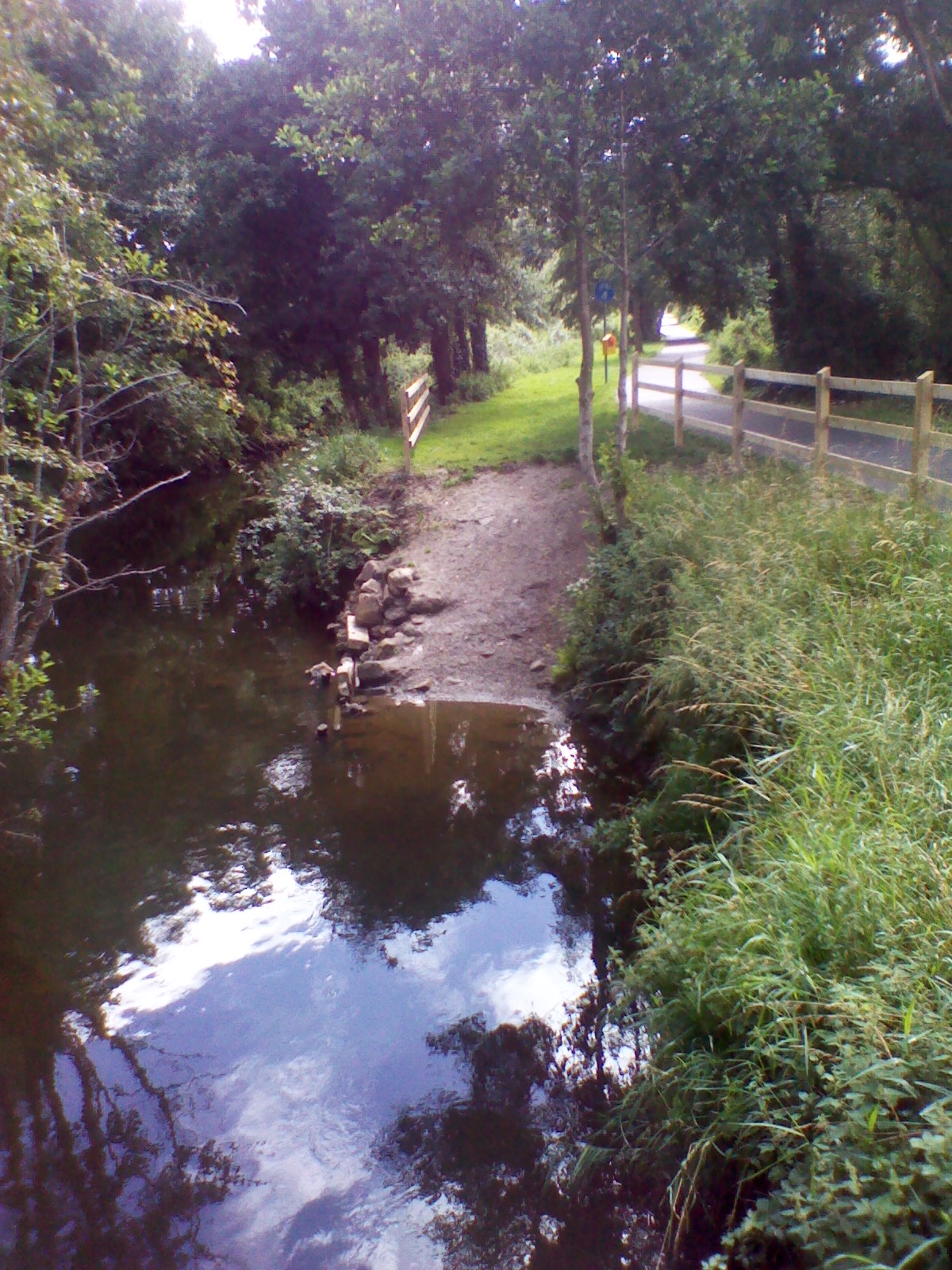
Waterford Council had new fencing erected by Fairybush Landscaping Ltd around Cherrymount bridge and around the slip area. The Council also recently opened a beautiful greenway for pedestrians and cyclists along the St John’s river right into Waterford City Centre.

Our slipway at Cherrymount bridge was being eroded by heavy rainfall and
strong currents when the canal was swollen.

DSCF2845

The slipway

IMG_20150826_134207

The slipway fenced (but eroded)

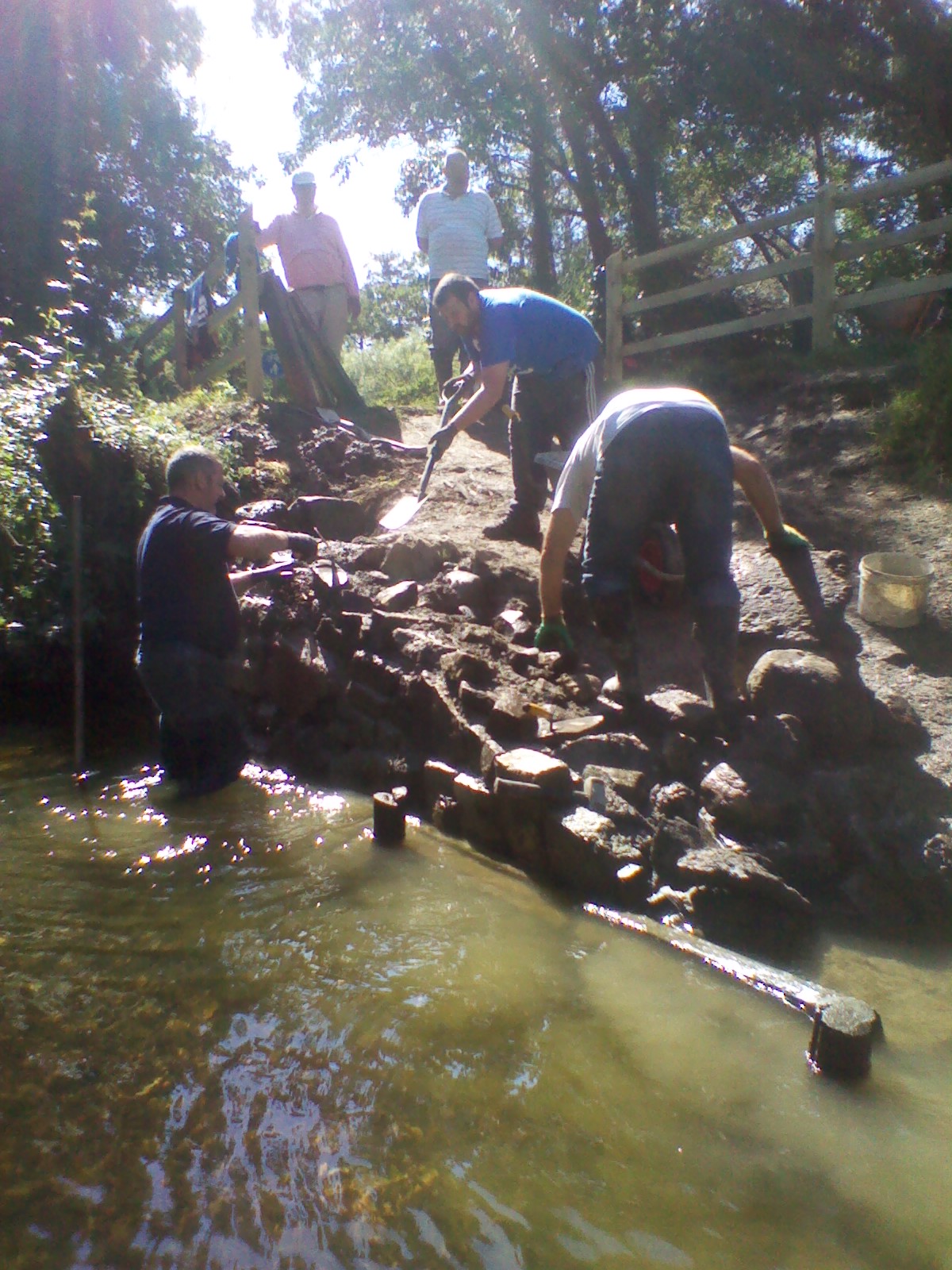
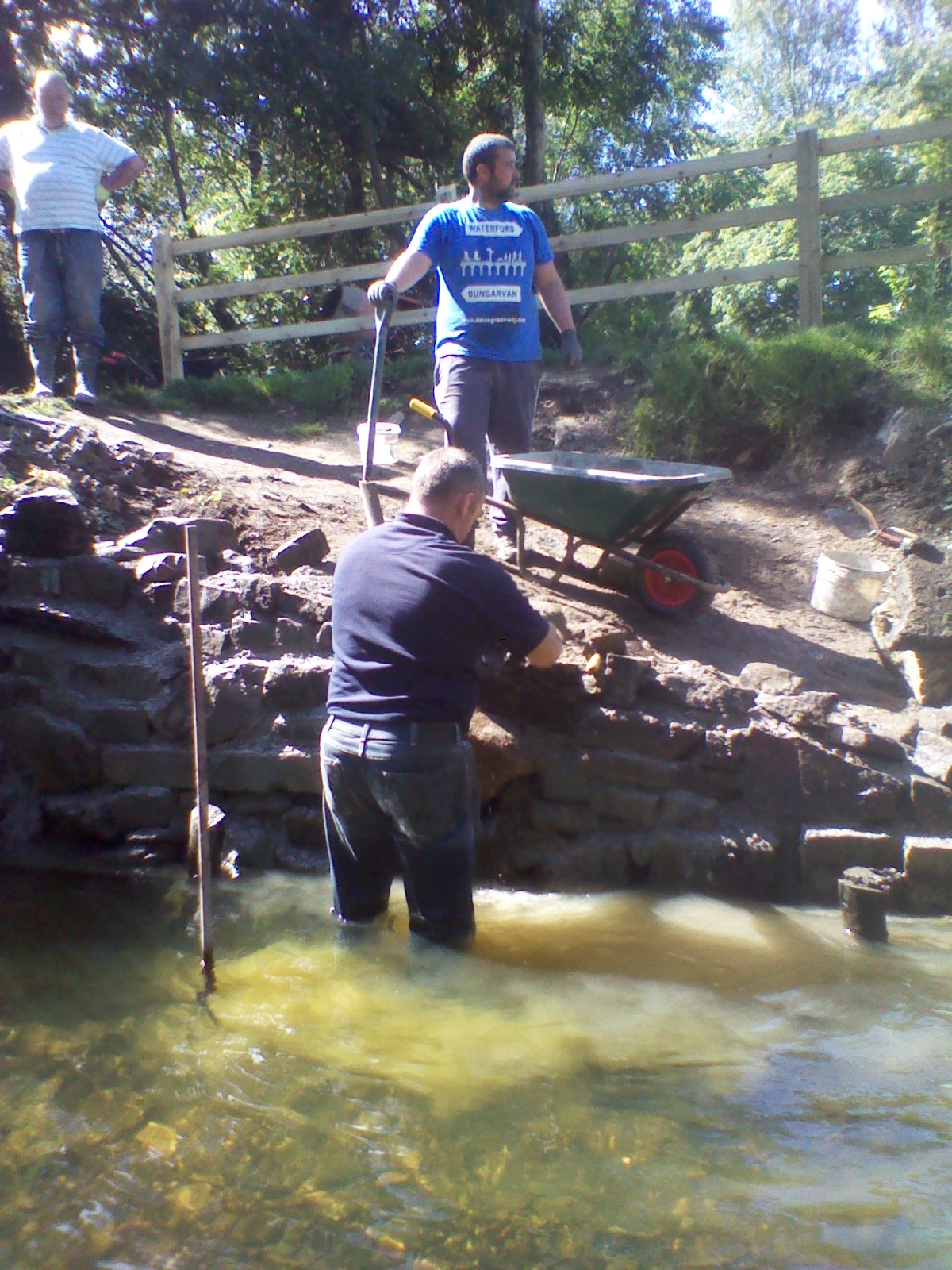
In order to prevent further damage with the approach of autumn and winter, improvement works had to be carried out. With a low tide window for much of the day and a couple of dry days beforehand, Saturday 29 August 2015 was our perfect opportunity.

IMG_20150829_132601

Men at work

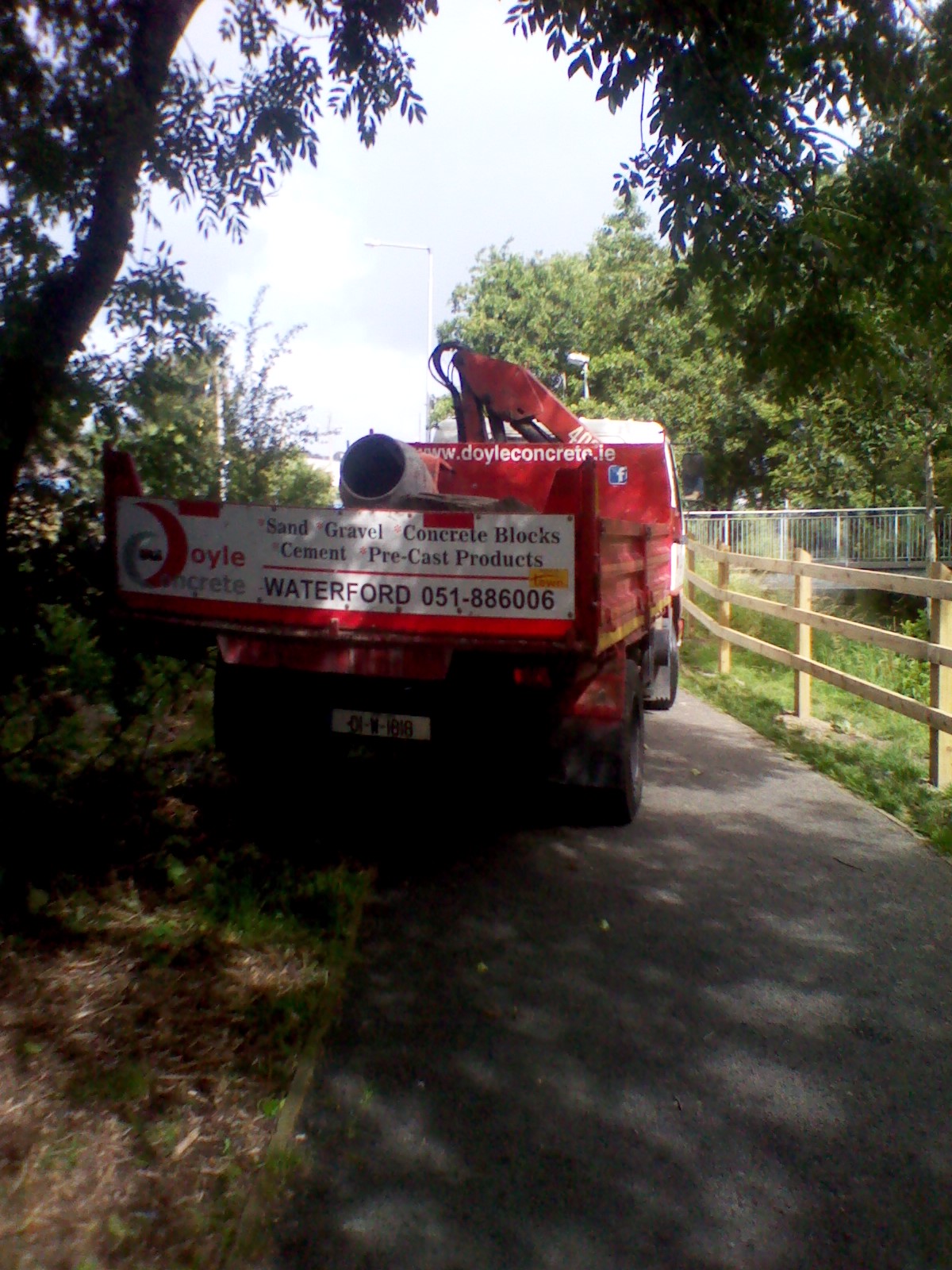
We would like to take this opportunity to thank our Chairman David Hayes [of David Hayes Engineering, Waterford] for organising the mixer, sand/gravel cement from Doyle Concrete

IMG_20150829_113737

Doyle Concrete

… and the concrete slabs and capping from Boyce Mulrooney, scrap merchant, Tramore Road, Waterford.

All the committee members who donated bags of cement, tools, ideas, labour and teamwork.

IMG_20150829_132539

Wade in the water

A great day was had and most importantly the slip is now much secure and pleasing to look at too.

The DUP fightback

I mentioned here that the ridiculous decision by the Sinn Féin Minister for Marching Bands [and Sheughs] to ask the DUP Minister for Finance and Personnel for £46 million for the Lisburn Sheugh might have been intended to annoy the DUP. Most of the Lisburn Sheugh, formerly the Lagan Navigation, ran through unionist territory; the Lagan Valley constituency is solidly unionist, and specifically DUP, in both Westminster and NI Assembly elections. It costs Ms Ní Chuilín nothing to pass on the Lisburn lunacy to the Dept of Finance, leaving it to a DUP Minister to turn down the funding application.

But the DUP has lobbed a neat hand-grenade response back at the Shinner fortress. Brenda Hale, DUP MLA for Lagan Valley, has put two questions to the sheughery enthusiasts:

AQW 48647/11-16 To ask the Minister of Culture, Arts and Leisure what financial support her Department has offered the Lagan Canal Trust, given that their budget has been cut by 11 per cent. [09/09/2015 Awaiting Answer]

AQW 48646/11-16 To ask the Minister of Culture, Arts and Leisure when the Lagan Navigation Canal Locks where last maintained. [09/09/2015 Awaiting Answer]

Ye’ll no’ fickle Thomas Yownie.

The Purton boat graveyard

If you happen to be driving across southern England and Wales — say from Fishguard or Pembroke to London — and you want a break, you could turn off the M4 or M48 and drive to the Purton ships’ graveyard in Gloucestershire. It’s roughly 25 miles, 35 minutes, each way: a two-hour break will give you an hour on site — and take you a world away from the busy motorways.

Purton gives you two waterways for the price of one: the Severn estuary and the Gloucester and Sharpness Canal, which bypasses part of the estuary.

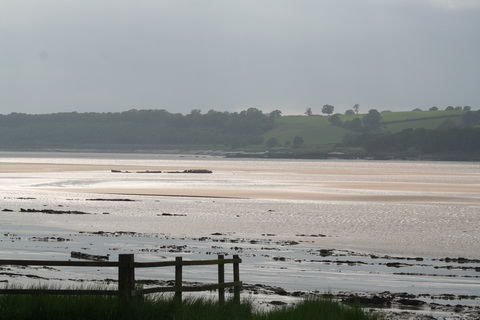
The estuary

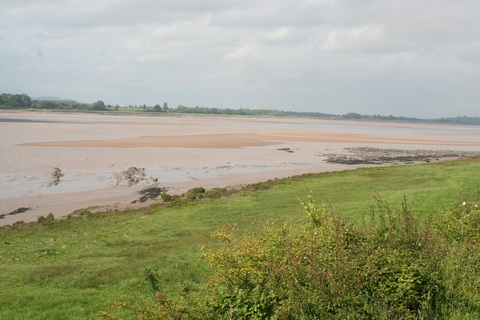
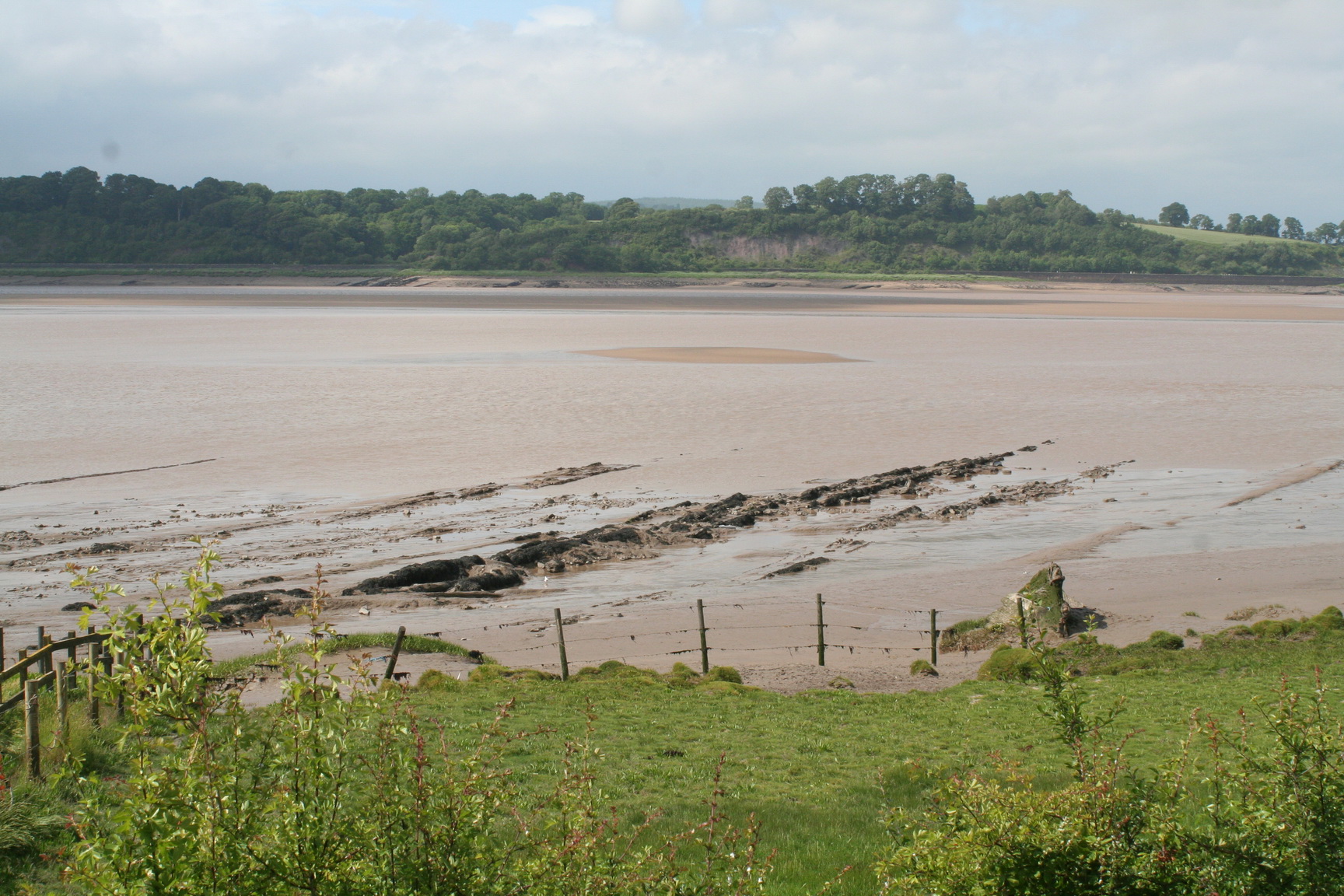
Big estuaries — including the Shannon and the Suir — always give a sense of space, with big open skies, but somehow the Severn looks even bigger when the tide goes so far out.

Severn rotation 3 05_resize

The long and level sands stretch far away

Severn rotation 1 01_resize

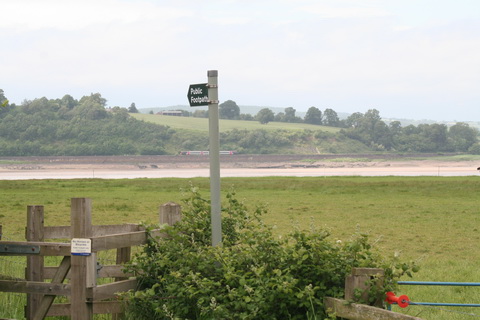
Note the train on the far bank, behind the signpost

Incidentally, the west bank too seems to have a place called Purton, if Messrs Google’s map is to be believed.

Severn rotation 3 02_resize

Drawing a line in the sand

The canal

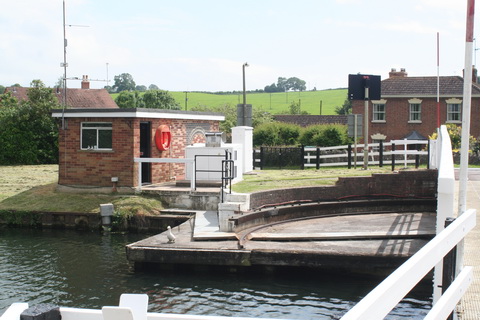
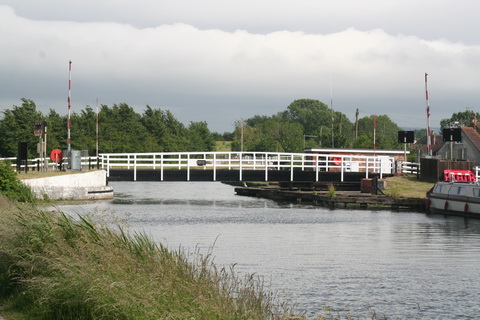
Purton has two of the Gloucester and Sharpness Canal‘s swing bridges, a weir and other interesting features.

Purton lower bridge 01_resize

Purton lower bridge

Purton lower bridge 03_resize

Purton lower bridge control room. The keeper operates both bridges

Purton lower bridge 06_resize

Swinging room

Purton lower bridge 08_resize

Purton lower bridge from downstream

Purton upper bridge

Purton upper bridge

Purton Gloucester and Sharpness Canal 02_resize

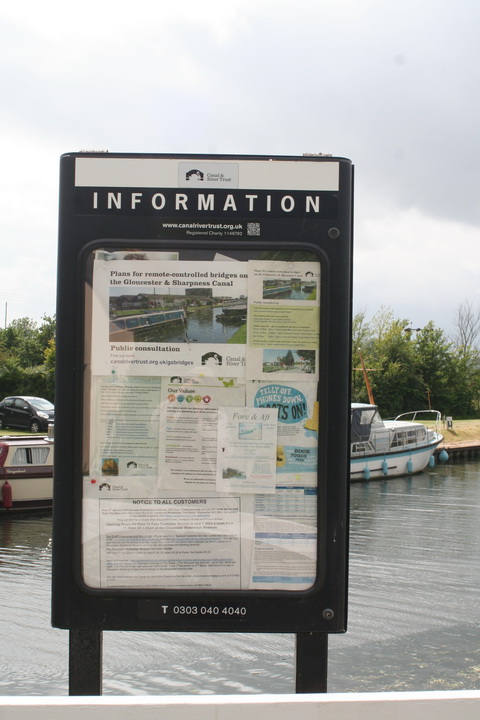
Information board beside the lower bridge

Purton weir 01_resize

Purton weir

Purton weir 03_resize

Weir bridge and sluices

Purton weir 04_resize

Weir inflow

Purton weir 06_resize

Weir sluices

Purton weir 07_resize

Weir outfall

Purton cottages 01_resize

Canalside cottages (all occupied)

Purton canal furniture 04_resize

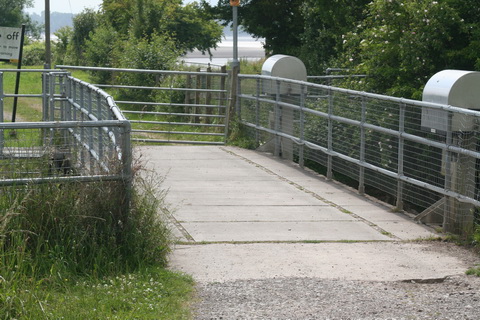
One of several designs of self-closing gate

Purton canal furniture 05_resize

Pontoon

Purton canal furniture 06_resize

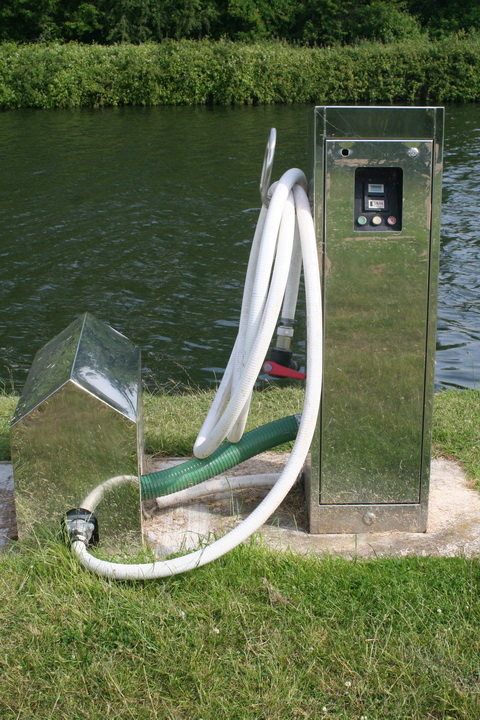
Pumpout

Purton Gloucester and Sharpness Canal 03_resize

Moorings

Boats at Purton 2015 01_resize

Boats 1

Boats at Purton 2015 05_resize

Boats 2

Boats at Purton 2015 06_resize

Boats 3

Purton boats 10_resize

Boats 4

The hulks

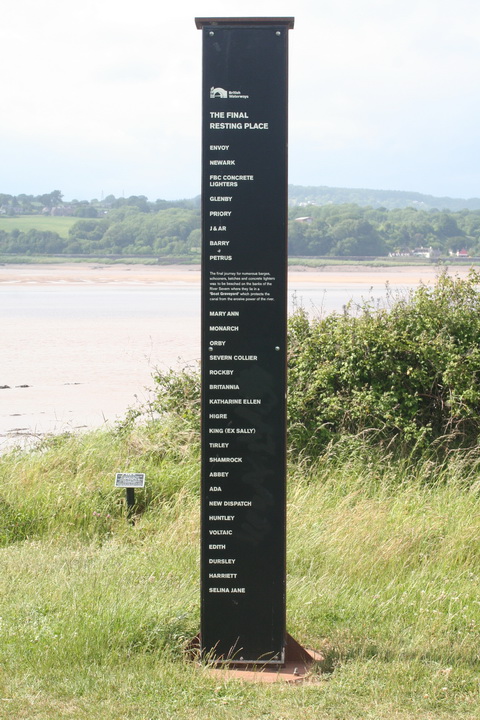
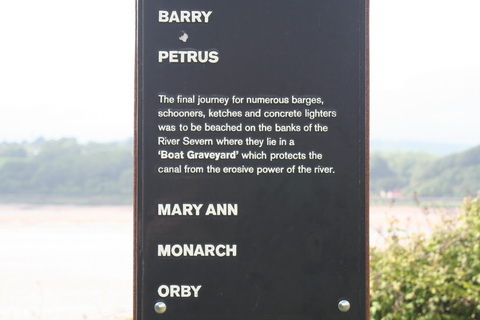
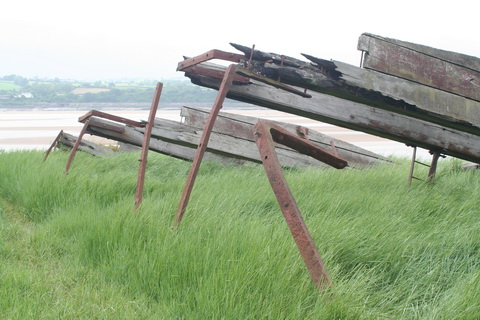
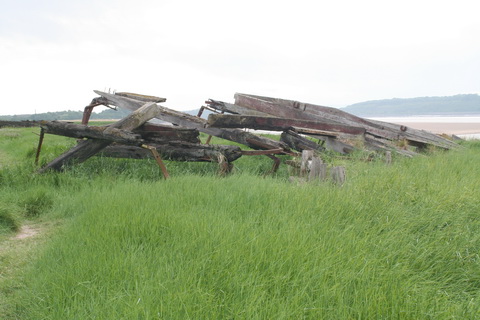
The hulls of old vessels were used to shore up the embankment, between canal and river, at Purton. [This practice was also used in Ireland, on both the Barrow and the Suir, but not on anything like the same scale.] The result was the creation of a boat or ship graveyard that preserved, and makes reasonably accessible, the hulls or frames or at least parts of a large number of inland, estuarial and coastal vessels. And some of them are vessels that traded with Ireland.

The Friends of Purton have an informative website here; please also read their page about access here. I can confirm that parking is restricted on the site; it would be easy to annoy the local people by careless parking.

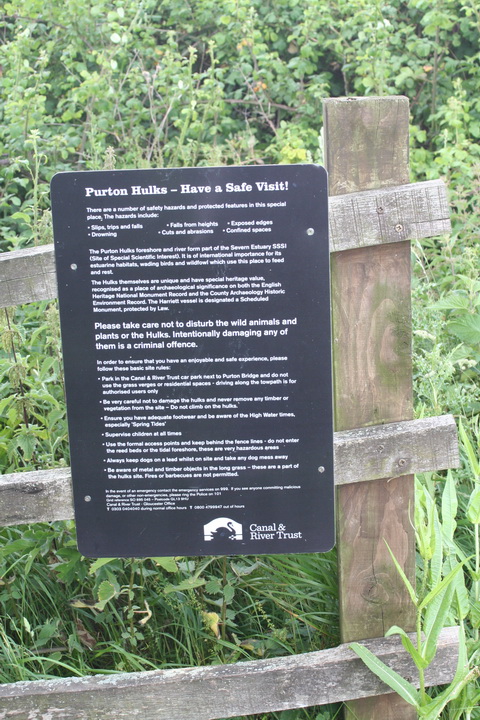
Good information is provided on site.

Purton hulks general information 01_resize

Information board

Purton hulks general information 02_resize

Memorial

Purton hulks general information 03_resize

Close-up

Purton hulks general information 04_resize

Advice

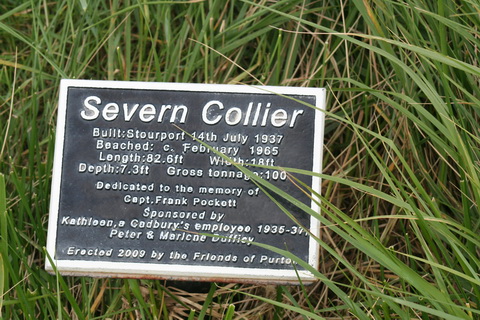
Purton hulks Severn Collier 04_resize

All identified wrecks have plaques like this

I had allowed an hour for my visit, but didn’t see everything; it would have been easy to spend twice as much time there. In the summer, growth hid a few of the artefacts, but there was plenty to see without trampling on the shrubbery.

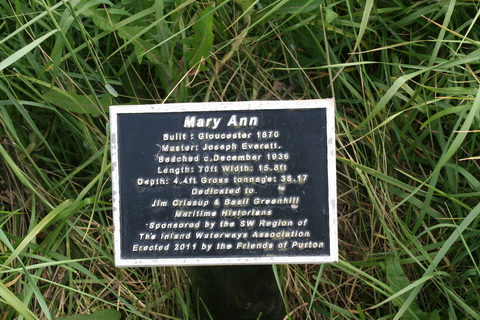
Mary Ann 01 resize

The Mary Ann

Mary Ann 03 resize

… is in there somewhere

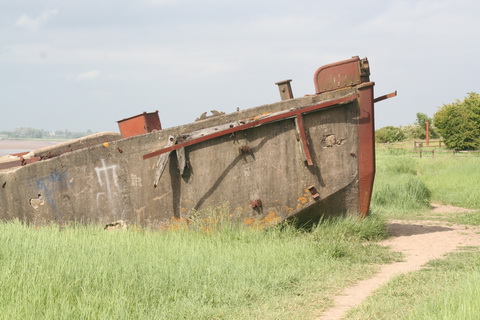
There are quite a few concrete (ferrocement) barges, built during the Second World War.

IMG_5227_resize

Up close

IMG_5229_resize

Bows on

Purton concrete barges 01_resize

Information plaque

Purton concrete barges 02_resize

Stacked up

Purton concrete barges 08_resize

Deck details

Purton concrete barges 17_resize

Merging into the bank

Purton concrete barges 18_resize

One side

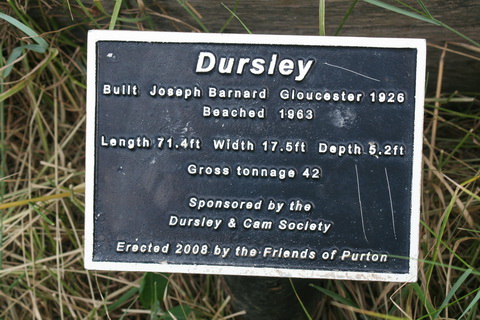
Of the other vessels, the Dursley is apparently in reasonable condition but, on my visit, was largely hidden in the grass.

Dursley 06 resize

Dursley plaque

Dursley 02 resize

Dursley sternpost and rudder

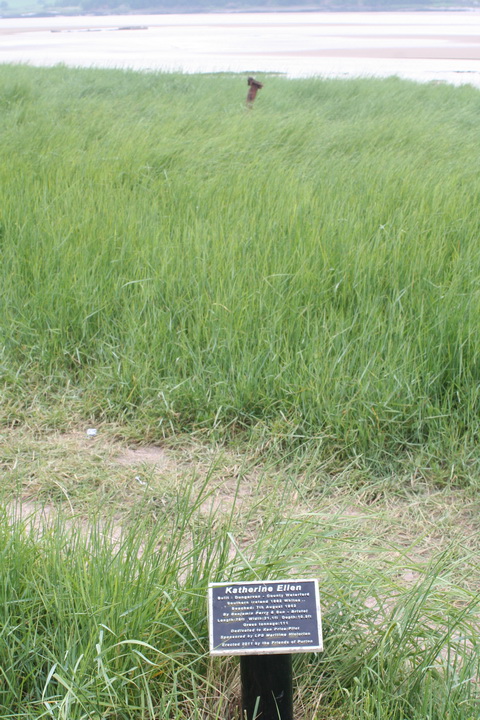
The same was true of the Katherine [or Catherine] Ellen, built in Dungarvan.

IMG_5165_resize

Katherine Ellen plaque

IMG_5166_resize

Katherine Ellen site

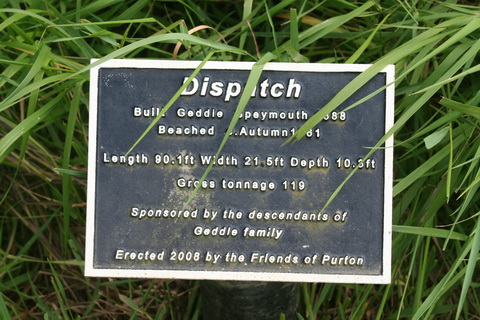
I failed to find the Jonadab, a Severn trow that traded to the (Munster) Blackwater, but I did see the remains of the Scottish-built Dispatch, which is amongst the vessels listed by Niall O’Brien as having visited the Munster Blackwater [Blackwater and Bride: navigation and trade 7000BC to 2007, Niall O’Brien Publishing, Ballyduff Upper, 2008].

IMG_5189_resize

Dispatch plaque

IMG_5190_resize

Dispatch hull

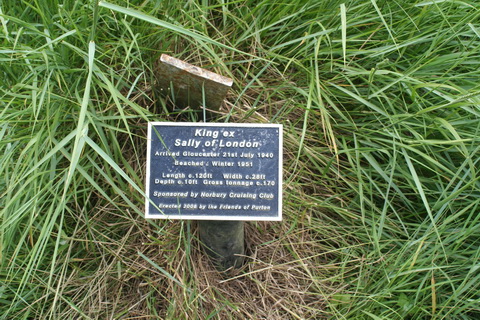
Then there were the dramatic remains of Sally, renamed King, of London.

IMG_5171_resize

Sally plaque

IMG_5172_resize

Sally remains 1

IMG_5169_resize

Sally remains 2

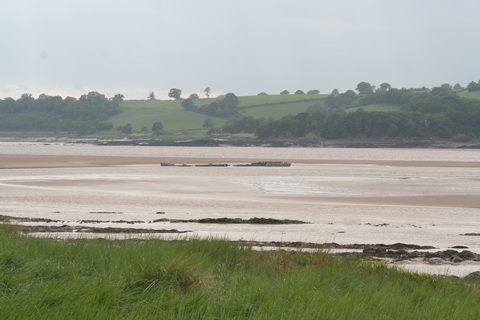
And many more. Even isolated timbers or iron ribs had their interest. But let me finish with a wreck that is not on the embankment but just offshore.

Purton hulks tanker 06_resize

Tanker offshore

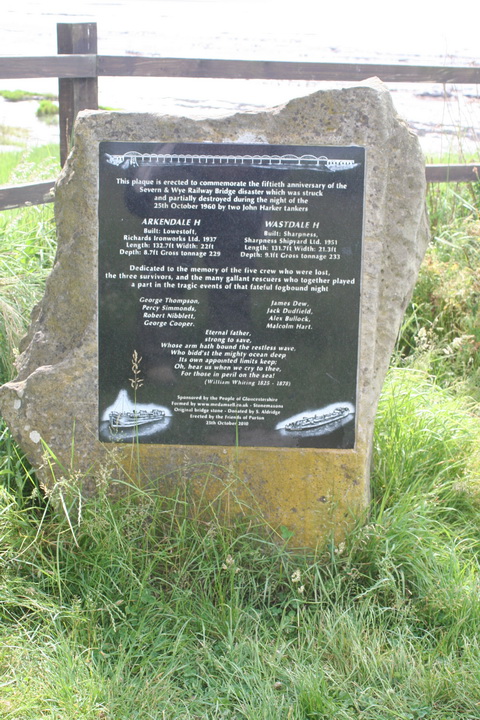
You can read about the loss of the tankers Arkendale H and Wastdale H here and here. They are remembered on a plaque at the site.

Purton hulks tanker 02_resize

Plaque about the tankers

Purton hulks tanker 03_resize

I don’t know which of the tankers is shown in my photos

Purton hulks tanker 05_resize

The wreck is a reminder of the hazards of estuaries

Purton is well worth a visit — but it is only one of the waterways delights close to the Fishguard/Pembroke to London route.

Northern nutters

I suppose this might be a Shinner ploy to annoy the DUP, but it is eloquent testimony to the pointlessness of the Northern Ireland Executive. It is unable to get its own act together, it can’t agree a budget — but one of its ministers thinks it should waste yet more of HMG’s money on yet another useless canal restoration proposal.

The Lagan Canal Trust is, it appears, funded by DCAL to enable it to draw up funding applications to DCAL ….

Victoria Lock, Meelick

Waterways Ireland has applied to Offaly County Council for planning permission for work on Victoria Lock:

REPLACING THE EXISTING LOWER LOCK GATES, LAND-TIES AND LAND-TIE ANCHORS, ALONG WITH ANY ASSOCIATED SITE WORKS. THIS WILL INVOLVE WORKS TO A PROTECTED STRUCTURE RPS NO: 38-05 AND WILL BE CARRIED OUT WITHIN THE CURTILAGE OF A PROTECTED STRUCTURE RPS NO: 38-04

The decision is due by 4 September 2015.