Category Archives: Irish inland waterways vessels

Dear Irish Sailing Association …

On those grounds, the Court (Eighth Chamber) hereby:

Declares that, by not ensuring that the minimum levels of taxation applicable to motor fuels laid down by Council Directive 2003/96/EC of 27 October 2003 restructuring the Community framework for the taxation of energy products and electricity were applied to gas oil used as fuel for propelling private pleasure craft, and by permitting the use of marked fuel for propelling private pleasure craft, even where that fuel is not subject to any exemption from, or reduction in, excise duty, Ireland has failed to fulfil its obligations under Articles 4 and 7 of Directive 2003/96 and Council Directive 95/60/EC of 27 November 1995 on fiscal marking of gas oils and kerosene respectively;

Orders Ireland to pay the costs.

Vilaras, Malenovský, Safjan

Delivered in open court in Luxembourg on 17 October 2018.

up yours.

Races at Castleconnell

There was a considerable multitude of persons at Castle-Connell, yesterday, to enjoy the spectacle of boat-racing. Vehicles of all descriptions were in requisition, and the pedestrians of both sexes were numerous. The weather was delightful, and the enchanting scenery of this far-famed watering place appeared to the very best advantage. The band of the County Limerick Regiment, which attended in full uniform, gave a new zest to the festivities of the occasion.

The contest on the river was between Castleconnell and O’Brien’s-bridge for the premiums advertised last week, and the Castleconnell men were victorious.

We understand the Strand men have challenged Castle-Connell to pull from O’Brien’s-bridge to Castle-Connell for £7, any day next week.

Dublin Observer 8 September 1832

The Newry bypass

I hesitate to criticise the Newry & Portadown Branch of the Inland Waterways Association of Ireland, admirable folk who conduct regular work parties improving the Newry Canal. So perhaps I should say that I disagree with them instead — at least on the proposal for a Southern Relief Road, aka bypass, around Newry, linking “the Warrenpoint Dual Carriageway to the A1 Dublin/ Belfast Road“.

Such a bypass is a very good idea and, of course, far better than the insane Narrow Water handsacrosstheborder project. But the new road must cross  the Newry River and the Newry Ship Canal, and I would be vastly surprised if there were any economic justification for the cost of an opening section or for the disruption that each opening would cause to traffic. Certainly six or twelve sailing vessels would no longer be able to reach the Albert Basin in Newry, but the greatest good of the greatest number should surely prevail.

I can’t see that the absence of sailing pleasure craft from Newry would in any  way diminish the heritage or historic value of the ship canal or the basin, and they are of course entirely irrelevant to the stillwater canal.

A spokesman from the Inland Waterways Association of Ireland” says that

The IWAI was formed in 1954 to stop the building of low bridges on the River Shannon. Fortunately this campaign was successful otherwise there would be no hire boats on the Shannon today. Think of the loss of revenue. This should be a lesson to the bridge builders in Newry.

This is rubbish, for two reasons. First, sailing vessels on Carlingford Lough are never going to be available for hire on the Newry Canal, so their inability to reach Albert Basin would have little effect.

Second, the IWAI campaign on the Shannon was notably unsuccessful. Instead of swivelling bridges that would allow masted vessels through, the Shannon now has fixed bridges (Banagher, Shannonbridge, Athlone) and lifting bridges (Roosky, Tarmonbarry) that lift enough to allow motor cruisers through, but not enough for sailing vessels.

Ruth Delany [in Ireland’s Inland Waterways: celebrating 300 years Appletree Press, Belfast 2004] says that the IWAI Shannon campaign resulted in there being a minimum clearance of 4.3m on the Shannon, which is a long way from the 35m that the Newry & Portadown folk are seeking. The only Shannon bridge providing that clearance is Portumna, a swivel bridge, which (unlike the others mentioned above) was not — or its ancestor was not — built by the Shannon Commissioners.

By using the Shannon as a model, the N&P folk have actually weakened their case: the 9m clearance suggested for the Newry bypass is more than twice what the Shannon provides.


Ireland’s mystical waterway

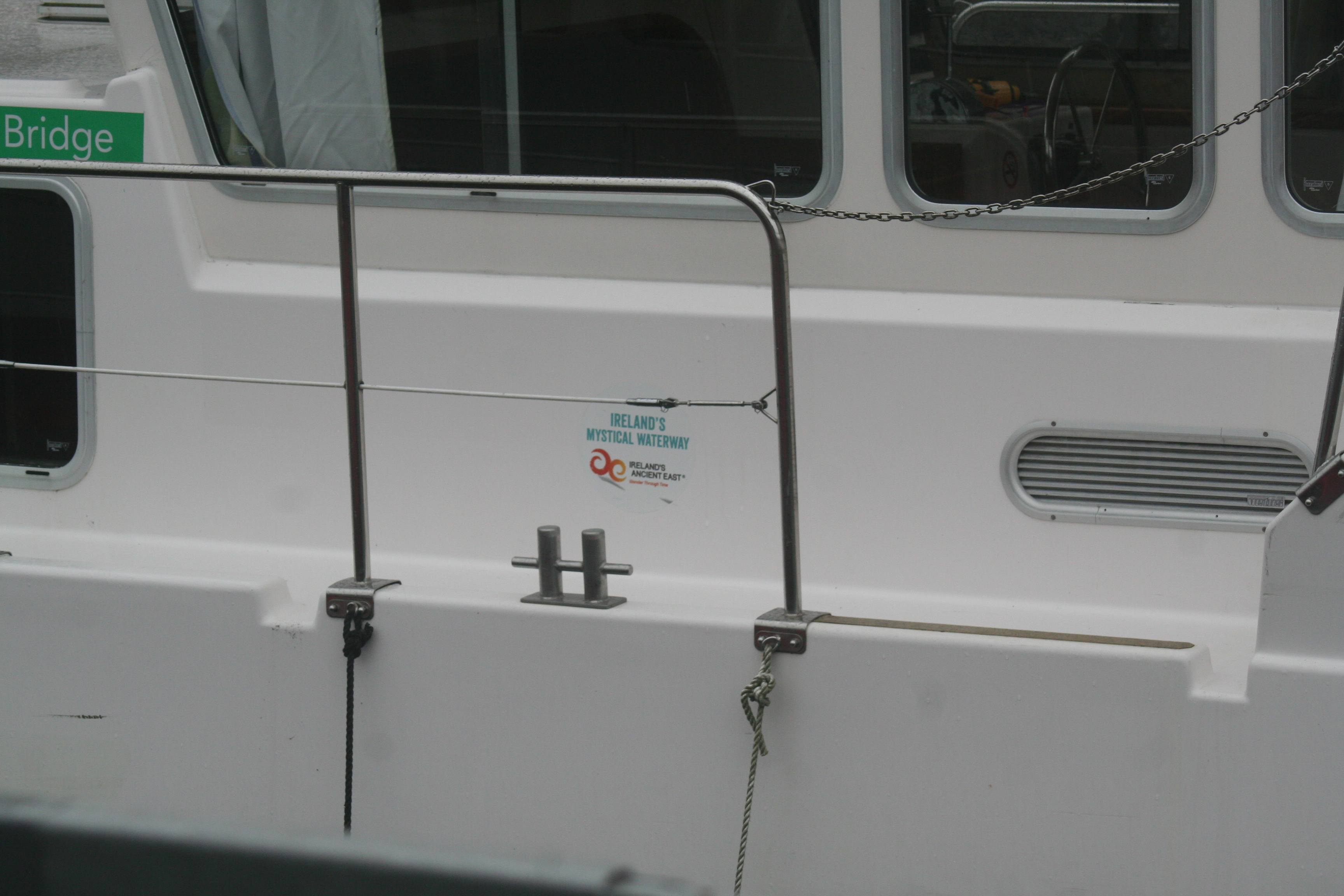
Mystical logo

Perhaps you’ve noticed an outbreak of strange stickers on Shannon hireboats, proclaiming that the river is “Ireland’s mystical waterway”. Cynics will dismiss this as just more marketing bollocks, in this case associated with the claim that the Shannon, which is in the middle of Ireland, is part of something called “Ireland’s Ancient East“. I do wish that, when marketing dudes get these brainwaves, they’d keep them to themselves.

But wait! What if we’re all wrong? What if the Shannon really is a mystical waterway? After all, wasn’t there recently a miracle in Athlone?

Mind you, you may need an encounter with spirits yourself after reading that lot: the spirits that come in 70cl bottles.


The Lough Gill Steam Company

Annual report of the Lough Gill Steam Company

Rev Thomas M’Keon, in the Chair

According to the Deed of Settlement, the Accounts are now laid before the Shareholders, and your Committee have the pleasure of recommending a dividend of 7 per Cent, still leaving a balance on hands as a surplus fund. This being her maiden year, during the first six months very few people travelled by the Steam Boat, the people being deterred by superstitious stories; but your Committee are enabled to state, that for the last six months, the passenger traffic has increased 350 per cent, with a prospect of a still further increase.

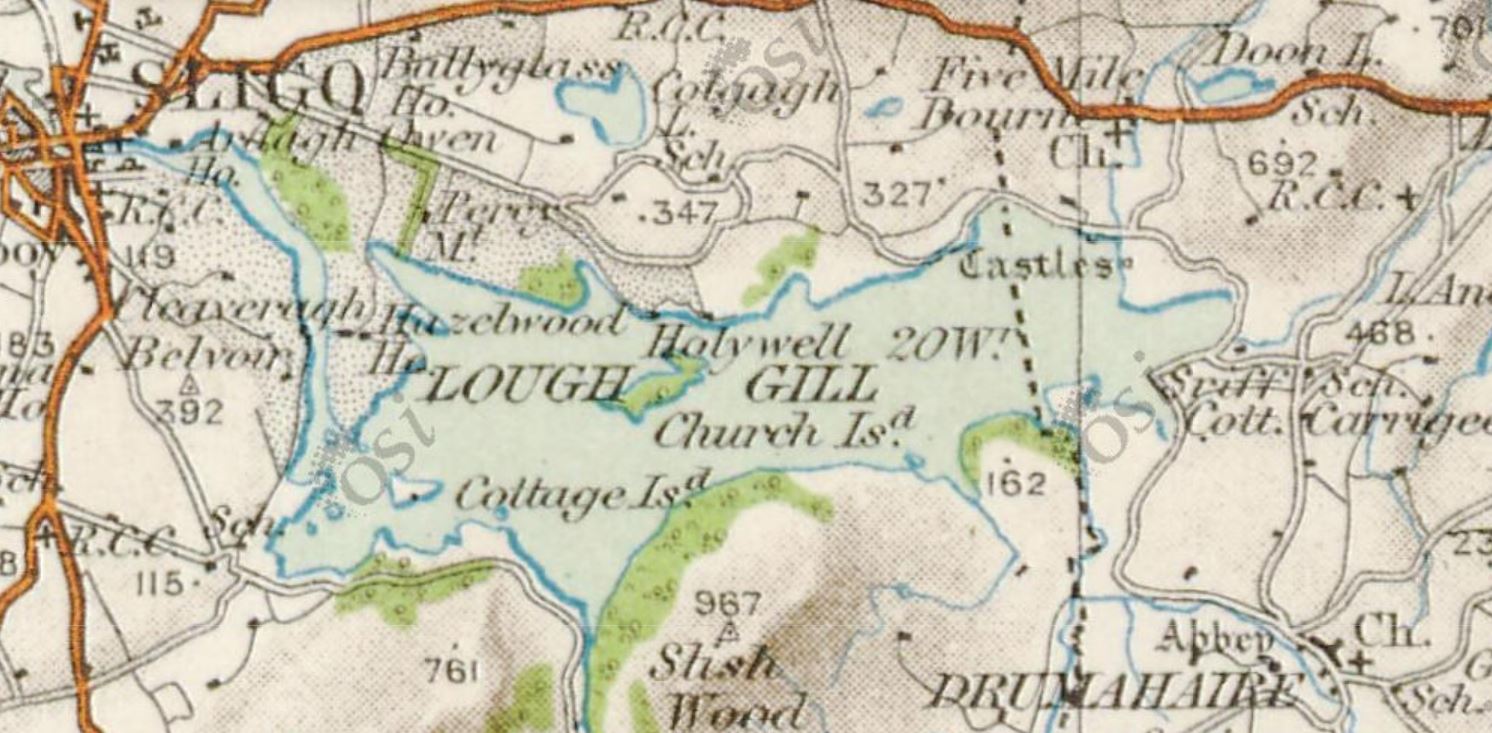
Lough Gill (OSI 25″)

Most of the passengers come from Drumkeerin, Doury, Dabally, and the country beyond the River Shannon, who are enabled by this conveyance to go to the Sligo Market, and return home the same day, thus travelling upwards of 50 Irish miles. From Manorhamilton and Glenfarn few passengers have as yet come, but it is hoped they will find this the best, cheapest, and quickest route, the fares for nine Irish miles being only 6d in cabin, and 3d on deck. If the contemplated road to Glenfarn by Gurtermore was opened, a passenger trade from Enniskillen (in 4½ hours from Sligo), Blacklion, Glenfarn, almost equal to her present trade, might be fairly expected. The Committee recommend all means to be used to get this road, about 3½ miles long, to be opened.

The number of passengers for six months ending October were:

Cabin 3240        Deck 12932

Your Committee would advise a system of Tickets for Passengers. The improvements of the Shannon are rapidly progressing, and when finished (in about 2 years) will, in conjunction with the Athlone Railway, open an immense passenger traffic on this line, the City of Dublin Company having offered to run powerful Steamers in conjunction with this Company to the Railway, bringing all the passengers between Sligo and Dublin.

The thanks of the Company are due are hereby to given [sic] C W Williams Esq of the City of Dublin Steam Company for his promptitude in attending to the wishes of the Company, and to James Heartley [recte Hartley] Esq for running a Car in conjunction with the Steamer and Dublin Day Coach, and his reduction of Fares on the Line, Passengers getting from Sligo to Dublin for 13s.

Your committee have to thank the Public generally for the support they have received, and they trust by the attention of their officers to serve the Public, that the Public in return will serve them, and hope at the next Annual Meeting to be able to declare a dividend of 14 per cent.

The Lady of the Lake leaves Sligo at 4 Evening, and Dromahair at ½ past 9, Morning

For Carrick and Dublin Per Steamer, Car, and Day-Coach, 13s.

The Lady of the Lake has ceased to ply on Sundays.

Company’s Office, Dromahair, 10th Oct 1844

The Champion, Sligo 12 October 1844

The mysterious capitalist

In 1847 George Lewis Smyth wrote [in Ireland: Historical and Statistical Vol II Whittaker and Co, London 1847 Chapter 14]

Another favourite object of praise and assistance is the Dublin and Kingstown Railway. The large sums lent to this railway and to the Ulster Canal are represented in certain circles in Dublin to have been matters of personal obligation. A capitalist holding a considerable interest in both undertakings is familiarly described as always carrying a commissioner in his breeches pocket.

Who was the capitalist in question? One possibility is Peirce [or Pierce] Mahony, solicitor to both the Dublin and Kingstown Railway and the Ulster Canal Company, but perhaps “capitalist” in not quite the mot juste for him. Another is James Perry, quondam director of the railway and Managing Director of the Ulster Canal Steam Carrying Company, which was owned (from 1843) by William Dargan, the contractor who built the Dublin and Kingstown Railway.

Perry had fingers in many other pies, including the Ringsend Iron Works which, in 1842, built an iron steamer for the use of the City of Dublin Steam Packet Company on the Shannon. The steamer was named the Lady Burgoyne.


The Shannon–Erne Waterway

The Shannon–Erne Waterway, a mix of canal, river and small lake, links the Shannon (at Leitrim) to the Erne (near Belturbet). Formerly the Ballinamore & Ballyconnell Canal, and originally the Junction Canal in the Ballinamore and Ballyconnell Drainage District (or some such combination of elements), it was rebuilt in the early 1990s with automated (boater-operated) locks, service blocks, a logo, marketing and other such new-fangled extras that had not engaged the attention of the Office of Public Works.

I have not been able to find a proper cost-benefit analysis, but my impression is that Irish taxpayers paid relatively little of the cost, so that it was a good investment for them. It has been used as an example of the regenerative power of restored waterways, although (unlike, say, the River Suck or the proposed Clones Sheugh) it was a link between two busy boating areas, rather than a dead-end canal. Even so, several of the businesses that were started in the early years have since vanished, although there are some new ones like Ballinamore Marina.

On a recent visit (from Leitrim to Haughton’s Shore and return), though, I felt that the waterway had an air of neglect. This view may have been formed by two nights (one on the outward, one on the return journey) at Keshcarrigan in the rain. Some improvement work was started at the harbour some time ago, but it seems to have been suspended or abandoned: fencing, equipment and materials were left on site. Given that Keshcarrigan was one of the areas afflicted by post-Celtic-Tiger ghost estates, the state of the harbour does not encourage visitors, despite the pleasure of staring at what appear to be the resident boats (one of which, sporting a “For sale” notice, was occupying one of the few long spaces and monopolising one of the few shore-power sockets).

Ballinamore, however, was much more cheerful, especially with a festival going on (the rain drowned the nighttime noise of the funfair), and Haughton’s Shore was peaceful, with not even one dancing van.

But the infrastructure seems to need attention. The paint on many of the navigation markers had faded, although admittedly that rarely caused a navigation problem.

The waterway seemed to me to have become shallower in places (we were told that we would meet even shallower bits if we went on to Ballyconnell), even making allowances for a dry summer. It felt as though there were bars of sand or clay underneath when coming out of locks (going down), but even on some of the stretches between locks the water felt shallower than it should be. This is of course only a series of impressions, but I would be interested to know whether the waterway’s profile has changed since it was rebuilt. It would not be surprising to find that it had: the passage of boats, and especially of those travelling fast, may have undermined the banks. I do not know what programme of dredging Waterways Ireland carries out.

The worst feature is the trees, which don’t seem to have been cut back for some time. They need a large amount of serious industrial-scale equipment to be applied to them for weeks or months.

In some places, large branches had fallen in and not been removed. In others, there was less than the width of the boat between the trees stretching from the two sides. They seriously impeded the ability to see the lines of bends, to judge the approaches to bridges or even to spot oncoming boats: for most of those we met, we had very little time to react (so it was just as well that, except for the lake sections, we didn’t get above tickover speed for the entire journey). Had there been kayaks or other small craft using the waterway, I suspect we wouldn’t have seen them until the last moment.

In some places the trees stretched out so far that it was hard to stay in the (presumably) deep water in the centre of the channel. But the really challenging part was when trees impeded the approach to a bridge, making it impossible to line up properly. Several of the bridges are on sharp bends and, with a large boat, the trees caused severe problems.

The extent of the overgrowth is such that it requires a major commitment to tree-cutting. I can imagine that that would be hard to organise: the bird-fanciers have limited the cutting season to the more unpleasant months of the year, when days are short; getting to and from the cutting site takes several hours out of the limited working day; removal of cuttings would be a major undertaking. But something will have to be done: it’s already bad enough that I won’t return unless I know that the trees have been cut, and if they’re left for another year or two even smaller vessels will have problems.

Update 26 September 2018

Waterways Ireland’s Marine Notice 99 of 2018 says that “tree trimming and hedge cutting will be carried out at various locations on the Shannon-Erne Waterway” between September 2018 and February 2019.

This is good news; I hope that the shrubbery will be given a thorough cutting.

Fans of recreated recreational waterways might consider that they need serious amounts spent on maintenance. It is not clear that all proposed recreations could generate the traffic to justify the expenditure.


 

Hooks

Statutory Instrument No 198 of 1964

GRAND CANAL BYE-LAW (CONFIRMATION) ORDER, 1964

I, ERSKINE H CHILDERS, Minister for Transport and Power, in exercise of the powers conferred on me by section 22 of the Transport Act, 1950 (No 12 of 1950), and the Transport, Fuel and Power (Transfer of Departmental Administration and Ministerial Functions) Order, 1959 (SI No 125 of 1959), hereby order as follows:

  1. This Order may be cited as the Grand Canal Bye-law (Confirmation) Order, 1964.
  2. The bye-law (set out in the Schedule to this Order) made by Córas Iompair Éireann on the 7th day of November, 1963, in lieu of Bye-law No 37 (confirmed by the Grand Canal Bye-law (Confirmation) Order, 1953 (SI No 162 of 1953)) is hereby confirmed and shall come into operation on the 5th day of August, 1964.

SCHEDULE

No person navigating any vessel on the canal shall have on board the same—

(1) passengers or persons exceeding twelve in number in addition to her duly appointed crew; or

(2) any scythe, hook, or other instrument for cutting grass or corn unless the same bona fide forms part of the cargo carried for hire; nor shall any such person use the same on the canal or towing-path, or on any land adjoining the canal or towing-path.

GIVEN under my Official Seal, this 5th day of August, 1964.

ERSKINE H CHILDERS, Minister for Transport and Power

EXPLANATORY NOTE

The effect of this Order is to remove the restrictions imposed by the former Bye-law No 37 of the Grand Canal Bye-laws on the carrying of firearms and fishing tackle on vessels traversing the Grand Canal.

Stolen from www.irishstatutebook.ie

The speed limit in Athlone

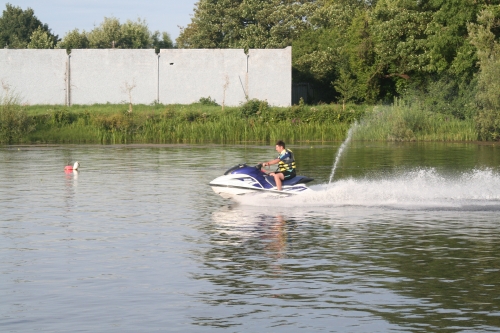
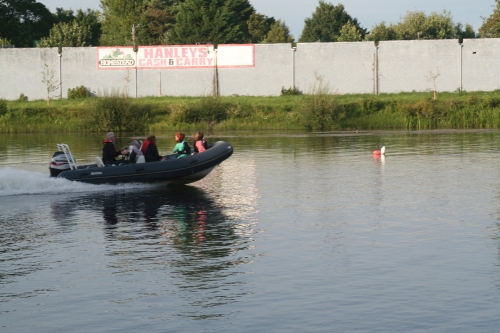
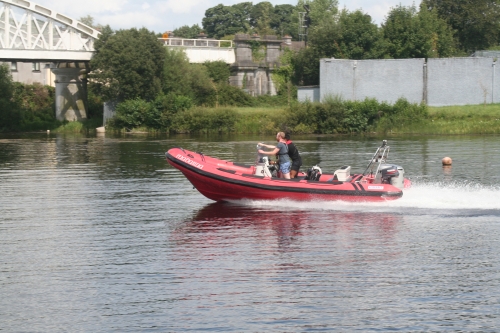
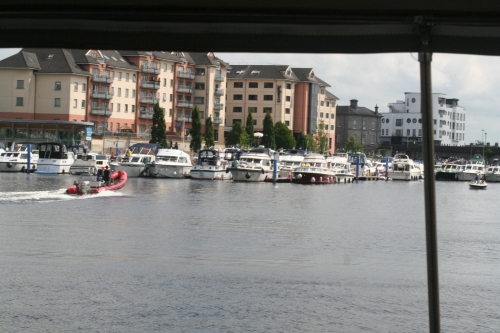
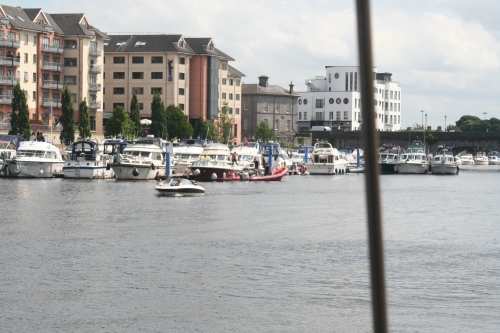
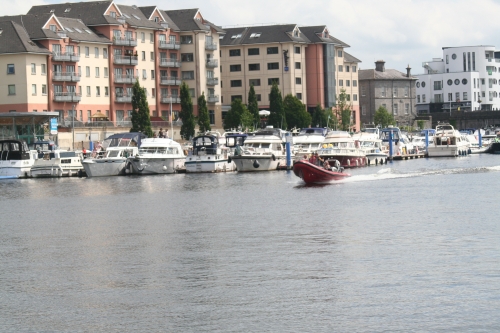
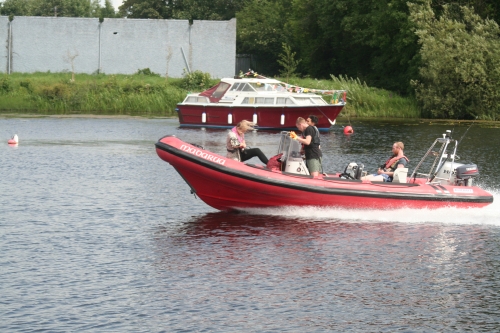
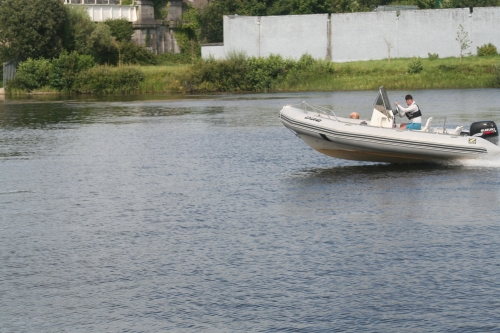
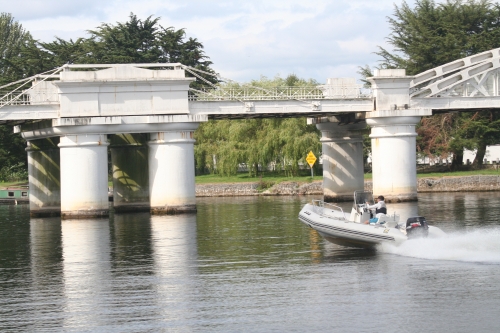
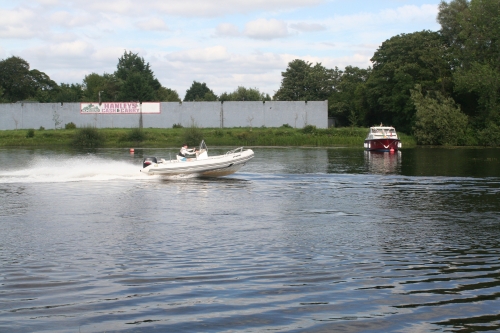
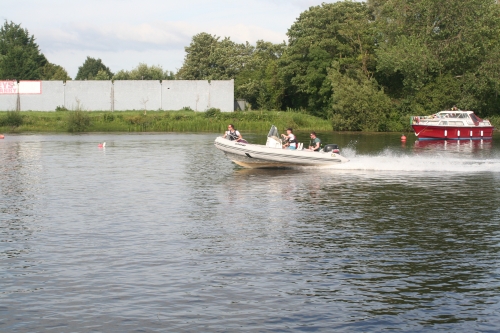
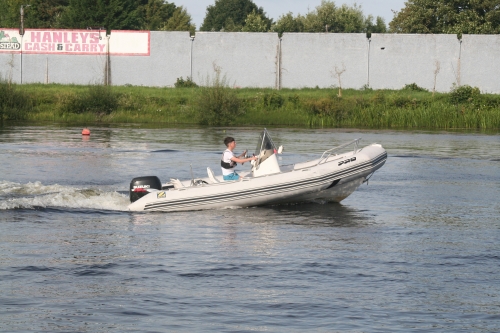
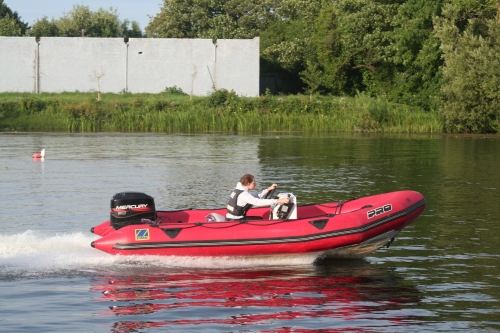
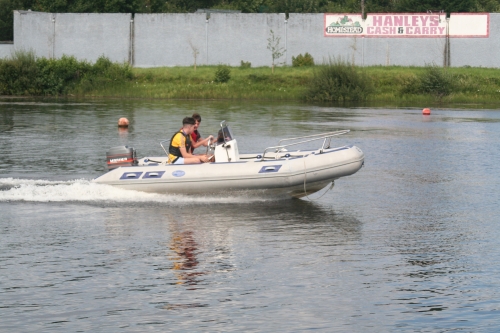
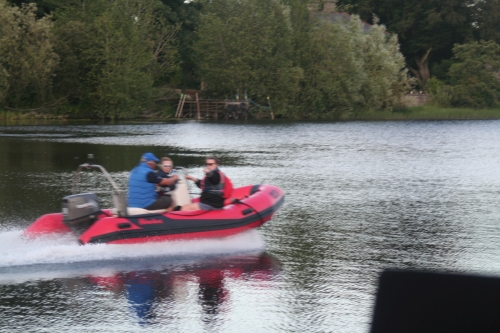
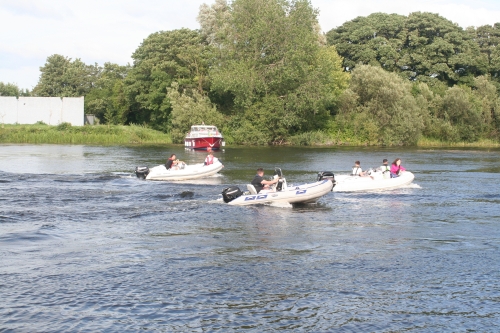
The following photographs (and many others) were taken from the Watergate in Athlone on Sunday 5 August 2018. An IWAI Rally was in progress and the Lough Ree Yacht Club’s annual regatta was beginning, but there is of course no suggestion that the boats and boaters shown in these photos had any connection with either of those august institutions.

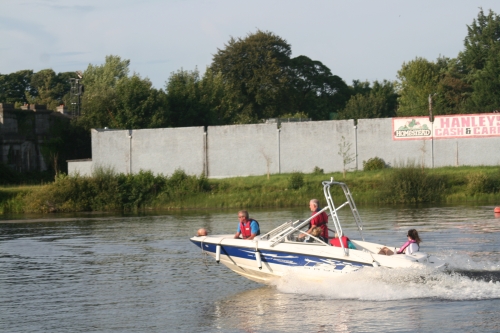
No doubt it is difficult to estimate speed

I do not know what is happening here

The jetski was relatively harmless

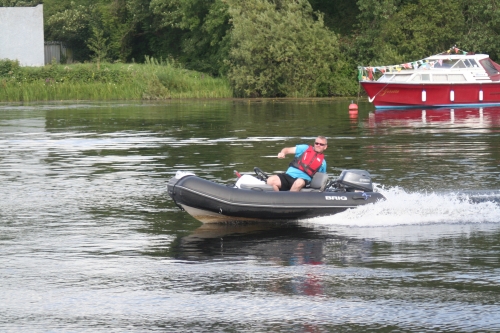
A large BRIG RIB, I think

Madarua goes upstream

Madarua goes downstream

Madarua alongside a cruiser

Madarua upstream again

Madarua upstream again

A busy boater: up …

… still going up …

Down

Up again

Down again

A red RIB

This one is almost sedate

Spotting the photographer

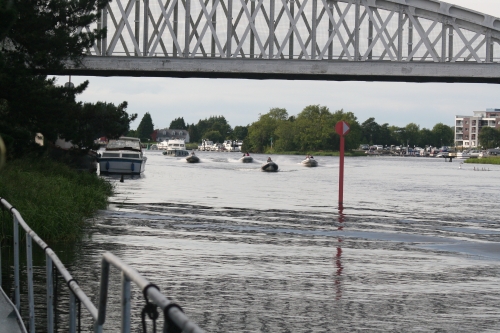
Three RIBs coming downstream (the nearest is not one of the three)

Three RIBs travelling more slowly below the railway bridge

The Watergate

There is, I believe, a 5 km/h [~2.7 knots] speed limit for boats passing through Athlone. The area covered includes the river at the Watergate and upstream for some distance above the railway bridge.

Tom Nolan, Grand Canal Company boatman

At its August meeting, the Killaloe–Ballina Local History Society presented “a selection of oral history recordings taken over 25 years ago of some of Killaloe’s and Ballina’s most elderly residents”; you can read about the event here.

Most of the recordings were made in 1992. One was an interview with Tom Nolan, formerly of the Grand Canal Company, and you can read a transcription of the interview here.