Category Archives: Engineering and construction

Piscator, Navita and Shannon navigation rights

I was never any good at fishing. The only time I ever caught anything was when fishing for mackerel with feathers from a boat, which is [I gather] the equivalent of shooting fish in a barrel [surely a pointless exercise: if you wanted to catch or kill them you could just let the water out of the barrel].

My knowledge of angling comes, therefore, almost entirely from two sources. The first is observation: from the comfort of a boat, I’ve seen anglers along riverbanks, huddled under umbrellas in the rain, miles from any amenities. They don’t seem to be having a lot of fun, but that is no doubt because they “affect a holy melancholy”, as explained in my second source.

Izaak Walton begins his The Compleat Angler or the Contemplative Man’s Recreation, being a Discourse of Rivers, Fishponds, Fish, and Fishing [a 1904 edition available here] with a friendly argument between Piscator, Venator and Auceps, each lauding his own pastime. They cite learned authorities, refer to scripture and quote poets at length before refreshing themselves at the Thatched House.

Then Venator, having become an apprentice angler, learns “How to Fish for, and to Dress, the Chavender or Chub” and many another fish, pausing to hear Maudlin, the milkmaid, sing her song and her mother sing a response. After a supper of barley-wine and trout, Piscator, Venator and two more anglers, Peter and Coridon, sing more songs, including The Angler’s Song, which includes this stanza:

Of recreation there is none
So free as fishing is alone;
All other pastimes do no less
Than mind and body both possess;
My hand alone my work can do,
So I can fish and study too.

Towards the end of the book’s first part [the second being written by Charles Cotton], Piscator recites a poem attributed to Sir Harry Wotton, this being the last stanza:

Welcome, pure thoughts, welcome, ye silent groves,
These guests, these courts, my soul most dearly loves;
Now the wing’d people of the sky shall sing
My cheerful anthems to the gladsome spring;
A prayer-book, now, shall be my looking-glass,
In which I shall adore sweet virtue’s face,
Here dwell no hateful looks, no palace cares,
No broken vows dwell here, nor pale-faced fears; Then here I’ll sit, and sigh my hot love’s folly,
And learn t’affect a holy melancholy;
And if contentment be a stranger, then
I’ll ne’er look for it, but in heaven, again.

They don’t write ’em like that any more.

Piscator iratus

I had assumed that this blend of contentment and holy melancholy characterised the anglers of today. But when, having visited the excellent website of the Limerick and District Anglers Association, I moved instead to their FaceTweet page, I found that the modern angler’s lot is not a happy one. The angler has to contend with the iniquities of the Electricity Supply Board [which owns fishing rights on the Shannon], Inland Fisheries Ireland  [whose role on the Shannon I know not] and, now, kayakers.

In discussion of another post on the subject, the Association said:

Therefore canoeists who enter this section of river without permission are trespassing.

That interested me, and I thought I should look further into navigation rights on the Shannon. [Update 10 June 2015] I have posted my interim conclusions here.

There is a second point. The Old River Shannon Research Group repeated the kayaking topic on its FaceTweet page with this comment:

This is a commercial company trying to turn the Castleconnell beats into something like Lahinch has become with surfers. See their website here. This type of “development” requires Appropriate Assessment.

I am most reluctant to disagree with the learned Dr William O’Connor on anything, as he knows far more than I do about environmental matters, but his comment raised a second topic of interest and I thought I might look into that too. Again, I’ll post separately on that.
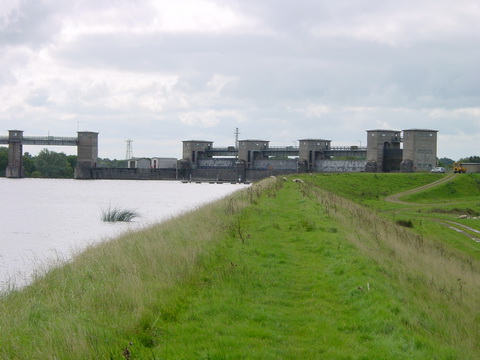
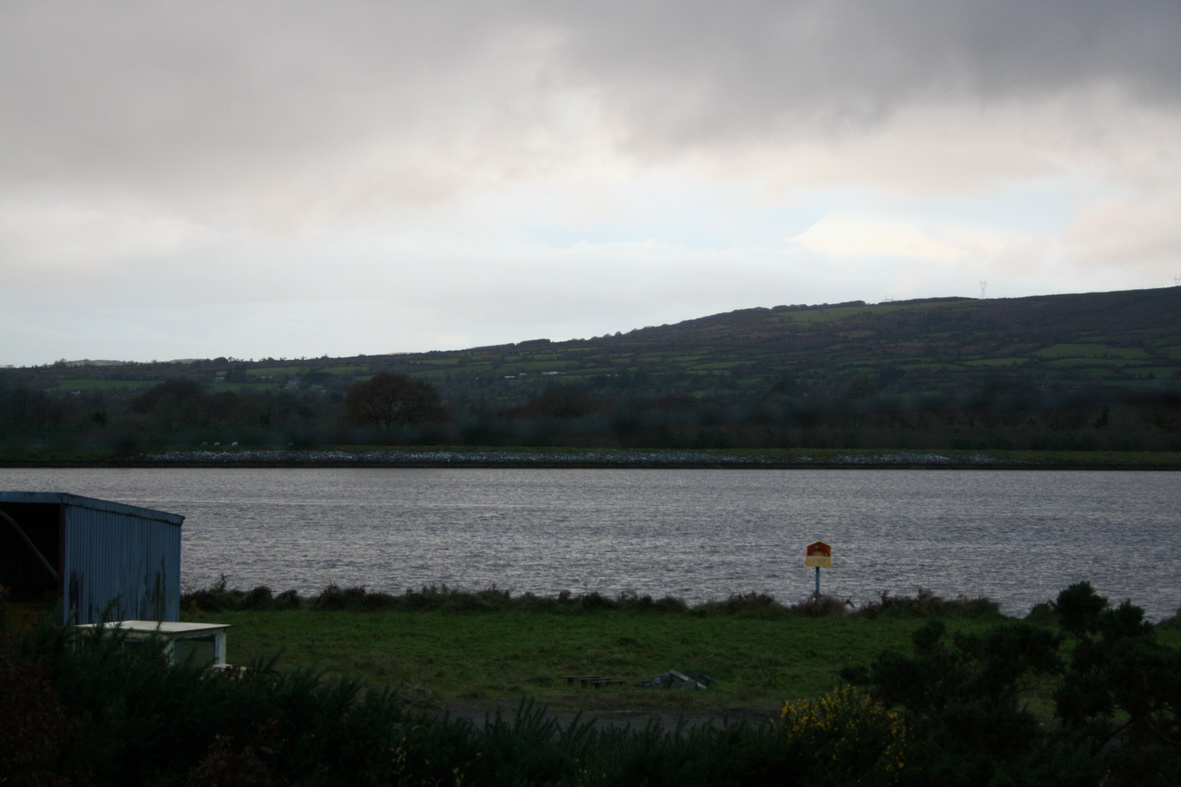
Please don’t look at these photos

I regret to say that I have published, on these pages, several photos of the Shannon, Parteen Villa Weir, Ardnacrusha hydroelectric power station and its headrace and tailrace canals.

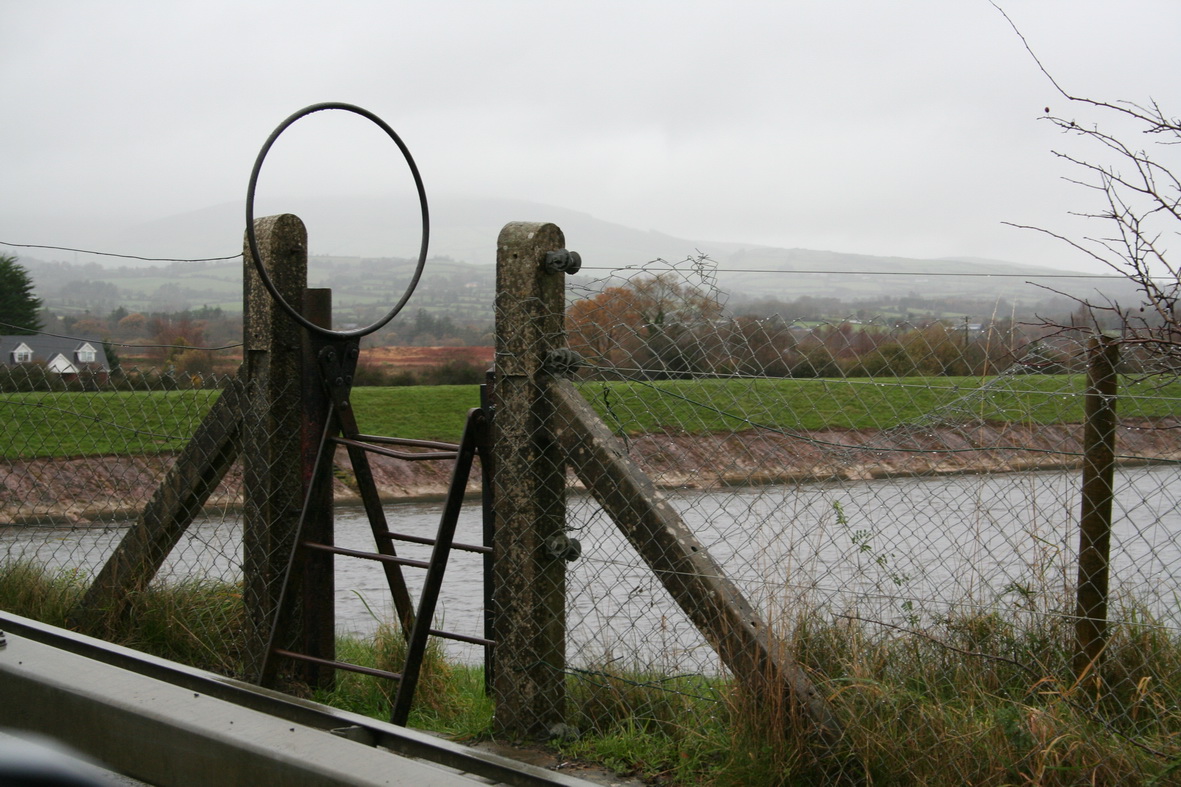
The storage basin between the road bridge over the River Shannon at Killaloe and the weir and canal intake at Parteen, including the right and left embankments constructed to form the said storage basin, together with the land outside and along the said right embankment delimited and separated from the adjoining land by post and wire fencing and also the land outside and, along the said left embankment delimited by the left bank of the Kilmastulla River Diversion.

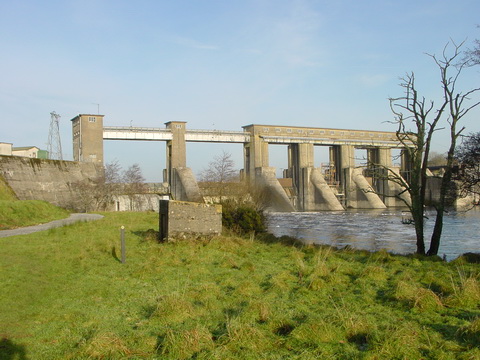
Parteen Villa Weir from the embankment upstream (2008)

Parteen Villa Weir from the embankment upstream (2008)

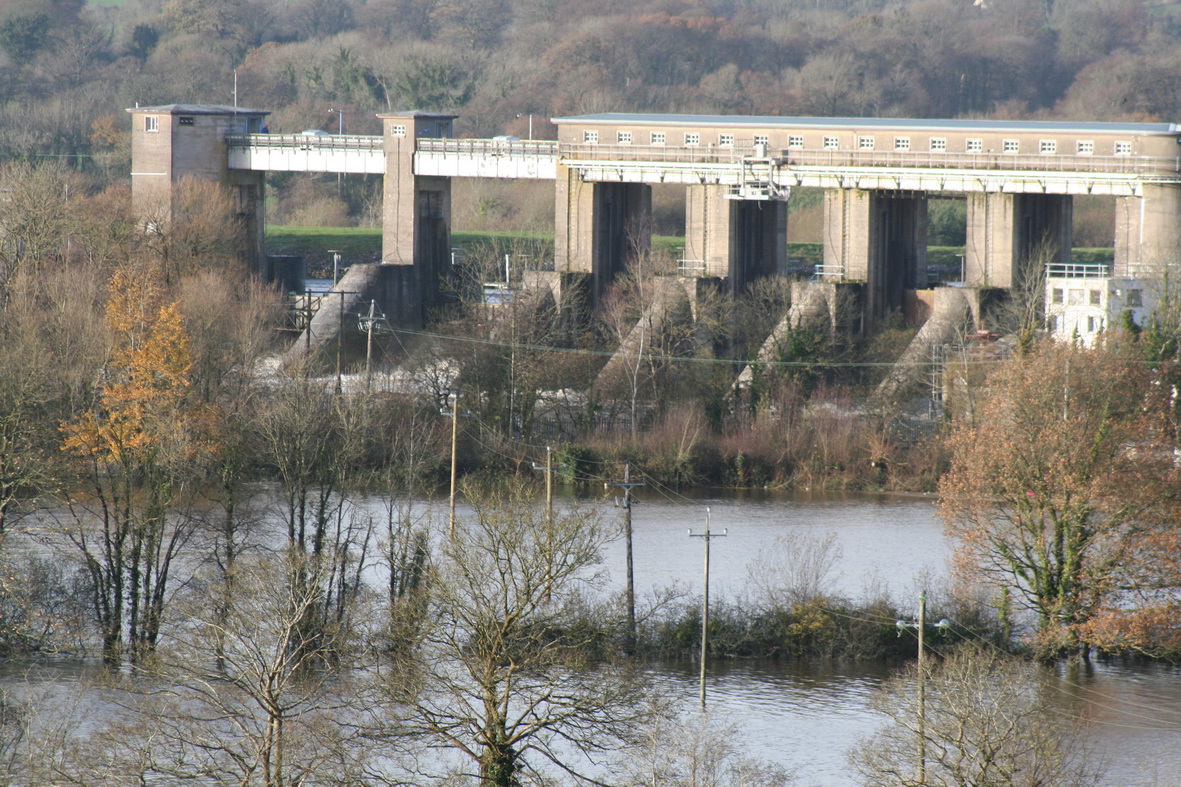
The flooded area above Parteen Villa Weir

The flooded area above Parteen Villa Weir

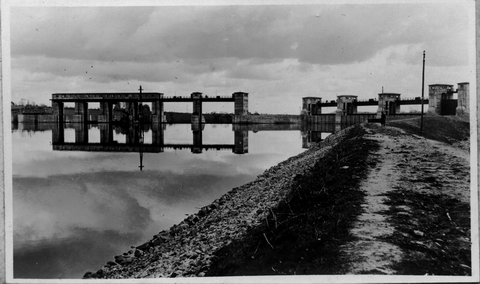
The weir and canal intake, the embankments constructed to form abutments to the said intakes, the syphon under the said canal intake, and adjoining lands inside and bounded by post and wire fencing.

Parteen Villa Weir

Parteen Villa Weir

Parteen Villa Weir from upstream

Parteen Villa Weir from upstream

The six sluices controlling discharges down the old course of the river

The six sluices controlling discharges down the old course of the river

The head race between the canal intake and the power station including the right and left embankments constructed to form the said head race, together with the land outside and along the said embankments delimited and separated from the adjoining land by post and wire fencing, and also the road bridges over and the syphons and culverts under the said race.

The headrace from the bridge at Clonlara 20 November 2009

The headrace from the bridge at Clonlara 20 November 2009

The headrace from the bridge at O'Briensbridge 22 November 2009

The headrace from the bridge at O’Briensbridge 22 November 2009

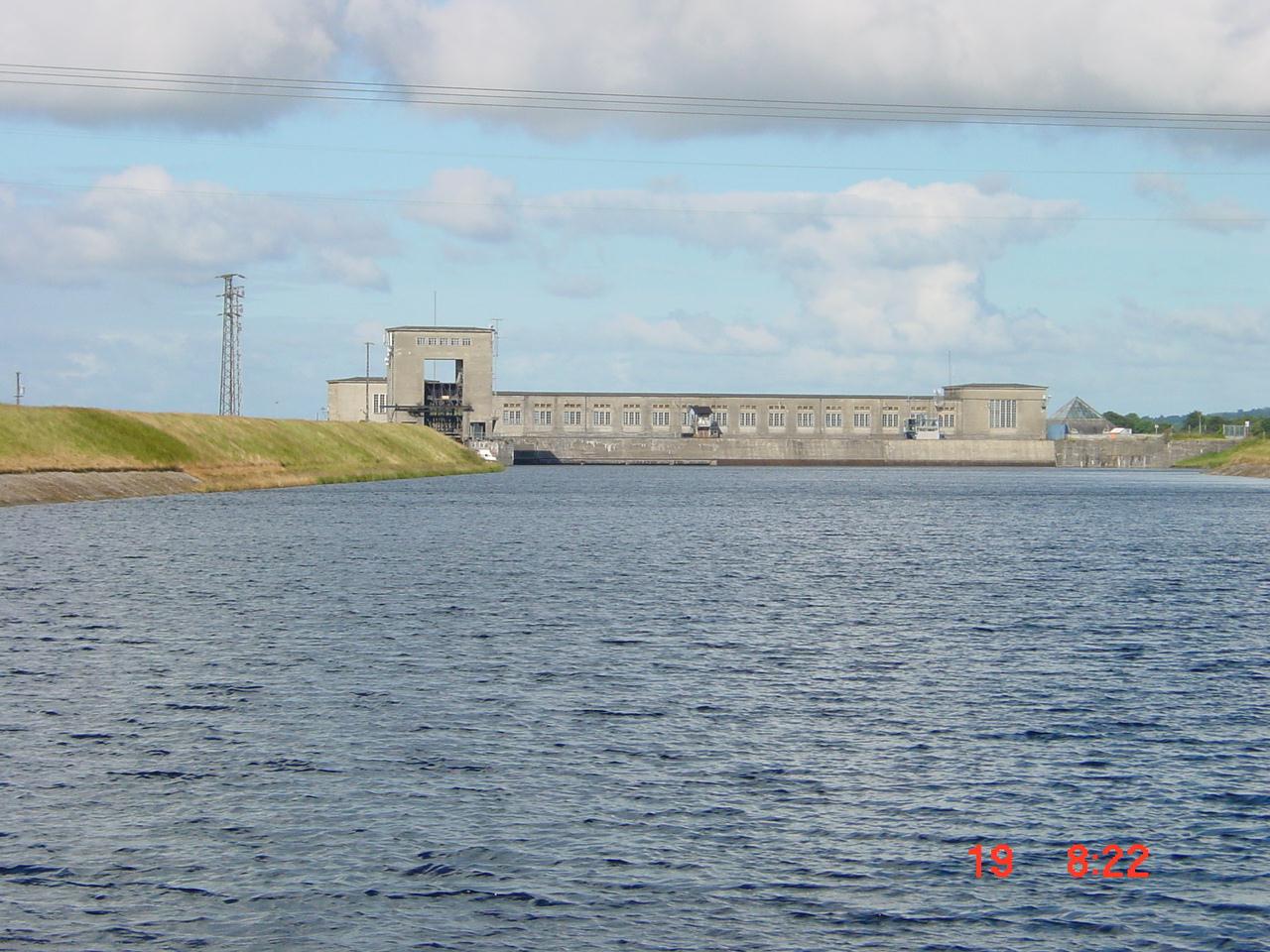
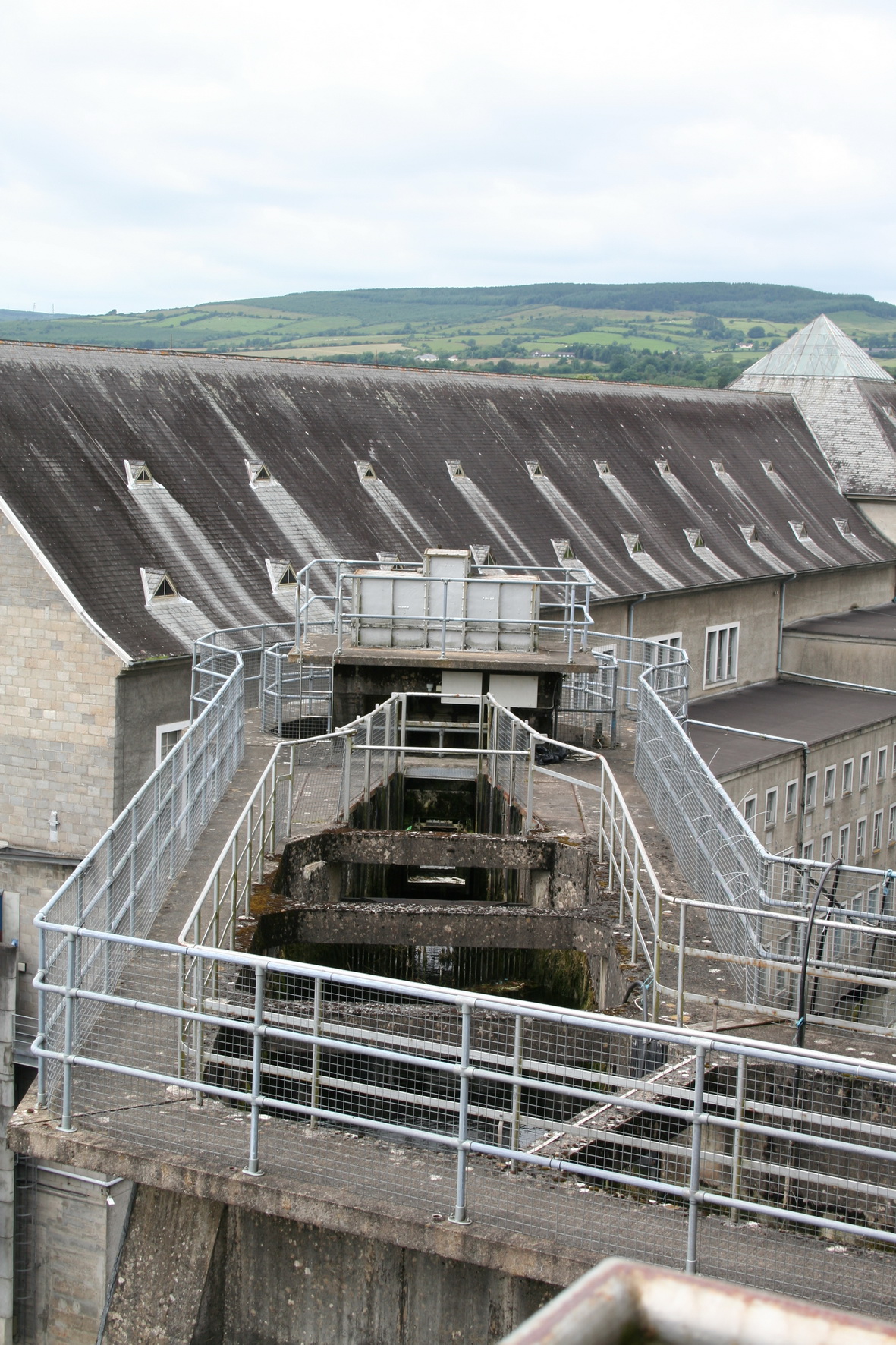
The power station, the intake to the said power station, the locks and all adjoining buildings and land within the area around the said power station, all of which are delimited and separated from the adjoining land by post and wire fencing.

The upper chamber at Ardnacrusha lock

The upper chamber at Ardnacrusha lock

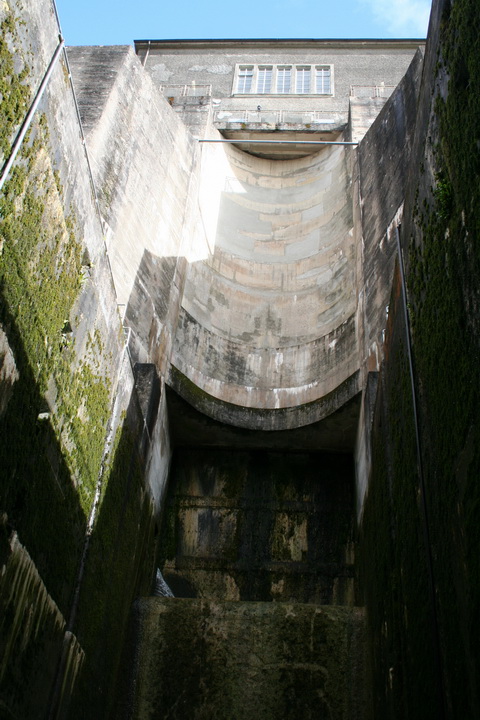
Ardnacrusha: looking up at the top chamber from the bottom

Ardnacrusha: looking up at the top chamber from the bottom

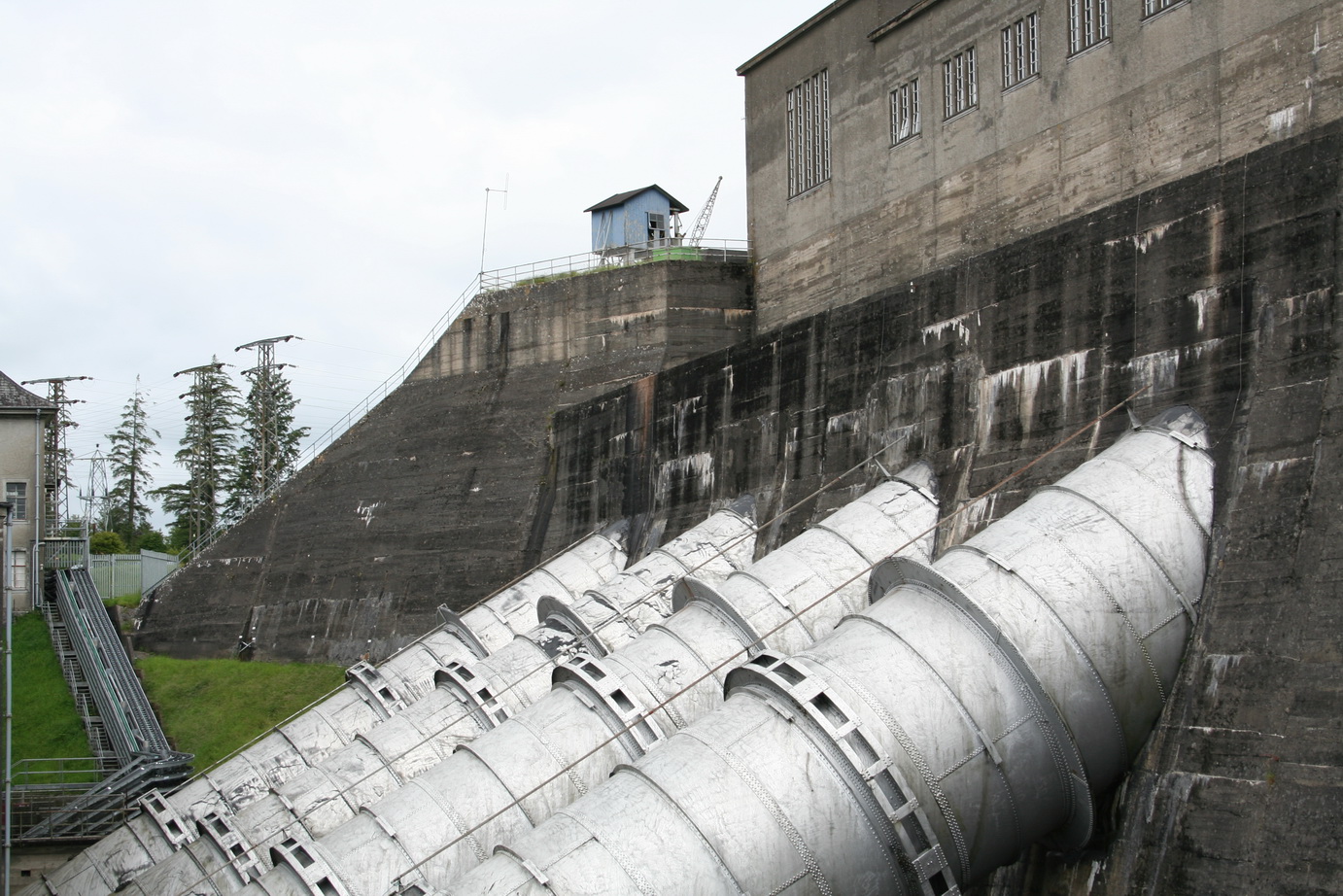
The penstocks that feed the turbines at Ardnacrusha

The penstocks that feed the turbines at Ardnacrusha

Ardnacrusha power station from the headrace

Ardnacrusha power station from the headrace

The fishpass

The fishpass

The tail race from the power station to the River Shannon, the branch railway running along the said tail race, and the land on either side of the said tail race, all of which are delimited and separated from the adjoining land by post and wire fencing.

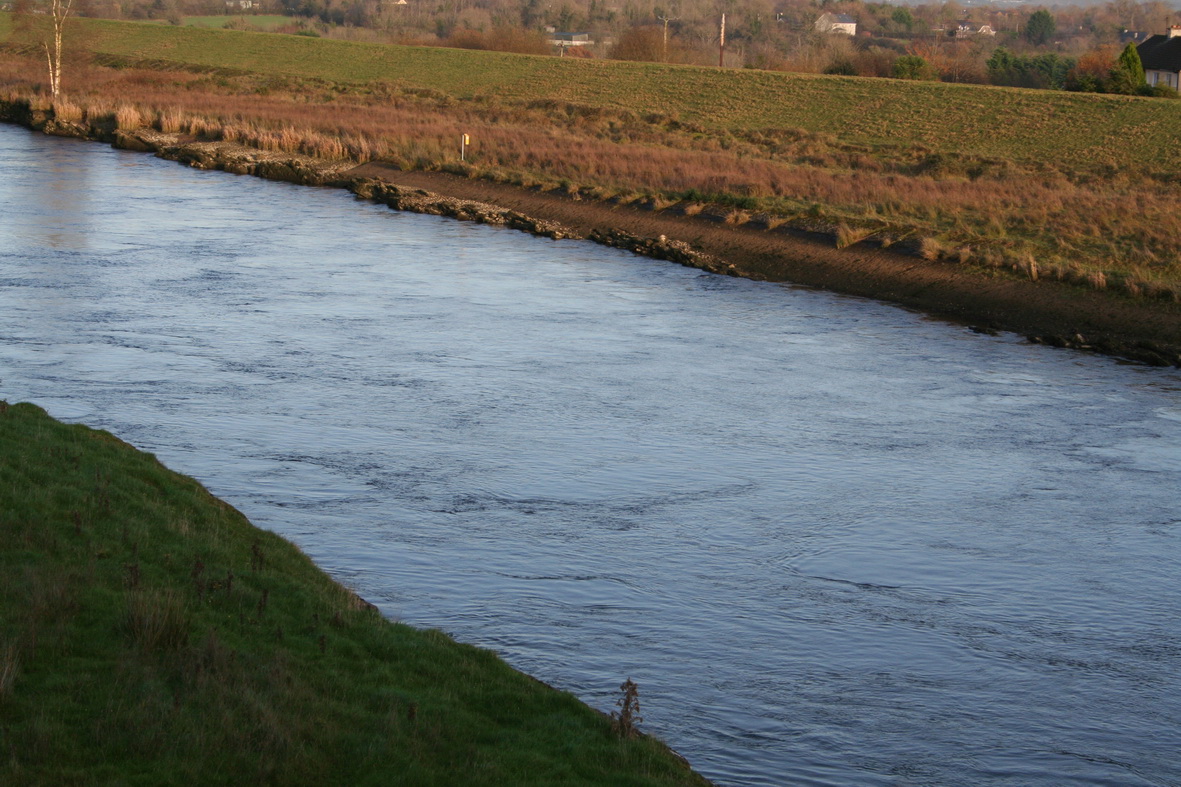
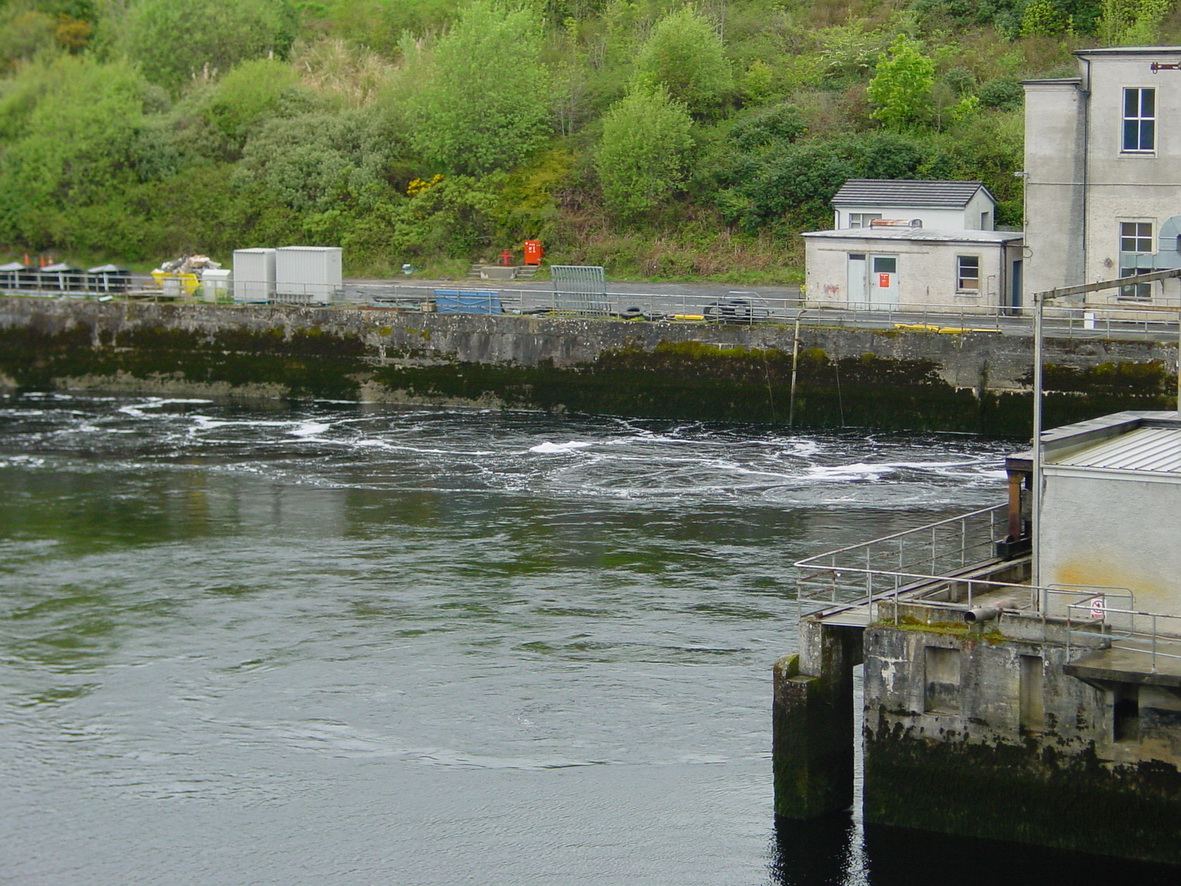
Outflow

Outflow

And I have lots more photos … here and here and here, which I ask readers not to look at either.

You see the thing is, Your Honour, Sir, I didn’t know. I didn’t realise that, under Statutory Instrument 73 of 1935 Shannon Electricity Works (Declaration of Prohibited Place) Order 1935, the places as described are prohibited places under paragraph (d) of Section 3 of the Official Secrets Act 1911, as amended by the Official Secrets Act 1920, and as adapted by or under the Adaptation of Enactments Act 1922 (No 2 of 1922). That’s because

information with respect thereto, or the destruction or obstruction thereof, or interference therewith, would be useful to an enemy.

Apparently, under those acts, giving anyone information about a prohibited place is a felony, punishable by imprisonment for up to fourteen years.

Wikipedia says that, in Ireland, those acts were repealed by the Official Secrets Act 1963, but was the statutory instrument repealed? I don’t know, but I’ve written to the Department of Justice to ask.

In the meantime, please don’t look at the photos, especially if you’re a Foreign Agent: a term that, under the 1963 act,

includes any person who is or has been or is reasonably suspected of being or having been employed by a foreign power either directly or indirectly for the purpose of committing an act (whether within or outside the State) prejudicial to the safety or preservation of the State, or who has or is reasonably suspected of having (whether within or outside the State) committed or attempted to commit any such act.

I wonder whether that includes the European Central Bank.

Bloody Fianna Fáil …

… obviously didn’t get the memo. [They didn’t get the marriage equality memo either, thus losing one of their better people — who needs to update the banner under her photos.] But a nos moutons ….

According to Northern Sound, Monaghan County Council wants the Monaghan Minister for Fairytales, Heather Humphreys, to meet her Northern Ireland counterpart, the Minister for Marching Bands [and boxing clubs, football stadiums and various other things about which MLAs ask questions: they’re as bad as TDs], to do something about the Clones Sheugh.

I suspect this means that FF, and perhaps the citizens of Monaghan, have realised that, despite the Momentous Day on the Ulster Canal [oops: sorry; not that one, this one], the Clones Sheugh has been hijacked by Co Cavan and is not actually going to reach Co Monaghan in the foreseeable future [which means until the next round of election promises].

As far as I can see, the deal was that Sinn Féin would shut up about the Sheugh provided that they got photos of activity before the UKoGB&NI general election. By nicking the money from other navigations in WI’s budget, the Minister for Fairytales was able to deliver the photos. And, as far as Google Alerts can tell, there hasn’t been a word about the Sheugh from the Shinners, north or south, since then. Of course I could be wrong about the deal and, if both departments will send me their full files on the subject, I’ll be happy to use that evidence to correct the story.

Now, though, a Fianna Fáil councillor in Monaghan has

… put forward the motion requesting the Ministers to meet to advance the project and asking Sinn Féin and Fine Gael members of the council to arrange the meeting urgently.

I don’t suppose he’d be trying to embarrass the parties that made the deal, would he? [If they did make a deal, of course, which they may not have, but we won’t know until the departments send on their files.]

SF has 7 members on Monaghan County Council, FG 5, FF 4 and there are two non-party members.

Speaking of parties, or their aftermath, a thought struck me:

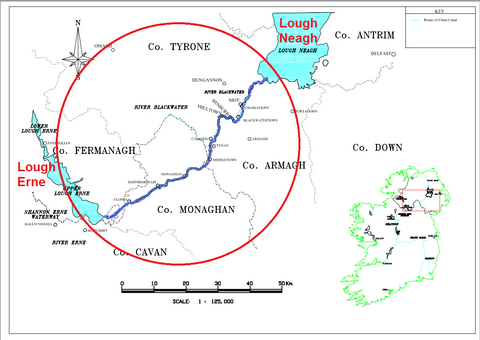
Ulster Canal 01 whole_resize

Fianna Fáil’s original conception for the Sheugh: bold, upstanding, thrusting …

Ulster Canal 04 whole_resize

The current plan: brewer’s droop


Interesting info from Waterways Ireland

Two interesting PDF documents available on this page:

No mention of Saunderson’s Sheugh, but I suppose dredging of the River Finn is proceeding.

Big it up for the OSI

I don’t know whether there is any official award scheme for contributions to historical research but, if there is, I reckon Ordnance Survey Ireland should get one. By making available, free, online versions of the OSI 6″ [~1840s] and 25″ [~1900] maps, they have provided amateur historians with an invaluable resource.

Using their public viewer, you can go to somewhere like Lecarrow, on Lough Ree, and look at what it was like before the Famine, around the start of the twentieth century or, using the Ortho options, in 1995, 2000 and 2005. As well, of course, as a bang-up-to-date map of Lecarrow today.

The most recent map was updated recently and the site fell over altogether for a while, then operated without the historical maps for another while. I suspect that I wasn’t the only person to realise, while it was down, how valuable the site was (and how far superior, at least for historical study, to the godawful Ordnance Survey of Northern Ireland version).

So big it up for Ordnance Survey Ireland: delighted it’s back up again.

Re-invention or re-creation?

I realise that many folk visit this website in order to find out what is hip and trendy, cool and with-it, in all sorts of fields, from beer to boating, casual dining to cost-benefit analysis. So, in order to keep readers down wid da kidz in da hood [as the young folk say], I’ve been checking out the latest, baddest [which means ‘goodest’, I gather, or what in the old days we would have called ‘best’], grooviest developments on tinterweb. It’s a thing called FaceTweet, and those cool dudes at Waterways Ireland have one of them. Hep to the jive, daddy-o [which means ‘How perfectly splendid, old boy’.]

As far as I can see, FaceTweet is in general intended for folk whose attention span renders them unable to read more than a single paragraph of continuous prose. But brevity is sometimes the soul of wit and good goods come in small parcels [sentiments for whose veracity I have not found peer-reviewed evidence]. And I was interested in Waterways Ireland’s self-description on the page:

Waterways Ireland is the Recreation Authority for over 1000km of Ireland’s Inland navigable waterways.

That phrase, Recreation Authority, does not occur in Waterways Ireland’s Business Plan 2015 [as approved by the North South Ministerial Council on 18 December 2014 and screwed up by the Council shortly afterwards] or in its Corporate Plan 2014–2016 [ditto]. Nor, according to its own search engine, is the phrase used on Waterways Ireland’s proper website [the search engine rather bafflingly reports “We don’t have any refiners to show you”].

Yet the concept of Waterways Ireland as a Recreation Authority is almost entirely in tune with the thinking underlying both of the plans and it is the neatest encapsulation I have yet seen of what WI is about.

I put in ‘almost’ there because the Corporate Plan‘s Executive Summary includes this:

Central to our vision for the future is the development of recreational, heritage and environmental opportunities that link people, history and nature, providing both local communities and visitors with compelling reasons to spend more time in the waterways environment.

While I’m all — well, somewhat — in favour of heritage and environment, the words seem to sit uneasily in that sentence: added as a form of ritual obeisance to the shade of Michael D Higgins, who ripped the rivers and canals from the sheltering embrace of the Office of Public Works engineers and proclaimed the waterways to be heritage artefacts. Heritage is no longer of great interest to TPTB and most people’s experience of it [whatever it is] is as entertainment or recreation; much the same applies to environment, which — for most people — is of interest only as providing a scenic background for more interesting activities.

So both heritage and environment can be subsumed under the heading of recreation, leaving Waterways Ireland with a neat, well-focused description of itself, a subheading for its title, and one that matches its Mission and Vision.

Mind you, it’s not entirely clear what a recreation authority is — Google finds relatively few [129000] instances of the term’s use, most of them in the Americas — but that might be no harm.

Waterways Ireland — the recreation authority

Hep to the jive, daddy-o: I like it.


Chains at the Black Bridge

It seems that the city edition of the Limerick Leader dated Saturday May 16 2015 carries a story saying that funding has been approved for the repair of the Black Bridge at Plassey. I can’t find the story on the Leader‘s website and I can’t find anything about it anywhere else [there is a limit to the amount of my life I am willing to spend trying to find anything on the Limerick Council website] except on the Leader‘s FaceTweet page, where I can expand the city edition front page.

There is a photo of several councillors, which of course is wonderful: no day is wasted if it offers an opportunity of looking at a photo of local councillors, especially important ones with chains.

From what I can read of the text, it seems that “councillors in City East” [which is not one of the Limerick districts listed here] are willing to spend €50,000 “to start work to make the walkway safe again”. And they hope that Clare County Council, the University of Limerick and Waterways Ireland will “also row in behind the project”.

Now, half a loaf is better than no bread, and €50,000 is better than a poke in the eye from a blind horse, but it’s not going to go very far towards the cost of repairing the Black Bridge. I don’t known whether it would even cover the cost of a full survey.

I’m sure that Waterways Ireland would be delighted to help, if the Department of Fairytales hadn’t raided its coffers to pay for Saunderson’s Sheugh. I have reason to believe that the university was willing to help — and that Clare County Council was not. I submitted a Freedom of Information request to the university, asking it for [recent] records relating to the Black Bridge. The university gave me three extracts from meetings of the Limerick Smarter Travel Steering Group:

9 January 2013
Funding not in place for Black Bridge

21 November 2013
Black Bridge: UL indicated that funding may be available from UL. LST [Limerick Smarter Travel] has indicated funding in the order of €100,000. UL may be able to mach [sic] this. Request for funding to be made formally to UL by LCCC and to include surveys and reports on bridge to date.

18 September 2014
RR said UL have set aside €100,000 towards Black bridge refurbishment but will need matched funding from LA [presumably local authority]. Black bridge will require a detailed study to identify what repair work will need to be carried out, also an AA study will be required, and proper consents from ABP [An Bord Pleanála?]. Funding currently not available from LA.
PON spoke to Clare Co Co. No funding available from them.
PC Department will not fund a pedestrian bridge.
RR can we look for alternative funding options, UL will ring fence for the moment.

An AA study is, I think, an Appropriate Assessment, a sort of employment creation scheme for bird-watchers who can read European directives [and sooner them than me].

The point to be remembered here is that Limerick County Council leased the bridge and undertook to keep it in repair; there is no obligation on Waterways Ireland, Clare County Council or the University of Limerick to spend a penny on it. The two parties on whom lies the responsibility for repairing the bridge are the Limerick Council and the Department of Finance, which latter has the power, under the lease, to do the work and charge it to the council. That would be a better use of its time and money than an unnecessary and intrusive footbridge in the middle of Limerick.

Hurrah for the red, white and orange

Colour discrimination seems to be rampant in Ireland. Of the sets of colours [red, white and blue] and [green, white and orange], there is Official Endorsement of two, green and blue, while red, white and orange are ignored. Even the North/South Ministerial Council has got in on the act, with a whole page on its website about greenways and blueways. They must have been overdosing on the Erne flag. Their page is a list of links, sort of plonked there without context or explanation, but there’s probably some hands-across-the-borderism or something going on.

I read in the Guardian today of a proposal for a greenway on the former railway line between Roscrea and Portumna via Birr. And a jolly good thing too, but how many greenways and blueways can one small island accommodate? How thinly will the tourists be spread? And what about those of us who hate walking, cycling, kayaking and other such energetic pursuits?

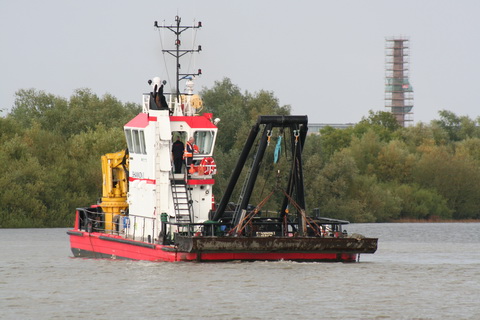
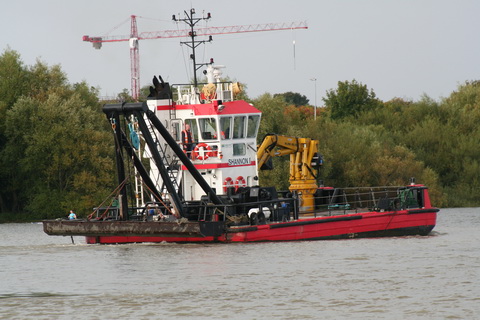
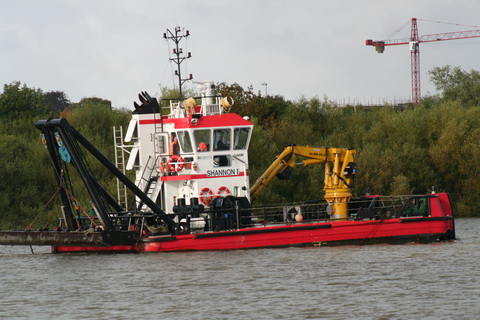
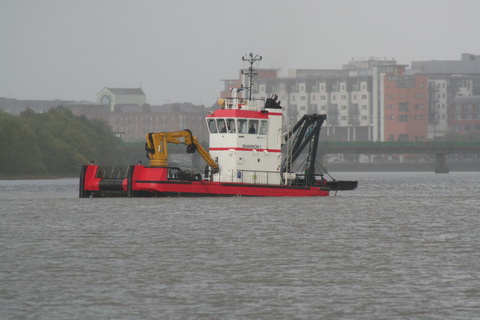
The Shannon One

Copy of IMG_4546_resize

Heading down the estuary past Shannon Airport

Limerick Port dredger Shannon I 3_resize

Working in Limerick

Limerick Port dredger Shannon I 4_resize

Almost as much kit as WI’s Swiss Army Knife

Limerick Port dredger Shannon I 5_resize

The big crane, though, is not part of the kit

Limerick Port dredger Shannon I 7_resize

Great view from the cab … er, wheelhouse

Limerick Port dredger Shannon I 11_resize

Pusher bow?

Limerick Port dredger Shannon I 1_resize

Limerick in the background

Limerick Port old dredger Curraghgour II 3_resize

Shannon 1’s predecessor Curraghgour II


Races on Lough Erne

To the Editor of the Erne Packet

Me Editor — The stir visible amongst the seamen of the Lake, assures a most interesting contest. Four new boats are to enter the lists — their prowess will best prove the merit of those which have on former occasions been exhibited.

To the amateur, the scene cannot fail of proving most interesting, as well from the unrivalled beauty of the sailing ground, as from the superiority of the boats, some of which, built on the Thames, are considered to be superior to any other vessels of any size, for lake sailing.

The mariners of Donegal Bay will not, it is to be hoped, sleep on their oars; if rumour is to be credited, they are not to yield the palm so easily as they did last year. Four boats besides those already mentioned, are reported to be in readiness to invade the lake, from the sea, to assert the superiority of the Donegalian over his fresh-water competitor.

Some experiments are to be tried upon scientific principles,where lightness of draught of water, and form, altogether differing from what, for centuries, has been in use, are to be put into competition with bulk and beam. The well established speed of the Lough Erne cot is also to be tried, a boat being in preparation; these rivals to be pulled by Gentlemen of the lake. Great confidence is expressed by the owners, and any money for hands with good beam and bottom. NB — Dandies not admitted.

To cheer the toils of the seamen, two Balls are in contemplation, where all the rank and fashion of a wide extended country have engaged to attend. A very distinguished party from London, òn a visit to the Lakes and Bundoran, will also be present, and gratify the eye, as they have already done the mind’s eye of most of us.

Besides the beauty of the Lakes, much speculation exists to account for their visit, whether an examination into the minerals and collieries of the neighbourhood, or the general capabilities of Lough Erne, an extension of the navigation, and perhaps a decision of a question which has long barred up our Lake; the choice between a canal to Lough Neagh and Belfast, or one from Ballyshannon. In giving information to these sagacious explorers, Gentlemen will do well to bear in mind, that their evidence should be divested of any private favour, for should it be found to contain more affinity for party purposes than the general object, the benefit of the country, it will instantly, and perhaps not civilly, be rejected as unfit matter to enter into such an important digest.

NOTUS

Enniskillen Chronicle and Erne Packet
12 August 1824