Category Archives: Engineering and construction

Garryowen and the Royal Canal

The shortage of water for the Royal Canal has been covered a few times on these pages with pieces about its feeders in general, the Lough Owel feeder in particular and the proposed replacement supply from Lough Ennell.  Last I heard, the Lough Ennell proposal had become a matter for Irish Water rather than for the local authority, which sent the whole thing back to the drawing-board but if, Gentle Reader, you have more recent information, do please leave a Comment below.

A recent post about the inadequacy of back-pumping from the Inny led to a discussion in the Comments, from which it became plain that the Lough Owel feeder was well below normal levels and that the water supply to Mullingar, never mind that to the canal, was seriously inadequate. I was prompted to suggest that one of these might be the best type of boat for the Royal.

But I see from the blatts that the seventh cavalry, in the shape of Irish Water (whistling Garryowen, of course), intends to take water from Lough Ree to supply Athlone, Mullingar and Moate.

Perhaps there will be some to spare for the Royal Canal.

Carrying on the Grand Canal around 1800

Some new items about early carrying on the Grand Canal or by the Grand Canal Company.

The Bishop of Killaloe and the bridge at Moys

That would be the Bishop of the United Church of England and Ireland, as established by the fifth article of the Acts of Union of 1800, of course.
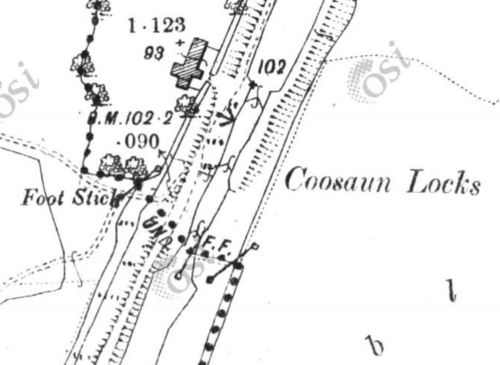
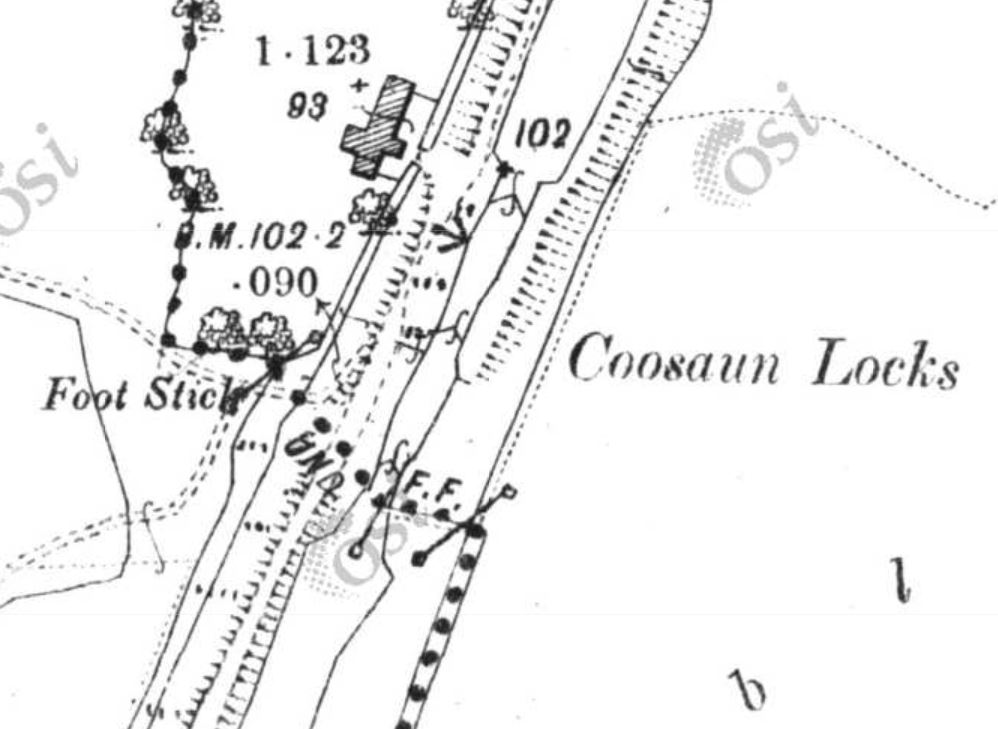
Cussane lock (OSI 25″ ~1900)

Cussane (or Coosaun, as above) Lock was the furthest downstream of the three locks on the Killaloe Canal. It was submerged by the “Flooded Area” created by Parteen Villa Weir as part of the Ardnacrusha hydroelectric scheme.

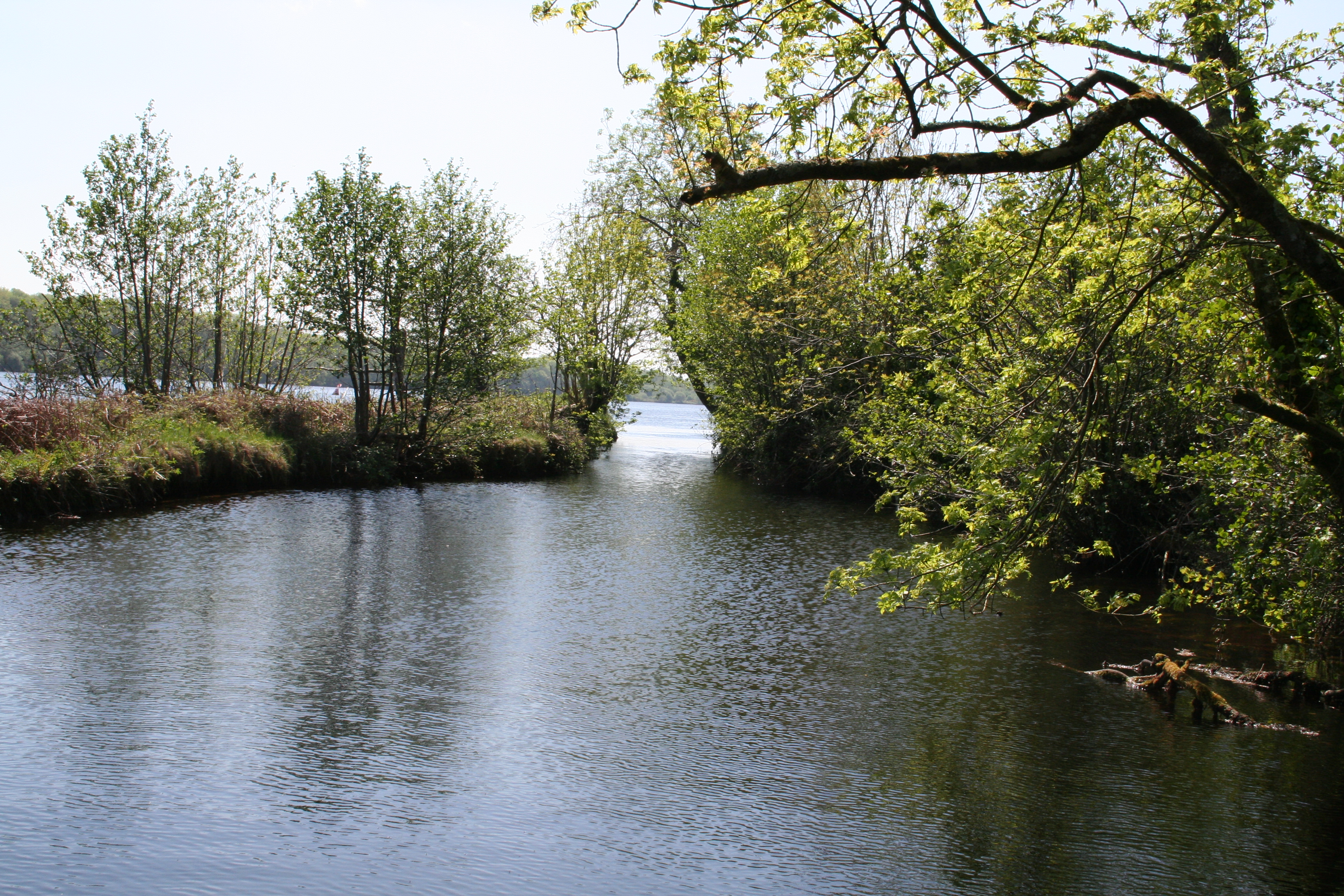
The middle lock on the Killaloe Canal is at Moys and its remains are visible, just above the water, in normal non-flood conditions. It is (or was until recently) still possible to go through it by (small) boat, though of course without needing to use the lock mechanisms.
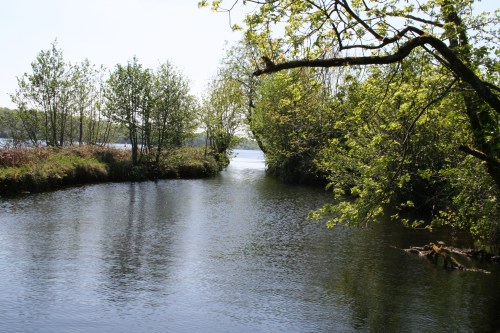
Approaching Moys Lock from upstream

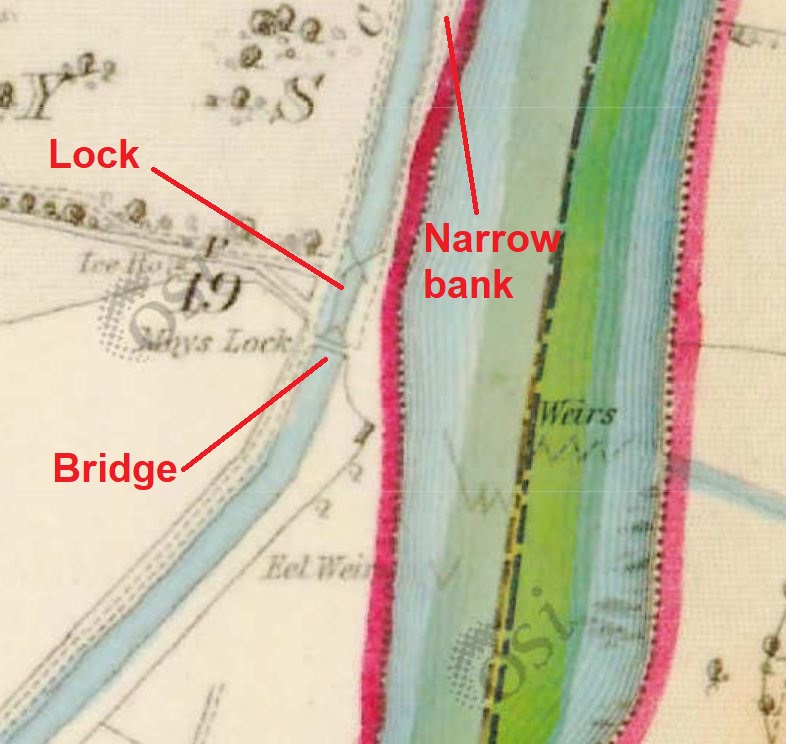
However, although the lock itself survives, the bridge that crossed it is no longer there. It was shown on the 6″ (~1840) and 25″ (~1900) Ordnance Survey maps; I would guess that it was removed as part of the Ardnacrusha works, but I don’t know and would welcome information.

The lock and bridge at Moys (OSI 6″ ~1840)

The other thing I don’t know about the bridge is why it was built in the first place. Hely Dutton [Statistical Survey of the County of Clare, with observations on the means of improvement; drawn up for the consideration, and by direction of the Dublin Society The Dublin Society, Dublin 1808] wrote that

It seems to be the general opinion in Killaloe, that the canal has been cut in the most improper direction; they think it should have been brought in a valley between Killaloe and Dr. Parker’s, and to the north of the Bishop’s house, and not parallel to the Shannon as at present. Bishop Bernard offered several thousand pounds, if this line had been pursued; for, instead of cutting his demesne off from the Shannon, as at present it does, it would have gone at the back of his house; if this was the only objection, I think the engineer acted very impartially, as all public officers should, but very seldom do.

That suggests that the bishop was not best pleased to have a canal in front of his house; if he was willing to pay “several thousand pounds” to have the canal put somewhere else, the Limerick Navigation’s promoters must have been able to deploy considerable firepower (political and financial) to overcome his opposition. I wonder whether promotion to Limerick might have helped: according to a later estimate [Dublin Weekly Register 21 September 1822], promotion from Killaloe to Limerick would have increased a bishop’s income from £7000 to £8000 a year.

Charlotte Murphy [“The Limerick Navigation Company 1697–1836” in North Munster Archaeological Society Journal Vol 22 1980], describing John Brownrigg’s report on the navigation in 1801, said

This latter [Moys] lock had a bridge over the tail to accommodate the Bishop of Killaloe, whose demesne was served by the canal.

But what accommodation did the bishop need? A small strip of land downstream of the lock was insulated by the canal; perhaps the bridge provided access for cattle.

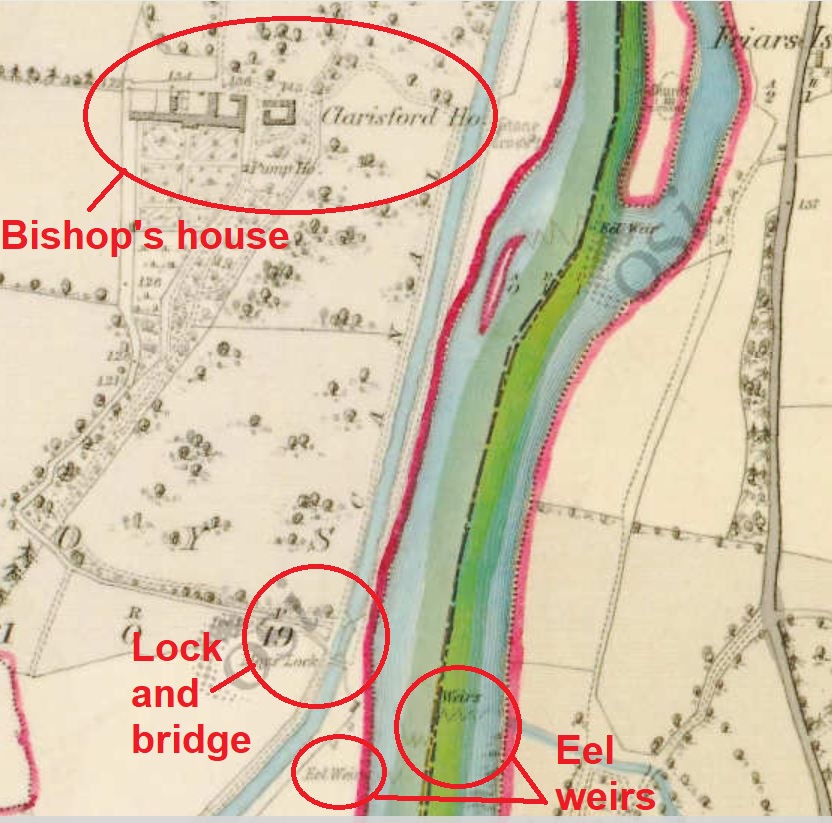
Another possibility is that the bridge provided access to the episcopal eel weirs. According to Mr Blackburne QC, addressing the Shannon Commissioners in 1837 on behalf of the Bishop of Killaloe and Sir Gilbert King Bart of Jamestown [Saunders’s News-Letter 29 December 1837],

The bishop, his tenants, and his predecessors had from time immemorial been in the habit of using twenty-five eel weirs, extending from the tail of Lough Dearg down the whole line of the rapids of Killaloe, which place, from natural impediments, could never be made navigable.

I think I have read somewhere that the eel weirs were worth £75 a year to the bishop, but I can’t remember where I saw that so I haven’t been able to check it.
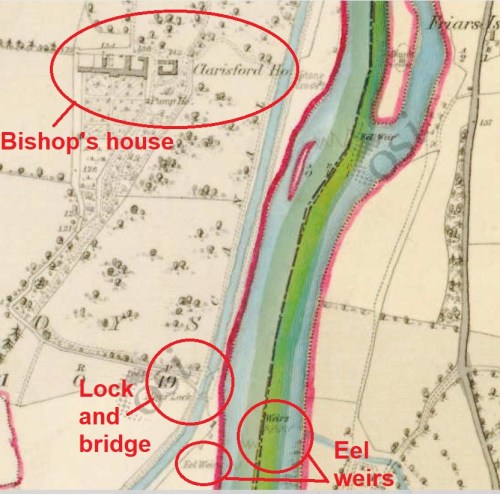
The bishop’s house, the lock and the bridge (OSI 6″ ~1840)


There is one other aspect. The bridge was used by the horses towing boats on the canal and, of course, by the men leading them. We know that because the towing-path changed sides at Moys Lock. It was on the west side of the canal from Cussaun to Moys but on the east from Moys to Killaloe: it is marked on the 6″ OSI map and named on the 25″.

That forced horses and men to walk on a narrow embankment rather than on the shore. But it kept them out of the bishop’s garden and a little further from his house. Might that have been the intention?

I would be glad to hear from anyone who knows more about Moys.


Limerick Navigation lockkeepers

The Limerick Navigation was in five sections — three canals with river sections in between — and joined Limerick to Killaloe and the rest of the inland Shannon. The canal sections had locks, each controlled by a lockkeeper who lived on site. The job passed from generation to generation: some of the lockkeepers’ cottages are still inhabited by descendants of the lockkeepers.

Cussane lock (OSI 25″ ~1900)

Cussane was the furthest downstream of the three locks on the Killaloe section of the canal. It was covered by water when the Ardnacrusha hydroelectric scheme created the “flooded area” below Killaloe. If memory serves, Cussane was known as Crowe’s Lock.

In the online searchable catalogue of the Registered Papers of the Chief Secretary’s Office in the National Archives, there is a letter dated 15 February 1830 [CSO/RP/1830/815]

[…] from James Saurin, Henry R Paine, and John Radcliffe, [Directors General of Inland Navigation], Board of Control, [Dublin], to Hugh Percy, 3rd Duke Northumberland, [Lord Lieutenant of Ireland, Dublin], recommending Denis Crow to succeed Lott Corboy sheriff as lockkeeper on the Limerick Navigation.]

There is also a letter dated 2 June 1830 [CSO/RP/1830/836]

from James Saurin, J Armit, and Henry R Paine, [Directors General of Inland Navigation], Navigation Office, [Dublin], to Hugh Percy, 3rd Duke Northumberland, [Lord Lieutenant of Ireland, Dublin], recommending dismissal of Simon Johnston, lockkeeper on the Limerick Navigation, for irregularities and for deception; asking to employ Michael Gully in his stead, for Stg£9-4-9 per annum.

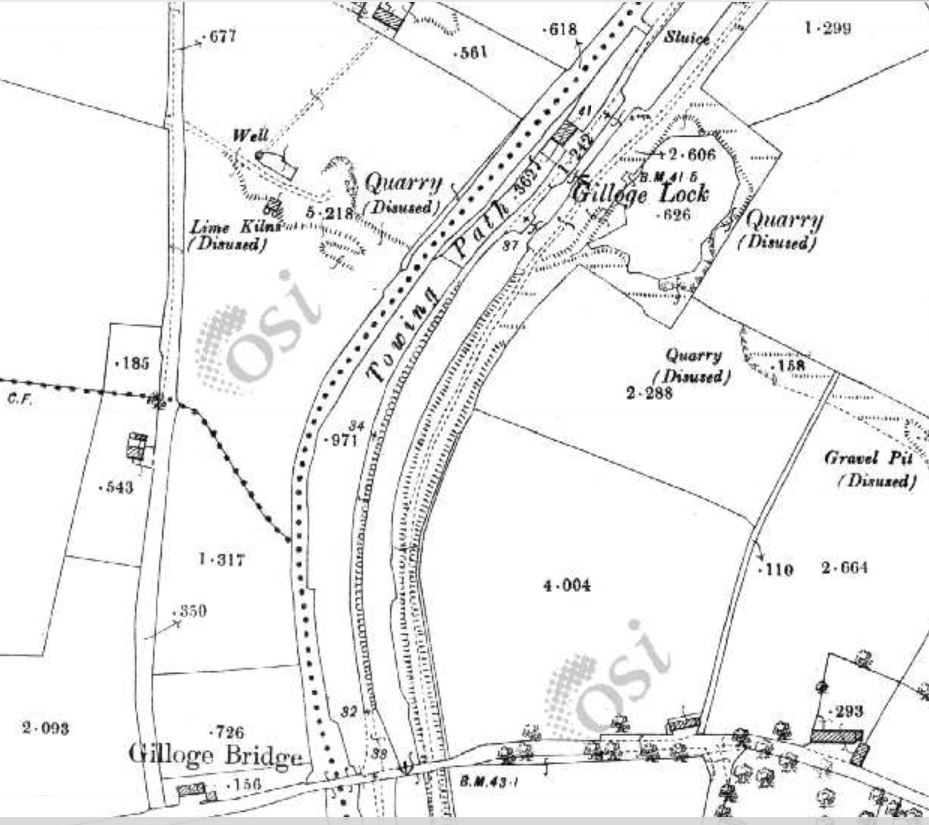
Gully’s Lock is at Gillogue, on the central canal section known as the Plassey–Errina Canal.

Gillogue lock (OSI 25″ ~1900)


A boat for the Royal

Someone asked me the other day what, given the unreliable water supply, would be the ideal boat for use on the Royal Canal.

I replied that it should be one with four-wheel drive. Maybe one of these.

Industrial stuff by night …

… perhaps on a cruise.

h/t Tom Whitwell’s 52 things, which include the truth about Elon Musk’s flamethrower.

Robert French of Monivea

Another addition to the collection of turf and bog navigations: the Monivea navigations, developed by Robert French in the middle of the eighteenth century. The navigations, like certain others in the nineteenth century, combined drainage, navigation and water power.

Monivea is near Athenry in Co Galway.


The Broadstone dry docks

See here for a slightly more detailed view from 1847. The third dry dock, at the junction with the main line, is here.

Mallett’s Insistent Pontoon is shown here marked “floating bridge”; the map also shows the drawbridge that featured in the attempted murder of Henry Garnett.

Waterways update: work in progress (1759)

Here is some information about the work of Messrs Ockenden and Omer on Irish waterways up to 1759. It is extracted from a book by Henry Brooke; Ockenden had, twenty years earlier, subscribed to support Brooke’s play. It is not impossible that they were acquainted, in Ireland or in England. Apart from anything else, both were supporters of Frederick, Prince of Wales: see A N Newman “The Political Patronage of Frederick Lewis, Prince of Wales” in The Historical Journal Vol 1 No 1 1958 on Ockenden’s post in the prince’s household at £100 a year and here on Frederick’s “many attentions” to Brooke.

Brooke’s account contains some information about Ockenden’s work that I have not seen elsewhere. I found the reference to Brooke in Thomas McIlvenna This Wonder-Working Canal: a history of the Tyrone Navigation Coalisland Canal Branch IWAI 2005.

Who was William Ockenden?

William Ockenden has been described as a Dutch engineer who worked on three eighteenth century Irish navigations: the Mallow to Lombardstown canal, the Kilkenny/Nore navigation and the Limerick Navigation [Park Canal section], all of them notably unsuccessful.

It seems likely that he was English, not Dutch, but may have lived in Ireland before inheriting property in England. But was he an engineer or a mill-owner and MP? Were there one or two William Ockendens at the time?

Here is some information and some speculation. I would welcome more of the first.