Category Archives: Irish inland waterways vessels

Float Bridge

This post was originally entitled “The avarice of the ferryman” but, as more information has been added, it seemed best to name the post for the remarkable Float Bridge itself, which links road, rail and waterway transport.

The avarice of the ferryman

Castlepollard, Sept 11. Last Week the following Accident happened at the Ferry, or Float, plying for Passengers over the River Inny, in the County of Westmeath: — A Post-Chaise and Four, with a Lady and Gentleman, were imprudently put upon this dangerous Conveyance, without separating the Cattle from the Carriage; unfortunately a Car and Horse had been put in before them, which, with the Post-Chaise and Horses, occupied the full Length of the Float.

On the Passage, the Car Horse grew very uneasy, and going back, the Car annoyed the Post-Chaise Horses, which occasioned them to back in like Manner, until the Post-Chaise fell into the River, and dragged the Horses after it; three of the Horses were drowned, being entangled with the Harness; the other broke through his Harness, and swam over to a boggy Place, but could not get upon Land; one of the men followed him in a small Boat, to lead him to a proper landing Place, but not being able alone to guide the Horse and row the Boat, the Horse got too near it, and striking it with one of his Feet, overset and sank it, by which the Man was drowned; the Horse then swam, and was saved.

It was very lucky for the Lady and Gentleman that they alighted from the Chaise at going into the Float. The Carriage, which belonged to the Gentleman, was got out with much difficulty; the Horses were Hacks. The Avarice of the Ferryman occasioned this melancholy Accident.

Hibernian Journal; or, Chronicle of Liberty
18 September 1775



That report came just about a year after this next one.

Good shot wanted

FERRY-BRIDGE, over the River Inny, between the County of Westmeath and Longford, 3 miles from Castlepollard, 12 miles from Mullingar and Longford, Sept 1st, 1774. Complaint having been made, that the Smallness of the Float rendered it inconvenient, and occasioned timorous People to drive or ride many Miles round to avoid the Ferry, the Proprietor therefore has undertaken to build a Bridge at his own Expence, which will be finished with all convenient Speed; in the mean Time, a Part of the intended Bridge, above 30 Feet long, Battlements fixed on each Side, properly gravelled over &c, will be made Use of to ferry over Carriages, &c. A Coach and four may now pass with the utmost Safety, without taking off the Horses, or 20 Head of Cattle, &c in less than 2 Minutes; and, to accommodate Graziers and others, as soon as said Bridge is compleated, Droves of large Cattle, above 30 in Number, will be passed over at the Rate of a British Shilling per Score, private Soldiers with Furlows from their Commanding Officers, in Time, gratis, all other Passengers, Cattle, &c at the usual Rates taken above these 20 Years.

This Road is now in good Repair, and well known to be many Miles nearer from Dublin to the County of Longford, Leitrim, Roscommon, Sligo, Mayo, &c than any other Road; a commodious Inn, near Ferry-bridge, on the Westmeath Side, is building, and a Carriers Inn on the Longford Side, will be both soon finished, and proper People to keep them.

Wanted, to take Care of said Bridge when finished, and to collect the Toll, &c a sober, honest, careful, active, middle-aged, single Man; he must be a Protestant, write a good Hand, and if a good Shot, and understands fishing in Lakes and Rivers, and delights in those Amusements, it will be more agreeable &c. Comfortable Lodging and Board, and not less than £12 per Ann will be made good to the Person approved of, and shall be treated (as far as can be reasonably expected) agreeable to his former Manner of Life. None need apply but such as have an undeniable good Character, as to Honesty and Sobriety, from his former Employers or Neighbours. Inquire of the Printer hereof.

Saunders’s News-Letter
2, 7, 9, 12, 14 September 1774

Sir Thomas Chapman

The Dublin Evening Post of 9 August 1810 advertised part of the Meath and Westmeath estates of Sir Thomas Chapman Bart to be let. They included

The Tolls of the Float near Castlepollard
And an excellent house and fifty acres of land

Applications were to be sent to Sir Thomas at St Lucy’s, Athboy, or to Mr High Dickison at the same address.

St Lucy’s was also known as Killua Castle, set of the Chapman baronets, of whom Sir Thomas was the second. Do be sure to read about the seventh baronet.

Sir Benjamin Chapman

Sir Benjamin James Chapman was the fourth baronet. Ewan Duffy writes:

Float bridge was a privately owned toll bridge. Its owner, Sir Benjamin Chapman, offered the bridge to the Midland Great Western Railway if they would build a station at Float, for which he would also give the necessary land. He subsequently suggested a variation on the agreement that if the company were to cease using the station, the land and bridge should be re-conveyed to him!* As the bridge remained in CIE ownership up to 1971, when it was transferred to Westmeath County Council under the Transport (Miscellaneous Provisions) Act 1971, he clearly did not get such a deal!

The original bridge is no longer there — I paid a site visit there last year, given its railway connection, but it has been replaced sometime in the 20th Century.

* W E Shepherd “The MGWR’s Cavan Branch – 1” JIRRS Vol 16 No 104, pp 282–3
 

Waterways Ireland’s boat register

A boat-owner of my acquaintance received a text message today. [A text message is a new-fangled form of telegram sent to a telephone, using technologies that need not concern us here.] The message, which I have redacted, read:

Hi, Boater, Waterways Ireland is currently data protecting the boat register. Please confirm your boat registration number S[????] by replying with your email address or to stop text WWSTOP to [?????].

This is not a type of communication that is familiar to me: if it were genuine, I would have expected some more formal message, perhaps a letter or a Marine Notice, to emanate from Waterways Ireland. Furthermore, the phrase “currently data protecting the boat register” is nonsense. And the acquisition by the originator of the boat-owner’s email address does nothing to validate or update the register of boats on the Shannon.

Accordingly, I regard this with deep suspicion, and I have advised the owner to ignore it. However, the owner tells me that the registration number given in the message was correct. That might mean that some evildoer has gained access to the Waterways Ireland register of boats and is now, for some unknown but nefarious purpose, seeking to match email addresses to boats.

I would be glad to hear from anyone who knows more about this. I would also be glad to be assured of the sanctity of WI’s boat register.

Update 13 May 2017

Usually reliable sources tell me that the communication is from Waterways Ireland and represents an attempt to check and update their register of boats. Two points, however, remain:

  • I cannot tell [though others more skilly in these matters may be able to do so] how the, er, lay reader can be assured that such a communication is genuine
  • the communication is itself unclear: I would prefer a more explicit statement of what WI is trying to do and what the recipient is expected to do.


Steamer at Drumsna

Can you help?

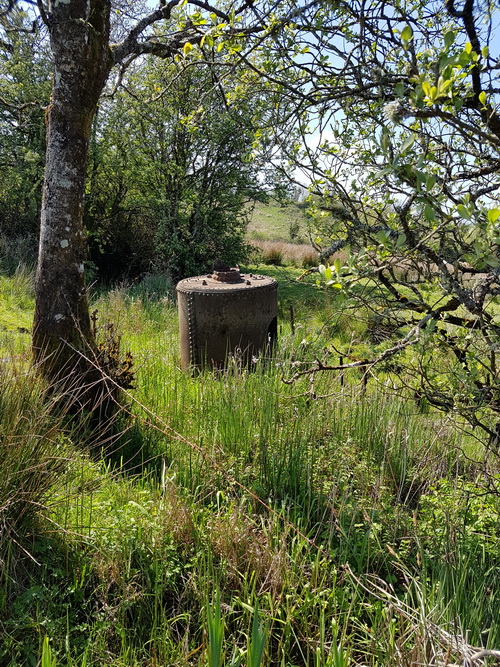
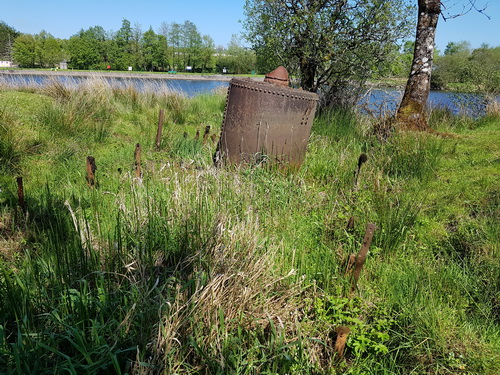
Liam Sherringham has sent me two photos of the remains of a steamer at Drumsna.

I am pretty certain that someone at some time told me something about this vessel, but I’ve lost the information. I think it was said to be a former steam yacht, owned by a family living not too far away and abandoned at the spot, but I am not at all certain about this.

If you are the person who told me about this, I apologise for my lapse and I would be grateful if you could supply the information again. If you are not that person, but know anything about the vessel, do please tell us about it. In either case you can leave a Comment below.

Photo 1 ((c) Liam Sherringham 2017)

Photo 2 ((c) Liam Sherringham 2017)


A new sporting opportunity for the Suir?

This could work, from Carrick-on-Suir up to Clonmel, as there is already a towing-path.

The Lanesborough Trader

Inland Navigation

The numerous individuals interested in the prosperity of the Royal Canal, as well as the Public at large, must be highly gratified to learn, that the trade on the extended line of that navigation has commenced with all the spirit and activity that could have been anticipated by the most sanguine. The first boat from the Shannon (the Lanesborough Trader, Patrick Connor, owner) arrived at the Broadstone harbour on Saturday [31 January 1818], amid the cheers of numerous spectators, with a fiddler playing merrily upon her deck.

Saunders’s News-Letter 2 February 1818

Quadrupling Kerry’s canals

I thought there was only one canal in Co Kerry, but there were three more at Lixnaw. They’re still to be seen and they have interesting associations.

Thanks to Ewan Duffy of Industrial Heritage Ireland for the tip-off.

Sunday travel

The Rev Mr Stavelly said that he would avail himself of the present occasion to draw the attention of the directors to a subject in which he felt much interest — namely, the propriety of the company discontinuing the plying of their passage-boats on Sundays, and he moved a resolution to that effect, which was seconded by Mr Robert Guinness.

The Chairman stated that the subject of the rev gentleman’s motion had been already, on various occasions, under the consideration of the Court of Directors, but, with any desire, on their part, to meet the views of those who objected to Sunday travelling, it had been hitherto found impracticable to reconcile the proposed change with the convenience of the public or the interests of the company. He believed it was not in his power to put the resolution from the chair, as by the laws which governed the proceedings of the company, no resolution could be put to any meeting which had not direct reference to the objects for which it was called, but that he would again draw the attention of the directors to the subject on the very earliest occasion.

The meeting then adjourned.

From the report on the stated half-yearly meeting of the Grand Canal Company held on Saturday 23 October 1841 in the Dublin Morning Register 25 October 1841


A Bourne mystery

Here is an ad, from 1785, offering to let flour-mills at Portlaw, Co Waterford, and a bake-house in John Street, Waterford, to a “tenant possessed of abilities”.

The ad is interesting in several respects. First, although the location of the flour-mills is not clear, they may have preceded the iron-works, the famous Malcolmson cotton-mill and the later tannery on the site; they certainly seem to have used the water power of the Clodiagh.

Second, the ad suggests that flour could be carried from the mills by three rivers to Waterford: the Clodiagh, the Suir and St John’s Pill, which is another navigation featured on this site.

Third, the ad invites applications to be sent to either John Thomas Medlycott in Dublin or John Edwards Bourne in Mayfield, Waterford. The Post-Chaise Companion [4th ed] says

Within half a mile of Portlaw, on the L is Glen-house the seat of Mr Bourne.

At Portlaw are the extensive mills built by Edward May Esq, and about a quarter of mile beyond Portlaw on the L is a large house built by the same gentleman.

About a mile from Portlaw, on the R situated on the banks of the Suir, is Mayfield, the noble and delightful seat, with very extensive and beautiful demesnes and plantations, of William Watson Esq and on the L is Coolfin, the seat of the Rev Thomas Monck.

That puts a Mr Bourne in Portlaw, though in Glenhouse rather than Mayfield. The Glenhouse address is confirmed by Matthew Sleater in 1806.

But what interests me is whether the John Edwards Bourne mentioned in the ad is related to John Edwards Bourne of Dunkerrin, Co Offaly, formerly of Nenagh, Co Tipperary, who died in 1799 or so. The Offaly Bourne seems to have had four brothers and three sisters.

I would be glad to hear from anyone who knows anything about the Portlaw Bourne (or indeed any of the other Bournes). If you can help, please leave a Comment below.


Grand Canal Navigation

Alloway and Boake, No 85, Bride-Street, inform the Public, that they now carry in commodious Boats, of from thirty to forty tons burthen, heavy Goods of all kinds, between the Canal harbour in St James’s-street and Sallins, near Naas, at 2d per hundred weight, or 3s 4d per ton, which is less than one-third of the average price of land carriage for that distance.

The advantages of this Navigation to the Public, in addition to the great reduction in the price of carriage, are, that all Goods carried by the Canal are exempted by act of Parliament from all duties, rates, tolls and customs whatsoever, in all places whatsoever, save the Canal tolls, which are included in the price before mentioned; and the flour, malt, and corn premiums are the same on carriage to Dublin, by the Canal, as by land carriage.

Proper persons attend at the Canal Stores, James’s-street, Dublin, and at Sallins, to receive all Goods addressed to the care of Alloway and Boake; for the safe carriage and delivery of which, they hold themselves responsible to the public.

Dublin Evening Post 8 April 1784

Dublin to Limerick or Kilkenny

FRANCIS JENKINSON,
At the DROGHEDA’s ARMS, Monasterevan,
PROPRIETOR of the LIMERICK and KILKENNY
STAGE COACHES

Most respectfully informs his friends and the public, that he has removed from the Old Town of Monasterevan, to a spacious and elegant house adjoining the Canal, which he has fitted up in a stile superior to any on the road:— His coach-houses, stabling, &c are on a very extensive scale; he has gone to a great expence in fitting up stall stables, which he flatters himself will give general satisfaction; — returns his sincere thanks for the numerous favours received since his commencement in business.

His Larder is constantly well assorted, and his wines are of the first quality.

NB said Jenkinson informs the public, that his Stage from Kilkenny sets off precisely at half after four in the morning, arrives in time for the three o’clock packet which leaves Monasterevan, and on passengers coming from Dublin will arrive in Ballyroan, so as to be in Kilkenny early next day. Said coach passes through Castle Durrow coming and going.

Stage passengers for Limerick or Kilkenny not charged with beds.

Seats taken in Dublin at Mr John Goffen’s, No 7, Bolton-street, and in Kilkenny at Mr Francis Reynold’s, Wheat Sheaf.

Dublin Evening Post 17 June 1790


I would be glad to hear from anyone who can tell me where Mr Jenkinson’s Drogheda’s Arms was. Please leave a Comment below.