Tag Archives: Lough Derg

Shannon traffic 2013

Some weeks ago Waterways Ireland kindly supplied me with the Shannon traffic figures for the final three months of 2013 and I have just now had a chance to add them to my spreadsheets and produce some graphs.

The usual caveats apply: the underlying figures do not record total waterways usage (even for the Shannon) as, for instance, sailing, fishing or waterskiing on lakes or river stretches, which did not involve a passage through a lock or Portumna Bridge, would not be recorded. The passage records are our only consistent long-term indicator of usage of the Shannon but they would not show, for instance, a change in the balance of types of activities from those in larger cruising boats to those in smaller (sailing, fishing, waterskiing) boats. On the other hand, they do include the Shannon’s most significant tourism activity, the cruiser hire business.

It is good to note, incidentally, that, in its draft Corporate Plan 2014–2016, Waterways Ireland says that it intends to

Develop and implement a research programme to measure waterway usage and inform planning and development.

It won’t be easy to do, but we need much better measures of all types of activities on all seven of the waterways managed by WI.

The final outcome for 2013 won’t greatly surprise anyone who has read earlier bulletins on this subject, like this covering the figures to end-September 2013. All the illustrations are based on information supplied by Waterways Ireland, with some minor adjustments by me to eliminate anomalies, but the interpretation and comments are mine own.

All boats full year

Total Shannon traffic 2003–2013, private and hired

The decline in traffic since 2003 seems to have been halted …

All boats full year %

Total Shannon traffic as a percentage of 2003 traffic

… but it is 40% below what it was in 2003.
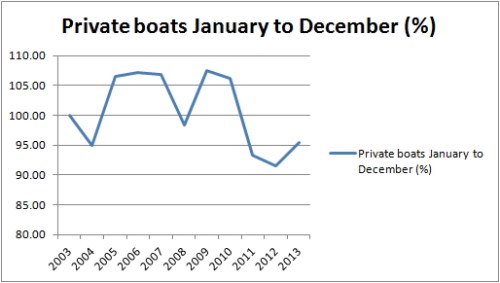
Private boats full year %

Private-boat traffic 2003–2013 as a percentage of 2003 traffic

Traffic in private boats seems to be recovering, but what is perhaps more significant is that it never went more than 10% above or below the 2003 figure. It has been remarkably stable over the period, despite the economic crash and despite the anecdotal evidence of boats being sold to overseas owners and trucked out of the country. Perhaps larger boats were replaced by smaller? Perhaps only boats bought in the boom were sold in the bust? Unfortunately the deficiencies of the registration system make it very difficult to determine what has been happening.

Hire boats full year %

Hire-boat traffic 2003–2013 as a percentage of 2003 traffic

But if private-boat traffic has been remarkably stable since 2003, the same cannot be said of hire-boat traffic. The best that can be said of 2013 is that the figures didn’t get [much] worse, but a 60% decline since 2003 is really, really dreadful.

WI’s draft Corporate Plan, which does not explicitly mention the hire industry, talks of

… unlocking opportunities to achieve recreational growth, and economic and social development.

I don’t know whether that omission means that WI sees little prospect of a rejuvenated hire-boat industry. And I note that, other than in the titles of organisations, the draft plan rarely mentions tourism or tourists. Are the waterways only for natives? If so, is that a deliberate policy decision? Or is there something that could be done, cheaply, to help to revive waterways tourism?

Emma Kennedy, writing in the Sunday Business Post on 23 February 2014, wrote about Fáilte Ireland’s latest brainwave, which is to “target” three groups:

  • social energisers, which are gangs of young people interested in “new and vibrant destinations”, which I take to mean Temple Bar
  • culturally curious folk aged 50 or over, with money, who are interested in “exploring new landscapes, history and culture”
  • great escapers, who like energetic rural holidays with their partners.

No families with kids, I see, although “Families & Loved Ones” (the latter term, by the way, nowadays seems to mean either dead people or their relicts) were one of the two “primary target customer segments” identified in Fáilte Ireland’s Inland Cruising Market Development Strategy. (Fat lot of good that strategy did, but we mustn’t be bitter.)

Anyway, without having done any market studies (though WI has funded lots of them), it seems to me that there is scope for more tourism on the waterways, but it might not be on traditional cruisers. It might involve outdoor activities like cycling and walking along the canals and Barrow: WI’s plan discusses them, but without adverting to an overseas market. And it might involve small-boat activities — canoeing, touring rowing, small-boat sailing, camping — on Shannon, Erne and SEW: WI says it will support micro-enterprises, and those providing outdoor activity holidays may need expertise and assistance rather than hard cash.

I admit to having little evidence on this, but it seems to me to be too early to give up on the tourism potential of the waterways. And the decline of the cruiser hire business does not necessarily mean that all waterway tourism is doomed.
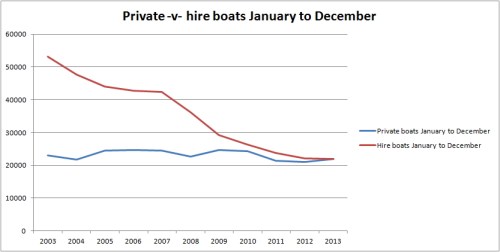
Private -v- hire full year

Private boats overtake hire boats

That said, 2013 was the year when, for the first time since Noah was an Able Seaman, the number of passages by private boats exceeded that by hire boats.
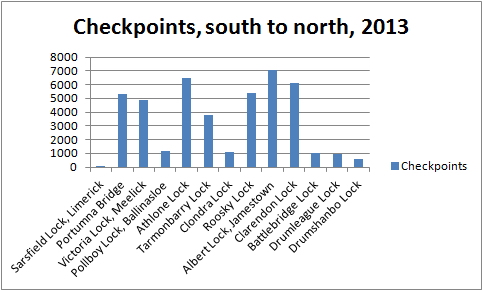
Checkpoints 2013

The points at which numbers were recorded

Finally, this chart suggests that any structures that were not built by the Shannon Commissioners in the 1840s will not attract many visitors. The extensions off the main stem of the Shannon — south to Limerick, west to Ballinasloe, east through Clondra, north to Lough Allen — are much less used than the main line from Lough Derg to Lough Key. It seems unlikely that any further extensions, especially to small towns that it would take three hours (at canal speed) to get to, are likely to be any more successful in attracting traffic.
Some bastard at Ballinderry …

… shot a Lough Derg eagle.

Heritage nonsense and the Naomh Éanna

There was a Dáil debate last week about the scrapping of the Naomh Éanna; nobody gave any good reason for keeping the vessel. Preservation proponents decided not to ask for money: instead they wanted the thing left hanging around while they worked out an “investment plan“, something that they could have done at any time over the last twenty-five years.

The funniest part was the final paragraph of the third contribution by Éamon Ó Cuív [FF, Galway West], who said:

Agus muid ag caint faoi stair, is fiú a lua gur úsáid RTÉ an bád seo le haghaidh scannán an-mhaith a rinne siad, “The Treaty”. Nuair a bhí Collins ag dul go Sasana sa scannán, is ar an mbád seo, seachas bád amuigh i nDún Laoghaire, a bhí sé. Tá ceangal stairiúil le hócáidí thar a bheith stairiúil ag an mbád sin. Níl ag teastáil ach cúpla mí ionas go mbeadh deis ag daoine rud éigin a eagrú. Beidh beagáinín slándáil i gceist. B’fhéidir go mbeidh costas beag ar Uiscebhealaí Éireann. Ní dóigh liom go mbeidh sé suntasach i gcomhthéacs an maitheas a d’fhéadfadh sé seo a dhéanamh dá gcoinneofaí an bád. Má táimid ag lord eiseamláir don rud a bhféadfadh a bheith i gcest, níl le déanamh againn ach cuairt a thabhairt ar Faing agus dul isteach ar an flying boat ansin.

Learned readers will recognise that Google Translate’s version needs improvement:

And we are talking about history, it is worth mentioning that RTÉ use the boat for a very good film they made, “The Treaty “. When Collins was going to England in the film, most of the boats, except boat out in Dun Laoghaire, it was. There are historical connections with historical events particularly at this boat. All you need is a few months so that people have the opportunity to organize something. The security bit concerned. There may be a small cost of Waterways Ireland. I do not think it will be significant in the context of the good it could do this if the boat is kept. If we lord model for what could be gcest, we do not just visit Foynes and go flying into the boat then.

So the Naomh Éanna is valuable because it was used as a film set. And Foynes flying-boat museum shows what could be done.

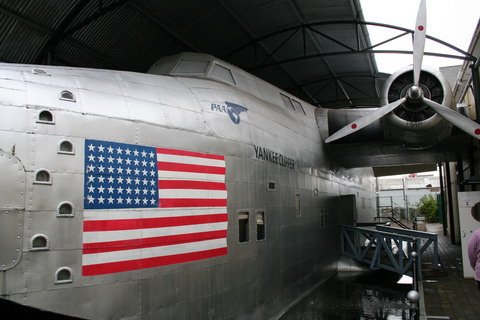
Foynes flying-boat

Foynes flying-boat

Up to a point, Lord Copper. You see — and I know this may come as a shock — the flying-boat on display at Foynes is not actually a real flying-boat. It’s not even a portion of a real flying-boat. It’s a reproduction of a portion of a flying-boat and it was built by a film-set designer.

If anyone really needs to be able to see around a small mid-twentieth-century ship, I suspect that the Foynes folk could provide a replica that would cost less to keep than the real thing.

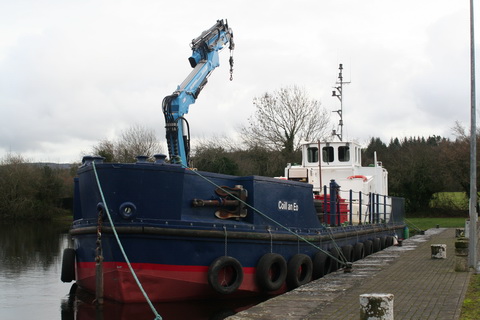
Alternatively, if Dublin needs another example of a locally built vessel, and one different in form from the Cill Áirne, it could take over the Curraghgour II or the Coill an Eo, both also built in Dublin. Maybe the preservationists should start now on their investment planning.

Coill an Eo

Coill an Eo

Limerick Port old dredger Curraghgour II 6_resize

Curraghgour II

Lowering Lough Derg

Boat-owners concerned about high water levels on Lough Derg will be glad to know that relief is in sight, although it may take a little while to arrive. Irish Water has taken over the project to send Shannon water to Dublin and is procuring something, although it is not at all clear what that is. The, er, news item is so far leading in the competition for least informative press release of the year.

Big it up for the OPW

I’ve just been reading some particularly nitwitted Dáil discussions and I need some time to calm down enough to report on them to the Learned Readers of this site. Let me just say that anyone who thinks that politicians cannot distinguish fact from fiction is absolutely right. But enough of that for the moment.

I reported earlier on an oddity in the results from the OPW’s Athlone waterlevel gauge. I emailed the OPW about it and a helpful chap got back on more or less immediately.

He explained that the data we see on the waterlevel.ie site is, as it were, live: raw unfiltered data with nothing added, nothing taken away. The same data goes in to the OPW and they spotted that the Athlone gauge was reading too high. They found the sensor was faulty; they have now adjusted it and the new, lower readings are correct.

The disappearance of the placenames is because of some work in progress on improving the website; they will be back.

He kindly pointed me to a list, in .xlsm format, downloadable from here; it shows all hydrometric stations in Ireland. It shows who operates them, whether they’re active and whether they use telemetry (which I take to mean that they can be monitored remotely). Unfortunately OPW itself doesn’t seem to have any gauges on Lough Derg and nor does Waterways Ireland. OPW does have a rather excitable gauge at Scarriff and gauges upstream of Meelick Weir and Meelick (Victoria) Lock. The ESB has gauges with telemetry at Ballyvalley (25073) and Killaloe (25074) but I can’t find any website giving the levels. If, Gentle Reader, you can find one, perhaps you would let us know.

The consoling part of dealing with the OPW is that you get the distinct impression that they know some useful stuff. Unlike, say, some folk working in Kildare Street ….

Pull the plug: drain the canals

The worst aspect of the piece published by the Indo last Sunday is that information is presented entirely without context. Persecuted boatowners are, it seems, to be forced to pay money, and the economy of the canals (such as it is) is to be damaged, for no reason whatsoever. The assertions of the boatowners go unchallenged.

Happily, this site provides a bilge-cleaning service. Here is the news.

1. Waterways Ireland is in dire financial straits

I have written extensively here about Waterways Ireland’s finances. I pointed out that there is a continuing dispute between the NI minister responsible for waterways and her southern counterpart, but that if the RoI government gets its way WI’s income will be cut by one third between 2010 and 2016. I showed that WI’s operating income is negligible and that most categories of expenditure have already been cut; I also showed that retirements will increase the cost of pensions benefits from just under €1000000 in 2011 to just under €2400000 in 2016, which will account for 10% of the total real staffing budget.

The combined effect is that Waterways Ireland needs to make further cuts in its spending, but that its scope for doing so is extremely limited: further cuts are bound to affect the staffing budget. WI’s only other option is to increase its (pathetically small) operating income.

2. canals and Barrow are disproportionately expensive

Here, I gave WI’s programme costs for 2011, taken from the annual report for that year (the most recent available). Here they are again, rearranged:

Royal Canal €2908k
Grand Canal €1556k
Barrow €600k

Total Canals + Barrow €5064k

Shannon €1882k
Erne & Lower Bann €478k
Shannon–Erne Waterway €658k

Total other waterways €3018k

There are all sorts of caveats to be entered about these figures: for instance, as I observed here, WI has different levels of non-navigational responsibilities on different waterways, and programme costs do not include staffing costs; nor do they include overheads like IT, marketing, personnel and so on.

But the Canal-and-Barrow costs clearly offer more scope for cutting than those for other waterways, as WI’s Corporate Plan 2011–2013 recognised. I showed here that it proposed these cuts for the period:

  • Grand Canal €910,000
  • Royal Canal €503,000
  • Barrow Navigation €387,000
  • Shannon Navigation €662,000
  • Shannon–Erne Waterway €232,000
  • Erne System €70,000
  • Lower Bann €69,000.

That’s €1800ooo in reductions from Canals + Barrow, €1033000 from the rest. However, budget developments since that plan was drawn up are likely to have increased the amounts required to be cut.

3. Canals and Barrow boaters get huge subsidies

I do not have up-to-date figures for the numbers of boats on the waterways, but suppose for the sake of argument that there are 500 on the Canals + Barrow and 8000 on the rest. I am confident that those figures are of the right order of magnitude.

In that case, counting only WI’s programme costs for the waterways in question and excluding staffing and central overheads, the costs to the taxpayer are:

  • Shannon, Erne, Shannon–Erne, Bann: €377.25 per boat
  • Grand, Royal, Barrow: €10128 per boat.

I hope to be able to provide better figures later, but the exact figures don’t matter very much: the point is that every boat on the canals and Barrow is benefiting to an enormous extent from taxpayer support. The poor persecuted boaters are seeking the continuation of a very, very privileged position: owners of camper vans, for instance, get no comparable benefit.

4. Canals and Barrow boaters contribute very little

I have figures for the numbers of boats on the canals and Barrow that held permits in September 2013. I have sought those for December, but I suspect that the number did not greatly increase by the end of the year.

By September:

  • 254 boats had Combined Mooring and Passage Permits
  • 134 boats had Extended Mooring and Passage Permits.

So the total contribution by boaters to the cost of the canals and Barrow was (254 X €126) + (134 X €152) = €52372, about 1% of the programme costs for the three waterways, which means it was considerably less than 1% of the total costs including salaries and overheads.

Let me dwell on that for a moment. The poor persecuted boaters, some of them members of organisations that claim to value the canals, themselves think that the canals are worth only €50000 a year, because that’s all they’re prepared to pay. It is not clear to me why anybody else, like the taxpayer, should pay more.

The poor persecuted boaters are now being asked to pay more than 1% of the total cost of the waterways they use (and, presumably, support). I would have thought that they would welcome an opportunity to contribute.

These figures also suggest that the level of compliance on these waterways is low, although I accept that my figures are inadequate and I will try to obtain more comprehensive information.

5. canals and Barrow are a poor use of public money

It is not clear how the taxpayer benefits by keeping the canals and Barrow open to navigation. Suppose Waterways Ireland were to open all the racks, drill holes in the bottoms of aqueducts and run off all the water. What then?

I suspect that it wouldn’t be that simple: that there are engineering-type reasons why some structures would need to be maintained and some water flow kept up. Perhaps the Morrell Feeder would suffice to keep the Grand Canal in Dublin looking nice; the flow from the Milltown Feeder, the canal’s main supply, could be sold off to Irish Water to relieve the Dublin drought. The Royal could simply be abandoned altogether; the Barrow would continue to be navigable by canoes and small craft. Shannon Harbour and Richmond Harbour could be kept in water (by pumping if necessary) and operated as commercial marinas, charging commercial rates.

Staffing could be reduced: even if there were no immediate redundancies (or transfers to Irish Water), the need for any new recruitment would be avoided for some time. Overtime would never be required and Irish Rail wouldn’t have to lift Effin Bridge.

So who would lose? The Irish tourist trade would hardly notice: as far as I can see, very few tourists go boating on canals or Barrow. There are two small hire firms on the Barrow Line, but apart from them there are (as far as I know: correct me if I’m wrong) only individual boats for hire here and there. Unless a large, well-capitalised firm, with a large marketing budget, moves in here, I can’t see there being any significant tourism activity that relies on there being water in the canals. Walking and cycling routes could be improved along the towing-paths, while the Barrow could also cater for canoeing and kayaking.

Who else benefits from having the canals and Barrow navigable? A publican or two in rural areas will sell an extra pint or two to passing boaters whose money might otherwise have been spent in Dublin; a takeaway in Tullamore will have a tiny increase in turnover … but that’s about it. This vast expenditure moves the spending of a few quid from Dublin to Daingean, but I doubt if the total is enough to create even one job in any location. I cannot see that there is any multiplier effect worth talking about.

Furthermore, such business as there is is highly seasonal, with very few boats moving any considerable distance other than in short periods in spring and autumn. Traffic is low in winter and summer.

Over the last ten years canal businesses have closed down. There were four hire fleets on the Barrow: they’ve all gone. Various trip boats have gone. Lowtown Marina is for sale. All of that during a period when capital expenditure on the canals was rising, facilities were being improved and charges to users ranged from low to non-existent.

I suggest therefore that spending on the canals and Barrow is not of any benefit to the tourist industry and is of minimal benefit to commercial service providers along the waterways. Instead the benefits go largely to two groups: the employees, who work for what they get, and the boat-owners.

6. Waterways Ireland should share the benefits

The cost of a year-round berth for a 60′ barge at a marina in a small village on the east (Dublin) side of Lough Derg is €3000. Lower rates are available on the west side.

The cost of a year-round berth for a 60′ (or any other size) barge in Shannon Harbour, a small village on the east (Dublin) side of the Shannon is currently that of an Extended Mooring and Passage Permit, €152. Thus Waterways Ireland is providing a benefit worth over €2800 to someone keeping a barge at Shannon Harbour.

I can see no good reason why Waterways Ireland should allow the Shannon Harbour owner the whole of that benefit: it would seem reasonable that Waterways Ireland should claw back at least half of it. Most marinas charge by the foot (or metre) of length, so rates for other boats could be worked out in proportion.

A berth at Shannon Harbour enjoys easy access to the Shannon; a berth in (say) Pollagh is less favourably situated and might thus be charged for at a lower rate. But berths closer to Dublin – say at Sallins or Hazelhatch or at the Leinster Mills on the Naas Branch — should attract a premium. And folk who are saving money by living in boats should be happy to share part of their savings with Waterways Ireland. (I don’t know what the premiums should be but, in another post, I’ll discuss pricing.)

The point here, the point ignored by the Indo, is that Waterways Ireland needs to narrow the gap between income and expenditure on the canals and Barrow. It is entirely fair that it should charge for the services it provides and that the burden should be borne by those who benefit.

However, it should be noted that WI’s charges are not inescapable: anyone who does not want to pay them is at liberty to remove his or her boat from the canal or Barrow and place it elsewhere, or to sell it and buy a camper van.

That being so, I see no more ground for objecting to any level of charge that WI might bring in than there is for objecting to the prices in, say, Brown Thomas.

Envoi

If (as seems to be the case) boaters’ organisations are incapable of engaging in rational discussion of the funding and management of the waterways, I suggest that Waterways Ireland should ignore them. Just pull the plug, shut down the canals and spend the savings elsewhere.

WI and the state should not continue to spend ridiculously large amounts of public money subsidising the leisure activities of a small number of people, who don’t themselves value what they’re getting, when there is little benefit to the economy as a whole. There has to be some better balance between income and expenditure on the canals and Barrow.

Matters of minor importance

Some recent(ish) discussions amongst the People’s Representatives. I haven’t time to analyse them all. All links courtesy of the estimable KildareStreeet.com.

Brendan Smith [FF, Cavan-Monaghan] wants a sheugh in Clones; he got the usual answer. And he allowed Jimmy Deenihan [FG, Kerry North/West Limerick] to announce, on 19 December 2013, the death of the suggested extension of the Erne navigation to Lough Oughter [loud cheers]:

Brendan Smith: To ask the Minister for Arts, Heritage and the Gaeltacht if he has received the feasibility study on the proposed extension of the Erne navigation from Belturbet to Killeshandra and Killykeen; and if he will make a statement on the matter.

Jimmy Deenihan: I am informed by Waterways Ireland that it commissioned a Strategic Environment Assessment for the possible extension of the Erne Navigation from Belturbet to Killeshandra and Killykeen.

On reviewing the environmental information from this process, Waterways Ireland considers that the environmental designations of this lake complex make the feasibility of the proposed navigation extension highly unviable. For that reason, I am advised that Waterways Ireland does not propose to pursue this project any further at this time.

Well, that’s one minor victory for sanity. Here’s how a dredger got to Lough Oughter in 1857.

Maureen O’Sullivan is anxious to recreate the economy of the eighteenth and nineteenth centuries by using canals for carrying cargoes. Especially on the Shannon–Erne Waterway, where commercial carrying was so successful before. [What is it about the Irish left?] Thank goodness that the sainted Leo Varadkar gave not an inch: someone should make that man Taoiseach, President and Minister for Finance. And Supreme Ruler of The Universe and Space.

The web-footed inhabitants of the midlands, who have discovered that they live in a flat area with rivers, keep wittering on about Shannon flooding, failing to realise that it is a message from The Lord, telling them to either (a) move to higher ground, eg Dublin, or build arks. On 15 January 2014 Brian Hayes told Denis Naughten, inter alia, that info from the recent OPW/CFRAM monitoring of water levels on Lough Ree (which I think was when the levels were lowered) would be placed on the OPW website “in the coming days”; I haven’t been able to find it yet so I’ve emailed the OPW to ask about it. And on 21 January one James Bannon said that he intends to introduce a bill setting up a Shannon authority, which will have magical powers. Well, if it doesn’t have magical powers it won’t be able to stop the Shannon flooding, but perhaps it’s designed to allow the unemployed landowners of Ireland another forum in which to demand taxpayers’ money to prop up their uneconomic activities.

Finally, a senator called John Whelan wants a longer consultation period on the proposed amendments to the canals bye-laws. I suppose I’d better read them  myself.

A query

I have emailed this query to Waterways Ireland today:

I would be grateful if you could tell me

(a) which, if any, persons Waterways Ireland has appointed as authorised persons for the purposes of Part 2 of the Maritime Safety Act 2005

(b) which, if any, authorised persons have been provided with training and instruction in the exercise of the power of arrest, as provided for in Section 13 (2) (b), and have been issued with warrants as
provided for in Section 13 (2) (c).

I note in Section 17 that

(9) Every authorised person appointed under this section shall be furnished with a warrant of his or her appointment as an authorised person and when exercising any power conferred on him or her by this Part as an authorised person shall, unless in uniform, if requested by a person affected, produce the warrant or a copy thereof to that person.

I regret that I had not noticed those provisions earlier.

Reading list

Waterways Ireland has been putting out more and more stuff on its website.

If you haven’t already seen them, you can get the full set of Product Development Studies, in PDF format, here.

Even more interesting, to this site, are the waterway heritage surveys. Those for all waterways other than the Shannon are available here. The Shannon study was done some years ago (I remember making some comments on it at the time) and will be uploaded “in due course”.

I was in a WI office yesterday and had a quick look at the Lower Bann survey, which was done by Fred Hamond (so we know it will be good), and I’m looking forward to learning more about the waterway I know least about. It is done thematically and has lots of illustrations: Fred is able to see and present the bigger picture, but a full database, with all the supporting information, is available on request.

Grace’s Guide and the Brunswick Dockyard

William Watson, of the City of Dublin Steam Packet Company, held patents for a double canal boat, capable of being shortened to pass through locks, and for a form of composite construction for boats, with iron ribs and wooden planking. I found recently that at least one composite boat was built for the CoDSPCo at the Brunswick boatyard in Ringsend, Dublin.

The invaluable Grace’s Guide had no entry for the Brunswick boatyard/dockyard but, when I mentioned the matter, undertook some research and produced a page about it. Grace’s and I would welcome any more information about that yard; as the Guide says:

The precise location of the dockyard has yet to be identified.

Pat Sweeney’s Liffey Ships and Shipbuilding (Mercier 2010) just mentions Henry Teal [sic]; Irish Maritime History’s list is light on early nineteenth century construction.

I would welcome information about other yards that might have built vessels for the CoDSPCo.