Category Archives: Uncategorized

Mr Paterson and Captain Pakenham

I have added a small amount of information, which may amuse those interested in vessels of the Shannon Estuary, to yesterday’s post. I have also included links to some information about The Hon Captain Pakenham, whose career and family links are interesting.

Note the possibility that Mr Paterson’s naval career was ended by the Treaty of Amiens.

Launch at Messrs Bewley and Webb’s yard

The first of two new steel canal boats which the above firm are building for the Grand Canal Company was successfully launched on Wednesday.  These boats are 60 ft long by 13 ft 2 in beam, and 5 ft 9 in depth of hold, and are designed to carry forty tons on a light draught of water. They are of improved design and construction, and expected to tow very easily. The Canal Company have expressed themselves well pleased with the time of delivery and workmanship, and it is to be hoped no more orders of this kind will go across the water in future. The firm appear to us to be well able to deal with the work of the port. The ss Magnet, of the Tedcastle Line, which had an extensive overhaul at this yard, we believe, gave every satisfaction, and had a most successful trial trip a few days ago. It is to be hoped that more of our local steamship companies will follow the lead of Messrs Tedcastle, and have their work done in Dublin.

The Freeman’s Journal 1 September 1893. From the British Newspaper Archive run by Findmypast Newspaper Archive Limited, in partnership with the British Library.

Some context here.

Lacustrine expansions

SHANNON (THE) , the largest river of Ireland, and probably the largest in any equal extent of insular ground in the world. […]

The lower third of its course is tidal or estuarial; and the other two-thirds are, in a comparative sense, so straight, so deep, so free from current, and so much aided by lacustrine expansions, that the river can be navigated by barges, and made an aqueous highway for commerce, to within a few miles of its source.

Were all its facilities to trade and communication as fully recognised and used as those of the rivers of England, it could not fail to relieve and enrich the condition of a very large proportion of the Irish population, and would be burdened with a much greater annual aggregate of freightage than any other river of equal length in the world; yet, in spite of its voluminousness, its highly navigable capacities, and its intimate connection with many of the most populous inland and central districts of Ireland, it was, till a few years ago, very little cared for, and continues to the present day to be comparatively little known.

It effects, from Lough Allen near its source, to the sea at the level of low-water, an aggregate descent of 159 feet in summer, or 163 feet in winter; or, to speak popularly, and with reference merely to high-water level, it makes an aggregate descent of 147 feet; but it achieves no less than 97 feet of the 147 in the brief distance between Killaloe and Limerick; and it also effects, within its entire course, no fewer than 17 different falls or rapids; so that, in its entire current, except at these few particular localities, it is necessarily sluggish and silent almost to stagnation.

Much of its strictly fluviatile extent consists of very large and long lacustrine expanses; much also consists of dull, dead reaches of river, stagnating amid callows, meadows, bogs, and morasses, rankly overgrown upon the sides by aquatic vegetation, and periodically spreading out in cold and shallow floods; and surprisingly little consists of the merry and brilliant combinations of limpid and rippling current with clean well-defined and picturesque banks which so generally constitutes the river-scenery of Scotland.

The Parliamentary Gazetteer of Ireland, adapted to the new poor-law, franchise, municipal and ecclesiastical arrangements, and compiled with a special reference to the lines of railroad and canal communication, as existing in 1844–45; illustrated by a series of maps, and other plates; and presenting the results, in detail, of the census of 1841, compared with that of 1831 Volume III N–Z A Fullarton and Co, Dublin, London and Edinburgh 1846

The Purton boat graveyard

If you happen to be driving across southern England and Wales — say from Fishguard or Pembroke to London — and you want a break, you could turn off the M4 or M48 and drive to the Purton ships’ graveyard in Gloucestershire. It’s roughly 25 miles, 35 minutes, each way: a two-hour break will give you an hour on site — and take you a world away from the busy motorways.

Purton gives you two waterways for the price of one: the Severn estuary and the Gloucester and Sharpness Canal, which bypasses part of the estuary.

The estuary

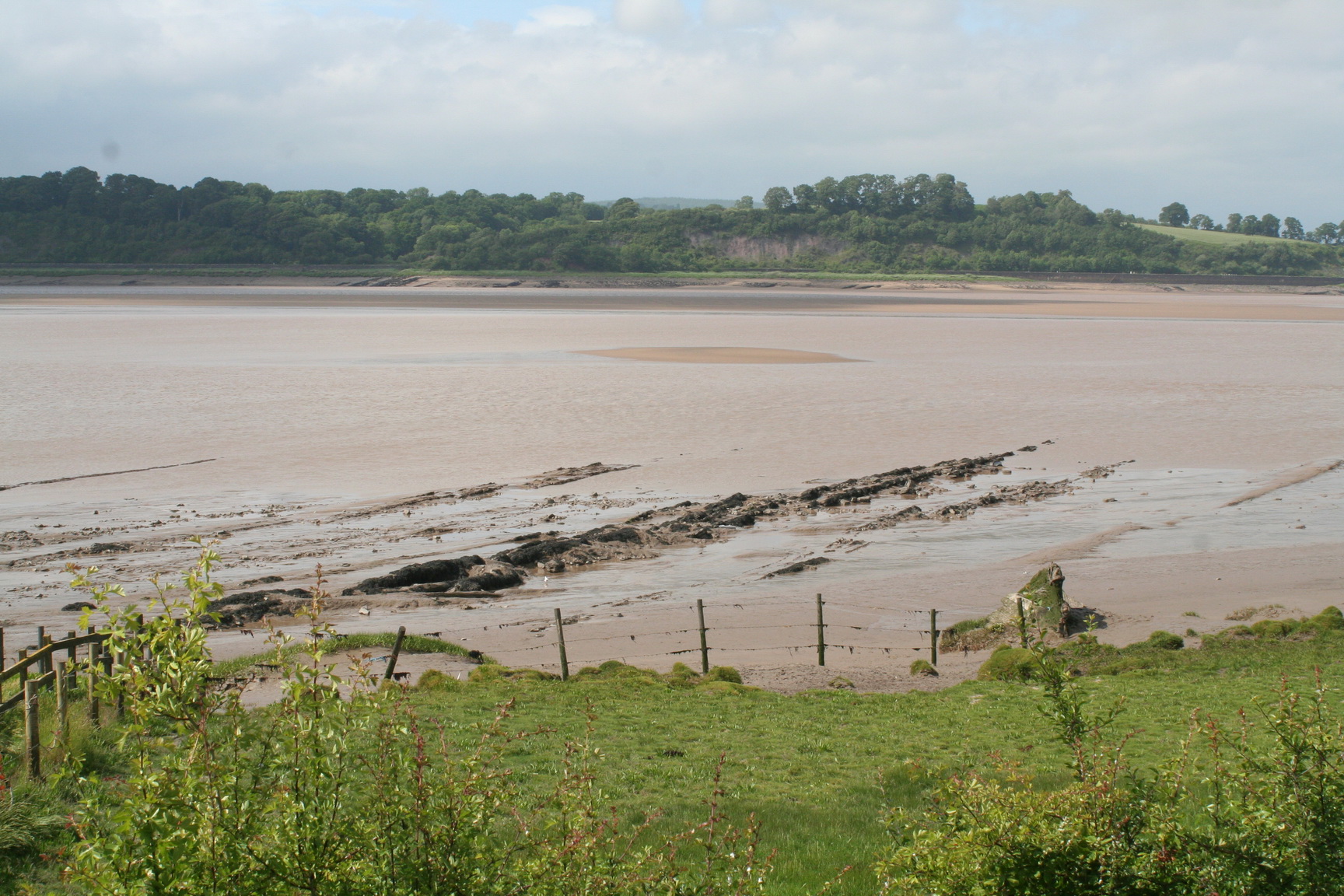
Big estuaries — including the Shannon and the Suir — always give a sense of space, with big open skies, but somehow the Severn looks even bigger when the tide goes so far out.

Severn rotation 3 05_resize

The long and level sands stretch far away

Severn rotation 1 01_resize

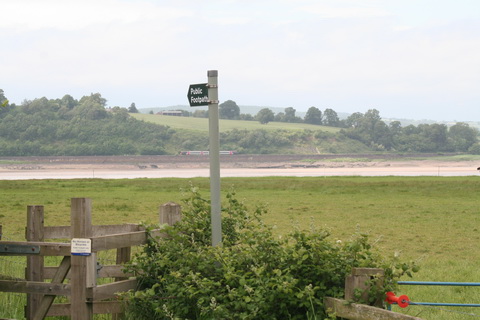
Note the train on the far bank, behind the signpost

Incidentally, the west bank too seems to have a place called Purton, if Messrs Google’s map is to be believed.

Severn rotation 3 02_resize

Drawing a line in the sand

The canal

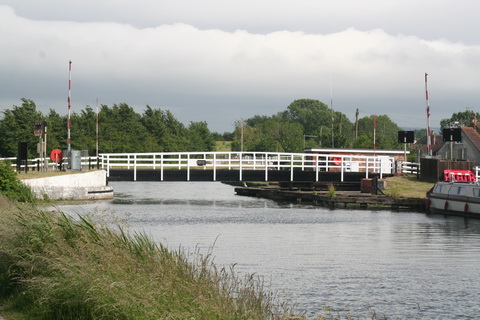
Purton has two of the Gloucester and Sharpness Canal‘s swing bridges, a weir and other interesting features.

Purton lower bridge 01_resize

Purton lower bridge

Purton lower bridge 03_resize

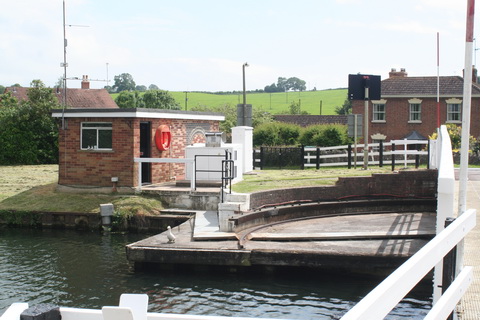
Purton lower bridge control room. The keeper operates both bridges

Purton lower bridge 06_resize

Swinging room

Purton lower bridge 08_resize

Purton lower bridge from downstream

Purton upper bridge

Purton upper bridge

Purton Gloucester and Sharpness Canal 02_resize

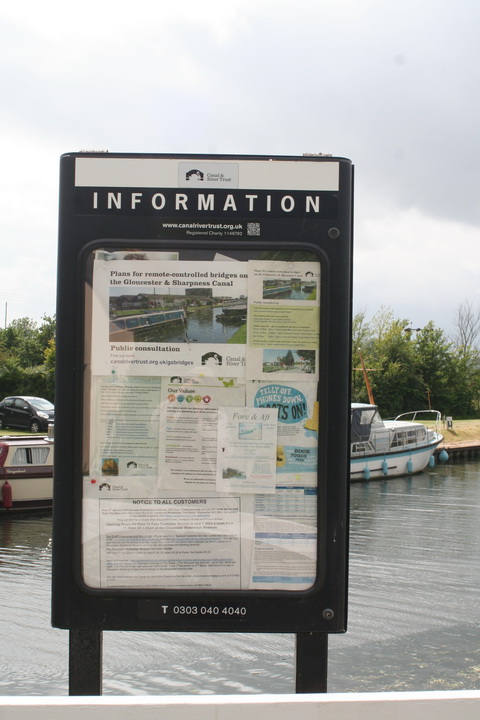
Information board beside the lower bridge

Purton weir 01_resize

Purton weir

Purton weir 03_resize

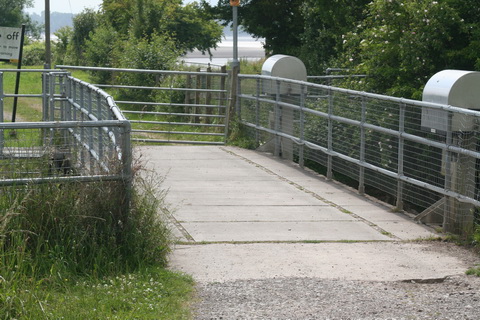
Weir bridge and sluices

Purton weir 04_resize

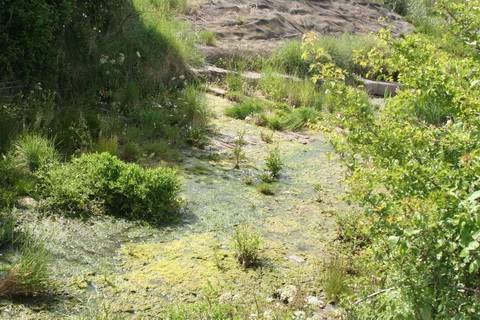
Weir inflow

Purton weir 06_resize

Weir sluices

Purton weir 07_resize

Weir outfall

Purton cottages 01_resize

Canalside cottages (all occupied)

Purton canal furniture 04_resize

One of several designs of self-closing gate

Purton canal furniture 05_resize

Pontoon

Purton canal furniture 06_resize

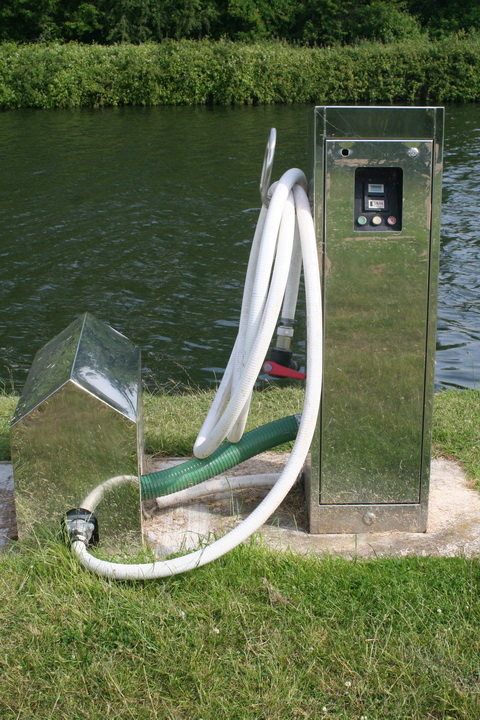
Pumpout

Purton Gloucester and Sharpness Canal 03_resize

Moorings

Boats at Purton 2015 01_resize

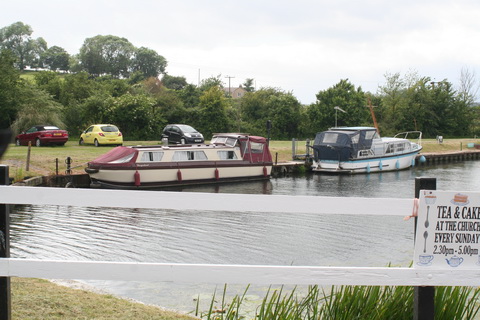
Boats 1

Boats at Purton 2015 05_resize

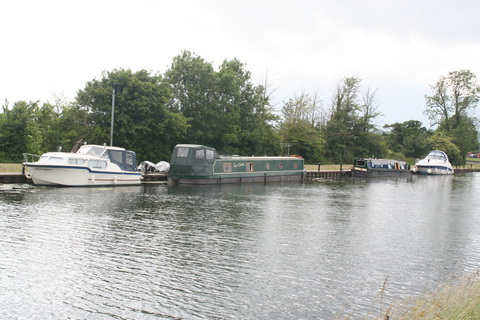
Boats 2

Boats at Purton 2015 06_resize

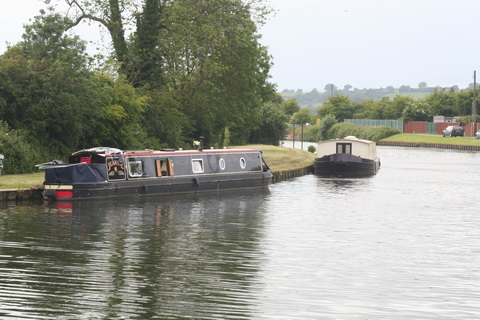
Boats 3

Purton boats 10_resize

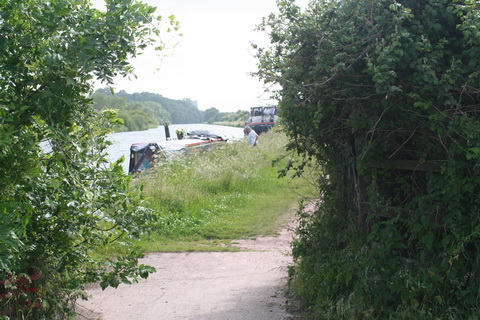
Boats 4

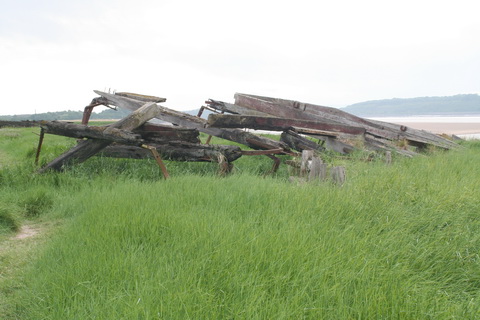
The hulks

The hulls of old vessels were used to shore up the embankment, between canal and river, at Purton. [This practice was also used in Ireland, on both the Barrow and the Suir, but not on anything like the same scale.] The result was the creation of a boat or ship graveyard that preserved, and makes reasonably accessible, the hulls or frames or at least parts of a large number of inland, estuarial and coastal vessels. And some of them are vessels that traded with Ireland.

The Friends of Purton have an informative website here; please also read their page about access here. I can confirm that parking is restricted on the site; it would be easy to annoy the local people by careless parking.

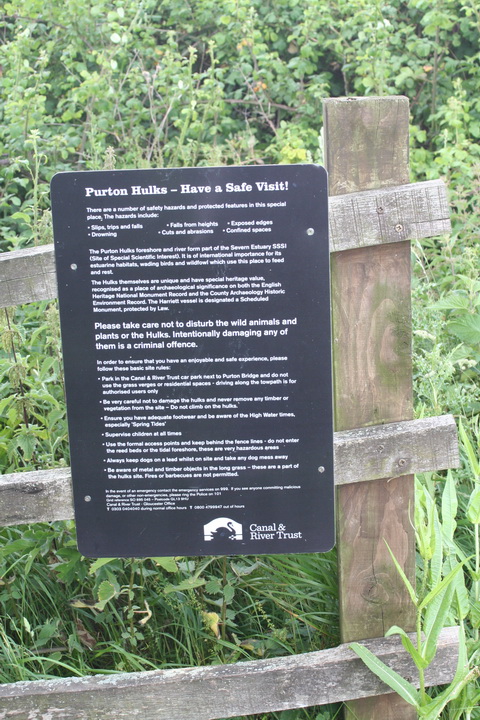
Good information is provided on site.

Purton hulks general information 01_resize

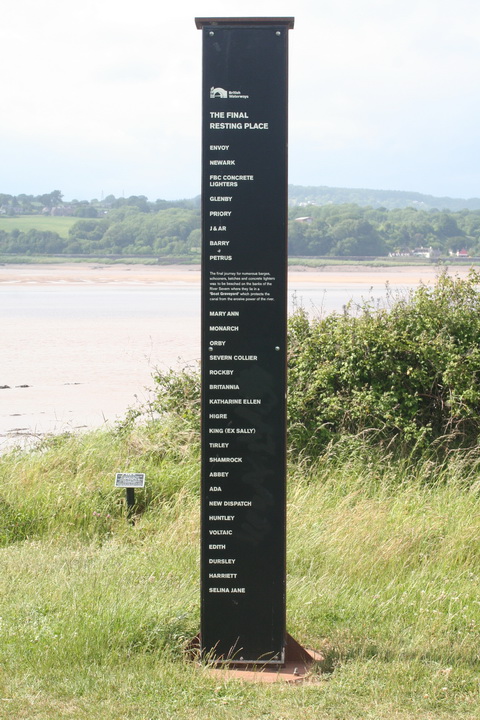
Information board

Purton hulks general information 02_resize

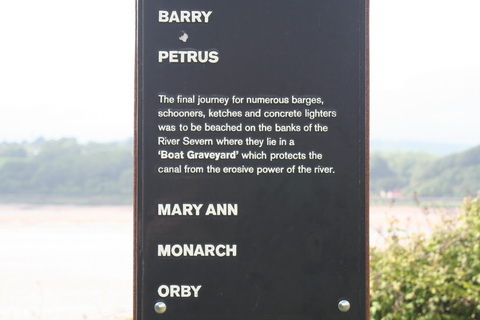
Memorial

Purton hulks general information 03_resize

Close-up

Purton hulks general information 04_resize

Advice

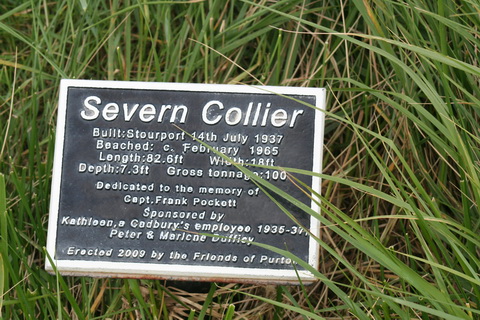
Purton hulks Severn Collier 04_resize

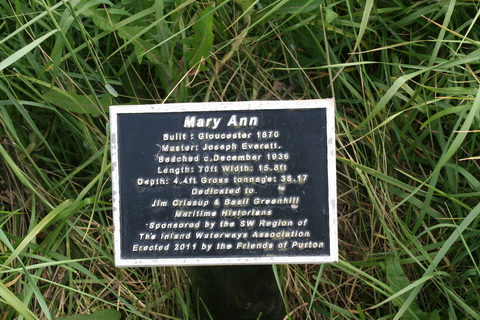
All identified wrecks have plaques like this

I had allowed an hour for my visit, but didn’t see everything; it would have been easy to spend twice as much time there. In the summer, growth hid a few of the artefacts, but there was plenty to see without trampling on the shrubbery.

Mary Ann 01 resize

The Mary Ann

Mary Ann 03 resize

… is in there somewhere

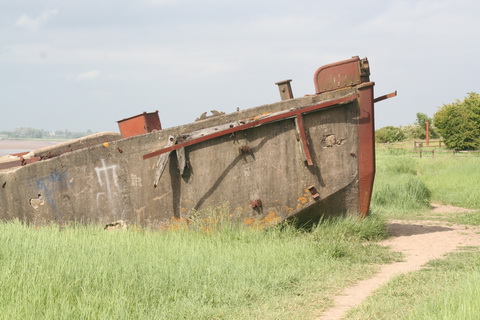
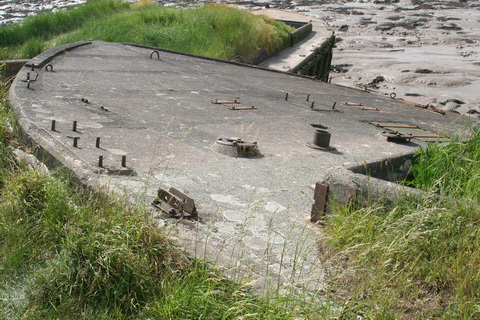
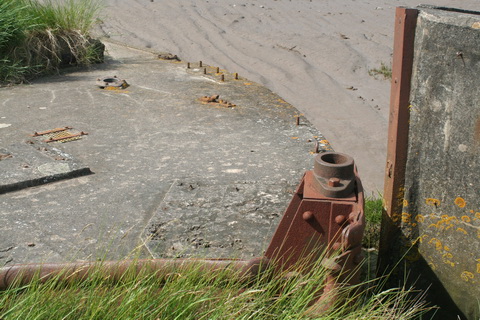
There are quite a few concrete (ferrocement) barges, built during the Second World War.

IMG_5227_resize

Up close

IMG_5229_resize

Bows on

Purton concrete barges 01_resize

Information plaque

Purton concrete barges 02_resize

Stacked up

Purton concrete barges 08_resize

Deck details

Purton concrete barges 17_resize

Merging into the bank

Purton concrete barges 18_resize

One side

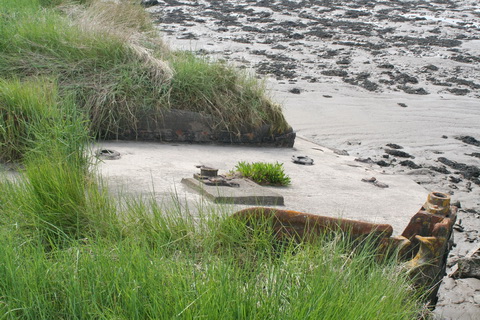
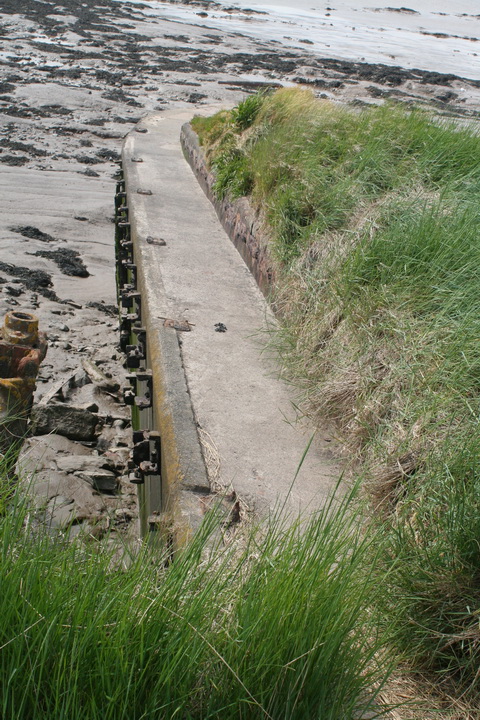
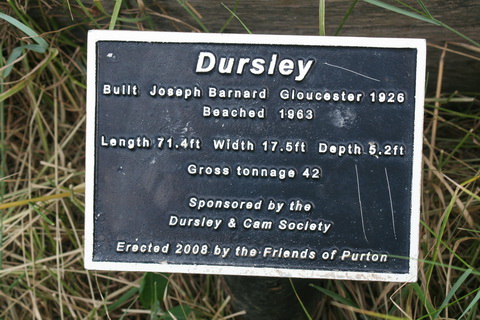
Of the other vessels, the Dursley is apparently in reasonable condition but, on my visit, was largely hidden in the grass.

Dursley 06 resize

Dursley plaque

Dursley 02 resize

Dursley sternpost and rudder

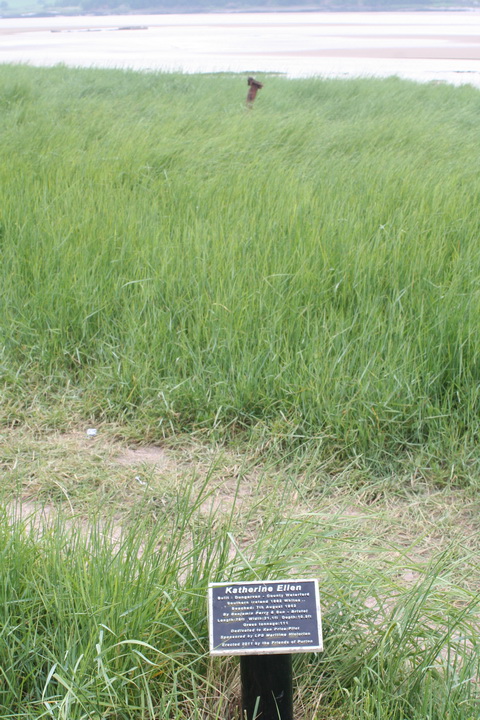
The same was true of the Katherine [or Catherine] Ellen, built in Dungarvan.

IMG_5165_resize

Katherine Ellen plaque

IMG_5166_resize

Katherine Ellen site

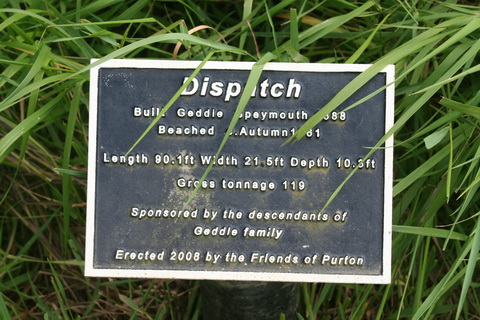
I failed to find the Jonadab, a Severn trow that traded to the (Munster) Blackwater, but I did see the remains of the Scottish-built Dispatch, which is amongst the vessels listed by Niall O’Brien as having visited the Munster Blackwater [Blackwater and Bride: navigation and trade 7000BC to 2007, Niall O’Brien Publishing, Ballyduff Upper, 2008].

IMG_5189_resize

Dispatch plaque

IMG_5190_resize

Dispatch hull

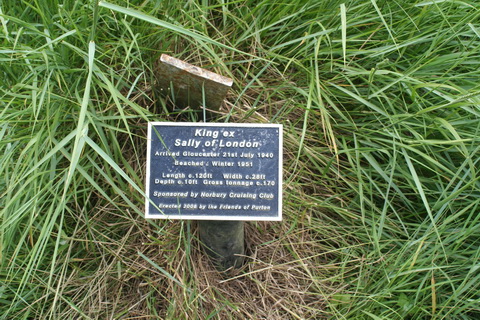
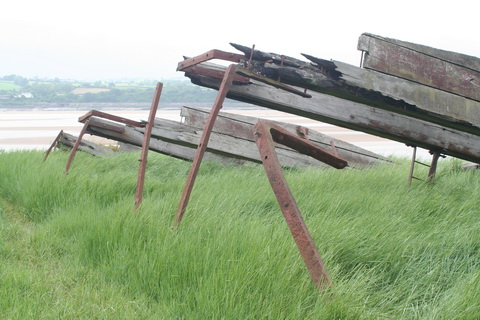
Then there were the dramatic remains of Sally, renamed King, of London.

IMG_5171_resize

Sally plaque

IMG_5172_resize

Sally remains 1

IMG_5169_resize

Sally remains 2

And many more. Even isolated timbers or iron ribs had their interest. But let me finish with a wreck that is not on the embankment but just offshore.

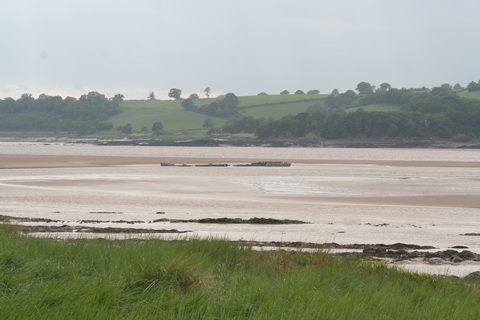
Purton hulks tanker 06_resize

Tanker offshore

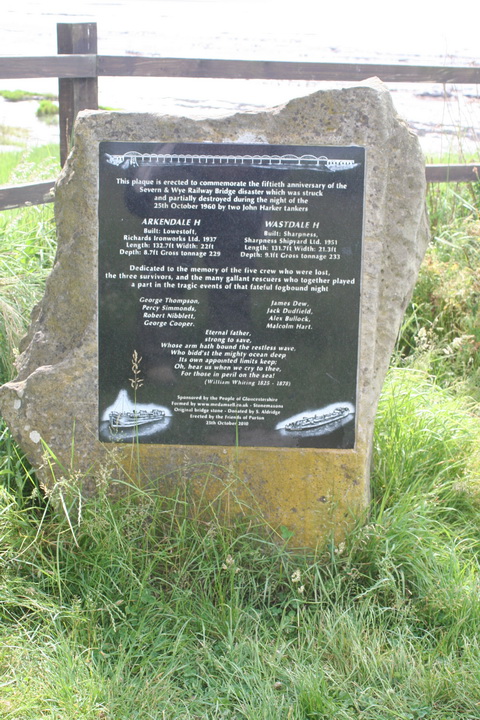
You can read about the loss of the tankers Arkendale H and Wastdale H here and here. They are remembered on a plaque at the site.

Purton hulks tanker 02_resize

Plaque about the tankers

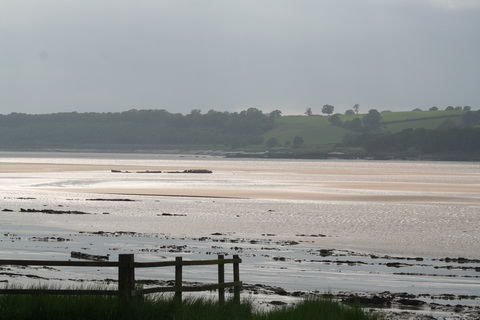
Purton hulks tanker 03_resize

I don’t know which of the tankers is shown in my photos

Purton hulks tanker 05_resize

The wreck is a reminder of the hazards of estuaries

Purton is well worth a visit — but it is only one of the waterways delights close to the Fishguard/Pembroke to London route.

Notes from the north

Some observations from a trip to the hyperborean regions.

Navigation

The 2015 edition of Shannon Leisure Development Company’s Navigational Guide to the Shannon and Erne Waterways includes the numbers of some of the markers; I found that helpful, especially on the longer river stretches.

The Guide is wrong about Clonmacnoise: there is no water supply. At Hodson Bay, a suggested course appears to cross a shoal.
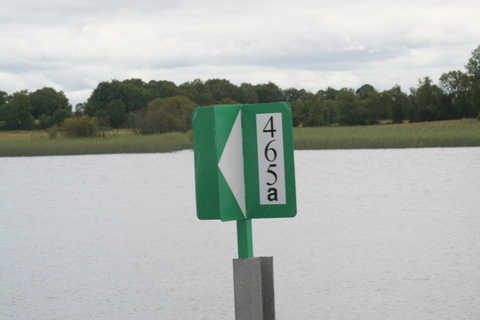
Eh?

Eh?

This was the first marker I noticed with a suffix to its number; I presume that means it’s a new marker.

Boxty

As far as I know, boxty is the only contribution made by the north midlands to world cuisine. We bought several varieties in Lanesborough, and jolly good they were too; I regret that I did not record the manufacturers’ names so that I could provide links to their websites.

However, boxty was not the only comestible to be found north of Portumna Bridge. Shannon Crafts and Coffee Dock in Athlone, on The Strand across the river from the lock, provides excellent cakes; boaters can tie up outside and stock up.

TripAdvisor folks liked it too.

Had I been there on a Saturday, I’d have had bratwurst.
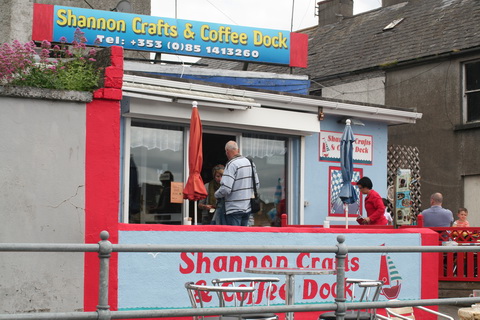
Shannon Crafts and Coffee Dock

Shannon Crafts and Coffee Dock

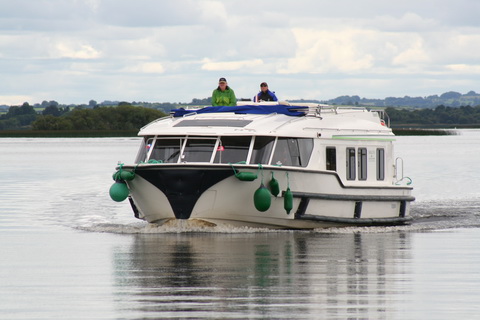
The Em’raldstar Galactica

Les grands bateaux de Monsieur Thibault must have been breeding: we met several of the things.
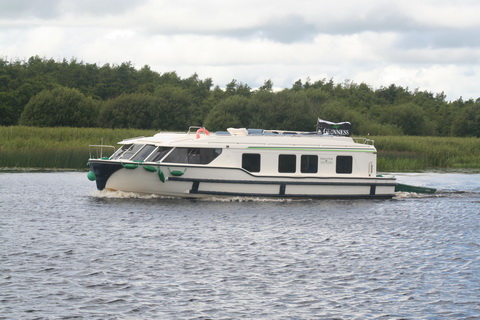
Emraldstar Galactica 2015 01_resize

It’s big …

Emraldstar Galactica 2015 03_resize

… and, I’m told, luxuriously fitted out …
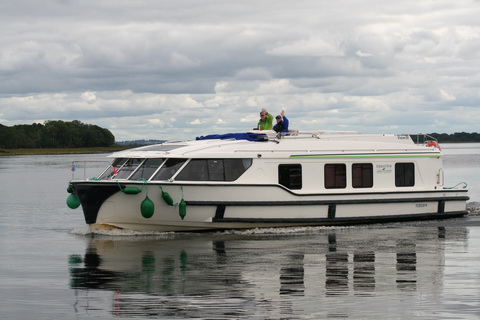
Emraldstar Galactica 2015 04_resize

… with good outdoor space on the roof …
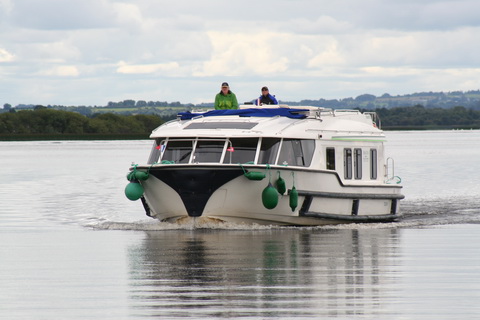
Emraldstar Galactica 2015 02_resize

… and it accelerates quickly and smoothly from rest, suggesting a good underwater shape …

… but I still think it’s the boating equivalent of the SsangYong Rodius.

Work in progress

Geotechnical investigation works on the N63 bridge at Lanesborough were being carried out from this pontoon, which was assembled at Hanleys Marina at Ballyleague.
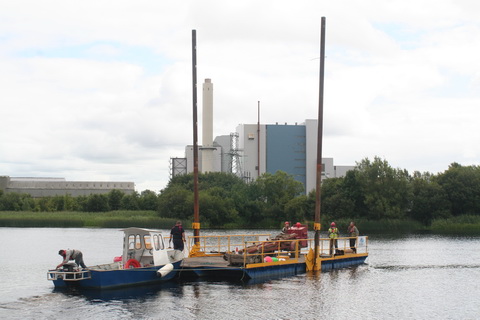
Moving the pontoon into position

Moving the pontoon into position

And here’s a Waterways Ireland boat, a Pioner I think, returning upstream to its launch site at Meelick Quay. Perhaps it had been investigating the possibility of providing berths near Meelick village.
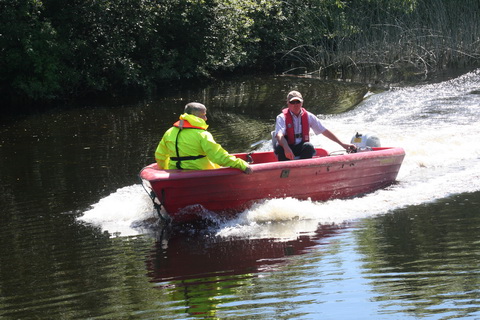
WI Pioner

WI Pioner

Wrecks?

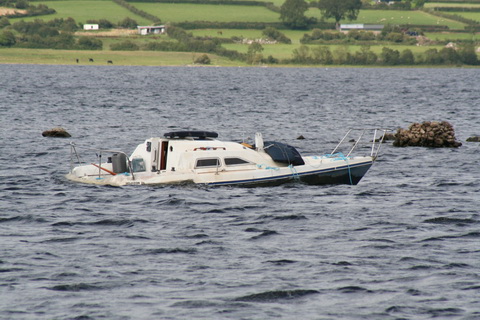
Iskeraulin wreck 03_resize

On the Iskeraulin shoal on Lough Ree

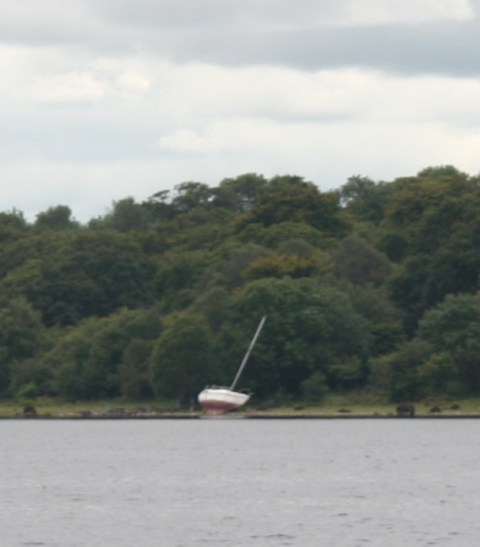
Copy of Boat ashore between Blackbrink and Galey bays

On shore between Blackbrink and Galey bays

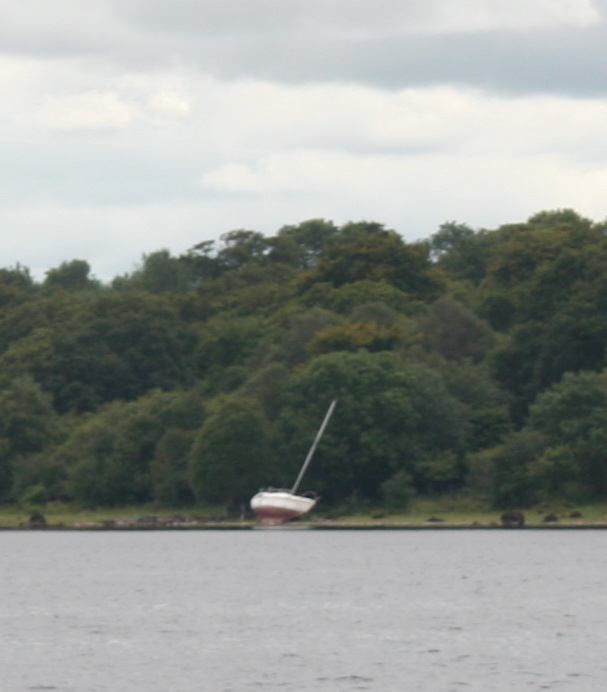
I don’t know anything about either of these vessels. The second might, I suppose, have been careened for work on its hull.

Out to lunch

The closing of locks at lunchtime has got to stop.

At Meelick, on a windy day, the lower gates were open at lunchtime and two boats were blown forward on to the sill. There, and at Athlone, the waiting pontoons and quays are utterly inadequate to the volume of traffic. Two boats occupied the whole of the Athlone pontoons and only two boats (one a barge) were able to fit on the quay wall. The combined length of boats waiting was about two and a half times the length available for tying to.
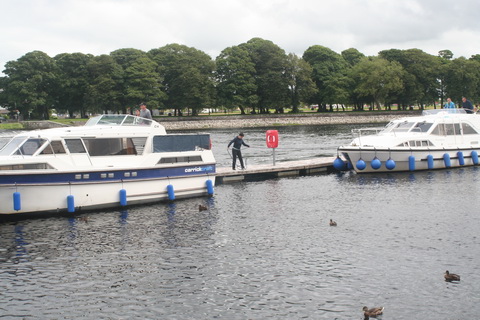
Athlone waiting pontoons

Athlone waiting pontoons

Why is it not possible to have staggered lunchtimes? Or to come up with some other arrangement that puts the interests and the safety of the boaters first?

Oddities

Is this a waterside thunderbox or privy?
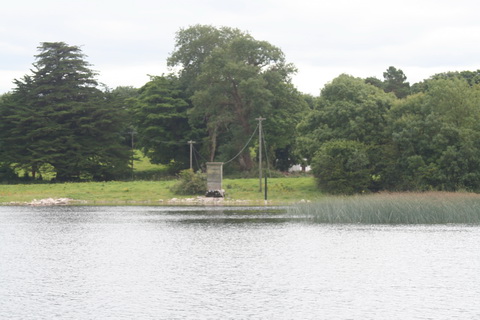
Perh privy above Athlone_resize

Outdoor sanitation above Athlone?

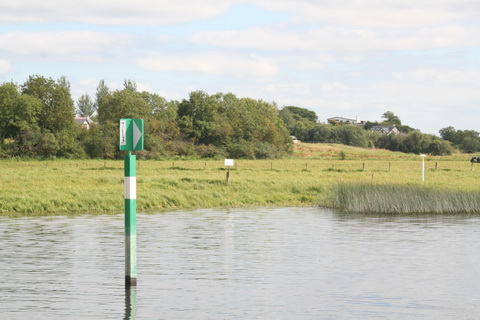
In the next photo, the small white sign in the middle says “No shooting”, which is about tweetiebirds rather than citizens. But what is the long-stemmed mushroom on the right? It looks like those gas thingies youo see scattered around the countryside, presumably to provide shelter while you strike a match to light your pipe, and there’s another on the other side of the river. Does that mean that there’s a gas pipe under the river? Or what?
Mushroom_resize

What’s the white thing on the right?

Imperfections

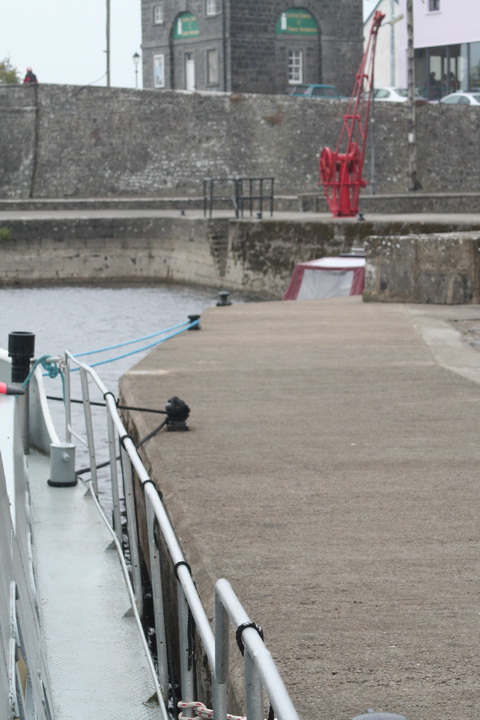
The pale patch of concrete suggests that the corner bollard is missing at the quay below the bridge in Shannonbridge. That makes the short angled section of wall very difficult to use.
Missing bollard at Shannonbridge_resize

Missing bollard?

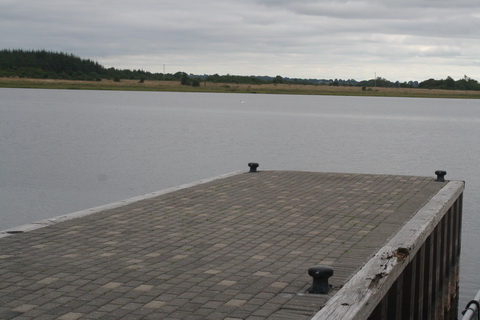
At Portrunny, some of the timber edging to the pier has rotted; it may be a trip hazard.
Portrunny pier edge 2015_resize

Portrunny pier

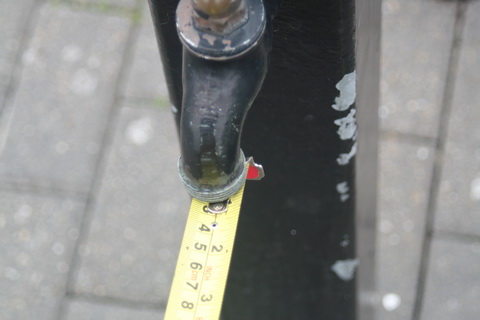
The taps on Portrunny pier defeated us. I would be grateful to anyone who could give me the specification of the adapter required to connect these taps to standard garden/boat hoses.
Portrunny tap

Portrunny’s giant taps

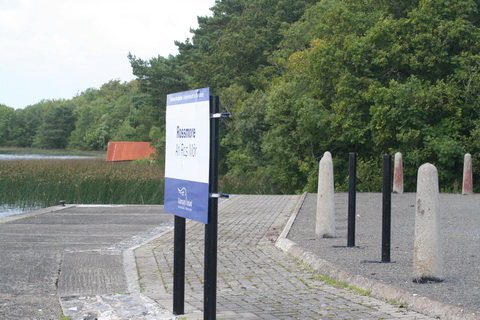
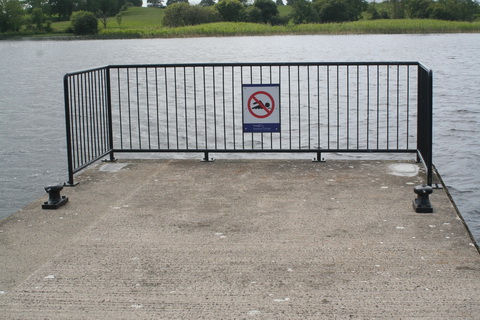
Back on Lough Derg, we found that a barrier had been erected at the end of the pier at Rossmore.
Rossmore barriers 01

Rossmore

This barrier makes the end of the pier unusable by boats. I have twice seen the end used when strong winds, and waves rolling into the bay, made conditions dangerous.

On one occasion a boat, pinned against the outer (upwind, exposed) side of the pier, worked around to the other side with ropes around the end of the pier; the barrier would have made that manoeuvre impossible.

On another, again with wind and waves coming into the bay, and with the head of the T occupied by other boats, a boat tied to the end of the pier, with its bow into the waves, using strong ropes from bow and stern to bollards along the pier. Again, the barrier would have made that impossible.
Rossmore barriers 02

The barrier

I do not know whether such considerations affected the decision to erect this barrier. If they did not, I suggest reconsideration.

Enterprise
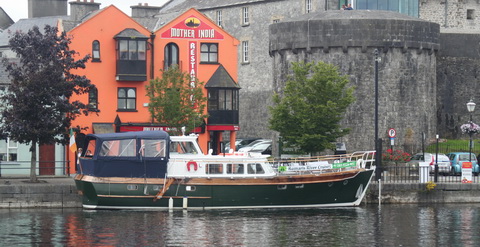
Romaris in Athlone

Romaris in Athlone (no, no: I took this one)

Romaris Motor Yacht is offering upmarket cruises in Athlone. And Baysports water park in Hodson Bay seems to attract favourable reviews.

Richmond Harbour

Finally, some thoughts on Richmond Harbour, our terminus ad quem. It is quite a delightful place and Waterways Ireland has done much to improve the amenities and maintain its appearance. Furthermore, Paddy, the patroller who let us up into the harbour, is helpful, friendly and enthusiastic about the Royal Canal.

But what a pity that WI doesn’t do more to promote both Richmond Harbour and the Royal Canal.

First, the Guide might usefully include Paddy’s phone number so that boaters, especially those (like hirers) without lock keys, might be enabled to get into the harbour. The numbers given on p15 don’t include Paddy’s.

Second, the text of the Guide might be updated: it makes it clear (p7) that some hire boats are allowed to use the Grand Canal but makes no equivalent statement about the Royal.

Third, WI might do more to establish an identity for Richmond Harbour itself, with information about its history, layout, buildings and other features. Maybe there was an information display; if so, I missed it.

Fourth, WI might provide information at Richmond Harbour (and perhaps elsewhere) to encourage boaters to venture even a few miles up the Royal. Such information might say what’s where (village X is Y miles/Z hours away), why X is worth a visit, what help is available, where a boat can turn, why it’s worth doing, what boaters should watch out for (mainly, I imagine, weed on prop or in filters). Or perhaps the RCAG or IWAI could do that.

Fifth, folk who use Richmond Harbour for free parking should find their boats below (or even above) the 45th Lock, thus leaving more space for visiting boats.

Boats arrive at the end of the Royal Canal; the canal itself, and the Harbour, should be promoted to them.

Incidentally, the Clondra Canal needs traffic lights: the cheerful and inventive keeper does his best with hand signals, but the systemn is scarcely foolproof. And it would be useful to have something (other than trees) to tie to at either end of the canal.

Weather

There were days to make Tim O’Brien eat his heart out. But some really bad days that are likely to damage next year’s tourism. I’ll get to the traffic figures anon.



Archives strategy

If you boogie on over to the National Archives of Ireland website, you can download a copy of its Strategic Plan 2015–2017 [PDF], whereof the NAI says:

The National Archives’ Strategic Plan 2015 – 2017 outlines the challenges and priorities for us as an organisation. In it, we have identified the key areas we wish to develop, grounded in our vision, mission and values.
Well, yes, I suppose that is so. The thing is, though, that the Plan as published has only six pages, of which the first is a cover page and the last has the Vision, Mission, Values and Strategic Priorities set out in boxes. There are only four pages of meat.

So, although the Vision, Mission, Values and Strategic Priorities are present as advertised, there’s very little else. Using Rumelt’s three-part kernel structure as a model, we find that the NAI’s published strategic plan

  • lacks diagnosis
  • does have a guiding policy
  • has no action plans.

Perhaps the NAI has a lengthier document that, for diplomatic reasons, it is keeping out of public view.

Diagnosis

There is a sad little paragraph on the second page:

We are progressing these responsibilities in a time of restrained financial resources and significant reductions in staffing. We are operating with only 75% of our sanctioned numbers and this is a major obstacle to meeting our statutory requirements with regard to accepting annual accessions, dealing with backlogs and providing services to government bodies. There are technical and legislative changes being progressed which will directly impact on our role and function as they relate to the records of government. The ubiquity of digital information requires earlier intervention in the approach to current records management. Collectively these present huge challenges for us in meeting our obligations and in trying to deliver existing and develop enhanced services.

I’m sure all of that is true, but — apart from the “sanctioned numbers”, which may or may not be relevant to the required workload — there is nothing to enable the concerned citizen [the singular citizen mentioned on the third page] to grasp the scale of the problems.

I have been told [but have no evidence] that there are unopened boxes or archival material that the NAI hasn’t got the staff to deal with [but if that’s not so, please leave a Comment so that I can correct this]. I can see that the amount of material made available on tinterweb is very small. And I can guess that there is difficulty in coping with public sector record management, not just because of “the ubiquity of digital information” but because some departments may not write everything down lest they have to release it under Freedom of Information legislation. But in these and other areas of activity it would be nice to have some figures to go on.
For diagnosis, then, the plan does very little to inform the concerned citizen.

Action plans

There aren’t any. There are no targets, goals, aims, performance measures, milestones … and no concrete plans for reaching, meeting, achieving or otherwise carrying them out.

What we get instead is a list of “five key strategic priorities”. Priority 1 is

Develop a secure footing for the National Archives

but

Priority 1 is foundational in that it directly addresses physical and staffing resources and the overarching legislative framework in which we operate. Priority 1 is also directly related to external factors with which the National Archives has limited influence. The inability to deliver on priority 1 will impact upon our core functions.

I don’t like that. If there is something you can do little or nothing about, it shouldn’t be in your strategic plan: it should be in your letter to Santa or your when-I-win-the-lottery wishlist.

Nor do I like the use of the verb “develop”, which is in three of the five strategic priorities, with the equally weak “improve” in a fourth:

  • Develop a secure footing
  • Improve the visibility and accessibility of our services
  • Transition to digital
  • Develop our people
  • Develop collaboration.

They, and most of the other verbs used in the text, are all about making unquantified changes but not about reaching goals. What’s lacking is any sense that the organisation knows exactly what needs to be done to bring itself to some defined state [which might be that of coping fully with its legal obligations or handling some quantity of material or serving some number of clients or …]. I want some specific targets and some hard-nosed verbs about how they’re to be met.

I’m sure, for instance, that it’s nice to

…  provide all staff with opportunities for professional development …

but I’d be more interested in knowing what capabilities the organisation lacks and how it proposes to acquire them.

I’m generally on the side of the poor buggers in public service bodies who have to cope with the contradictory demands and short-term agendas of nitwitted politicians, and it seems to me that the NAI is probably suffering from both of those. But I would be more reassured by a more detailed strategy, with achievable targets and concrete plans for reaching them, than I am by the short document made available to the public. I hope that some longer, more explicit version has been developed for use by NAI management.


Chains at the Black Bridge

It seems that the city edition of the Limerick Leader dated Saturday May 16 2015 carries a story saying that funding has been approved for the repair of the Black Bridge at Plassey. I can’t find the story on the Leader‘s website and I can’t find anything about it anywhere else [there is a limit to the amount of my life I am willing to spend trying to find anything on the Limerick Council website] except on the Leader‘s FaceTweet page, where I can expand the city edition front page.

There is a photo of several councillors, which of course is wonderful: no day is wasted if it offers an opportunity of looking at a photo of local councillors, especially important ones with chains.

From what I can read of the text, it seems that “councillors in City East” [which is not one of the Limerick districts listed here] are willing to spend €50,000 “to start work to make the walkway safe again”. And they hope that Clare County Council, the University of Limerick and Waterways Ireland will “also row in behind the project”.

Now, half a loaf is better than no bread, and €50,000 is better than a poke in the eye from a blind horse, but it’s not going to go very far towards the cost of repairing the Black Bridge. I don’t known whether it would even cover the cost of a full survey.

I’m sure that Waterways Ireland would be delighted to help, if the Department of Fairytales hadn’t raided its coffers to pay for Saunderson’s Sheugh. I have reason to believe that the university was willing to help — and that Clare County Council was not. I submitted a Freedom of Information request to the university, asking it for [recent] records relating to the Black Bridge. The university gave me three extracts from meetings of the Limerick Smarter Travel Steering Group:

9 January 2013
Funding not in place for Black Bridge

21 November 2013
Black Bridge: UL indicated that funding may be available from UL. LST [Limerick Smarter Travel] has indicated funding in the order of €100,000. UL may be able to mach [sic] this. Request for funding to be made formally to UL by LCCC and to include surveys and reports on bridge to date.

18 September 2014
RR said UL have set aside €100,000 towards Black bridge refurbishment but will need matched funding from LA [presumably local authority]. Black bridge will require a detailed study to identify what repair work will need to be carried out, also an AA study will be required, and proper consents from ABP [An Bord Pleanála?]. Funding currently not available from LA.
PON spoke to Clare Co Co. No funding available from them.
PC Department will not fund a pedestrian bridge.
RR can we look for alternative funding options, UL will ring fence for the moment.

An AA study is, I think, an Appropriate Assessment, a sort of employment creation scheme for bird-watchers who can read European directives [and sooner them than me].

The point to be remembered here is that Limerick County Council leased the bridge and undertook to keep it in repair; there is no obligation on Waterways Ireland, Clare County Council or the University of Limerick to spend a penny on it. The two parties on whom lies the responsibility for repairing the bridge are the Limerick Council and the Department of Finance, which latter has the power, under the lease, to do the work and charge it to the council. That would be a better use of its time and money than an unnecessary and intrusive footbridge in the middle of Limerick.

Advice to potential UK prime ministers …

… from the inimitable XKCD.


Better drowned than duffers

The Irish Sailing Association is at it again, lobbying for the retention of a system under which the vast majority of owners of diesel-powered private pleasure craft can safely engage in tax dodging.

The ISA folk don’t want you think about that part of it so, although they say that they hold “no brief for those who have not complied with the current arrangements”, they concentrate on all the disasters that will befall leisure sailing folk if they can’t buy cheap diesel. Apparently there will be outbreaks of scurvy, plagues of locusts and unwanted exercise if boaters can’t continue to buy subsidised fuel.

You can read it all here if you want a laugh, but Commander Walker’s immortal words come to mind:

BETTER DROWNED THAN DUFFERS IF NOT DUFFERS WON’T DROWN.

If owners of private pleasure craft are as nitwitted as the ISA say …

Leisure vessels would go to sea either overburdened with spare cans of fuel, or with insufficient reserves on board. Distress situations would arise and lives would be at risk.

… they will at least have the consolation of knowing they may be nominated for the Darwin Award. But I don’t believe they are, and I believe in the power of the free market: if seafaring yachties have to use white diesel, a supply will arise to meet the demand.

The ISA are asking us to ignore the elephant in the room: to treat as an incidental and minor side-effect the fact that (by my reckoning) 99.75% of those who should be paying tax are not doing do. That scale of tax-dodging means that the current scheme is a complete failure, indeed a farce. It would have been really nice if the ISA had used their accumulated brainpower to devise schemes whereby yachties (and other owners of diesel-powered private pleasure craft) would have to pay the full price for their fuel.

The ISA say …

The issue for leisure sailors is not the price of diesel but its availability.

… but the fact that (at a rough guess) only 0.25% of them have been paying the proper rate of tax for the past five years, even though all they have to do is to send a cheque to the Revenue Commissioners, strongly suggests to me that “leisure sailors” are keenly interested in the price and have few qualms about ripping off the state.

According to Practical Boat Owner 584 March 2015, one Harry Hermon, described as “chief executive of the RSA”, said:

The ISA’s role is to promote the sport and to protect the interests of Irish sailors, hence the ISA’s interest in this matter. It is not the ISA’s remit to regulate or to enforce regulation.

But what the ISA is doing goes well beyond the neutrality that that suggests: it is actively promoting and lobbying for the retention of a scheme that facilitates tax-dodging by boat-owners. The ISA’s stance might be slightly less irritating if their friend Cantillon in the Irish Times hadn’t been prating about an “honour system” for paying the requisite tax. In 2014 just 20 boat-owners paid the tax for 2013 [I have not yet got the figures for 2015, covering tax due for 2014], which suggests that honour is not to be relied upon.

You might think that the ISA would have an interest in the financial health of the state: after all, the taxpayers give them over one million euro a year. But perhaps, in the yachting world, it’s more blessed to receive than to give?

Background

The ISA are lobbying because the European Commission has taken an interest.


Shannon–Erne Waterway traffic

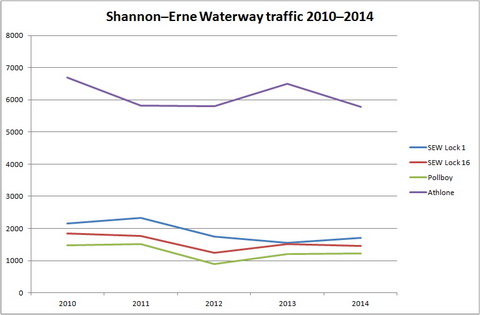
I have reported regularly on Shannon traffic figures [most recently here] but I have paid relatively little attention to the Shannon–Erne Waterway [SEW]. I am therefore grateful to Waterways Ireland for supplying me with the last five years’ monthly traffic figures for Locks 1 and 16 on the SEW. I had some queries about the figures for certain months and I have put them to Waterways Ireland, but I presume that the annual figures are OK.

Shannon–Erne Waterway traffic 2010–2014

Shannon–Erne Waterway traffic 2010–2014

Clearly, not all boats go all the way through: if they did, the figures for Locks 1 and 16 might be the same. The hire bases for Locaboat, Riversdale and Corraquill were all on the Erne side of the summit level; does Lock 1’s excess of traffic over Lock 16 suggest that hirers, perhaps wishing to minimise the number of locks they passed through, headed for the Erne rather than the Shannon? The figures, which I presume are gathered automatically, do not distinguish between private and hired boats.

The other point that strikes me is that the level of traffic is actually quite low. I put in the figures for Pollboy and Athlone locks to allow comparison. SEW traffic is greater than that on the Lough Allen Canal, but it is not much greater than that on the River Suck to Ballinasloe. In that case, WI is [according to its Business Plan 2015] considering automating Pollboy Lock to reduce costs.

Pollboy lock passages 2005–2014

Pollboy lock passages 2005–2014

The SEW locks are already automated, but the costs and benefits may have to be re-examined, especially now that Locaboat has moved from Ballinamore to Quigleys Marina at Killinure on Lough Ree: I presume that that will result in less traffic on the SEW.

Pollboy and the CLones Sheugh

In 2006 Pollboy traffic was used as the basis for estimating likely traffic to Clones on the Ulster Canal’s “SW section”:

The total number of boat parties/groups for the SW section is assumed to be 600. This is based on a comparison with another “offshoot” like the Suck Navigation which had around 1,250 boat parties/groups in 2005 (obtained by dividing the passages through Pollboy Lock by 2) in a much busier section of the whole system. So, for the SW section, a level of around 50% (ie. 600) is regarded as a reasonable assumption.

Waterways Ireland Socio economic Summary Report for the NE and SW Sections of the Ulster Canal Final Report February 2006

Now that Pollboy’s traffic is half what it was in 2005, no doubt the estimate for the number of boats that would visit Clones, if a canal ever reached it, has likewise been halved, which would give an average of about ten boats a week over a seven-month season: four boats every Saturday and one a day for the rest of the week. Folk intending to build restaurants to cater for the cruiser traffic might be wise to reassess their investment plans:

In overall terms, the benefits of waterway restoration derive from the fact that these can facilitate a variety of leisure and recreational activity, that the users will benefit from this activity, and that there will also be wider spin-off benefits in the areas, e.g. facilities such as restaurants etc built to service canal traffic.

Department of Arts, Heritage and the Gaeltacht Restoring the Ulster Canal from Lough Erne to Clones Updated Business Case February 2015

There’s not enough business there for a burger van, never mind a restaurant.

The magic of the Shannon–Erne Waterway

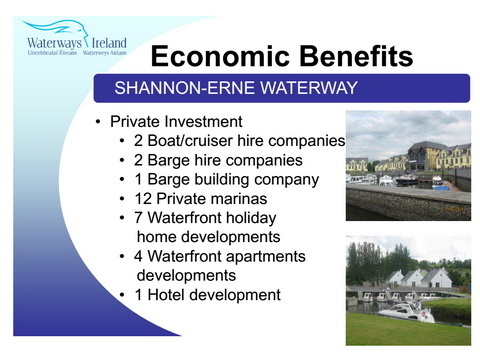
But if Pollboy, the River Suck and Ballinasloe are no longer cited as support for the construction of a Clones Sheugh, the Shannon–Erne Waterway is still used as an example, in that and in other contexts. Take, for example, this:

Shannon–Erne Waterway magic

Shannon–Erne Waterway magic

I’ve nicked that from a slide show called Economic, Recreational and Social Benefits of Rural Waterways in Ireland, which was to be delivered [PDF] by Garret McGrath of Waterways Ireland at the World Canals Conference [PDF] in Milan in 2014.

Now, if the Shannon–Erne Waterway had caused all that construction activity, we’d have to drag Waterways Ireland before the Irish banking enquiry. Skipping lightly over the question of the ghost estates, and the departure of Locaboat from Ballinamore, we come to the real problem with this sort of stuff: the post hoc fallacy. We are invited to believe that

  • a waterway was built
  • prosperity followed
  • so the waterway must have caused the prosperity.

Well, maybe it did and maybe it didn’t, but the argument presented in the slide show isn’t sufficient to prove it. You would have to check to see whether there were any other possible explanations: any other changes that might have resulted in all that construction.

Along the Shannon–Erne Waterway, I can think of two other possible factors: Sean Quinn’s business empire and the Upper Shannon Rural Renewal Scheme, a tax dodge that applied in Leitrim, Longford, Roscommon, Cavan and Sligo, five of the six counties that had the highest rates of vacant housing (excluding holiday houses). So there are two problems here:

  • much of that construction activity may have been driven by tax breaks rather than by the existence of a nearby waterway
  • the construction itself may not have had beneficial effects.

You can read more about that here, noting in particular, on the map, the areas around the upper Shannon and the SEW with vacancy rates of over 25%; you might wonder whether Waterways Ireland is wise to claim credit for housing over-development.

But my main concern here is a different one: that, if you want to claim credit for economic benefits that followed waterways development, you have to measure the benefits and subtract those attributable to other factors, such as Sean Quinn and the Rural Renewal Scheme. Then it would be useful if you compared the remaining benefits with the cost of constructing your waterway: it might then be possible to say that waterways development is a good investment.

It may be that such a study has been done on the SEW, but if it has I don’t know where it is; I would like to see it if it exists. Until then, I regard this sort of thing, from DAHG’s Business Case, as drivel:

The broad existence and nature of the potential socio-economic benefits of canals and restored waterways are therefore well established and not really at issue.

Sorry, minister: that’s rubbish. As far as I know no proper evaluation has ever been carried out on the costs and benefits of any restored or new-built Irish waterway. So you’re not getting away with that one.