Tag Archives: Shannon

Lacustrine expansions

SHANNON (THE) , the largest river of Ireland, and probably the largest in any equal extent of insular ground in the world. […]

The lower third of its course is tidal or estuarial; and the other two-thirds are, in a comparative sense, so straight, so deep, so free from current, and so much aided by lacustrine expansions, that the river can be navigated by barges, and made an aqueous highway for commerce, to within a few miles of its source.

Were all its facilities to trade and communication as fully recognised and used as those of the rivers of England, it could not fail to relieve and enrich the condition of a very large proportion of the Irish population, and would be burdened with a much greater annual aggregate of freightage than any other river of equal length in the world; yet, in spite of its voluminousness, its highly navigable capacities, and its intimate connection with many of the most populous inland and central districts of Ireland, it was, till a few years ago, very little cared for, and continues to the present day to be comparatively little known.

It effects, from Lough Allen near its source, to the sea at the level of low-water, an aggregate descent of 159 feet in summer, or 163 feet in winter; or, to speak popularly, and with reference merely to high-water level, it makes an aggregate descent of 147 feet; but it achieves no less than 97 feet of the 147 in the brief distance between Killaloe and Limerick; and it also effects, within its entire course, no fewer than 17 different falls or rapids; so that, in its entire current, except at these few particular localities, it is necessarily sluggish and silent almost to stagnation.

Much of its strictly fluviatile extent consists of very large and long lacustrine expanses; much also consists of dull, dead reaches of river, stagnating amid callows, meadows, bogs, and morasses, rankly overgrown upon the sides by aquatic vegetation, and periodically spreading out in cold and shallow floods; and surprisingly little consists of the merry and brilliant combinations of limpid and rippling current with clean well-defined and picturesque banks which so generally constitutes the river-scenery of Scotland.

The Parliamentary Gazetteer of Ireland, adapted to the new poor-law, franchise, municipal and ecclesiastical arrangements, and compiled with a special reference to the lines of railroad and canal communication, as existing in 1844–45; illustrated by a series of maps, and other plates; and presenting the results, in detail, of the census of 1841, compared with that of 1831 Volume III N–Z A Fullarton and Co, Dublin, London and Edinburgh 1846

The disappointed steamer

For one brief moment it seemed that the humble steamer Ballymurtagh might have a glittering future as a passenger vessel. Alas, it was not to be.

For certain values …

In the Irish Times of 5 January 2016 Fintan O’Toole has an article headed “Genuine local democracy part of the solution to flooding“. He points out that
  • in 2004 the Irish Times property supplement showed a photograph [we are not told whether it was part of an ad or advertorial or of a critique of property development] showing a sign advertising for sale a flooded field that had been zoned for residential use
  • in 1997 a resident of Clonmel detailed how the town’s natural flood defences had been destroyed
  • in 1999 a man in Ennis blamed the flooding of his house on the granting of too many planning permissions
  • in 2000 3500 Clonmel residents objected to building on flood plains
  • nitwitted local councillors didn’t care.

He concludes that

As flooding gets worse, we will have to spend enormous amounts of money on engineering solutions. But in fact one part of the solution doesn’t cost any money at all. It’s called listening. Or, to give it its political title, it’s called genuine local democracy. Top-down, very expensive technocratic measures may have to be part of the response. But they will only work in a political culture that has eyes to look at the land and ears to listen to what people know about it.

Well, up to a point, Lord Copper. The article provides no evidence that a majority of the citizens — in any local authority area, Dáil constituency or other political unit — shares the erudite and enlightened views of those who write letters to, or columns in, the Irish Times. In fact, given that the citizens have, over more than one hundred years, continued to elect large numbers of nitwits to the local authorities and, for almost a century, to the Dáil, it seems unlikely that democracy — genuine, local or otherwise — will ever produce the right answers.

Which may explain why so much power now resides elsewhere, in the hands of experts and courtiers, and why elected representatives are reduced to throwing the occasional tantrum, providing tea and sympathy and making empty promises that then come back to haunt them.


The Ballina pontoon

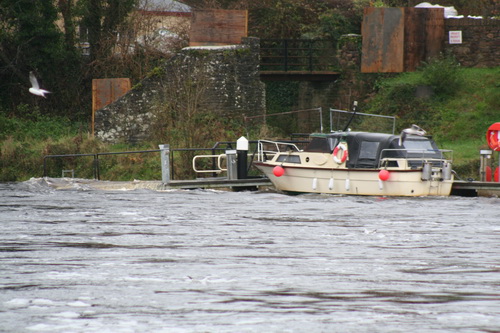
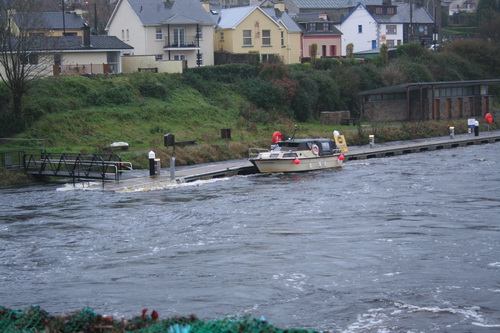
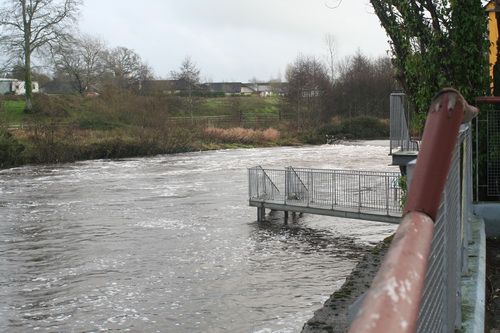
That’s Ballina, Co Tipperary, on the Shannon, opposite Killaloe.

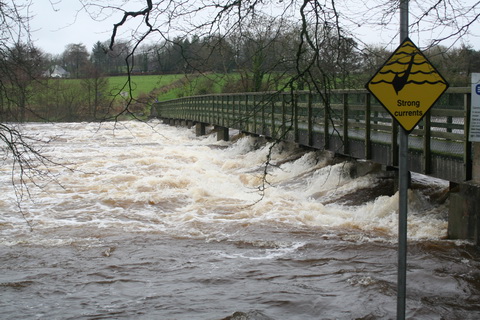
Killaloe 20160101 14_resize

Looking upstream

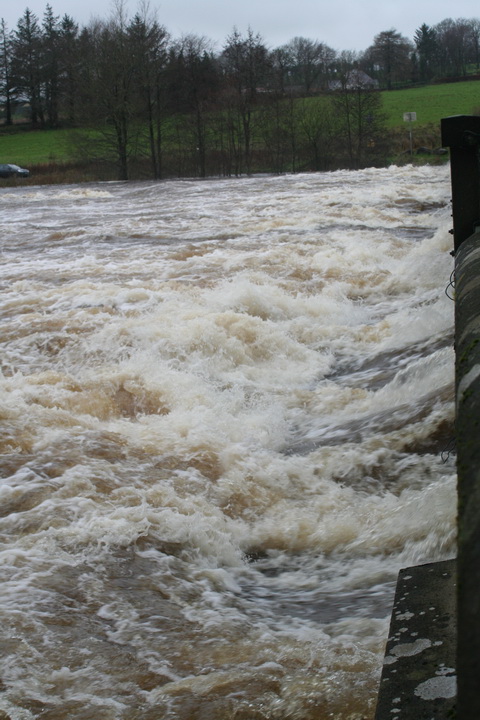
Killaloe 20160101 15_resize

The ramp

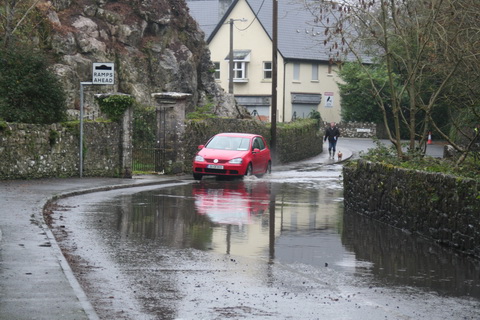
Killaloe 20160101 20_resize

Looking downstream

Killaloe 20160101 21_resize

From the railway footbridge

Photos taken on 1 January 2016.

The pontoon seems to be more severely affected than it was in the last big floods, on 22 November 2009.

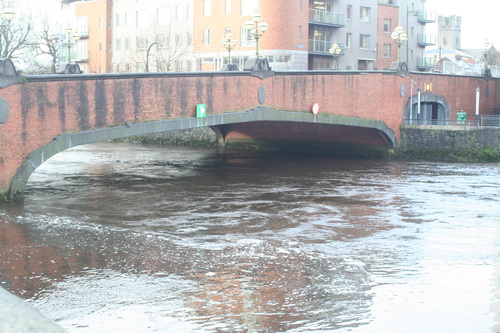
New Ballina pontoon in floods 20091122 1_resize

From across the river

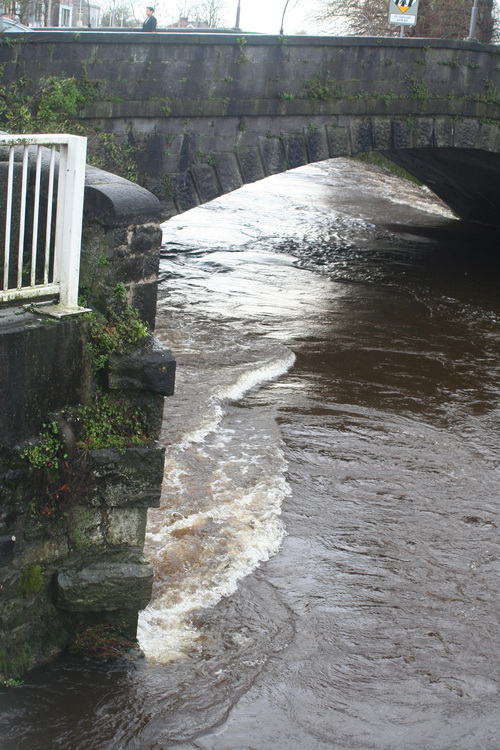
New Ballina pontoon in floods 20091122 2_resize

From the bridge


Managing the Shannon

Sometimes you have to wonder about politicians and their grasp of reality. Take, for instance, young Mr Adams, Sinn Féin TD for Louth. There he was in the Dáil the other day, talking about flooding on the Shannon, and saying (amongst other things):

No single agency is responsible for the management of the River Shannon. Will the Taoiseach give full responsibility to the OPW for management of the Shannon?

Can Mr Adams have forgotten that, under the Good Friday Agreement, a cross-border implementation body called Waterways Ireland, reporting jointly to the Minister for Fairytales in the republic and the Minister for Marching Bands [a Sinn Féin MLA] in Northern Ireland, is responsible for navigation on certain named waterways including the Shannon?

Giving the Office of Public Works full responsibility for the management of the Shannon would require renegotiation of the Good Friday Agreement [and perhaps some later agreements]. I gather that the members of HM Devolved Administration in Northern Ireland delight in doing that sort of thing, but reducing the powers of the largest of the cross-border implementation bodies might not be wise.


Shannon lake levels

According to the Shannon Catchment-based Flood Risk Assessment and Management (CFRAM) Study Technical Assessment: River Shannon Level Operation Review [PDF: Office of Public Works v2_0 July 2012]

ESB collects and maintains records of rainfall, river and lake levels and flow data. Even though ESB has no responsibility to supply flood warnings under their regulations, it issues twice weekly lake level forecasts to all the relevant stakeholders since 2010.

Those stakeholders include Waterways Ireland.

As the levels of the lakes are of great interest to boat-owners and others, it would be really nice if either the ESB or Waterways Ireland were to publish those forecasts. WI wouldn’t need any elaborate new system: they could send them around as marine notices, and the cost would be minimal.

But perhaps the forecasts are already published somewhere? If, Gentle Reader, you know where they are, do please leave a Comment [preferably with a link] below.

Limerick water levels 14 December 2015

The Abbey River

Abbey Bridge 20151214 01_resize

Abbey Bridge

Baal's Bridge 20151214 04_resize

Baal’s Bridge

Mathew Bridge 20151214 01_resize

Mathew Bridge

Mathew Bridge 20151214 05_resize

Current heading for Mathew Bridge

The Shannon in Limerick

Shannon in Limerick 20151214 02_resize

The weir

Plassey

Plassey 20151214 01_resize

Lots of pumps running and equipment trundling about the place

Plassey 20151214 02_resize

Trouble at t’mill

Plassey Millstream 20151214 01_resize

T’millstream

Plassey 20151214 10_resize

Cots on the bank

Plassey Black Bridge 20151214 01_resize

The Black Bridge getting another hammering

Annacotty

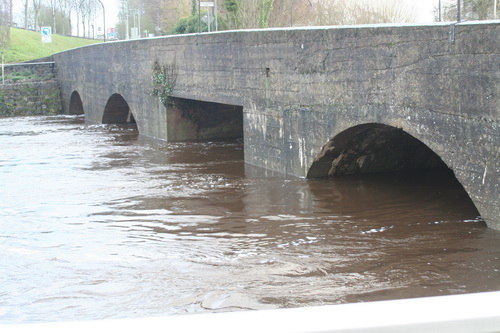
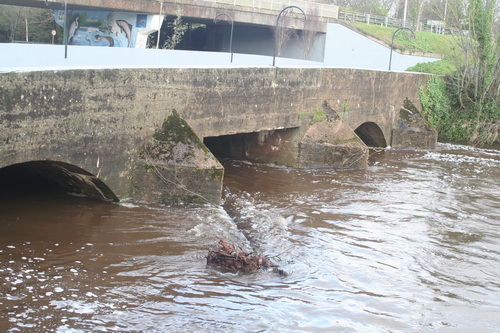
I have been told that the Mulkear River rose very rapidly on Saturday night and that, at one time, it was feared that the (older) bridge would be swept away. I gather that folk working in other areas were called to Annacotty to deal with the emergency.

Annacotty 20151214 01_resize

The old bridge at Annacotty (downstream face)

Annacotty 20151214 12_resize

A tree in the water above the bridge

Annacotty 20151214 14_resize

There’s a weir in there somewhere

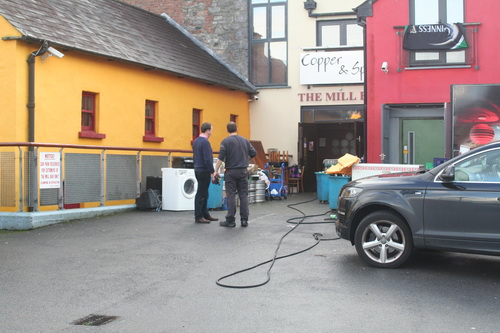
The Mill Bar in Annacotty was closed today after being flooded.

Annacotty 20151214 15_resize

The Mill Bar

Annacotty 20151214 03_resize

This, from a small garden beside the bridge, suggests that the Mulkear may have carried and deposited a lot of silt

The Park Canal

I gather that the Mulkear’s waters, added to those of the Shannon itself, raised the level of the Park Canal (the bottom section of the Limerick Navigation). A problem with opening the lock gates, to release the water, meant that a few houses in Corbally were flooded. A Sinn Féin councillor, whose party colleague has been responsible [with her southern counterpart] for slashing Waterways Ireland’s budget in recent years, is quoted as saying

I am in no doubt it was primarily caused by the ineptitude of Waterways Ireland.

Alas, the news story does not tell us the source of the councillor’s certainty.

The article also says that

[…] the force of this water meant it was not possible to open the lock gates by hand.

That is, I think, misleading: neither set of gates has gate beams, so they are not opened by hand.

park canal mist 03_resize

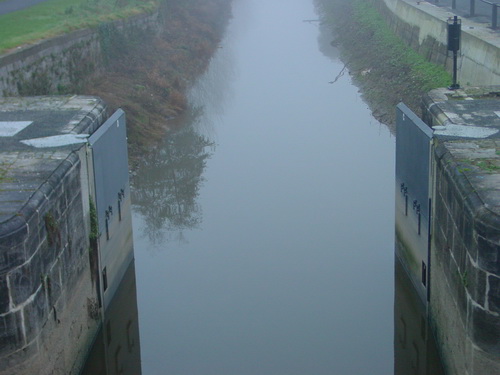
The upper gates in 2004, shortly after installation. Note the absence of gate beams. Note also the two sluices or paddles on each gate

Park Canal 20151214 31_resize

Control pedestal and gear

Park Canal 20151214 11_resize

The upper gates open today

I see no sign of the paddles or sluices. Perhaps the level is so high that they’re underwater. I must try to check next time I’m at the canal harbour.

Canal lower lock floods 20091128 1_resize

The upper gates in the floods of 2009

In the floods of 2009 the upper gates were held slightly open and all four sluices were discharging water. That would have lowered the level in the canal; it would also, I think, have made it easier to open the gates fully.

I am guessing, but I imagine that on Saturday night some sort of hydraulic machine was brought in this way …

Park Canal 20151214 21_resize

Two bollards have been moved from the gateway and stacked beside it

… and used to push or pull open the near-side upper gate. There seems to be some slight damage to the stone and iron work.

Park Canal 20151214 10_resize

Slight damage

One other possibility that struck me is that silt from the Mulkear might have built up behind the gates, making them difficult to open, but I have no evidence on the matter.

Park Canal 20151214 12_resize

The lower gates

Park Canal 20151214 22_resize

From the outside looking in


ESB water discharge info

Here is the ESB’s Notifications page, with info on the rate of discharge from its hydroelectric dams and weirs. Today (14 December 2015) Parteen Villa Weir is discharging 440 cumecs (cubic metres per second or, roughly, ton[ne]s per second down the original course of the Shannon. That’s 44 times the 10 cumec usually discharged and more than replaces the 400 cumec diverted through the headrace to the Ardnacrusha power station. The Shannon is therefore running at its pre-Ardnacrusha levels and the Falls of Doonass have regained their power.

Of course if Ardnacrusha didn’t exist, its 400 cumec would be coming down the original course of the Shannon on top of the 440 cumec already there, which would make for interesting levels of flooding.

That ESB page has a link to this infographic, which shows the sort of information I was trying to get across here. I usually start from Leitrim [village]; the ESB starts slightly further upstream at Lough Allen. Note that the Shannon’s few locks are concentrated upstream of Lough Ree: between them and Killaloe are only two locks, at Athlone and Meelick, so the river’s fall is very slight.

Update 2018: the ESB has a new page with lots of interesting information here.

Shannon traffic figures to October 2015

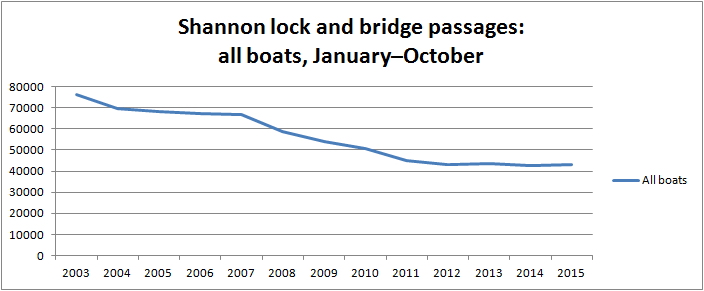
I have not posted charts of Shannon traffic figures for some months now. That was not Waterways Ireland’s fault: it has kindly continued to send the figures to me, but other demands on my time have intervened. However, I have now charted the figures to the end of October 2015, which takes in the bulk of the year’s boating activity. All the usual caveats apply:

  • the underlying figures do not record total waterways usage (even for the Shannon) as, for instance, sailing, fishing or waterskiing on lakes or river stretches, which did not involve a passage through a lock or Portumna Bridge, would not be recorded
  • the passage records would not show, for instance, a change in the balance of types of activities from those in larger cruising boats to those in smaller (sailing, fishing, waterskiing) boats
  • figures like these will not necessarily be representative of those for the year as a whole.

On the other hand, the figures do include the Shannon’s most significant tourism activity, the cruiser hire business. And they are our only consistent long-term indicator of usage of the inland waterways.

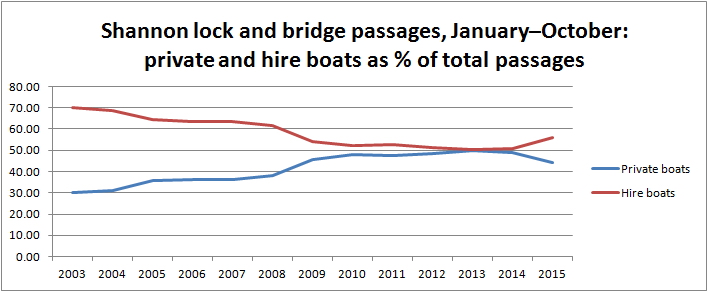
There has been a very slight increase in total traffic, although it might be better to regard the figures as confirming that traffic has stabilised at the new, lower level established around 2011.

Shannon JanOct all boats

All boats. The slight increase in total traffic seen up to May has continued to October

I commented on the May figures:

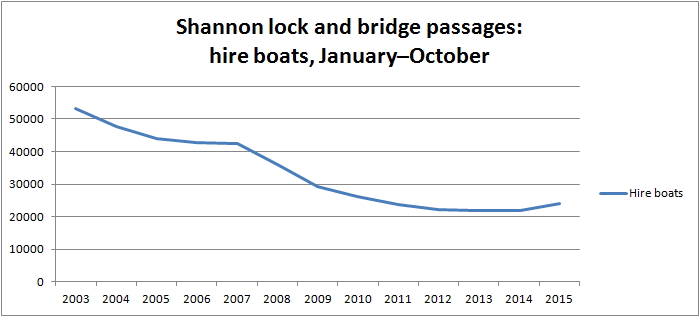
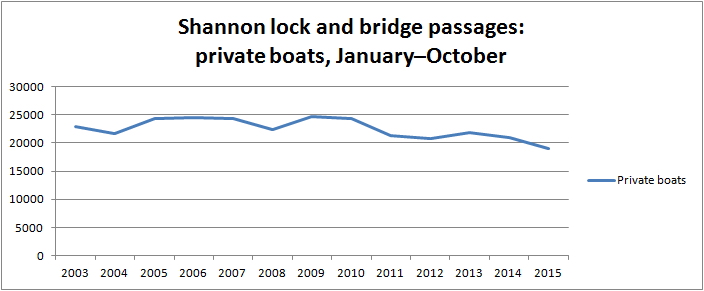
The big news is that there is an increase in the amount of hire-boat traffic and a decrease in the amount of private traffic. [Personal observation suggests very little activity on Lough Derg, apart from the sailing bods.]

Again, that trend has continued. Hire-boat traffic is up …

Shannon JanOct hired

Hire-boat traffic is up

… and private-boat traffic is down.

Shannon JanOct private

Private-boat traffic is down

Perhaps the private boats were afraid to move from the new berths in Killaloe where they wanted to spend the winter at Waterways Ireland’s ridiculously low rates. Is this some delayed effect of the death of the Celtic tiger? Or was it the weather? Neither hire nor private figures changed hugely, but change they nonetheless did.

Shannon JanOct private -v- hired

After a brief period when it seemed that private traffic was overtaking hired, the hire-boats are in the lead again

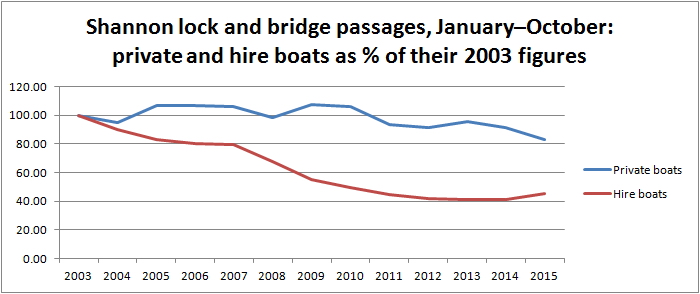
Of course hire-boat traffic fell much further from its 2003 figure: it dropped to 40% and is still not much higher, whereas private traffic is still more than 80% of its 2003 figure.

Shannon JanOct v2003

Change (private and hired) since 2003

It would be nice to have data on other forms of waterways usage.


What’s a cumec, Daddy?

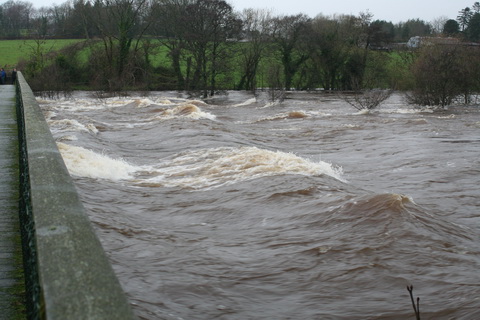
I don’t know, but here’s a picture of 415 of them flowing through Castleconnell. [Update 13 December: that may be only 405 cumec.]

Castleconnell 20151212 10_resize

415 cumecs on 12 December 2015

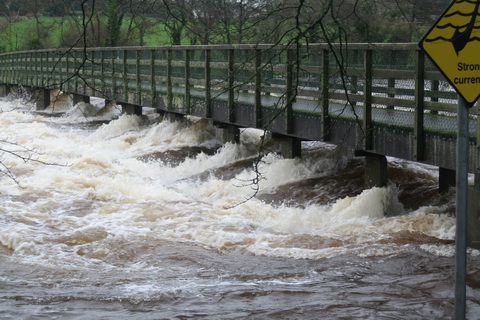
Actually, a cumec is one cubic metre of water per second, which is roughly one ton per second, which is a lot of water. And 415 cumec is the amount that, according to the blatts, the ESB is currently letting down the original course of the Shannon from Parteen Villa Weir; the minimum flow in that channel, as seen in summer, is 10 cumec.

Castleconnell 12 December 2015

Castleconnell 20151212 02_resize

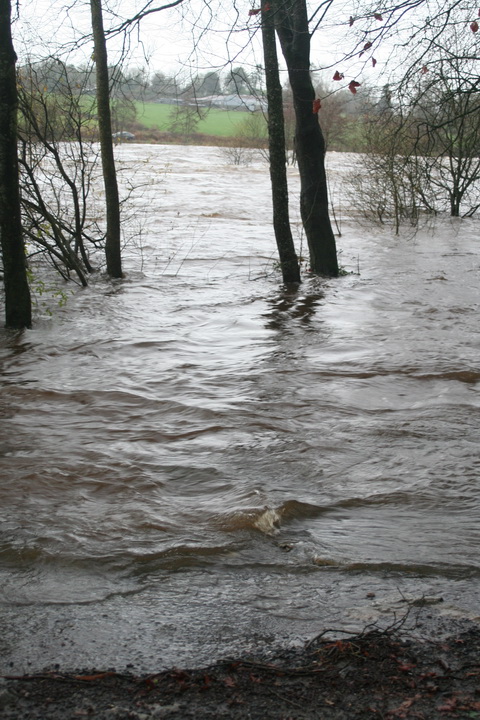
Younger trees getting their feet wet

Castleconnell 20151212 11_resize

Who’d have guessed?

Castleconnell 20151212 14_resize

Below the bridge

Castleconnell 20151212 21_resize

Above the bridge

Castleconnell 20151212 34_resize

Stormont

Castleconnell 20151212 37_resize

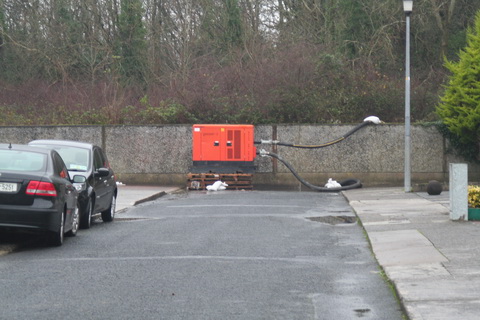
Pump

Castleconnell 20151212 40_resize

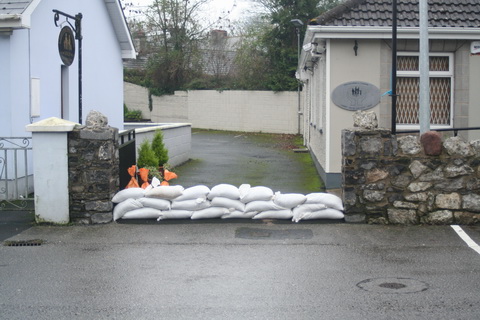
Sandbags

Castleconnell 20151212 42_resize

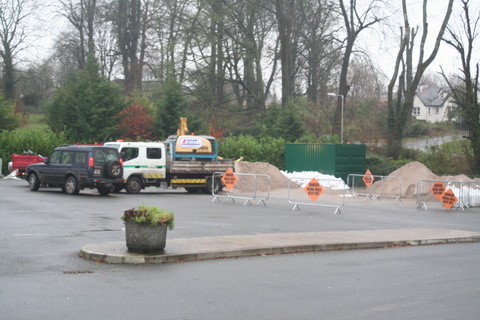
Sandbag Central

Castleconnell 20151212 43_resize

Sandbags filled here for distribution

Castleconnell 20151212 46_resize

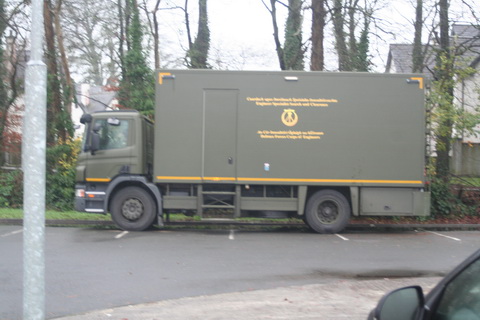
Army engineers

Castleconnell 20151212 50_resize

More equipment arriving

Clonlara 11 December 2015

Headrace Clonlara 20151211 01_resize

Ardnacrusha headrace, said to take 400 cumec

PEC Errina Bridge 20151211 04_resize

Errina bridge on the Plassey-Errina Canal

PEC Errina Bridge 20151211 01_resize

The stop planks seem to be quite effective …

PEC Clonlara upstream 20151211 01_resize

… as there is little water getting down the canal to Clonlara bridge

Park Canal 9 December 2015

Park Canal 20151209 01_resize

Depth gauge at Park Lock

Park Canal 20151209 03_resize

Lock chamber

Park Canal 20151209 04_resize

Full canal upstream