
I thought there was only one canal in Co Kerry, but there were three more at Lixnaw. They’re still to be seen and they have interesting associations.
Thanks to Ewan Duffy of Industrial Heritage Ireland for the tip-off.
Thanks to AOD for alerting me to an article by Morgan McCloskey “O’Maras of Limerick and their overseas business” [PDF] from the Old Limerick Journal summer 2001. O’Maras were bacon and ham curers: according to Frank Prendergast “The Decline of Traditional Limerick Industries” in David Lee & Debbie Jacobs, eds Made in Limerick: History of industries, trade and commerce Volume 1 [Limerick Civic Trust, Limerick 2003]
James O’Mara of Toomevara in County Tipperary had established the business in a small house on Mungret Street in 1839. He started bacon curing in the basement but it became so successful that he had to move shortly afterwards to the premises in Roches Street, which they occupied until its closure in 1987.
The waterways interest arises from McCloskey’s having drawn on Patricia Lavelle James O’Mara: a staunch Sinn Féiner Dublin 1961, republished in 2011 under a slightly different title. Lavelle’s O’Mara, her father, was also covered here and was the grandson of the original James who set up the business in 1839. We are concerned with neither of the Jameses: Stephen, son of the first and father of the second, is the man of the moment. McCloskey says that Lavelle says that Stephen preferred to go to Dublin by boat rather than by rail and that she gives this description of one such trip:
Then the boat went through the heart of Ireland; and the country, with its hills and green fields, was spread before him in all its changing beauty for the best part of a couple of days. The steamer left Limerick and made its way up the Shannon, avoiding the rapids by various canals and locks.
After Killaloe it reached the wide waters of Lough Derg. The passengers had the run of the boat and could get a snack meal if they wished. Once, when grandfather was travelling this way, terrible squalls sprang up and the lake was very rough, but usually they could stop for a moment at Holy Island and see the ancient ruins there, and pass on by the wooded heights of the Tipperary shore, past Dromineer to Portumna, crossing and re-crossing the lake until they found anchorage in Shannon Harbour, as far north as Offaly.
There was a big hotel there owned by the Grand Canal Company, where they all stayed for the night and got to know one another; and feasted on chicken and bacon and cabbage followed by apple pie, and then sat round huge turf fires swopping stories or playing cards.
Next morning the canal boat awaited them, gay with its overhead canopy to protect passengers from the heat of the sun or from inclement weather. The passengers sat in two long rows, back to back, and gazed out across the fields as the paddle lazily churned up the turbid waters and the boat made leisurely progress along the canal. The monotony was broken once in a while by the excitement of passing through a lock.
The problem with this romantic account is that, as presented, it’s rubbish.
Stephen O’Mara was born in 1844 and began work in the family business in 1860. The passenger boat service between Limerick and Killaloe ceased in 1848, when the railway reached Limerick (though there were occasional special excursions after that).
The service was by horse-drawn boat, not by steamer; though there had been some attempts at running steamers, the Limerick boats did not go beyond Killaloe, whence larger steamers ran to Portumna or, later, to Shannon Harbour and places further north.
Scheduled passenger services did not “stop for a moment” at Holy Island, which was off the main route to Portumna.
The canal hotel at Shannon Harbour effectively ceased operating as such in 1847, according to Ruth Delany The Grand Canal of Ireland David and Charles, Newton Abbot 1973.
The canal passage boats did not have canopies, the passengers sat facing each other rather than back to back and the boats were horse-drawn rather than paddle-driven. Furthermore, the service ceased in 1852.
I cannot explain the extent of the inaccuracies, but perhaps Lavelle’s account should have been attributed to the elder James rather than to his son Stephen. I would be glad to hear from anyone who can cast light on this; please leave a Comment below.
Posted in Ashore, Economic activities, Extant waterways, Historical matters, Industrial heritage, Ireland, Irish inland waterways vessels, Operations, Passenger traffic, People, Politics, Rail, Shannon, Sources, Steamers, waterways
Tagged bacon, Dromineer, Grand Canal, ham, Holy Island, horse, Killaloe, Limerick, lock, O'Mara, passage boat, Portumna, railway, Shannon Harbour, steam, Tipperary
The other day I posted an account of the Grand Canal Company’s inspection launch, built at its own docks in James’s Street Harbour in 1909. I said
I had not been aware of the existence of a GCC inspection launch later than the gondola of 1795. I would be glad of information from anyone who knows more about it: please leave a Comment below if you can help.
Then I remembered that, back in January, Alan Lindley had kindly permitted me to post this photograph, taken at Lowtown in 1911 or 1912.
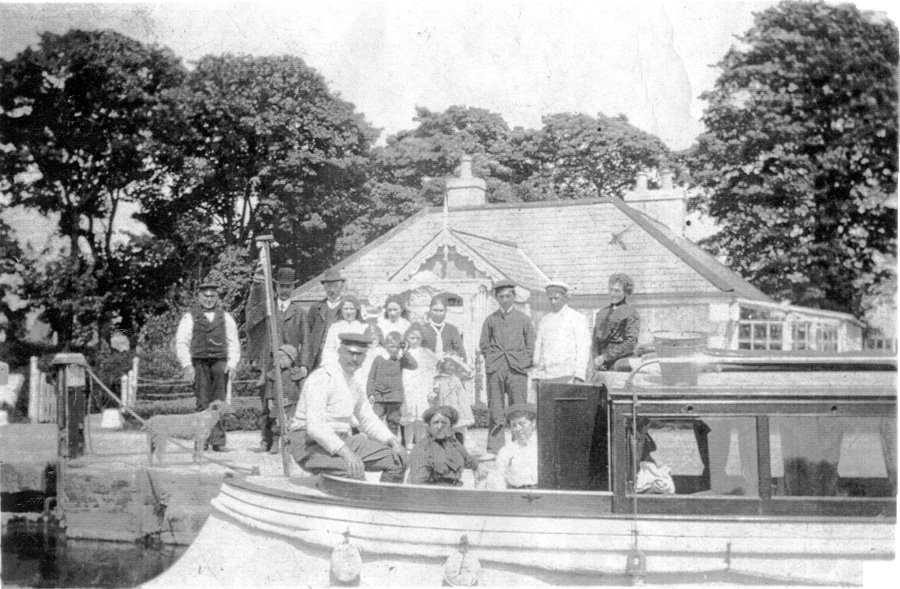
Unidentified boat at Lowtown (courtesy Alan Lindley)
Alan identified the man on the left of the group — with cap, waistcoat and watch-chain, and with a dog standing in front of him — as the lock keeper, Murtagh Murphy, the great-grandfather of the present incumbent, James (Jimmy) Conroy.
I said at the time that, although the boat had been described as a passenger flyboat, that seemed unlikely, and that the boat looked much more like a pleasure vessel than a working boat. I added:
If the Grand Canal Company had an inspection launch, this might be it, but I have found nothing to indicate that it did. The boat does, though, seem to have been designed for canal travel: it seems (from the twenty feet or so we can see) to have straight sides and to be well equipped with fenders. It might therefore have been designed to travel on the canals (as well as on other waters).
Well, now we know that the Grand Canal Company did have an inspection launch, built in 1909, not long before this photo was taken. Could this be it?
Posted in Ashore, Canals, Engineering and construction, Extant waterways, Historical matters, Industrial heritage, Ireland, Irish inland waterways vessels, Operations, People, Sources, waterways, Waterways management
Tagged Alan Lindley, Grand Canal, Grand Canal Company, inspection launch, James's Street Harbour, Jimmy Conroy, lock, Lowtown, Murtagh Murphy
Cussane or Coosaun Lock was the lowest of three on the Killaloe Canal, which was the uppermost section of the Limerick Navigation. It was a double lock or “staircase pair”.
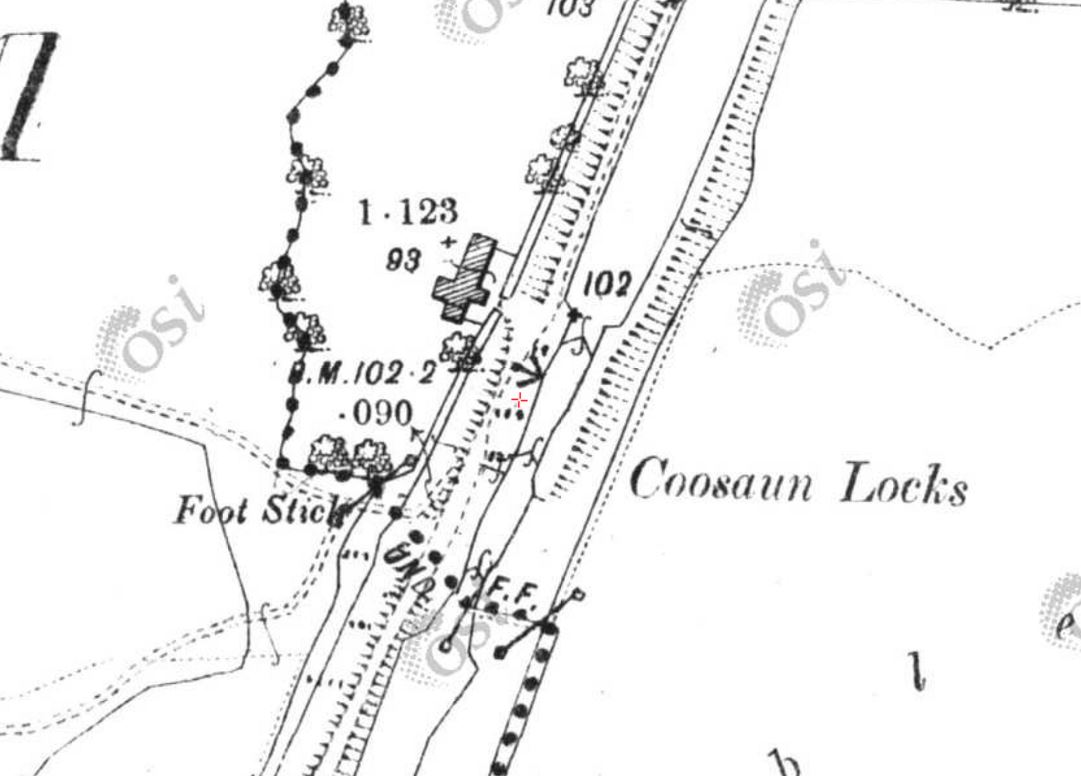
Cussane Lock (OSI ~1900)
You can see what the lockkeeper’s house looked like in 2015 in the article “A Flooded Landscape Revealed“, written by folk who surveyed the area last year for Irish Water.

Posted in Ashore, Built heritage, Canals, Economic activities, Engineering and construction, Extant waterways, Forgotten navigations, Historical matters, Industrial heritage, Ireland, Irish inland waterways vessels, Modern matters, Operations, Shannon, Sources, Steamers, The grain trade, waterways, Waterways management
Tagged Coosaun, Cussane, double lock, flooded area, geo-mara, irish water, Killaloe, lock, MV Dolphin, Shannon
Boat at Lowtown
Alan Lindley has very kindly sent me, and permitted me to publish, this photograph.
It was taken at Lowtown lock, on the Grand Canal, in 1911 or 1912.
Alan says that the man on the left of the group — with cap, waistcoat and watch-chain, and with a dog standing in front of him — is the lock keeper, Murtagh Murphy, the great-grandfather of the present incumbent, James (Jimmy) Conroy. Murtagh was born in Ballycowan, near Tullamore, Co Offaly, in 1849 and, after working on a Grand Canal Company boat, married a Kildare girl and took the job at Lowtown.
The boat had been described as a passenger flyboat but, as the Grand Canal Company had ceased carrying passengers in 1852, that seems unlikely. And the boat looks much more like a pleasure vessel than a working boat.
If the Grand Canal Company had an inspection launch, this might be it, but I have found nothing to indicate that it did. The boat does, though, seem to have been designed for canal travel: it seems (from the twenty feet or so we can see) to have straight sides and to be well equipped with fenders. It might therefore have been designed to travel on the canals (as well as on other waters).
At least one director of the Grand Canal Company, Henry Samuel (aka Harry Samuel) Sankey, of Fort Frederic, Virginia, Cavan and of 64 Wellington Road, Dublin, did have a launch or pleasure craft on the canal, the Aja, which you can read about here. Incidentally Mr Sankey, who died on 5 December 1925, directed “that no Roman Catholic shall take any benefit” under his will.
Further information about the boat and the people shown in the photograph, and about Mr Sankey’s launch, would be very welcome; please leave a Comment below.
Posted in Ashore, Built heritage, Canals, Extant waterways, Historical matters, Industrial heritage, Ireland, Irish inland waterways vessels, Operations, People, Politics, Sources, Steamers, Water sports activities, waterways, Waterways management
Tagged Ballycowan, Conroy, director, Grand Canal, launch, lock, Lowtown, Murtagh Murphy, Sankey, steamer
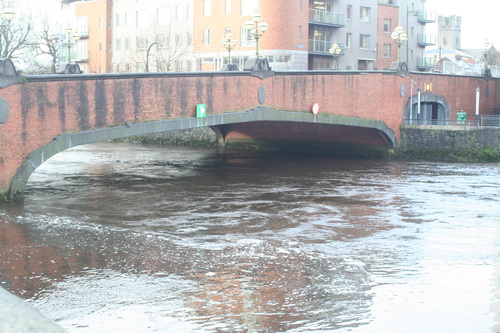
Abbey Bridge
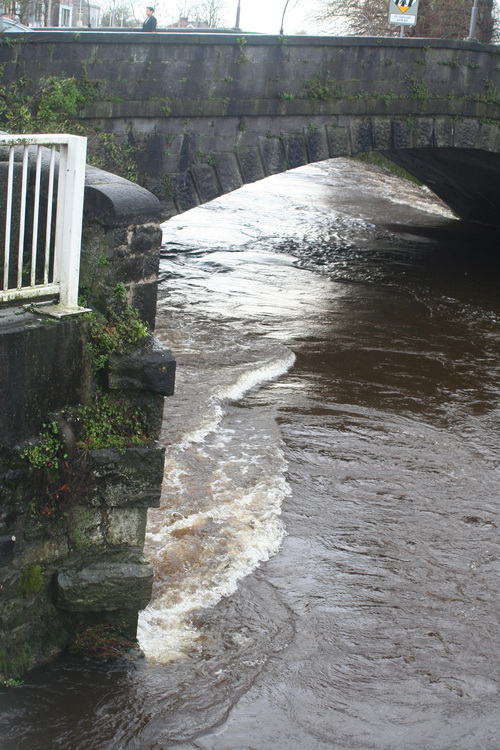
Baal’s Bridge
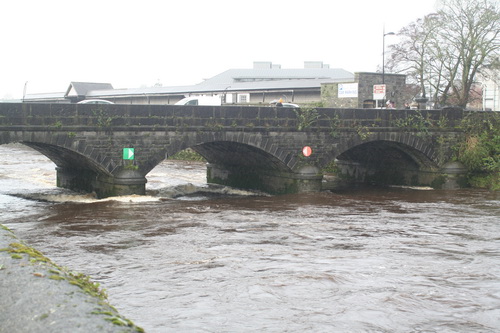
Mathew Bridge
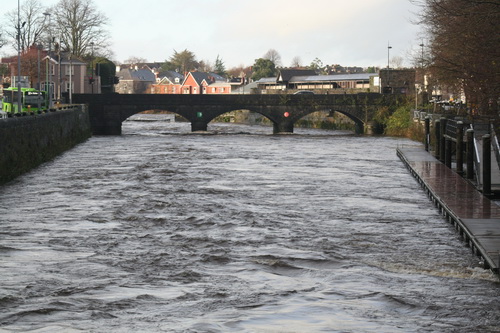
Current heading for Mathew Bridge
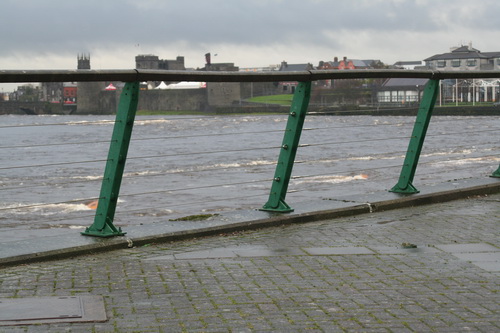
The weir
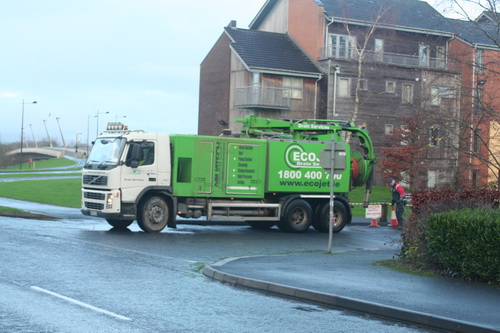
Lots of pumps running and equipment trundling about the place
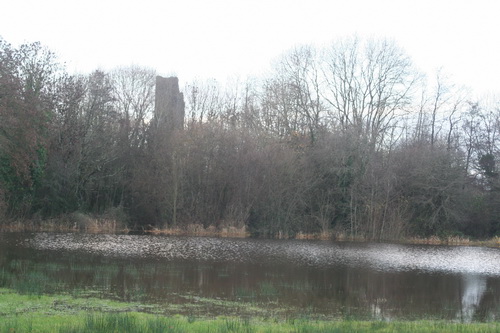
Trouble at t’mill
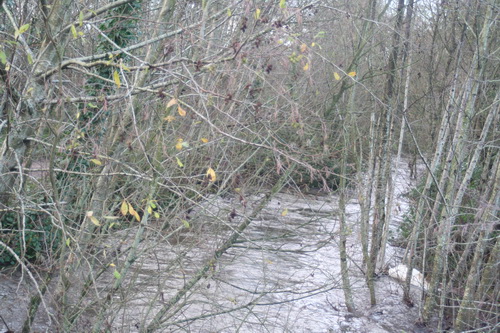
T’millstream
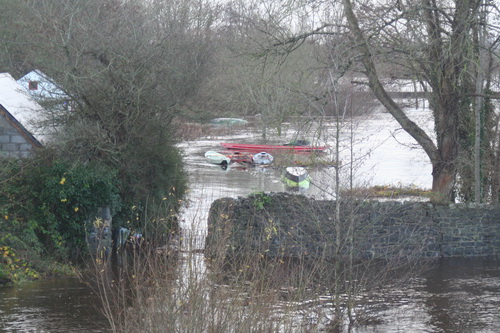
Cots on the bank
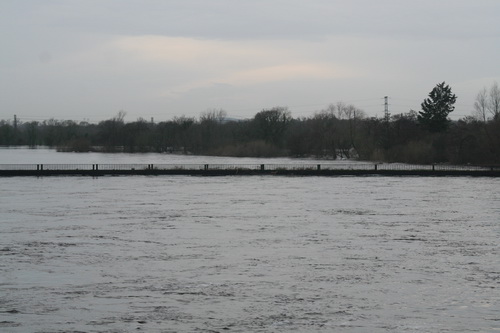
The Black Bridge getting another hammering
I have been told that the Mulkear River rose very rapidly on Saturday night and that, at one time, it was feared that the (older) bridge would be swept away. I gather that folk working in other areas were called to Annacotty to deal with the emergency.
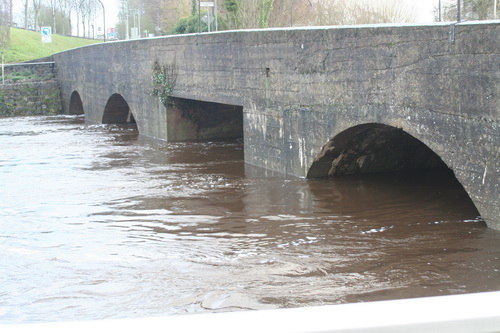
The old bridge at Annacotty (downstream face)
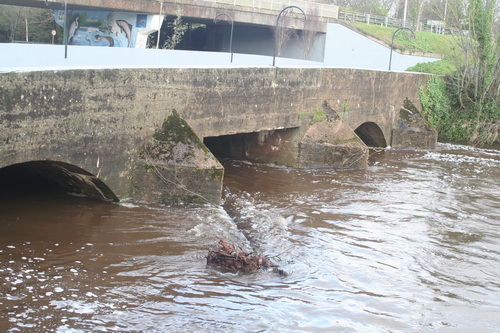
A tree in the water above the bridge
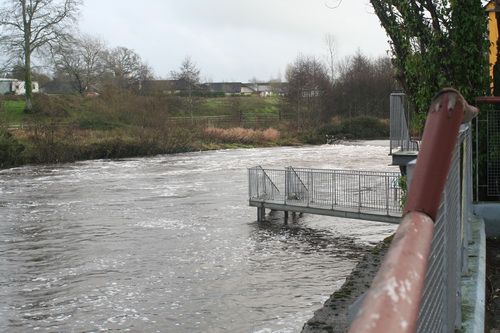
There’s a weir in there somewhere
The Mill Bar in Annacotty was closed today after being flooded.
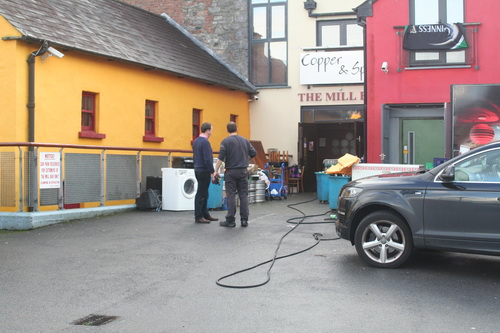
The Mill Bar
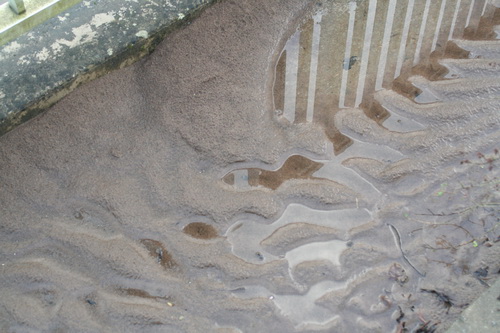
This, from a small garden beside the bridge, suggests that the Mulkear may have carried and deposited a lot of silt
I gather that the Mulkear’s waters, added to those of the Shannon itself, raised the level of the Park Canal (the bottom section of the Limerick Navigation). A problem with opening the lock gates, to release the water, meant that a few houses in Corbally were flooded. A Sinn Féin councillor, whose party colleague has been responsible [with her southern counterpart] for slashing Waterways Ireland’s budget in recent years, is quoted as saying
I am in no doubt it was primarily caused by the ineptitude of Waterways Ireland.
Alas, the news story does not tell us the source of the councillor’s certainty.
The article also says that
[…] the force of this water meant it was not possible to open the lock gates by hand.
That is, I think, misleading: neither set of gates has gate beams, so they are not opened by hand.
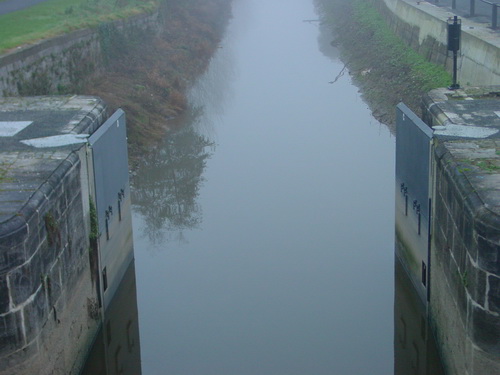
The upper gates in 2004, shortly after installation. Note the absence of gate beams. Note also the two sluices or paddles on each gate
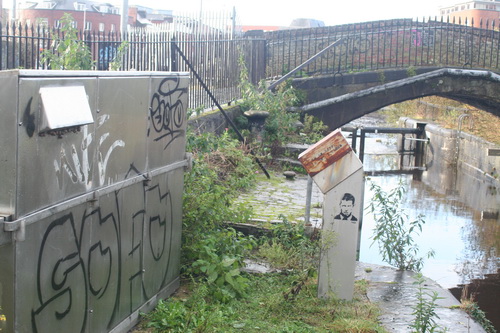
Control pedestal and gear
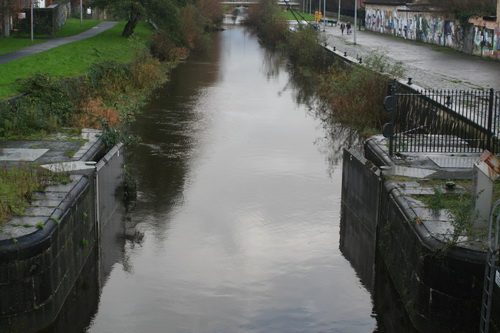
The upper gates open today
I see no sign of the paddles or sluices. Perhaps the level is so high that they’re underwater. I must try to check next time I’m at the canal harbour.
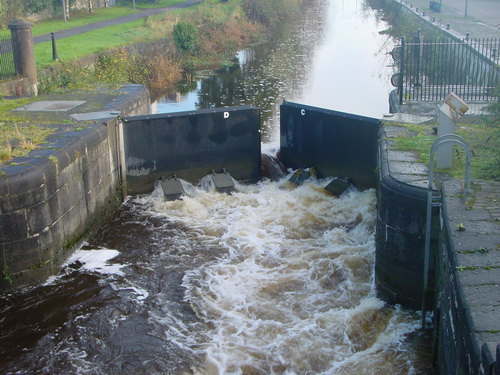
The upper gates in the floods of 2009
In the floods of 2009 the upper gates were held slightly open and all four sluices were discharging water. That would have lowered the level in the canal; it would also, I think, have made it easier to open the gates fully.
I am guessing, but I imagine that on Saturday night some sort of hydraulic machine was brought in this way …
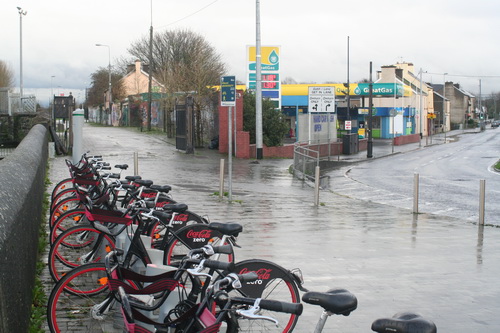
Two bollards have been moved from the gateway and stacked beside it
… and used to push or pull open the near-side upper gate. There seems to be some slight damage to the stone and iron work.
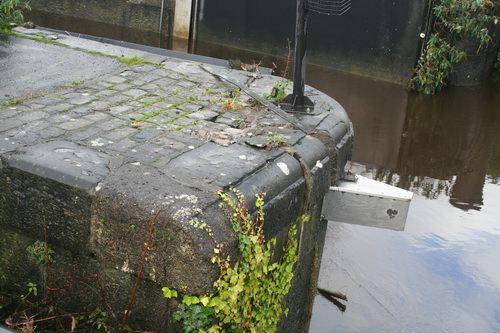
Slight damage
One other possibility that struck me is that silt from the Mulkear might have built up behind the gates, making them difficult to open, but I have no evidence on the matter.
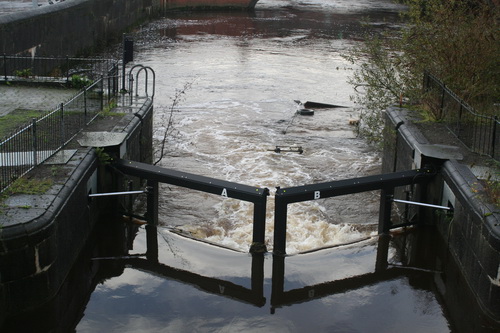
The lower gates
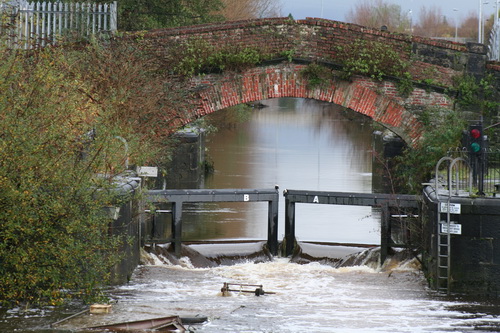
From the outside looking in
Posted in Built heritage, Canals, Charles Wye Williams, Drainage, Economic activities, Engineering and construction, Extant waterways, Forgotten navigations, Historical matters, Industrial heritage, Ireland, Modern matters, Operations, Safety, Shannon, waterways, Waterways management, Weather
Tagged 2009, Annacotty, Anney River, Baal's Bridge, Black Bridge, bridge, cot, flood, gate, harbour, hydraulics, lock, Mulcair, Mulkear, Park Canal, Plassey, Shannon, silt, University of Limerick, water level
Here is the ESB’s Notifications page, with info on the rate of discharge from its hydroelectric dams and weirs. Today (14 December 2015) Parteen Villa Weir is discharging 440 cumecs (cubic metres per second or, roughly, ton[ne]s per second down the original course of the Shannon. That’s 44 times the 10 cumec usually discharged and more than replaces the 400 cumec diverted through the headrace to the Ardnacrusha power station. The Shannon is therefore running at its pre-Ardnacrusha levels and the Falls of Doonass have regained their power.
Of course if Ardnacrusha didn’t exist, its 400 cumec would be coming down the original course of the Shannon on top of the 440 cumec already there, which would make for interesting levels of flooding.
That ESB page has a link to this infographic, which shows the sort of information I was trying to get across here. I usually start from Leitrim [village]; the ESB starts slightly further upstream at Lough Allen. Note that the Shannon’s few locks are concentrated upstream of Lough Ree: between them and Killaloe are only two locks, at Athlone and Meelick, so the river’s fall is very slight.
Update 2018: the ESB has a new page with lots of interesting information here.
Posted in Ashore, Built heritage, Canals, Drainage, Economic activities, Engineering and construction, Extant waterways, Industrial heritage, Ireland, Modern matters, Operations, Safety, Shannon, waterways, Waterways management, Weather
Tagged Ardnacrusha, Athlone, cumec, ESB, Falls of Doonass, flood, Killaloe, Leitrim, lock, Lough Allen, Lough Ree, Meelick, Parteen Villa Weir, power station, river, Shannon
I don’t know, but here’s a picture of 415 of them flowing through Castleconnell. [Update 13 December: that may be only 405 cumec.]
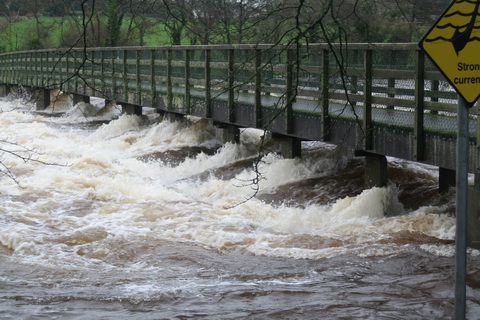
415 cumecs on 12 December 2015
Actually, a cumec is one cubic metre of water per second, which is roughly one ton per second, which is a lot of water. And 415 cumec is the amount that, according to the blatts, the ESB is currently letting down the original course of the Shannon from Parteen Villa Weir; the minimum flow in that channel, as seen in summer, is 10 cumec.
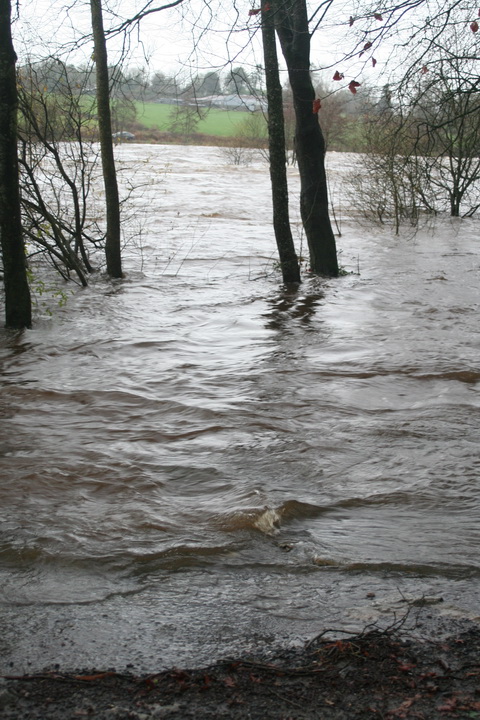
Younger trees getting their feet wet
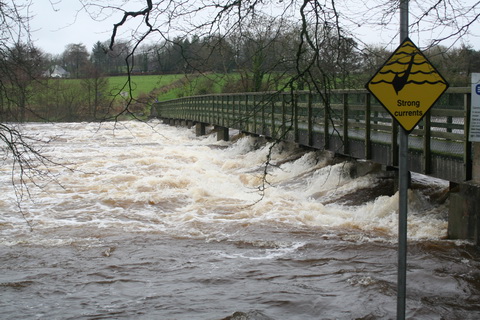
Who’d have guessed?
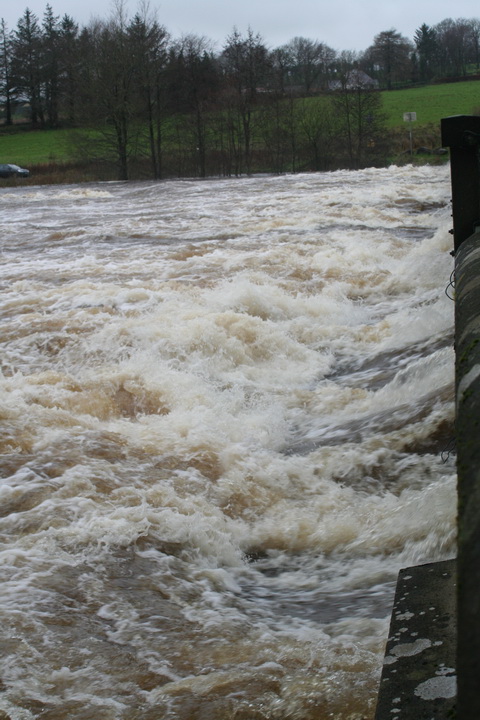
Below the bridge
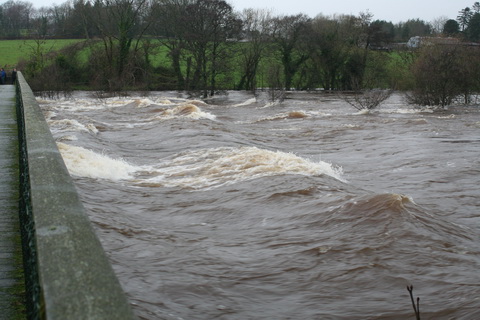
Above the bridge
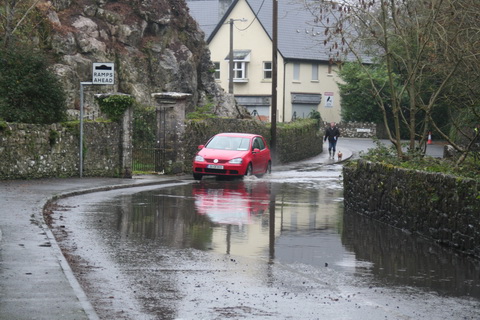
Stormont
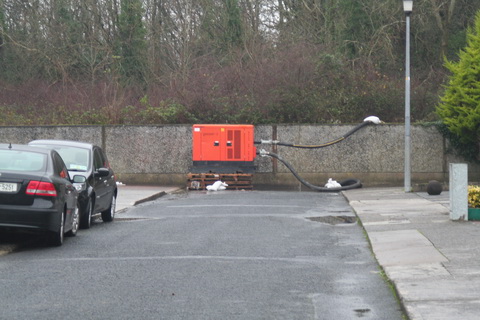
Pump
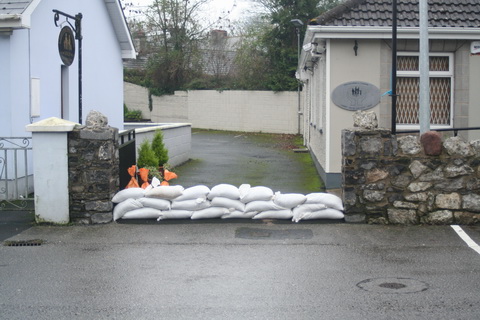
Sandbags
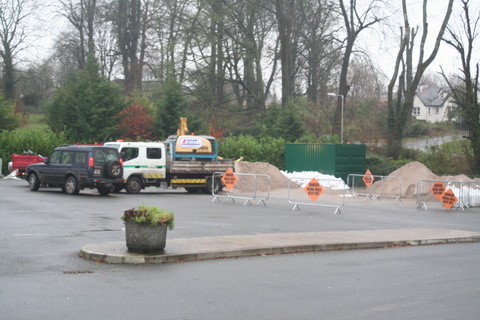
Sandbag Central
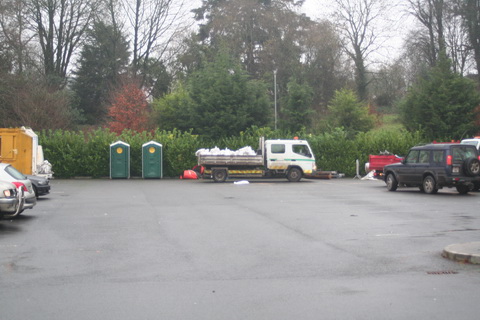
Sandbags filled here for distribution
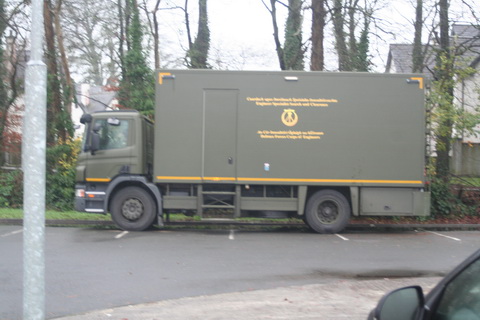
Army engineers
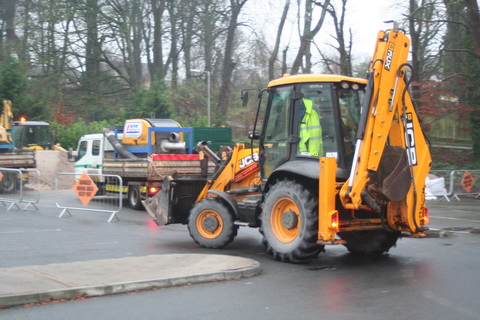
More equipment arriving
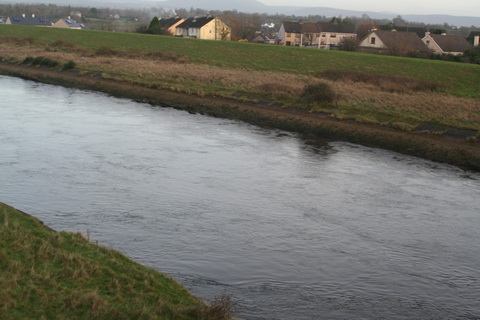
Ardnacrusha headrace, said to take 400 cumec
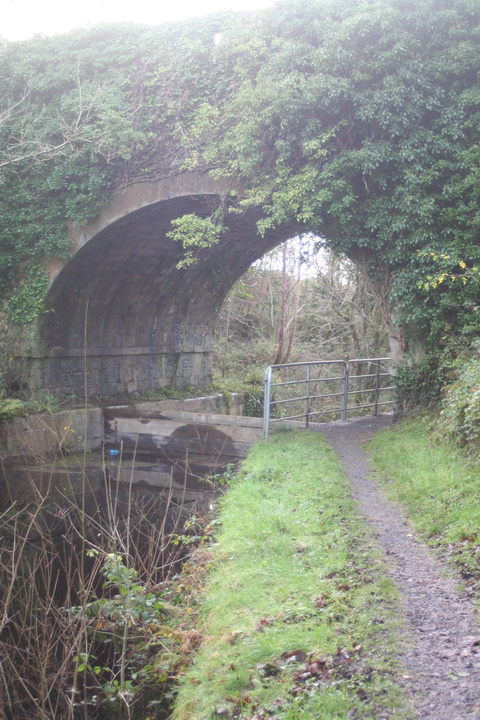
Errina bridge on the Plassey-Errina Canal
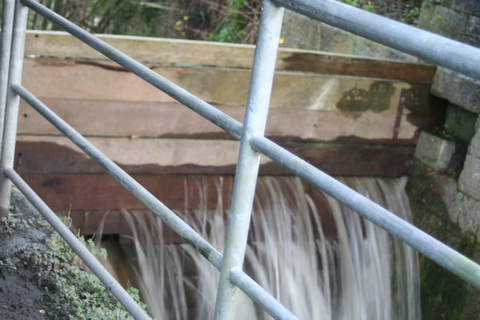
The stop planks seem to be quite effective …
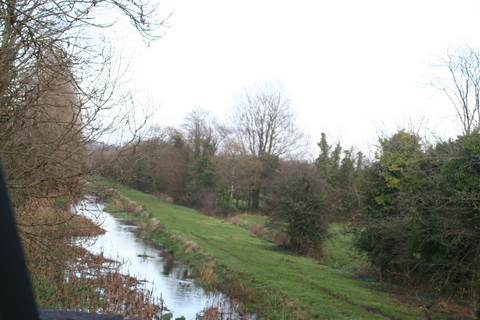
… as there is little water getting down the canal to Clonlara bridge
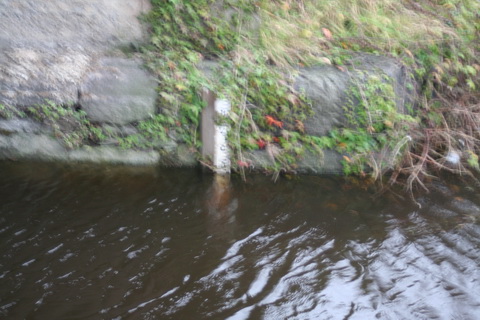
Depth gauge at Park Lock
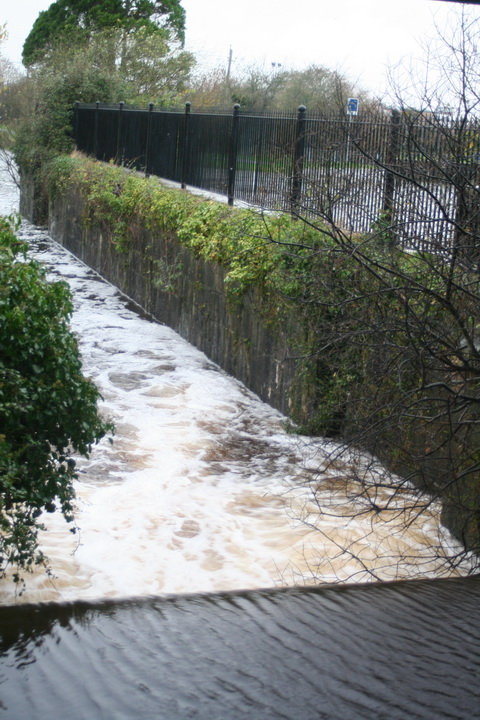
Lock chamber
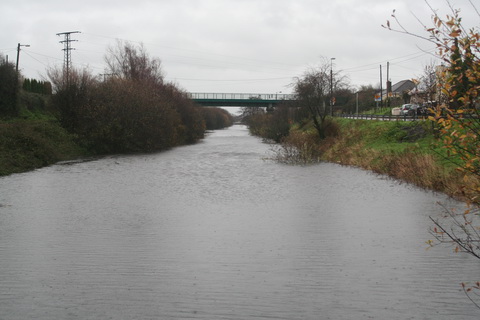
Full canal upstream
Posted in Ashore, Built heritage, Canals, Drainage, Economic activities, Engineering and construction, Extant waterways, Forgotten navigations, Industrial heritage, Ireland, Modern matters, Operations, Roads, Shannon, waterways, Waterways management, Weather
Tagged 2015, Ardnacrusha, bridge, canal, Castleconnell, clonlara, cumec, depth, Errina, ESB, flood, flow, headrace, lock, Park Canal, Parteen, Parteen Villa, Plassey, Shannon, Stormont, weir
Here are the fourth and fifth pages [I split one long page] in the sequence of articles about the sinking of the passage boat Longford on the Royal Canal in 1845. They discuss some of the evidence of corporate incompetence and farcical laxity that may have persuaded the inquest jury to award a deodand against the vessel (and thus against the Royal Canal Company).
Amongst other gems, the footnotes explain what a crapper is.
Posted in Built heritage, Canals, Economic activities, Engineering and construction, Extant waterways, Historical matters, Ireland, Irish inland waterways vessels, Operations, Passenger traffic, People, Restoration and rebuilding, Safety, Sources, waterways, Waterways management
Tagged 1845, boats, bridge, canal, Clonsilla, crapper, deep sinking, Dublin, Ireland, lock, Longford, Operations, passage boat, Porterstown, Royal Canal, Samuel Draper, vessels, waterways

 Irish waterways history